
Other News
Kano Govt Introduces Mandatory Premarital Health Screening Law

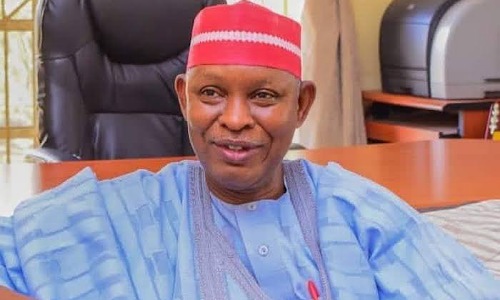
In a groundbreaking move aimed at bolstering public health, Kano State has implemented a new Mandatory Premarital Law necessitating medical screening for all couples prior to marriage.
Signed into effect by Governor Abba Kabir Yusuf, this legislation mandates that no marriage ceremony can proceed without a health certificate confirming screenings for genotype, hepatitis B and C, HIV/AIDS, and other relevant conditions.
Governor Yusuf emphasized the vital importance of this law in ensuring healthier unions and the birth of children devoid of preventable illnesses.
The primary objective of this initiative is to significantly curb the prevalence of conditions such as sickle cell anemia, HIV/AIDS, and hepatitis among newborns.
“This law marks a pivotal stride toward fortifying the healthcare sector and securing a healthier future for our progeny,” stated Governor Yusuf during the signing ceremony.
Additionally, the law incorporates stringent anti-discrimination measures, safeguarding individuals with HIV/AIDS, sickle cell anemia, and hepatitis from societal stigmatization.
It mandates that couples furnish a test certificate from a government-endorsed health facility prior to formalizing any marital union.
Non-compliance with the new law carries severe penalties, including fines reaching up to N500,000 and a minimum of five years’ imprisonment, underscoring the state’s unwavering commitment to enforcement.
Nevertheless, reactions from stakeholders have been mixed.
Dr. Abdurrahman Ahmad Tijjani, a medical practitioner at Murtala Mohammed Specialist Hospital in Kano, commended the initiative as a positive stride forward, emphasizing its significance in the face of contemporary disease transmission dynamics.
He remarked, “Given the present scenario where certain diseases are easily transmissible, the mandated screenings for genotype, hepatitis B and C, and sickle cell anemia are crucial for intending couples.”
Conversely, a distinguished Islamic scholar from the Department of Islamic Studies at Bayero University, Kano, who opted to remain anonymous, opined that the government’s implementation of the law is premature.
He advocated for a gradual introduction of the law before its full enactment, drawing parallels with the incremental prohibition of intoxicants and fornication in the Qur’an.
He asserted, “Just as the prohibition of intoxicants and fornication in the Qur’an occurred gradually, the implementation of this law should have followed a similar incremental approach.”






The Social Democratic Party (SDP) and the Inter-Party Advisory Council (IPAC) have disclosed details of their recent closed-door meeting with President Bola Tinubu, explaining that the engagement focused on strengthening Nigeria’s democratic process ahead of the 2027 general elections.
The clarification came amid speculation surrounding the meeting, which took place at the Presidential Villa in Abuja after leaders of several opposition parties attended an Iftar dinner hosted by the president earlier in the week.
ALSO READ: NNPC Secures Tinubu’s Approval for $20bn FID on Bonga Deepwater Project
Speaking during a gathering hosted in Abuja by the SDP’s former presidential candidate, Adewole Adebayo on Friday, the party’s National Chairman, Prof. Sadiq Gombe, said the meeting with Tinubu followed an official invitation from the Presidency and lasted about an hour.
According to Gombe, the discussion centred on the need to strengthen Nigeria’s electoral laws and restore public confidence in the country’s electoral process ahead of the 2027 polls.
He explained that the meeting provided an opportunity for party leaders to remind the president of the importance of conducting transparent, free, and credible elections.
Gombe noted that democracy can only thrive when governments listen to the concerns of citizens and ensure electoral processes that guarantee fairness and accountability.
The SDP chairman also expressed concern over growing voter apathy, pointing to the low turnout recorded in the recent Area Council election in the Federal Capital Territory.
He said the Abuja Municipal Area Council election witnessed only about seven per cent voter turnout, which he described as a clear sign that many Nigerians are losing confidence in the electoral system.
Gombe urged the government and members of the National Assembly to take urgent steps to review electoral laws and rebuild public trust in Nigeria’s democracy.
Also speaking, the National Chairman of IPAC, Dr. Yusuf Dantalle, said political parties used the meeting to raise concerns about aspects of proposed electoral reforms, particularly issues related to indirect primaries and the mandatory electronic transmission of results.
Dantalle explained that the parties appealed to the president to use his influence to encourage legislative review where necessary, noting that reforms should strengthen, rather than complicate, the democratic process.
He expressed optimism that Tinubu would consider the concerns raised and support necessary amendments that would improve the electoral system.
The IPAC chairman also called on the Independent National Electoral Commission (INEC) to strictly adhere to electoral guidelines as preparations for the next election cycle begin.
Earlier in his remarks, Adebayo cautioned political actors against turning the 2027 general elections into a do-or-die contest, stressing that the primary goal of democracy should be the progress and stability of Nigeria rather than personal political victories.
He urged leaders across political parties to encourage citizens to actively participate in the democratic process and ensure that elections are conducted peacefully and transparently.

President Bola Tinubu and Mr. Taiwo Oyedele during his nomination on Wednesday.






NCDMB, Renaissance Africa Train Pipeline Engineers

NLNG Inducts 103 Trainees Into Empowerment Scheme
NCDMB Sponsored Oracle Primavera P6 Training Underway In Rivers State

Senate Approves Abe as Chairman, NUPRC Board

Tinubu Swears in Taiwo Oyedele as Finance Minister

Burna Boy Breaks Record as Africa’s Top-Grossing Concert Artist

Trump’s Family Unveils New Cryptocurrency Platform

Reps Recommend 3-year Jail Term For Aviation minister

Dangote Cement Lights Up Benue Host Communities With CSR Initiatives

Senate Denies Receiving Petitions Against Tinubu’s Ambassadorial Nominees

Tems Sets New Record On Billboard Hot 100 Chart
