
Other News
The Peace and Security Council’s Decision on the situation in Madagascar


ADDIS ABABA – The Peace and Security Council of the African Union (AU), at its 415th meeting held on 27 January 2014, adopted the following decision on the situation in Madagascar:
Council,
1. Takes note of the briefing made by the Commissioner for Peace and Security, as well as of the statement made by the Executive Secretary of the Southern African Development Community (SADC);
2. Recalls its previous communiqués and press statements on the situation in Madagascar, in particular PSC/ PR/COMM.(CLXXXI) communiqué, adopted at its 181st meeting held on 20 March 2009, PSC/PR/COMM.1(CCXVI) and PSC/PR/COMM.1(CCXXI) communiqués, adopted at its 216th and 221st meetings held on 19 February and 17 March 2010, respectively, PSC/PR/COM.1(CCCIII) communiqué, adopted at its 303rd meeting held on 8 December 2011, and PSC/MIN/Comm.(CCCLXVIII) communiqué, adopted at its 368th meeting held in Dar-es-Salaam, United Republic of Tanzania, on 22 April 2013;
3. Reiterates its appreciation to the SADC and the AU for their sustained support to the resolution of the crisis and for the close coordination between the two organizations throughout the crisis exit process. Council, in particular, pays tribute to the SADC Mediator in the Malagasy crisis, former President Joaquim Chissano of Mozamique, as well as to Ambassador Ramtane Lamamra, former AU Commissioner for Peace and Security, for their commitment and active engagement, which contributed significantly to the progress achieved. Council also reiterates its appreciation to the international partners, particularly the members of the International Contact Group on Madagascar (ICG-M), for their support to the efforts of the AU and the SADC;
4. Welcomes the positive developments in Madagascar, particularly the holding, on 25 October and 20 December 2013, of the 1st and 2nd rounds of the presidential election, as well as the holding of the legislative elections, concurrently with the second round of the presidential election;
5. Acknowledges that the electoral process has been recognized as being inclusive, credible and legitimate by the different observation missions, particularly those of the AU and the SADC. Council, in this regard, expresses its appreciation to the Malagasy people, as well as to all political actors and institutions of the country, for the smooth and peaceful conduct of the elections and the completion of the transition process;
6. Takes note of the proclamation, on 17 January 2014, by the Special Electoral Court (CES) of Madagascar, of the final results of the second round of the presidential election, congratulates Mr. Hery Rajaonarimampianina Rakotoarimanana, for his election as the new President of the Republic of Madagascar, and notes his swearing-in on 25 January 2014;
7. Decides, in view of the completion of the transition process and the restoration of constitutional order, and in accordance with the relevant AU instruments, including the African Charter on Democracy, Elections and Governance and paragraph 8 of its communiqué PSC/MIN/Comm.(CCCLXVIII), to lift the suspension of Madagascar’s participation in the activities of the AU. Council further decides to lift all other measures that had been taken to ensure that the Malagasy stakeholders work towards the restoration of constitutional order, and invites Madagascar to immediately resume its participation in the activities of the AU;
8. Urges the new President of the Republic of Madagascar and the other Malagasy stakeholders to work towards the promotion of national reconciliation, good governance and respect for human rights, in order to consolidate the important gains achieved;
9. Expresses the commitment of the AU and the SADC to continue to support the new Malagasy authorities and the other concerned stakeholders in the country in their efforts, including those relating to socio-economic recovery;
10. Calls on the international community to provide necessary support to Madagascar, with a view to consolidating the remarkable gains made by the country;
11. Decides to remain actively seized of the matter.

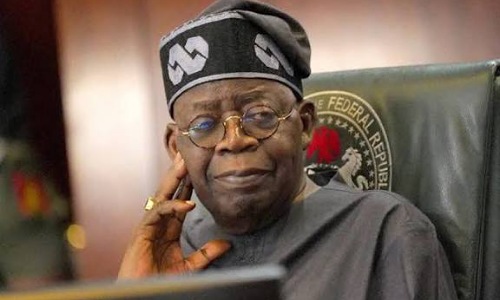
The Social Democratic Party (SDP) and the Inter-Party Advisory Council (IPAC) have disclosed details of their recent closed-door meeting with President Bola Tinubu, explaining that the engagement focused on strengthening Nigeria’s democratic process ahead of the 2027 general elections.
The clarification came amid speculation surrounding the meeting, which took place at the Presidential Villa in Abuja after leaders of several opposition parties attended an Iftar dinner hosted by the president earlier in the week.
ALSO READ: NNPC Secures Tinubu’s Approval for $20bn FID on Bonga Deepwater Project
Speaking during a gathering hosted in Abuja by the SDP’s former presidential candidate, Adewole Adebayo on Friday, the party’s National Chairman, Prof. Sadiq Gombe, said the meeting with Tinubu followed an official invitation from the Presidency and lasted about an hour.
According to Gombe, the discussion centred on the need to strengthen Nigeria’s electoral laws and restore public confidence in the country’s electoral process ahead of the 2027 polls.
He explained that the meeting provided an opportunity for party leaders to remind the president of the importance of conducting transparent, free, and credible elections.
Gombe noted that democracy can only thrive when governments listen to the concerns of citizens and ensure electoral processes that guarantee fairness and accountability.
The SDP chairman also expressed concern over growing voter apathy, pointing to the low turnout recorded in the recent Area Council election in the Federal Capital Territory.
He said the Abuja Municipal Area Council election witnessed only about seven per cent voter turnout, which he described as a clear sign that many Nigerians are losing confidence in the electoral system.
Gombe urged the government and members of the National Assembly to take urgent steps to review electoral laws and rebuild public trust in Nigeria’s democracy.
Also speaking, the National Chairman of IPAC, Dr. Yusuf Dantalle, said political parties used the meeting to raise concerns about aspects of proposed electoral reforms, particularly issues related to indirect primaries and the mandatory electronic transmission of results.
Dantalle explained that the parties appealed to the president to use his influence to encourage legislative review where necessary, noting that reforms should strengthen, rather than complicate, the democratic process.
He expressed optimism that Tinubu would consider the concerns raised and support necessary amendments that would improve the electoral system.
The IPAC chairman also called on the Independent National Electoral Commission (INEC) to strictly adhere to electoral guidelines as preparations for the next election cycle begin.
Earlier in his remarks, Adebayo cautioned political actors against turning the 2027 general elections into a do-or-die contest, stressing that the primary goal of democracy should be the progress and stability of Nigeria rather than personal political victories.
He urged leaders across political parties to encourage citizens to actively participate in the democratic process and ensure that elections are conducted peacefully and transparently.
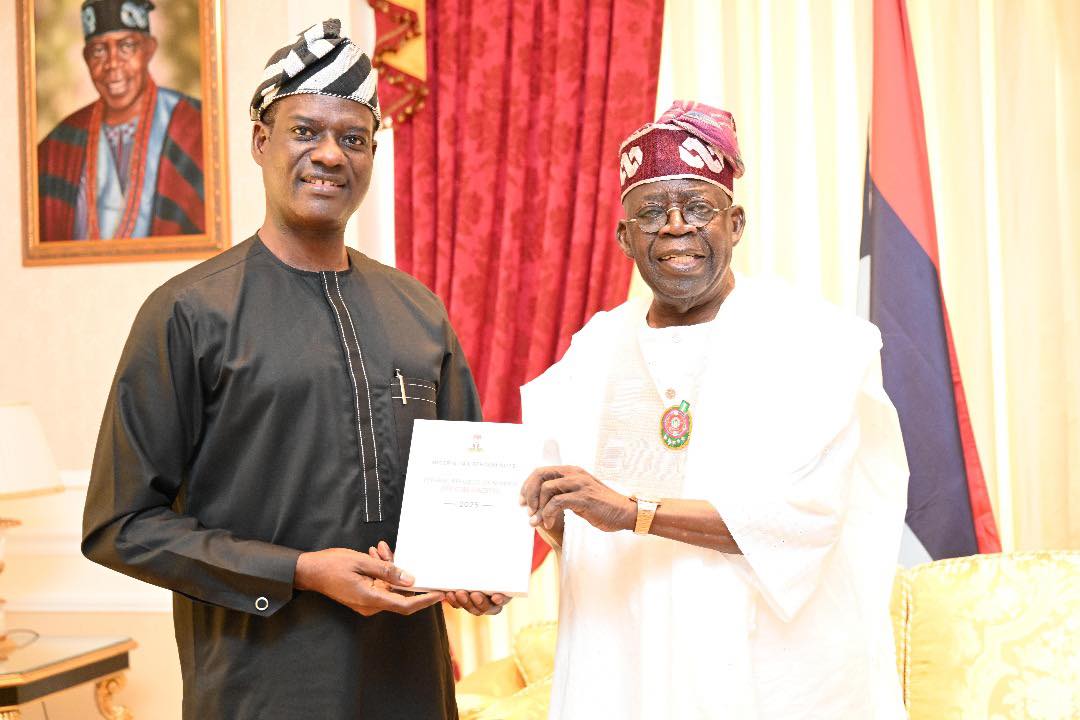
President Bola Tinubu and Mr. Taiwo Oyedele during his nomination on Wednesday.






NUPRC Shifts Focus to Dormant Oil Licences

SERAP Asks Tinubu To Probe N5.9bn Spent On NNPC Rebranding

NLNG Change YourStory: Backs Digital Storytelling’s New Era

Nigeria Wants to Export Electricity to Togo While Citizens Face Outages

Leadership Shakeup: ADC Kicks Off Nationwide Elections

‘Why My Retirement Came at the Perfect Time’ — Ex-IGP Kayode Egbetokun

Trump’s Family Unveils New Cryptocurrency Platform

Reps Recommend 3-year Jail Term For Aviation minister

Dangote Cement Lights Up Benue Host Communities With CSR Initiatives

Senate Denies Receiving Petitions Against Tinubu’s Ambassadorial Nominees

Tems Sets New Record On Billboard Hot 100 Chart

70575 675739Thank you for your information and respond to you. bad credit auto loans hawaii 741406
967304 392091I appreciate you taking the time to create this post. It has been really valuable to me definitely. Value it. 814228
914661 955751It shows how you comprehend this subject. Added this page, is for more. 51432