
NEWS
“This Is Not Governance” — Obi Blasts FG Over ₦142bn Bus Terminal Project

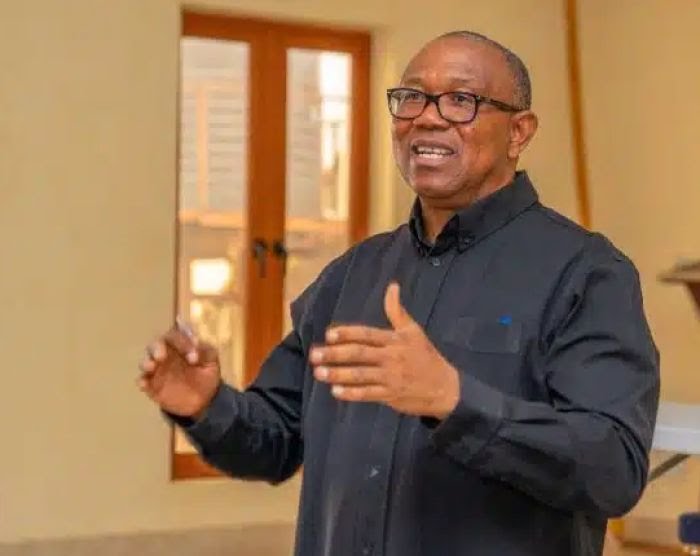
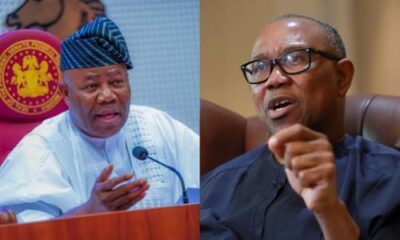
Former Labour Party presidential flag bearer, Peter Obi, has taken a swipe at the Federal Government for approving ₦142 billion to build bus terminals in the six geopolitical zones, describing the initiative as another indication of misplaced priorities.
Obi, in a statement issued on Friday titled “₦142 Billion for Bus Terminals,” said the project reflects the administration’s lack of focus in handling Nigeria’s scarce resources.
“The difference between the success and failure of the development in any nation is how you prioritise your scarce resources,” Obi stated.
READ ALSO: Peter Obi Kicks Against Lifetime Ban on Comfort Emmanson, Demands Fair Justice
“The recent announcement that a sum of ₦142 billion has been approved by the Federal Government for the construction of one bus terminal in each of our six geopolitical zones further affirms the lack of competence, lack of focus and poor leadership.”
He argued that such an amount would have had a greater impact if directed to the country’s health sector, pointing out that the collective allocation for all federal teaching hospitals and psychiatric centres in the 2024 budget is less than ₦100 billion.
“This is disturbing, considering that health is one of the most critical areas of development, which is deteriorating and remains grossly underfunded,” Obi added.
“WHO recently reported that over 20 million Nigerians are living with mental health issues. This is not only a misplaced priority but a tragic irony of our country. This is not governance.”
The Federal Executive Council had earlier defended the decision, saying the ₦142 billion scheme is part of its efforts to upgrade the nation’s transport infrastructure.
But Obi maintained that channeling funds into healthcare and other pressing needs should come before investing in bus terminals.

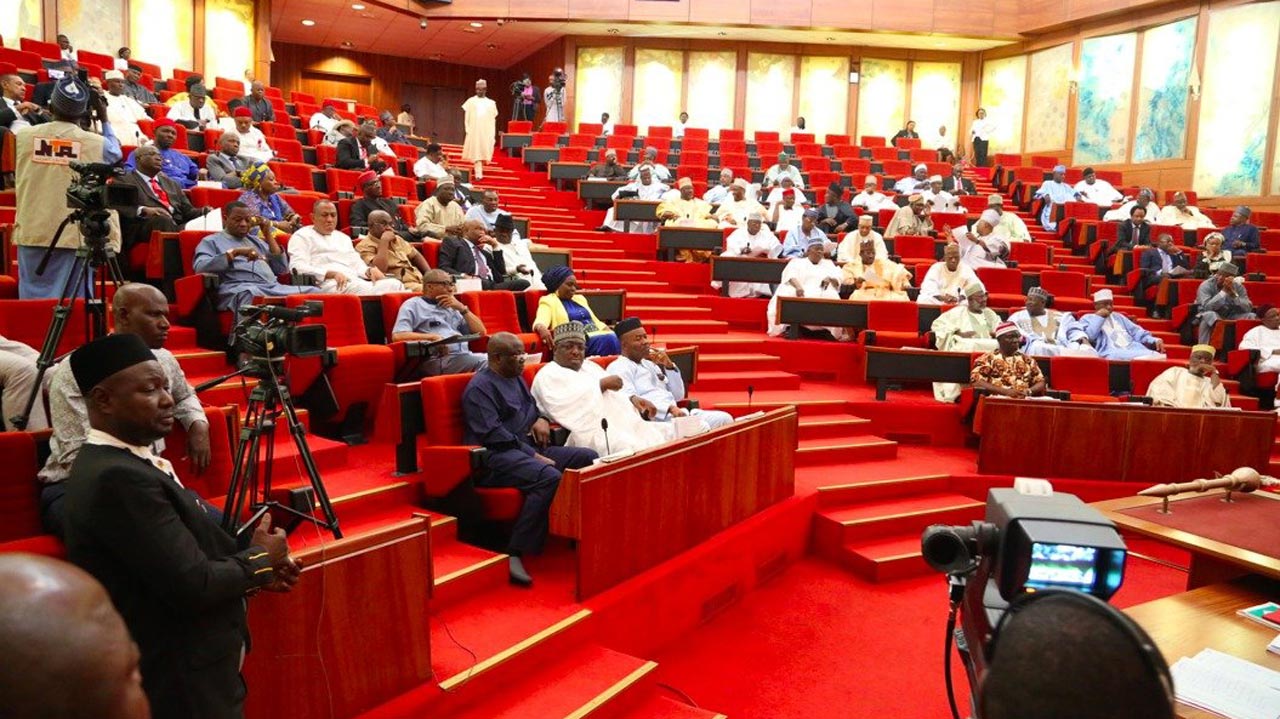




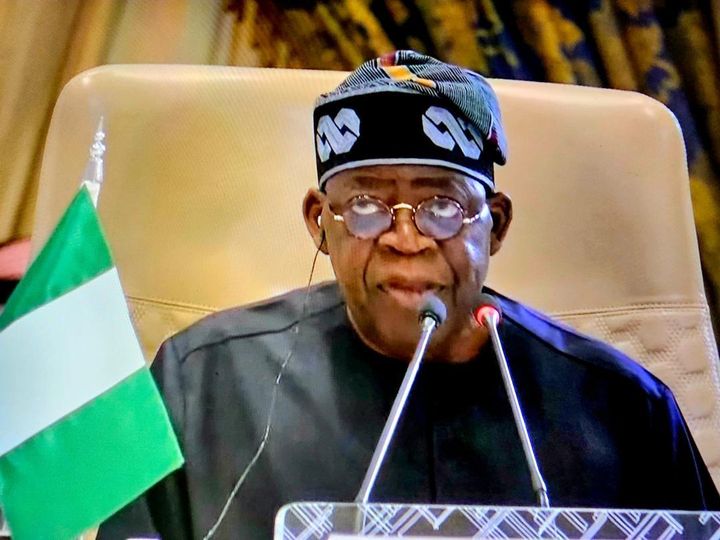
President Bola Ahmed Tinubu has signed the Appropriation (Amendment) (No. 4) Bill, 2025, into law, extending the implementation period of the 2025 budget from September 30 to December 31, 2026.
The development was confirmed in a statement issued on Wednesday by Bayo Onanuga, Special Adviser to the President on Information and Strategy.
According to the statement, the presidential assent followed the passage of the amendment by both the Senate and the House of Representatives on Tuesday, September 29, 2026.
SEE MORE:2027 Election: Wike Sets Resignation Date If Tinubu Loses Rivers, FCT
The extension gives Ministries, Departments and Agencies (MDAs) additional time to complete ongoing capital projects and utilise funds already appropriated.
The Presidency said the move would ensure that funds already approved in the 2025 budget are fully put to work without disrupting critical government programmes.
The National Assembly had approved the extension after lawmakers considered the need to provide additional time for the implementation of capital projects under the 2025 Appropriation Act.
The Senate had described the extension as necessary to prevent the abandonment of ongoing projects and allow outstanding obligations relating to projects to be addressed.
With the President’s assent, the 2025 budget implementation deadline is now formally extended to December 31, 2026.
President Tinubu commended the leadership and members of the National Assembly for what he described as their prompt consideration of the amendment.
He said the development further demonstrated cooperation between the Executive and Legislative arms of government in the service of the country.
The latest extension marks another adjustment to the implementation timeline of the 2025 capital budget, which had previously been extended from its original deadline to March 31, June 30 and subsequently September 30, 2026.
The Federal Government has begun discussions with electricity distribution companies (DisCos) on plans to establish dedicated energy zones that could provide 24-hour electricity supply to homes, businesses and industries in major demand centres across Nigeria.
The initiative was discussed during a closed-door meeting between the Minister of Power, Joseph Tegbe, and representatives of selected electricity distribution companies and other power-sector stakeholders on Wednesday.
SEE MORE: Kainji–Birnin Kebbi Power Line: TCN Begins Final Phase of Restoration
Under the proposed arrangement, the government is targeting six major locations across three key electricity corridors: the Lagos axis, the Abuja-Kaduna-Kano corridor, and the Enugu-Port Harcourt corridor.
The proposed zones are intended to concentrate efforts on areas where reliable electricity is considered critical to manufacturing, commercial activities and other productive sectors.
Tegbe said the challenge facing Nigeria’s power sector goes beyond electricity generation and transmission, noting that distribution companies must also be able to take up available electricity and deliver it effectively to consumers.
“The constraint on the sector is not limited to generation and transmission but includes how much power is taken up and delivered at the distribution end,” the minister said.
According to him, the proposed energy zones are expected to help address gaps at the distribution end of the electricity value chain, while also supporting increased commercial and industrial demand.
The minister said the initiative could improve the revenue and collection performance of DisCos as more reliable electricity becomes available to productive users.
He also said the Federal Government would continue expanding electricity infrastructure in areas with high demand, stressing that electricity supply capacity must increase alongside the needs of the economy.
Representatives of Abuja Electricity Distribution Company, Ikeja Electric, Eko Power, Ibadan Electricity Distribution Company and Sahara Energy Group were among those reported to have attended the meeting.
However, the government has not announced a specific implementation date, the amount of electricity expected to be supplied to the proposed zones or the infrastructure investment required to achieve round-the-clock supply.
The plan comes as businesses and households continue to face concerns over the reliability of electricity supply and the ability of DisCos to efficiently distribute available power.

The President of the National Association of Nigerian Students (NANS), Akinteye Babatunde Afeez, has challenged ADC chieftain Dino Melaye to account for his record of supporting students after the former senator criticised the Nigerian Education Loan Fund (NELFUND).
Afeez made the remarks in a video circulating on social media on Tuesday while reacting to Melaye’s comments about the Federal Government’s student loan programme.
The NANS president questioned whether Melaye had personally provided scholarships or bursaries to students in his constituency.
RELATED NEWS: ‘NELFUND Is A Haven Of Corruption’ — Dino Melaye Blasts Tinubu Govt
“Dino Melaye should come out and tell us if he has even given ₦5,000 as scholarship to students in his area, as bursary to students in his constituency,” Afeez said.
He questioned why Melaye should be the person shaping public opinion on education policy, particularly given his previous tenure in the Senate.
“Dino Melaye was a member of the 8th Senate, and I think he was one of the strongest members of the 8th Senate who was closer to the Senate President. What was his policy on education? What did he do to the students in his constituency?” he asked.
Afeez also criticised Melaye’s understanding of the NELFUND programme, saying the former lawmaker appeared to have confused the monthly upkeep payment with the entire support provided under the scheme.
“If Dino Melaye had done some research at all, he wouldn’t have embarrassed himself like that on national television stating that just ₦20,000 was given to students per year,” the NANS president said.
He explained that NELFUND provides educational loans as well as monthly upkeep support to beneficiaries.
“NELFUND has loan, and NELFUND has upkeep. Students are getting their educational loan and they are also getting the upkeep monthly,” Afeez said.
“And the upkeep is not just ₦20,000 a year, it’s ₦20,000 monthly,” he added.
Afeez further questioned whether Melaye had examined NELFUND’s publicly available information before making his claims.
“Even if Dino Melaye should go to ordinary NELFUND page, he will see schools acknowledging that they have received money from NELFUND,” he said.
The NANS president also took a strong position on Melaye’s criticism, describing the ADC chieftain as a comedian and questioning whether people still take his comments seriously.
“Do people still take Dino Melaye serious? Dino Melaye is a comedian. He is a jester,” Afeez said.
He argued that anyone commenting on education policy should be sufficiently informed about the subject.
“It is not about campaign and it’s not about supporting, but one fact is that if you want to talk about the education policy of the present administration, you have to have something upstairs,” he said.
Afeez also alleged that Melaye had previously asked students to endorse former presidential candidate Atiku Abubakar during the last election and subsequently failed to fulfil promises made to them.
“Dino Melaye, last election, came to Southwest to deceive students to endorse Atiku. After those students endorsed Atiku, he ran away with their money,” Afeez alleged.
He further claimed that Melaye had promised the students a vehicle.
Afeez concluded by dismissing Melaye’s criticism and saying NANS would continue to defend students’ interests.
The exchange followed Melaye’s earlier criticism of NELFUND, in which he described the programme as a “haven of corruption” and questioned the Federal Government’s claim that it was paying students’ school fees.
Melaye had specifically questioned the ₦20,000 payment, asking: “Which government school today takes ₦20,000 annual school fees?”
He also challenged NELFUND to publish the names of students who had benefited from the programme.






Tinubu Signs 2025 Budget Amendment Into Law

FG Reveals Six Locations for Proposed 24-Hour Power Supply Zones

2027 Election: Wike Sets Resignation Date If Tinubu Loses Rivers, FCT

NNPC Flaunts $800m Ima FID, as Affirmation of Upstream Viability

NMDPRA Poised to Curb Under-dispensing at Petrol Stations

2027: ‘They’ve Shown Peter Obi More Than One Kobo, Yet He Hasn’t Backed Down’ — Afegbua

Trump’s Family Unveils New Cryptocurrency Platform

Senate Denies Receiving Petitions Against Tinubu’s Ambassadorial Nominees

Dangote Cement Lights Up Benue Host Communities With CSR Initiatives

Reps Recommend 3-year Jail Term For Aviation minister

Tems Sets New Record On Billboard Hot 100 Chart

https://shorturl.fm/1k24Q