
NEWS
Wabote Urges Africa To Embrace Local Content For Economic Development

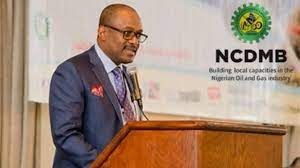
African nations seeking to achieve economic prosperity must develop local capabilities to process, utilise, and export their resources as a means of powering their growth and development.
This view was expressed in Cape Town, South Africa by the Executive Secretary of the Nigerian Content Development and Monitoring Board (NCDMB), Engr. Simbi Kesiye Wabote, at the ongoing 2023 Africa Energy Week, on Tuesday.
The ES regretted that most African nations lacked requisite local capacities in key areas of the oil and gas industry such as Engineering, Procurement, Construction and Fabrication, Installation, Commissioning, and Operation, which has resulted in the loss of job creation opportunities, revenues, skills acquisition, and other aspects of national development.
According to Wabote, another negative impact is that those broad categories take a significant proportion of the oil and gas industry expenditure, hence it is expedient for oil-producing nations to develop local capabilities that would ensure that those financial outlays are retained in-country.
On the strategy for enhancing local content capacity in African nations, Wabote stated that one important plan was to make local content a national agenda, backed by appropriate legislation or legal framework.
This, he noted, would “make it clear to all and sundry that local procurement, fabrication, and manufacturing is a national priority such that all institutions, businesses, decision-makers, investors, and citizens will buy into the vision.”
Using Nigeria as an example, Wabote recalled that Nigeria started with policy directives to deepen local content practice in the oil and gas sector before enacting the Nigerian Oil and Gas Industry Content Development (NOGICD) Act in 2010, thereby eliminating the possibility of companies complying with local content requirements in the oil and gas sector on ‘best endeavour’ basis’.
He listed other strategies for enhancing local content capacity as establishing factual data on current capacities in-country and carrying out gap analysis between current realities and the national vision. He noted that “periodic gap analyses are essential to determine gaps that need to be closed and the progress being made in the target areas of interest.
The ES insisted that local content is not ‘copy and paste’, hence local peculiarities must be factored into programs aimed at enhancing local capabilities.”
The NCDMB boss identified other enhancement tools to include Structured Capacity Building interventions to close identified gaps and funding and incentives, describing them as essentials to implement local content programs, develop infrastructure, attract new investments, and keep existing businesses afloat.
Speaking further, Wabote highlighted the importance of patronising in-country capacities and capabilities, clarifying that all policies, capacities, and individuals would become frustrated in the absence of outlets to engage them and receive rewards for sustainability and growth.
He explained that the Board ensured patronage of local goods and services by using the ‘right of first refusal’ principle contained in the Nigerian Content Act and various project certification and compliance monitoring tools.
On the Board’s activities, the ES revealed that the NCDMB commenced implementation of a 10-year Strategic Roadmap in 2018, with the goal of raising the level of Nigerian Content in the Nigerian Oil and Gas industry to 70 percent by the year 2027.
According to him, various initiatives were put in place under five strategic pillars and four vision enablers.
He pointed out that “as at end of year 2022, and five years into the 10-year journey, we have achieved 54% Nigerian Content level against the target of 42%.”



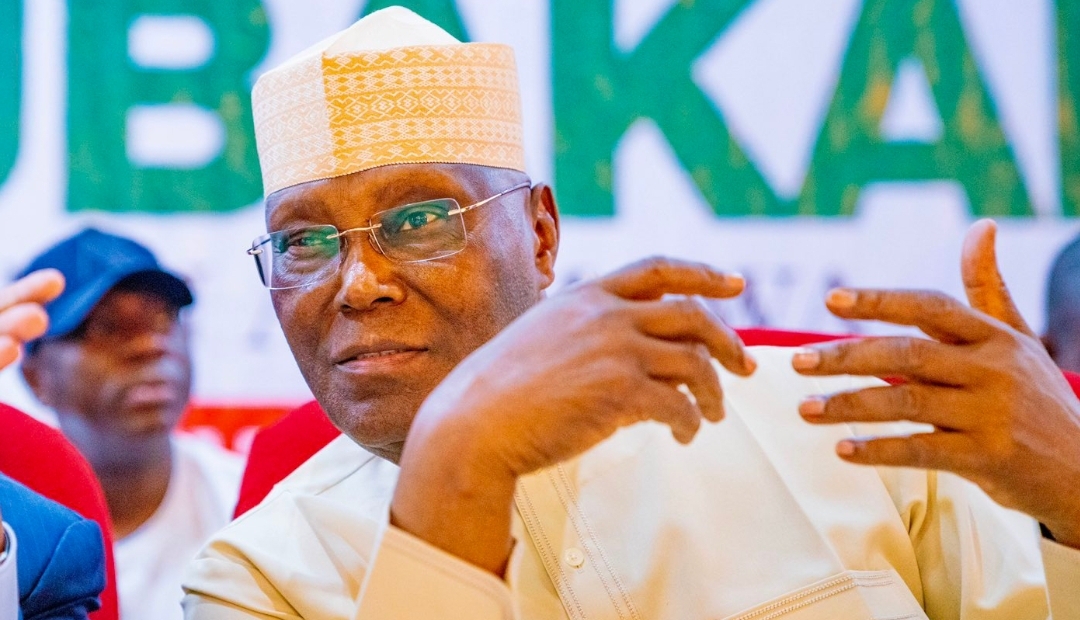
Former Vice President, Atiku Abubakar, has raised fresh concerns over Nigeria’s security situation following deadly bomb attacks in Maiduguri, warning that terrorism is making a dangerous comeback.
In a statement released on Tuesday, Atiku condemned the coordinated explosions that rocked parts of the city, describing them as a troubling sign of renewed insurgent activities.
He noted that the return of suicide bombings, once believed to have been largely defeated, poses a serious threat to national stability.
SEE MORE: ‘Insults Against Obi Only Help APC Stay in Power – Atiku
23 killed, 108 injured in Maiduguri bomb blasts
The attacks, which occurred on Monday night, targeted the Maiduguri Monday Market, a post office, and an area near the University of Maiduguri Teaching Hospital.
At least 23 people were confirmed dead, while over 100 others sustained injuries, leaving families in anguish as they search for missing loved ones.
Reacting to the development, Atiku warned that the resurgence of terrorism could erode public confidence in the government’s ability to protect its citizens.
He stressed that Nigerians are more interested in concrete results than official condemnations of attacks.
While acknowledging the sacrifices of security operatives, the former vice president urged the administration of President Bola Ahmed Tinubu to urgently review its security strategies to address the growing threats.
He also criticised the government’s handling of insecurity, alleging that more attention appears to be given to political matters than to tackling the worsening security challenges across the country.
Atiku further cautioned against politicising national security, noting that terrorism affects all Nigerians regardless of political affiliation.
He called for unity, decisive action, and a renewed commitment to safeguarding lives and property.
Meanwhile, security agencies have confirmed the incidents and launched investigations into the coordinated attacks as efforts continue to restore calm in the affected areas.

The Nigerian Content Development and Monitoring Board (NCDMB) has launched a 5-day Hands-on Oracle Primavera P6 Training in Rivers State, targeting 50 participants.
The training, being executed by Mathnebi Nig. Ltd, commenced today, March 16th and will run until Friday, March 20th.
The intensive hands-on program aims to equip participants with practical skills in project management using Oracle Primavera P6, enhancing their capabilities in the energy and construction sectors.
The NCDMB’s sponsorship of the training underscores its commitment to boosting local capacity and driving Nigeria’s economic growth through skills development.
ALSO READ: Senate Approves Abe as Chairman, NUPRC Board
The training is expected to benefit participants and contribute to the development of Nigeria’s project management landscape.
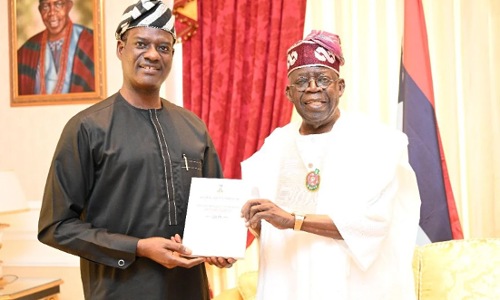
President Bola Ahmed Tinubu has sworn in Mr. Taiwo Oyedele as Nigeria’s new Minister of State for Finance at the Aso Rock Presidential Villa.
The swearing-in ceremony took place shortly after the Senate confirmed Oyedele’s nomination last Wednesday.
Oyedele, 50, from Ikaram, Akoko in Ondo State, brings over two decades of experience in fiscal policy and tax administration.
ALSO READ: SERAP Asks Tinubu To Probe N5.9bn Spent On NNPC Rebranding
He previously chaired the Presidential Committee on Fiscal Policy and Tax Reforms, which overhauled Nigeria’s tax system, introducing zero income tax for Nigerians earning N800,000 or less and exemptions for small businesses with turnovers below N50 million.
During his Senate screening, Oyedele described his appointment as “a call to serve at a critical time when Nigeria faces significant fiscal challenges and remarkable opportunities.”
He replaces Dr. Doris Uzoka-Anite, who has been redeployed to the Ministry of Budget and National Planning.
Oyedele also spent 22 years at PricewaterhouseCoopers, held executive programs at top global institutions including the London School of Economics and Harvard Kennedy School, and currently serves as a professor at Babcock University.
The minister’s appointment signals a continued focus on implementing the Tax Reform Acts, which took effect on January 1, 2026, and aim to simplify Nigeria’s tax system while boosting economic growth.






Maiduguri Blasts: Atiku Warns of Terror Resurgence, Slams Govt Response

Ex-FCT Senator Dumps PDP Over Internal Crisis
NCDMB, Renaissance Africa Train Pipeline Engineers

NLNG Inducts 103 Trainees Into Empowerment Scheme
NCDMB Sponsored Oracle Primavera P6 Training Underway In Rivers State

Senate Approves Abe as Chairman, NUPRC Board

Trump’s Family Unveils New Cryptocurrency Platform

Reps Recommend 3-year Jail Term For Aviation minister

Dangote Cement Lights Up Benue Host Communities With CSR Initiatives

Senate Denies Receiving Petitions Against Tinubu’s Ambassadorial Nominees

Tems Sets New Record On Billboard Hot 100 Chart
