
Energy
We have Over N600bn Worth Of Petrol In Store ― Dangote

. . . Zambia Seeks Dangote’s Investment In Energy Sector
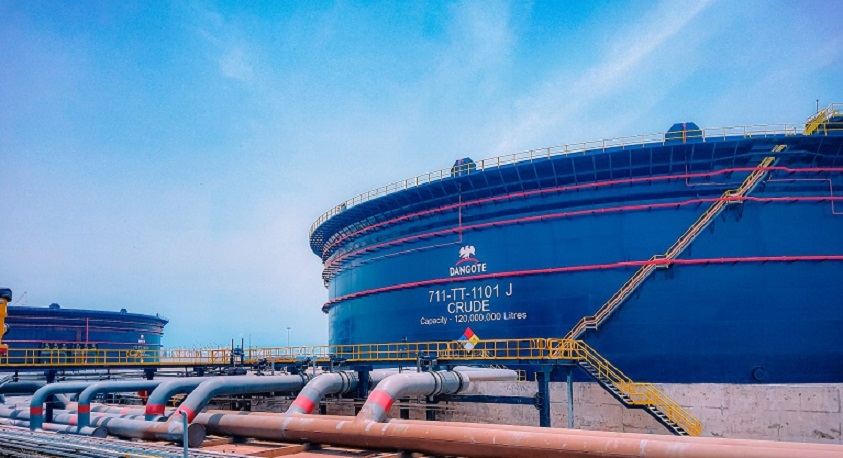
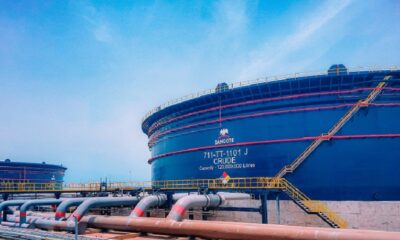
The Dangote Petroleum Refinery and Petrochemicals Limited has enough Premium Motor Spirit (PMS), otherwise known as petrol, in storage to meet the local needs of Nigeria.
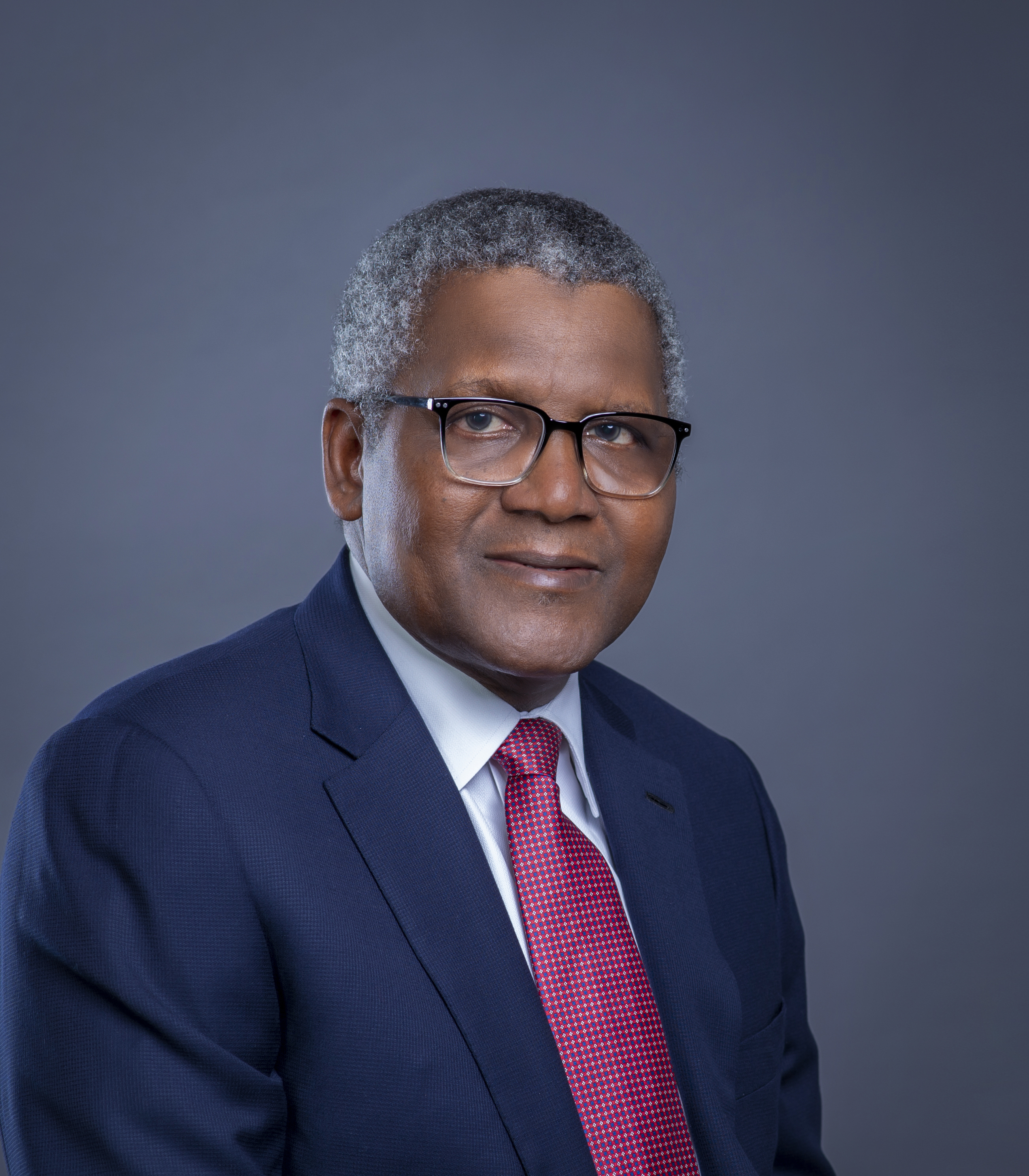
President of Dangote Industries Limited (DIL), Aliko Dangote made the disclosure in a statement over the weekend.
According to him, the Dangote Refinery has “more than half a billion litres of petroleum and over 600 billion Naira worth of products in its tanks.
Dangote stressed that, “…as we speak, right now we have more than half a billion litres. The Refinery is producing enough refined products, like gasoline, diesel, and kerosene, to meet 100 percent of Nigeria’s requirements.”
ALSO READ: Shell Calls For Collaboration For Development Of Nigerian Economy
After a tour of the Refinery complex by a Zambia Government delegation, led by the country’s Minister of Energy, Makozo Chikote, Dangote stated that the refinery project, like other projects in the past, is not for Nigeria alone.
“This refinery is not only for Nigeria; it is for Africa. We must sustain the African Continental Free Trade Area (AfCFTA) deal. We are trying to see how we trade with other African countries,” he pointed out.
The Zambian Minister of Energy said his takeaway from the Dangote Refinery working visit was that the President, Aliko Dangote, is truly focused on the bigger picture for Africa.
Chikote, who led a delegation of energy experts to the Dangote Petroleum Refinery to partner Zambia on energy solutions, expressed satisfaction and readiness to work with the African manufacturing giant.
After a tour of the Dangote complex at the Free Trade Zone, Ibeju Lekki, starting from the Single Point Mooring to the Dangote Jetty, the biggest fertiliser plant in Africa and the 650,000bpd largest single-train refinery in the world, the Minister enthused that the presentation by the Vice President, Oil and Gas of Dangote Industries Limited, Edwin Devakumar, made their hearts “jump”.
He stated that the presentation speaks to the challenges of his country, Zambia.
The energy minister added, “In Zambia, we created an environment for the private sector to participate in the growth and development of our country. Currently, 100 percent of our petroleum is done by the private sector.
“We are targeting increased productivity in mining, agriculture, and other sectors. Your presentation is an immediate solution to our energy needs. We are trying to promote competition among our private players.
“We are looking at Dangote coming on board, which would lead to efficient, reliable, quality, and competitive products, and we want these done like yesterday.
“Coming to the Dangote Petroleum Refinery, we have learned so many advantages of bringing many players for competition, which has improved the lives of the citizens.”
According to him, “From what we have seen, we need to promote trade within Africa to promote each other. We need these countries together to make Africa efficient, and a reliable trade hub.
“We have seen here that we can learn from what Dangote has done, and this would lead Africa and Africans to stand on their feet and not depend on overseas support in terms of trade. I believe going forward that people have learned a few lessons. The one lesson I have learned from this visit is that Dangote looks at the bigger picture for Africa.”
Another member of the Zambia delegation, Samuel Maimbo, the Vice President of Budget, Performance Review, and Strategic Planning at the World Bank Group, presently campaigning for the presidency of the African Development Bank (AfDB), explained that there is not enough development aid to develop Africa.
“There is also not enough government funding to develop Africa. The only way we can finance Africa’s growth at a pace and scale that solves our problem is by working through the private sector, which is why we are here today, to learn and to see what an ambitious programme looks like,” he stated.
He added that it is only the private sector that can help develop the continent of Africa.
On his part, Devakumar stated that the Refinery produces the best quality products as its core business strategy.
“The project concept was to process the crude from Nigeria and add value. But we also wanted to provide some flexibility to process most of the African crudes and some of the Middle Eastern crudes,” Devakumar said.
He added “In another concept, what we did was maximum value extraction. That is a process where every barrel of crude which goes in, the value addition should be the best.”
According to Devakumar, “the Refinery can meet all our requirements. 44 per cent can meet the entire requirements of Nigeria, and 56 per cent of the production would be exported. Every day, we produce lighter products of 104 million litres; 57 million litres of petrol every day; 20 million litres of jet fuel; and 27 million litres of diesel production.
“The local consumption is just around 46 million litres, and the remaining 58 million litres will be exported daily,” he added.








Oil output from the United Arab Emirates (UAE) rose to record levels in September, underscoring its resilience even amidst the Middle East crises and liberation from OPEC+ limits.
The International Energy Agency (IEA) issued the data in its monthly report, adding that Abu Dhabi raised total oil production, including condensates, by 400,000 bpd to 5.3 MMbpd.
According to the IEA, the UAE bolstered crude output to more than 4.4 MMbpd, nearing its maximum capacity, which surpasses the previous highs for total oil in August, and crude oil in June.
READ ALSO: Africa’s Energy Security Conversations Pull Industry Executives Together
The UAE has been one of the most successful among regional producers in restoring flows through the Strait of Hormuz, by drawing on a fleet of tankers to discreetly shuttle cargoes through the chokepoint and then transfer them onto other vessels. In addition, the country’s decision to leave the Organization of the Petroleum Exporting Countries (OPEC) as of May has freed it from the group’s output caps, a source of frustration for years.
Its gains contributed to a wider recovery in flows from Gulf producers, which reached more than 75% of pre-war levels in September, led by Saudi Arabia, according to the Paris-based IEA.
Still, it’s unclear how far the regional rebound has withstood a new wave of Iranian attacks on tankers transiting Hormuz, and escalating hostilities carried out by the Houthi rebel faction in Yemen.
The UAE depleted its observable above-ground inventories at a record pace of more than 270,000 bpd in September, drawing them to an all-time low, according to the IEA.
Africa’s gas potential and strengthening the continent’s energy security would take centre stage at the Africa Interviews Sustainability Forum (AISF 2026) scheduled for Wednesday, October 21, in Lagos.
Biztellers reports that top officials of Oando Plc and Renaissance Africa Energy Company Limited, Ayotola Jagun and Tony Attah, respectively, will be leading other industry leaders in the discussion.
Jagun, Oando’s Executive Director, Chief Corporate Services and Sustainability Officer, and Attah, Managing Director and Chief Executive Officer of Renaissance Africa Energy Company Limited, will participate in a panel discussion alongside Lamé Verre of Lean In Equity & Sustainability (LiNES) and Dapo Filani, Managing Director and Chief Executive Officer of Waltersmith.
The panel will examine Africa’s energy security and the role of natural gas in the continent’s energy transition.
READ ALSO: 30 Nigerians Bag Postgraduate Scholarship from NNPC Ltd, Eni
The forum, launched in 2024, is holding its third edition under the theme, “Energy Security and Africa’s Energy Transition: Defining the Role of Gas.”
This year’s gathering will explore how African countries can strengthen energy security, attract investment in gas development and balance growing energy demand with sustainability objectives.
Verre, a London-based energy and sustainability executive, is Co-founder and Chair of the Advisory Board of LiNES. She will bring her international experience in sustainability, decarbonisation and low-carbon development to the discussion. Her work spans low-carbon initiatives across sectors, including marine, the built environment, forestry, land and agriculture.
Jagun brings extensive experience in corporate governance, regulatory compliance, enterprise risk management and sustainability. Her contribution will provide a corporate sustainability and governance perspective on the relationship between energy development, environmental responsibility and Africa’s transition priorities.
Attah, a former Managing Director and Chief Executive Officer of Nigeria LNG Limited, has extensive experience in the oil and gas industry, particularly in natural gas development and major energy operations.
Filani leads Waltersmith, an indigenous Nigerian energy company with interests across the oil and gas value chain. His participation will highlight the role of indigenous energy companies in strengthening domestic energy capacity and supporting economic development.
The panel will consider what is required to unlock greater investment in Africa’s gas sector, how natural gas can support industrial growth while advancing sustainability, and what practical measures could help translate the continent’s energy ambitions into tangible outcomes.
Beyond the panel discussion, AISF 2026 will provide opportunities for engagement among senior energy executives, policymakers, investors and business leaders.
Oil prices on Monday went south, after crude exports from the Middle East rose above pre-war levels, while the Group of Seven nations pledged to release 100 million barrels of crude and diesel from emergency reserves.
Brent crude futures fell by $1.20, or 1.17 percent, to $101.05 a barrel, while West Texas Intermediate crude declined by $1.16, or 1.27 percent, to $89.95 per barrel, according to Reuters.
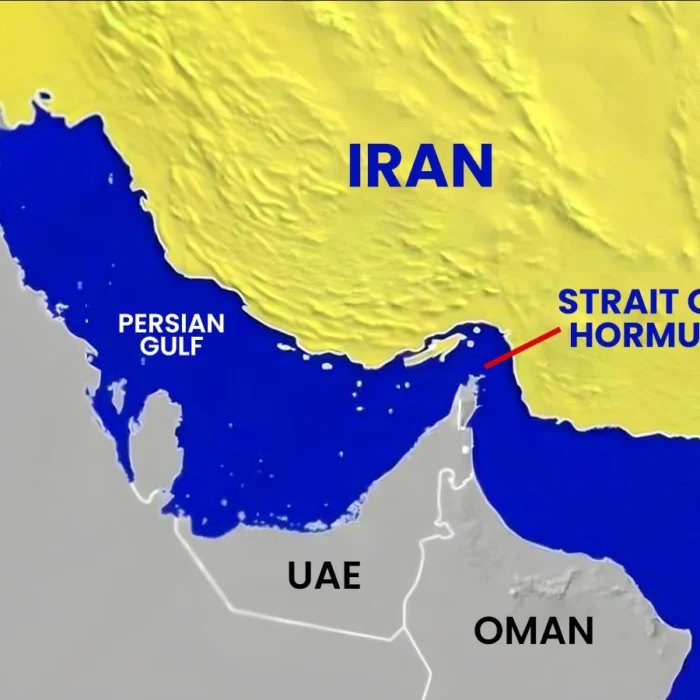
Middle Eastern crude exports exceeded pre-war levels on four of the seven days in the final week of September, shipping data showed, despite attacks on vessels passing through the strategic Strait of Hormuz.
The increase in exports, combined with the G7’s planned release of emergency stocks, helped put downward pressure on crude prices.
The G7 countries agreed on Friday to release 100 million barrels of diesel and crude from emergency reserves and pledged to refrain from energy export restrictions following pressure from United States President Donald Trump.
READ ALSO: Ndindi Nyoro Gives Ruto 14 Days to Disclose Dangote Refinery Deal
However, the scale of the additional supply remained uncertain.
IEA Executive Director, Fatih Birol, said last week that member countries had already released about two-thirds of the 400-million-barrel volume.
Meanwhile, supply concerns remained elevated as fighting continued across parts of the Middle East.
Saudi Aramco Chief Executive Officer, Amin Nasser, also warned that crude oil and refined fuel supplies were expected to remain stretched.
He said rebuilding global stockpiles after emergency withdrawals could take two years.
The United States Strategic Petroleum Reserve fell to 283 million barrels last week, its lowest level since October 1982, according to data from the US Department of Energy.
The supply outlook was further complicated by the continuing conflict involving Saudi Arabia and Iran-backed Houthi forces in Yemen.
Yemeni government forces attacked Houthi positions in the Dhubab district overlooking the Bab el-Mandeb Strait on Monday, according to two military sources.
The development came a day after the internationally recognised government launched a campaign to retake Houthi-held territory.
Meanwhile, OPEC+ postponed a review that would determine its 2027 oil output quotas after the war involving Iran disrupted projects aimed at expanding production capacity across the Middle East.






‘The Entire North Has Made Up Its Mind for Tinubu’ — APC Chieftain

‘Tinubu Has Procured Proxies’ — Sam Amadi on President’s 2027 Campaign Strategy

Tesla Aims for 2028 Commercial Production of Flying Car

Corruption Trials: EFCC, NJI Push Specialised Judges, Digital Evidence Reforms

‘It Is Morally Wrong’ — PDP Chieftain Questions North’s Bid for Another Eight Years

2027 Election: ‘Your Future Is More Valuable’ — IGP Warn Youths Against Political Violence

Trump’s Family Unveils New Cryptocurrency Platform

Senate Denies Receiving Petitions Against Tinubu’s Ambassadorial Nominees

Dangote Cement Lights Up Benue Host Communities With CSR Initiatives

Reps Recommend 3-year Jail Term For Aviation minister

Tems Sets New Record On Billboard Hot 100 Chart

7l0yr4
9oiala
51js7f
Excellent post. I was checking continuously this blog and I am impressed! Extremely helpful info particularly the last part 🙂 I care for such information much. I was seeking this certain information for a long time. Thank you and best of luck.
amei este site. Pra saber mais detalhes acesse nosso site e descubra mais. Todas as informações contidas são conteúdos relevantes e exclusivos. Tudo que você precisa saber está ta lá.
I’m commenting to let you be aware of what a really good experience my cousin’s daughter encountered studying yuor web blog. She mastered so many things, which included what it is like to have an awesome coaching character to have most people without hassle know just exactly some complex subject matter. You truly exceeded visitors’ desires. Many thanks for offering the warm and friendly, dependable, educational and also fun tips about the topic to Sandra.
I am glad to be one of many visitors on this great site (:, thankyou for posting.
I know this if off topic but I’m looking into starting my own blog and was curious what all is needed to get setup? I’m assuming having a blog like yours would cost a pretty penny? I’m not very web smart so I’m not 100 sure. Any suggestions or advice would be greatly appreciated. Thanks
I like this blog very much, Its a real nice spot to read and receive information.
Rattling nice pattern and superb subject matter, nothing at all else we want : D.
Thanks , I have recently been searching for information about this topic for ages and yours is the best I have discovered so far. But, what about the bottom line? Are you sure about the source?
I have to show some appreciation to this writer just for bailing me out of this condition. As a result of looking throughout the the web and seeing opinions which are not productive, I assumed my entire life was gone. Living minus the approaches to the problems you’ve sorted out by means of your guideline is a critical case, as well as those that could have badly affected my entire career if I had not noticed your web blog. Your actual expertise and kindness in taking care of every aspect was very useful. I don’t know what I would have done if I had not encountered such a thing like this. I can also at this point relish my future. Thank you very much for the reliable and result oriented guide. I won’t be reluctant to endorse your web blog to any person who needs guide on this subject.
Nice weblog here! Additionally your website rather a lot up very fast! What host are you the usage of? Can I am getting your affiliate link to your host? I wish my site loaded up as fast as yours lol
Would you be all in favour of exchanging links?
I am glad to be a visitor of this perfect site! , thankyou for this rare info ! .
Very nice article and straight to the point. I don’t know if this is actually the best place to ask but do you people have any ideea where to get some professional writers? Thanks 🙂
Its like you read my mind! You appear to know so much about this, like you wrote the book in it or something. I think that you can do with some pics to drive the message home a bit, but other than that, this is excellent blog. A great read. I’ll certainly be back.
I was curious if you ever considered changing the structure of your site? Its very well written; I love what youve got to say. But maybe you could a little more in the way of content so people could connect with it better. Youve got an awful lot of text for only having one or two images. Maybe you could space it out better?