
Business
10 Profitable Business Ideas You Can Start With Just One Million Naira


Starting a business can be a challenging but rewarding experience, especially when you have limited capital.
With just one million naira, there are several business opportunities you can pursue in Nigeria that have the potential to yield high returns.
Here are ten business ideas to consider.
POULTRY FARMING
Poultry farming is a lucrative business in Nigeria. With one million naira, you can start a small-scale poultry farm and grow it over time. You can focus on egg production or meat production or both.
FISH FARMING
Fish farming is another profitable venture you can start with one million naira. You can set up a fish pond and start with a few hundred fingerlings. With proper management, you can grow your fish farm and become a major supplier in your area.
RESTAURANT BUSINESS
If you have a passion for cooking and hospitality, you can start a restaurant business with one million naira. You can either rent a space or set up a food truck and offer delicious meals to your customers.
CLOTHING STORE
With one million naira, you can open a small clothing store and sell trendy outfits for men, women, and children. You can either buy ready-made clothes or partner with local designers to create unique pieces.
ONLINE RETAIL STORE
You can start an online store with one million naira and sell products to customers all over Nigeria. You can choose a niche like fashion, beauty, or electronics and partner with local suppliers to source your products.
SNAIL FARMING
Snail farming is a relatively new industry in Nigeria but has great potential for profitability. You can start small and grow your farm over time.
BARBING SALON
If you have a talent for hair styling, you can start a barbing salon with one million naira. You can offer haircuts, shaves, and other grooming services to your customers.
DAYCARE CENTER
There is always a demand for quality daycare services in Nigeria. With one million naira, you can start a daycare center and offer a safe and nurturing environment for children while their parents are at work.
EVENT PLANNING
If you have a creative mind and love organizing events, you can start an event planning business with one million naira. You can plan weddings, birthday parties, corporate events, and more.
CAR WASH BUSINESS
With one million naira, you can start a car wash business and offer professional cleaning services to car owners. You can partner with local car dealerships and offer bulk cleaning services.
Starting a business in Nigeria with one million naira is possible. With the right mindset, dedication, and hard work, you can grow your business and become a successful entrepreneur.
Choose a business idea that aligns with your passion and interests, and don’t be afraid to take calculated risks.


Guinness Nigeria Plc is focused on sustaining growth through wider product availability, commercial expansion and disciplined pricing.
Managing Director and Chief Executive Officer, Guinness Nigeria, Girish Sharma made the disclosure in an interview with CNBC Africa, in which he outlined the priorities expected to shape the company’s performance in the coming quarters.
According to Sharma, the company would keep focusing on making its products more accessible to consumers while strengthening its presence across markets and distribution channels.
“The strategy has always been growing by being available at more places, having our beer, having our products cold in a lot of places and ensuring that we are playing at the right price points,” he said.
READ ALSO: Osun Tackles Sanitation with Adhoc Road Sweepers
Sharma explained that the company’s approach was centred on expanding its reach rather than relying on price increases to drive growth.
He said Guinness Nigeria had increased the number of locations and cities in which its products were available, alongside growth in its distributor network.
He maintained that the company’s commercial expansion is part of a longer-term plan that will continue over the next three to five years.
“In terms of number of touch points where we’re available to the Guinness Nigeria products, number of cities where we’re available today, number of distributors that we have that distribute our products today, on every single count we have grown multi-fold,” Sharma said.
He described the expansion as a significant undertaking for the business, noting that the effort began with his first 100-day plan and remains a key part of the company’s direction.
Sharma also pointed to operational discipline and improvements made over the past year as important foundations for the business. He said earlier decisions to address the balance sheet, adjust pricing and make fundamental corrections were now supporting the company’s growth trajectory.
He added that teams across operations and procurement were working to keep price increases to a minimum while increasing output, while a more stable currency environment had also been helpful.
Looking ahead, Sharma said the company would focus on maintaining consistency rather than promising a particular growth rate for the next quarter.
“I’m not here to stand and say that we’re going to do better than the third quarter, but what I see is we will be consistent in terms of delivering healthy results,” he said. “Consistency is the word.”
He also highlighted the importance of the final quarter of the year to the beverage industry, citing increased consumer activity around the festive season. Guinness Nigeria, he said, had strategic partnerships planned across the period, with some extending into the first quarter of the following year.
Sharma said the company’s broader ambition was to build a stronger business capable of funding its growth, rewarding shareholders and sustaining performance over time.
“The business is sturdy, business is strong, business is good, and I’m confident that we will continue to grow sustainably,” he said.
His comments underline Guinness Nigeria’s focus on extending its market reach, strengthening execution and building consistency as it pursues its longer-term growth ambitions.
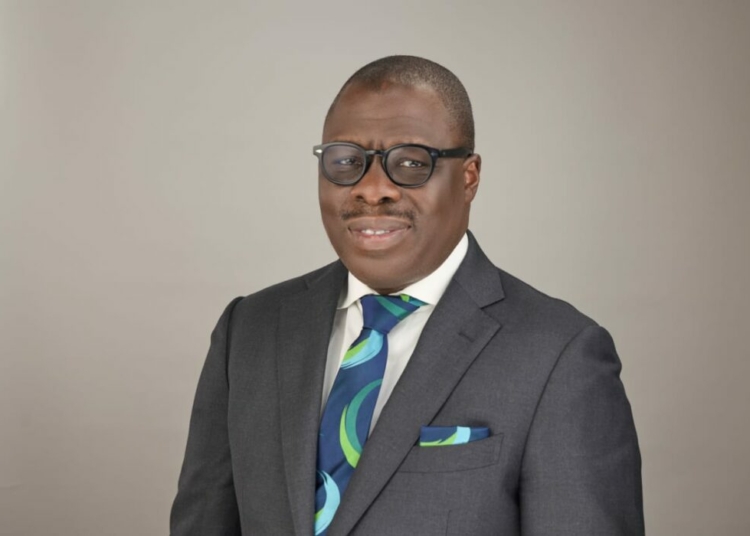
Nigeria must be surefooted to attract the right investment to harness her full potential in the oil and gas industry.
At the 32nd Nigerian Economic Summit (NES) during a panel session titled, “Unlocking Nigeria’s Oil Potential: The Push for More Oil”, in Abuja, the Managing Director and Chief Executive Officer of NLNG, Adeleye Falade, decried the lack of certainties in the investment environment in Nigeria’s oil industry.
He traced Nigeria’s inability to attract sufficient financing for major oil and gas projects to uncertainties over investment terms, project execution and guaranteed markets for output.
According to Falade, investors and lenders must be confident that contractual agreements will be honoured, projects will deliver as planned and buyers will be available to purchase production before committing billions of dollars to capital-intensive energy developments.
READ ALSO: OTL Africa Urges ECOWAS to Adopt Regional Standardisation
He cited the financing of NLNG’s Train 7 expansion as evidence that investment certainty, a proven delivery record and credible commercial agreements could unlock substantial funding, even under challenging global economic conditions.
Falade explained that projects requiring huge upfront capital and 20 to 30 years to recover investments depend on confidence that the terms underpinning them will remain stable throughout their lifespan.
According to him, lenders assess not just the quality of an oil or gas resource but also the durability of the investment framework, the predictability of future earnings and the capacity of project sponsors to meet their obligations.
Falade pointed to the $3 billion in external financing secured from 31 local and international financial institutions for Train 7 in 2020, at the height of the COVID-19 pandemic, as proof of the importance of a credible investment proposition.
The project is being financed through a combination of internally generated cash flows and external funding, underpinned by NLNG’s record of developing six operating trains and repaying the loans used to finance their construction.
He said that track record gave lenders tangible evidence of the company’s capacity to execute complex projects and honour financial commitments, reducing the uncertainty that often discourages investment in capital-intensive developments.
He noted that each successful expansion strengthened NLNG’s credibility and positioned it to secure subsequent financing on more competitive terms.
He identified three fundamental questions that lenders seek answers to before financing major energy projects: “Who buys the product? Who carries the risk? Who stands behind the project?”
For NLNG, he said, long-term sales and purchase agreements, some spanning 20 years, provide the commercial foundation required to secure funding before a final investment decision is taken.

A call has gone to West African countries to adopt uniform fuel specifications, strengthen testing capacity, address infrastructure gaps and improve enforcement systems to facilitate more effective regional petroleum trade.
This formed the bulk of the submission of petroleum regulators at a panel session during the 20th OTL Africa Downstream Energy Week that ended in Lagos.
It is the considered opinion of the regulators that inconsistencies in standards across the region remain a huge disservice to fair competition. Therefore, they expressed a common view that putting in place an acceptable standard will ensure a harmonised fuel quality, improve infrastructure and stronger regulatory coordination which will facilitate cross-border trade and reduce market barriers across the region.
Speaking at the session themed: “Regulatory Convergence in African Oil and Gas Markets,” the Authority Chief Executive (ACE), Nigerian Midstream and Downstream Petroleum Regulatory Authority (NMDPRA), Rabiu Umar, argued that differences in fuel specifications across countries made it difficult to compare products and ensure fair competition.
READ ALSO: NUPRC Resorts to Technology to Reduce Emissions by 60%
For instance, he explained that the disparity between diesel specifications of 50 parts per million (ppm) and 1,500 ppm, presents a complication in efforts to harmonise standards across the region.
To this end, the ACE said the sub regional countries needed common product specifications and coordinated production rules to facilitate trade and promote competition.
Umar also advocated the establishment of a West African reference price for petroleum products, saying regional markets needed to strengthen trade among African producers.
On his part, the Chief Executive Officer of Ghana’s National Petroleum Authority (NPA), Godwin Tameklo, said that inadequate infrastructure was a major constraint to regional petroleum trade.
According to him, countries needed to address infrastructure gaps, regulatory differences and market constraints to improve the cross-border movement of petroleum products.
For instance, he disclosed that Ghana’s port and storage facilities could not always accommodate volumes delivered by larger vessels, forcing operators to consider smaller shipments or alternative arrangements.
Tameklo also stressed the need for clear implementation timelines to ensure that regional harmonisation initiatives translated into practical results.
In a similar vein, the Director of Water, Petroleum and Electricity at The Gambia’s Public Utilities Regulatory Authority (PURA), Musa Njie, highlighted the importance of laboratory facilities in testing petroleum product quality.
Njie identified the absence of a laboratory for petroleum product testing as one of the challenges facing The Gambia, and stressed the need to strengthen national quality assurance systems.
He said that harmonisation efforts should protect public health and the environment while improving market efficiency.
Njie also called for stronger coordination between regional frameworks and national regulatory institutions to ensure effective implementation of agreed standards.






‘I’ve Been a Threat to Gov’t Since Age 20’ – Sowore

Guinness Nigeria CEO Shares Sustainable Growth Strategy

Tinubu Sends Six NMDPRA Executive Director Nominees to Senate, Retains Three

Osun Tackles Sanitation with Adhoc Road Sweepers

NLNG: Nigeria’s Oil Ambitions Require Investor Guarantees
OTL Africa Urges ECOWAS to Adopt Regional Standardisation

Trump’s Family Unveils New Cryptocurrency Platform

Senate Denies Receiving Petitions Against Tinubu’s Ambassadorial Nominees

Dangote Cement Lights Up Benue Host Communities With CSR Initiatives

Reps Recommend 3-year Jail Term For Aviation minister

Tems Sets New Record On Billboard Hot 100 Chart