
Politics
2023: APC Presidential Candidate to Emerge Through Indirect Primary


By Edozie Obasi-Eze
The All Progressives Congress (APC) has resolved to pick its presidential candidate for the 2023 elections through an indirect primary election.
The party made the resolution at its ongoing 11th National Executive Committee (NEC) meeting at the Transcorp Hotel in Abuja.
Reliable sources at the meeting revealed that President Muhammadu Buhari and other leaders of the APC had ceded their powers to the National Working Committee (NWC) of the party, for a period of 90 days, to enable the NWC to make far-reaching decisions.
Read Also >> Zamfara State PDP Receives High Profile Defectors From APC
Notable among those who have indicated an interest in contesting the nomination for the Presidential candidature of the APC are Vice President, Yemi Osinbajo, former Lagos governor, Bola Ahmed Tinubu; Minister of Transportation, Rotimi Amaechi; Ebonyi State Governor, Dave Umahi; Minister of Labour and Employment, Chris Ngige and Governor Yahaya Bello of Kogi State.
Some other politicians said to be nurturing the ambition of joining the race include, Ekiti State Governor and Chairman of the Nigerian Governors’ Forum, Kayode Fayemi and the Governor of the Central Bank of Nigeria, Godwin Emefiele.







President Bola Ahmed Tinubu’s decades-long political alliances with northern leaders have come under focus following the October 24 APC presidential campaign rally in Kaduna, with his Special Adviser on Media and Public Communications, Sunday Dare, highlighting the relationships as a key part of the president’s political history.
Dare made the observation in a commentary published on his X account on Sunday, November 1, 2026, while reflecting on the political significance of the All Progressives Congress (APC) presidential campaign rally held in Kaduna on October 24.
SEE ALSO: ‘Calling Tinubu Bola, Giving Him Orders Is Insolence’ — Sunday Dare Blasts Atiku
In the article titled “Kaduna: A Redoubtable President Tinubu and the Northwest Political Narrative,” Dare argued that Tinubu’s political strength rests on decades of relationship-building, political organisation, support for candidates and alliances across competing constituencies.
He said the Kaduna rally had ended, but its political significance extended beyond the dismantling of the campaign stage, describing the city as an important setting for renewing political relationships and presenting Tinubu’s case to voters in the Northwest.
According to Dare, Tinubu’s political influence goes beyond the authority of the presidency, noting that before entering Aso Rock, he had spent decades cultivating relationships, organising political structures, supporting candidates and building alliances across different constituencies.
“His durability reflects that patient investment in people and organization, as well as his willingness to remain engaged through difficult contests,” Dare wrote.
He described Kaduna as a particularly significant location for the campaign because of its historical position as the former capital of the Northern Region.
Dare noted that Kaduna’s institutions helped shape the personnel, priorities and political traditions of a region whose participation remains important in the formation of national governments.
He argued that campaigning in Kaduna meant entering a political conversation that spans generations, involving public administration, regional aspirations, political organisation and Nigeria’s continuing efforts to govern its diversity.
The presidential aide also invoked the historical legacies of Sir Ahmadu Bello, Sir Kashim Ibrahim, Alhaji Balarabe Musa and Dr Yusufu Bala Usman in discussing the political significance of Kaduna.
He said Bello and Kashim Ibrahim represented traditions of regional government, institution-building and public service, while Balarabe Musa’s legacy evoked populist reform, accountability and concern for ordinary citizens.
Dare described Bala Usman as representing an uncompromising demand that political power be critically examined and judged by its consequences for the people.
According to him, their historical contributions should provide a standard for assessing contemporary leadership, particularly in areas such as functioning schools, effective administration, productive communities and broader opportunities.
“Their memory gives a contemporary rally its proper standard. It asks what leadership builds, whom it prepares for opportunity, how it accepts accountability, and what it leaves behind,” he stated.
Dare further explained that Kaduna’s historical importance also accounts for its relevance to presidential electioneering, noting that electoral victories require relationships across regions, religions, communities and competing interests.
He said the city connects regional political history with national ambitions, providing an opportunity for candidates to address both immediate electoral demands and broader questions about national unity and governance.
The presidential aide also highlighted remarks by Vice President Kashim Shettima at the Kaduna rally, where he recalled Tinubu’s support for northern presidential candidates across successive election cycles.
According to Dare, Shettima cited Tinubu’s support for Atiku Abubakar in 2007, Nuhu Ribadu in 2011, and Muhammadu Buhari in the 2015 and 2019 presidential elections.
Dare said the recollection formed part of the campaign’s central argument that Tinubu’s relationships with northern political figures reflected years of familiarity, partnership and reciprocity.
Dare also praised Kaduna State Governor, Senator Uba Sani, for his address at the campaign rally, particularly his presentation of the Tinubu administration’s achievements.
He said the governor delivered a powerful account of the administration’s record in less than four years, adding that his presentation, which included anecdotes, attracted applause from the audience.
Dare further noted that Uba Sani drew on his experience as an advocate during his days of political struggle to declare that the North had decided to support Tinubu.
“The opponents will not even try to outmatch Uba Sani,” he wrote.
Yari Rallies Northern Support for Tinubu
The presidential aide also commended the Director-General of the Presidential Campaign, Senator Abdulaziz Yari, for his presentation at the Kaduna rally.
Dare described Yari as having become an encyclopedia of the Tinubu administration’s achievements, saying he was unstoppable in presenting the government’s record and rallying northern support for the president.
He added that Yari’s decision to switch to the Hausa language generated an enthusiastic response from the crowd.
“By the time he switched to Hausa language the crowd roared in unison,” Dare stated.
Politics
Atiku Raises Alarm Over Attacks on Sowore, ADC Governorship Candidate, Accuses APC of Intimidation

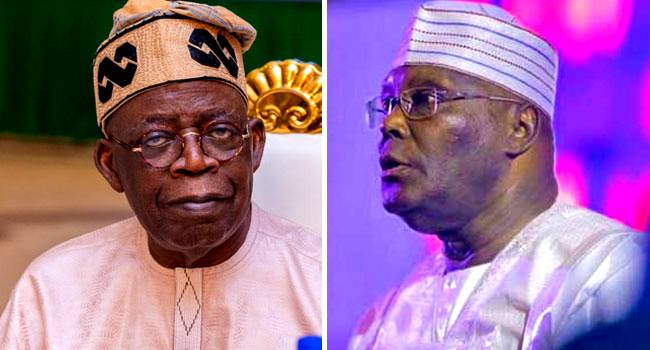
Former Vice-President Atiku Abubakar has condemned the reported simultaneous attacks on African Action Congress (AAC) presidential candidate, Omoyele Sowore, and the African Democratic Congress (ADC) governorship candidate in Sokoto State, Manir Muhammad Dan’iya, describing the incidents as “deeply troubling and unacceptable.”
Atiku accused the ruling All Progressives Congress (APC) administration of using intimidation and violence against opposition leaders and their supporters, alleging that the incidents exposed the government’s determination to suppress political opposition.
ALSO READ: ₦2.3tn Kaduna Rally Claim: APC Accuses Atiku, ADC of Fake News Plot
In a statement, the former Vice-President expressed concern that the attacks reportedly occurred while President Bola Tinubu was away on a spiritual pilgrimage.
He alleged that “political enforcers and thugs loyal to his party are unleashing terror on his political opponents at home.”
“These two realities cannot coexist in a democracy,” Atiku declared, referring to the President’s absence and the reported attacks on opposition figures.
He further warned that the continued attacks on opposition members and the alleged disappearance of critical social media influencers were signs of a dangerous political development.
“The continued attacks on opposition figures and the unexplained disappearance of critical social media influencers are clear red flags of a dangerous slide toward a censored state where the opposition is crushed by the brute force of the current government,” he said.
Atiku described the incidents as unbecoming of a democratic government, adding that they “starkly reveal the desperation of the Tinubu administration.”
He called for immediate and transparent investigations into both attacks, insisting that the government must refrain from any attempt to silence opposition voices.
The former Vice-President also demanded that the Tinubu administration guarantee a free, fair and competitive electoral process ahead of the forthcoming general elections.
Raising additional concerns about the situation in Sokoto State, Atiku alleged that a local security outfit had been harassing ADC supporters and physically assaulting citizens simply for wearing the party’s merchandise.
He said the reported harassment further highlighted the challenges facing opposition parties and their supporters.
“We shall resist every ongoing attempt to cancel political opposition in Nigeria,” Atiku declared.
He also accused the ruling APC of failing in its mandate, insisting that Nigerians must be allowed to freely participate in an electoral contest that would determine the country’s political future.
“Nigerians must be allowed to freely participate in an electoral contest that will determine the fate of this administration,” he added.
The African Democratic Congress (ADC) has accused President Bola Tinubu of using the Federal Government’s proposed N50,000 monthly cash relief programme to win back public support ahead of the 2027 general elections.
The opposition party described the intervention as an election gimmick, alleging that its timing was driven by the Tinubu administration’s reaction to growing public dissatisfaction and the ADC’s campaign promise to reduce the cost of living.
In a press statement issued on Saturday, October 31, and signed by its National Publicity Secretary, Mallam Bolaji Abdullahi, the party questioned the government’s motive for announcing the financial intervention after years of economic hardship.
The ADC alleged that the announcement followed its decision to make affordability and reducing the cost of living central issues in its political campaign ahead of the 2027 elections.
SEE MORE: ₦2.3tn Kaduna Rally Claim: APC Accuses Atiku, ADC of Fake News Plot
“President Tinubu is in full panic mode now. Since the ADC and our Presidential Candidate, Atiku Abubakar, have made affordability and reducing the cost of living the cardinal focus of our campaign, the government has been announcing one desperate intervention or another,” Abdullahi said.
The party recalled previous government announcements, including a $1 billion Renewed Hope Social Intervention Fund, a 30-day fuel discount, cheaper transportation arrangements scheduled for October 1 and a N70,000 transportation allowance for workers.
According to the ADC, several of the announced interventions had failed to produce the promised results, describing the latest N50,000 cash relief announcement as another attempt by the government to gain public approval.
“They are just thrashing around, hoping that something would stick,” the statement added.
The opposition party also questioned the purchasing power of the proposed N50,000 payment, arguing that the amount would offer limited relief to households struggling with rising food, transportation and healthcare costs.
“What exactly is N50,000 supposed to buy in Tinubu’s Nigeria today? How much food can a family purchase with that amount? How much transport can it cover? And for how long?” the party asked.
It further described the intervention as “a desperate and cynical attempt to buy back the goodwill of the people,” adding that the proposed payment was “too little, too late.”
The ADC accused the Tinubu administration of failing to adequately address the economic consequences of its reforms, arguing that the government had ignored warnings about the hardship the policies could impose on Nigerians.
The party questioned why financial assistance for vulnerable Nigerians was not incorporated into the government’s economic reform plans from the beginning.
“If they could give N50,000 to vulnerable Nigerians, why didn’t they factor it into reform plans from day one rather than make it an election-season handout?” the statement queried.
The party further alleged that the government’s handling of previous intervention programmes raised concerns about accountability and the possibility of public funds being diverted.
It cited findings by the Auditor-General concerning billions of naira allocated to previous cash transfer programmes, which it said could not be properly accounted for.
The ADC demanded explanations over the findings and questioned whether officials responsible for the management of the previous intervention funds had been held accountable.
“What has happened to the findings of the Auditor-General concerning the billions of naira in previous cash transfers that could not be properly accounted for? Have those responsible been held accountable?” the party asked.
The opposition party also challenged the government to explain why Nigerians should trust another intervention programme involving billions of naira when questions surrounding previous funds remained unresolved.






Ekiti Attack: Sowore Tracks Stolen Phones Near Governor’s Office, Demands CCTV Footage

NAF Tests 816 Recruits’ Combat Readiness in Kaduna Bush Camp Exercise
‘Tinubu Built Northern Alliances Long Before Presidency’ – Sunday Dare

Ekiti Attack: Sowore Demands CCTV Release, Questions Gov’t Ties to Gang Leader

Nigeria Gets More 1,000 5G Sites, Courtesy Airtel

INEC Chairman Assures on 2027 Elections

Trump’s Family Unveils New Cryptocurrency Platform

Senate Denies Receiving Petitions Against Tinubu’s Ambassadorial Nominees

Dangote Cement Lights Up Benue Host Communities With CSR Initiatives

Reps Recommend 3-year Jail Term For Aviation minister

Tems Sets New Record On Billboard Hot 100 Chart
