
NEWS
2024 Budget Way Too Small, Says Budget Office

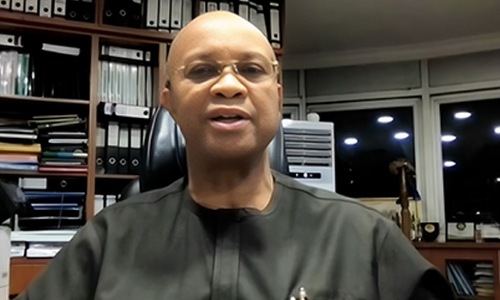
Ben Akabueze, the Director-General of the Budget Office of the Federation, has emphasized that the N27.5 trillion 2024 budget awaiting approval in the National Assembly is way too small to address Nigeria’s needs.
He acknowledged the necessity for the government to make do with the available resources.
Akabueze made this statement during an appearance on Channels Television’s Politics Today program on Wednesday.
He said “I’m always first to acknowledge that the budget of the Federal Government of Nigeria is way too small relative to our needs and our requirements but it is now a case of cutting out coat according to our cloth rather than our size.
“The reason this budget is this small is because out public revenues are also too small. We also need to keep the focus on that.
Akabueze addressed the economic outlook of President Bola Tinubu’s administration for 2024.
He reiterated that despite the criticisms surrounding the 2024 budget estimates, the bill ensures allocations for healthcare, security, education, and the economy aimed at assisting the less privileged.
Recall that the President presented the inaugural budget estimates of N27.5 trillion for 2024 to the National Assembly on November 29, 2023.
Outlined in the budget breakdown: recurrent non-debt expenditure at N9.92 trillion, capital expenditure at N8.73 trillion, debt service at N8.25 trillion, revenue at N18.32 trillion, new borrowings at N7.83 trillion, and a deficit of N9.18 trillion.
The President anticipated a 3.76% economic growth and projected inflation to decrease to 21.4% in 2024.




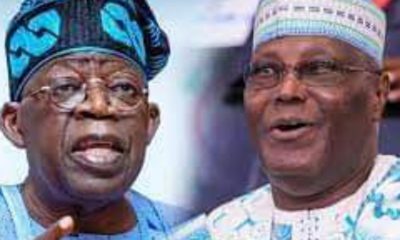



In response to the recent security alerts, the Osun State Government has approved the establishment of a Joint Security Taskforce to strengthen security response and alert to threats to lives and properties in the state.
According to a government house statement on Thursday, to ensure smooth take off of the JTF, the state government declared its readiness to provide all necessary logistics that will strengthen the protection of lives and property of the people throughout Osun State .
The decision was adopted at the State Security Council (SSC) meeting convened yesterday by Governor Ademola Adeleke and presided over by the Deputy Governor, Prince Kola Adewusi with the new Commissioner of Police personally in attendance alongside other security top brass.
READ ALSO: NCDMB Book Reading Features Nwabuikwu
The Deputy Governor while opening the meeting conveyed the best wishes of the state Governor to the service commanders and lauded their steadfastness during recent security challenges and tasked them not to relent in the face of fresh security threats.
Accompanied by the Attorney General of the state, Hon Wole Jimi-Bada; the Head of Service, Elder Ayanleye Aina; and the Governor’s Special Adviser on Security, Mr Samuel Ojo, the Deputy Governor told the commanders that the governor is committed to further empowering the security agencies to secure the state while calling on the traditional rulers to sustain their local security oversight.
The Council during its deliberations also used the opportunity of the meeting which lasted several hours to further allay the fears of the residents on their security and protection, noting that Osun state remains safe and secured.
The Council further tasks residents to be extra vigilant particularly in churches, mosques and schools, tasking stakeholders to put extra security measures around their premises.
While assuring the public of their safety, the Council further requested timely intelligence sharing to security agencies by members of the public to forestall attacks by suspected terrorists and bandits.
The Nigeria Police in conjunction with other security agencies were also directed to be on a 24 hour red alert to curtail the threats of the said bandits and terrorists.
At the meeting, an agreement was also reached between the Ministry of Justice, the Nigeria Police, and the DSS, to collaborate with a view to ensuring that all the suspects are properly investigated and prosecuted accordingly without delay.
The meeting ended with a commendation of the new Commissioner of Police, Mr Ibrahim Zungura for instituting policing reforms since his assumption of office and for attending the security meeting in person.

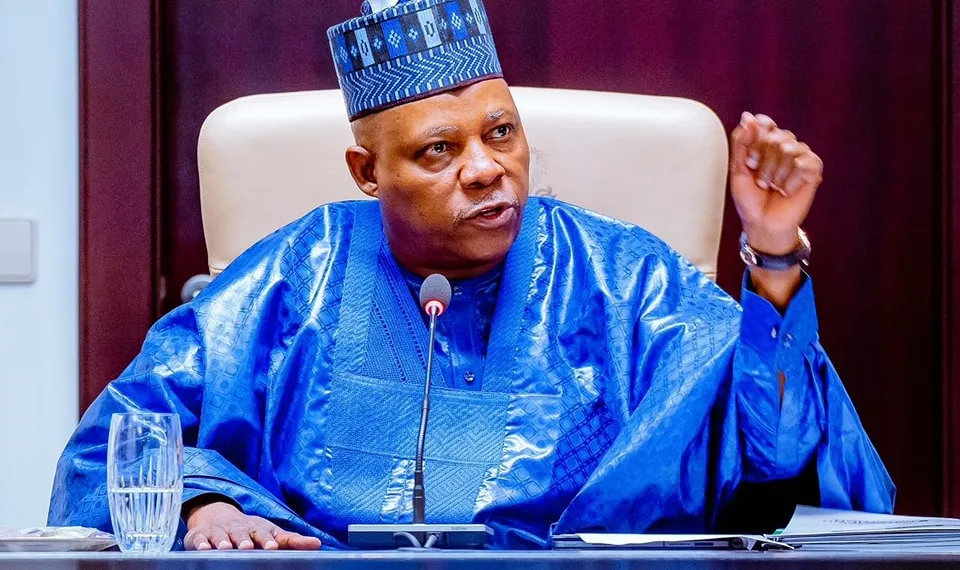
Vice President Kashim Shettima has arrived in Yola, Adamawa State, to lead a Federal Government delegation on a condolence visit to the family of the late elder statesman, Alhaji Bamanga Muhammad Tukur.
Shettima’s visit is at the instance of President Bola Ahmed Tinubu, following the death of the former Governor of the old Gongola State and former National Chairman of the Peoples Democratic Party (PDP).
The Vice President was received in Yola by Adamawa State Governor, Ahmadu Umaru Fintiri, alongside members of the state executive council.
Tukur, who died on September 12, 2026, was a prominent businessman, politician and elder statesman whose career in public service and business spanned several decades.
SEE MORE: 2027: PDP Drops Fresh Revelation on Wike’s Support for Tinubu
He served as Governor of the defunct Gongola State and later became National Chairman of the PDP. He was also recognised for his contributions to Nigeria’s political development and Africa’s business community.
The presidential delegation accompanying Shettima includes the APC Deputy National Chairman (North), Hon. Ali Bukar Dalori; former Minister of Transportation, Senator Sa’idu Ahmed Alkali; Deputy Chief of Staff to the President (Office of the Vice President), Senator Ibrahim Hassan Hadejia; and Senior Special Assistant to the President on National Assembly Matters (Senate), Senator Abdullahi Abubakar Gumel.
Others on the delegation are Hon. Abdulrazaq Sa’ad Namdas; Sarkin Gabas Adamawa, Dr Mahmood Halilu Ahmed (Modi); and APC National Vice Chairman (North-East), Comrade Mustapha Salihu, among others.
The condolence visit comes as political leaders, government officials and other Nigerians continue to mourn the death of the former governor and PDP national chairman.
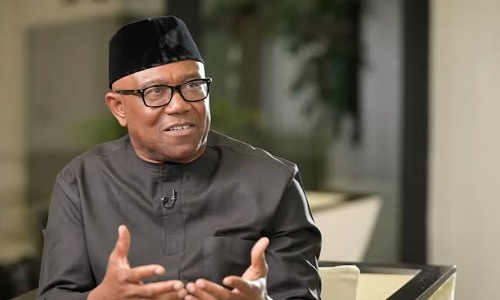
Peter Obi has condemned the reported killing of some Nigerians abducted in Borgu, Niger State, saying the country must never normalise the killing of its citizens.
Obi made this known in a statement released via X on Wednesday, where he described the reports emerging from Borgu as increasingly difficult to comprehend and deeply painful.
He recalled that on August 27, he had expressed his anguish over the reported abduction of about 600 Nigerians, including women, children and elderly people, alongside the killing of others.
ALSO SEE: ‘You Should Not Have to Leave Nigeria to Succeed’ – Peter Obi Tells Nigerian Youth
According to him, his anguish has deepened following continuing reports of the gruesome killing of some of those abducted, while many others remain unaccounted for.
Obi also referred to another disturbing incident in which a bandit group reportedly beheaded a Nigerian and sent his severed head to a community leader over a ₦50 million levy.
“If the reported killing was intended to increase pressure on the community and extract more money for those still being held, then we must recognise the terrible reality before us: human life is being deliberately turned into a bargaining instrument,” he said.
The former Anambra State governor said one person being killed to terrorise an entire community while others are kept alive as hostages for more ransom amounts to the systematic devaluation of human life.
“These are not statistics. They are Nigerians. They are mothers, fathers, children, brothers, sisters and elderly people,” Obi said.
He questioned how long the country would continue to accept the kidnapping of hundreds of citizens, killings, criminal levies, displacement and ransom payments as unavoidable features of Nigerian life.
Obi said insecurity also affects families, farms, businesses, education and public confidence in government.
He called for intelligence-led operations, stronger community security, rapid response, better coordination and equipment for security forces, effective border protection and sustained action against criminal networks.
“The primary responsibility of government is the security and welfare of its citizens,” he said.
“While politicians prepare for elections, Nigerians are asking for something more fundamental: the right to live.”
Obi urged the government to match prayers with action, insisting that no criminal group should determine who lives or dies anywhere in Nigeria.
“Every Nigerian life matters. Every victim deserves justice. Every community deserves protection. Nigeria must restore security, justice, and the dignity of human life,” he added





Terror Threats: Osun Establishes Joint Security Task Force

Shettima Arrives Yola to Condole With Bamanga Tukur’s Family

Middle East Crises Pump Fuel Prices Upwards with Attacks on Iran, Saudi Arabia

NCDMB Book Reading Features Nwabuikwu

Gas Industry Must Commercialise Methane – NLNG

2027: South Should Complete 8 Years Before North Takes Over — Shehu Sani

Trump’s Family Unveils New Cryptocurrency Platform

Senate Denies Receiving Petitions Against Tinubu’s Ambassadorial Nominees

Dangote Cement Lights Up Benue Host Communities With CSR Initiatives

Reps Recommend 3-year Jail Term For Aviation minister

Tems Sets New Record On Billboard Hot 100 Chart