
Politics
2027: Kwankwasiyya Movement Fires Warning Shot Over Attacks on Kwankwaso

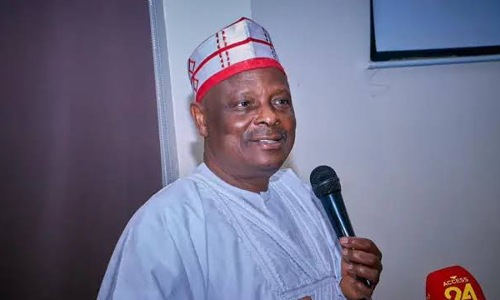
The Kwankwasiyya Movement has issued a strong warning against what it described as growing political attacks on its leader, former Kano State Governor, Rabiu Musa Kwankwaso, ahead of the 2027 general elections.
The group, in a statement released on Friday by its spokesperson, Habibu Sale Mohammed, accused some political commentators of deliberately targeting Kwankwaso with what it called misleading narratives aimed at undermining his political influence.
SEE ALSO: Political Alignments: Tinubu Woos Kwakwanso in France
According to the movement, the recent wave of criticism appears to be linked to discussions around possible political cooperation between Kwankwaso and Labour Party presidential candidate, Peter Obi, under the proposed Nigeria Democratic Congress (NDC).
The group said the idea of a broader political alliance has generated nationwide interest and support, as many Nigerians see it as a potential pathway to national unity and democratic progress.
However, it expressed concern that certain individuals and interests are uncomfortable with the emerging political alignment, which they believe could reshape Nigeria’s political structure.
“What appears to be troubling certain interests is not merely the possibility of political cooperation, but the enormous national potential such an alliance represents,” the statement said.
The Kwankwasiyya Movement further argued that a partnership between Kwankwaso and Obi could bridge Nigeria’s long-standing regional and political divisions by combining strong grassroots support in the North with widespread youth backing in the South.
It described the development as a rare opportunity in Nigeria’s political history, where leaders with independent support bases could collaborate across regional lines for national interest.
“For the first time in recent political history, Nigerians are witnessing the realistic possibility of a broad-based political understanding capable of bridging the long-standing regional divide,” the group stated.
The movement also criticised what it called double standards in how political figures are judged, alleging that similar political engagements by other actors are often praised while Kwankwaso’s are framed negatively.
It maintained that coalition-building is a normal part of democratic politics and should not be misrepresented as a threat.
Reaffirming Kwankwaso’s relevance in Nigerian politics, the group said his influence is built on years of grassroots engagement and public trust rather than federal power or elite backing.
The statement urged political actors and commentators to act responsibly and avoid inflammatory rhetoric, especially at a time when Nigeria is facing economic and security challenges.






The All Progressives Congress (APC) Presidential Campaign Council has accused former Vice President Atiku Abubakar and the African Democratic Congress (ADC) of allegedly plotting to discredit the party’s presidential campaign flag-off in Kaduna through the circulation of fake news, fabricated documents and manipulated videos.
The council alleged that the plan involved the use of artificial intelligence (AI), deepfake videos and counterfeit documents to mislead the public and damage the reputations of President Bola Tinubu, Kaduna State Governor Uba Sani and other APC leaders.
In a press statement issued on Saturday, October 24, 2026, the council’s spokesperson, Dele Alake, said the alleged disinformation campaign had been underway in the 24 hours preceding the rally.
ALSO READ: ‘Nigeria Is Doomed Under Tinubu’ — Kenneth Okonkwo Backs Atiku for 2027
Alake claimed that one of the alleged attempts involved the circulation of a photograph showing a security vehicle on routine patrol near an APC campaign billboard in Kaduna metropolis.
According to him, the photograph was misrepresented to suggest that security personnel had been deployed specifically to protect APC campaign billboards.
The council alleged that a national newspaper subsequently published a report based on the photograph, which Atiku then shared on his official social media accounts.
The statement described the sequence of events as a coordinated attempt to generate attention and undermine the APC campaign.
APC Rejects Alleged ₦2.3tn Kaduna Rally Expenditure
The APC council also raised concerns over a purported letter circulating online, allegedly written by Governor Uba Sani and addressed to the Director-General of the APC Presidential Campaign Council, Senator Abdulaziz Yari.
The alleged letter claimed that the Kaduna State Government had released ₦2.3 trillion to host the APC rally.
Rejecting the claim, Alake questioned how a state government could spend such an amount on a political rally, arguing that the figure exceeded Kaduna State’s combined budgets for 2024, 2025 and 2026.
According to the statement, Kaduna State’s budgets stood at ₦458.271 billion in 2024, ₦790.439 billion in 2025 and ₦985.9 billion in 2026.
“The combined Kaduna State budgets for 2024 (₦458.271 billion), 2025 (₦790.439 billion), and 2026 (₦985.9 billion) are still less than ₦2.3 trillion,” the statement said.
Alake described the purported letter as fabricated and questioned the credibility of the allegation concerning the state’s expenditure on the rally.
APC Warns of Alleged Deepfake Videos
The council further alleged that the photograph and purported letter were only part of a broader plan to discredit the campaign.
It claimed that old, doctored and deepfake videos would be circulated as the rally progressed to create the impression that residents were dissatisfied with the APC and its leaders.
The council said the alleged tactics were intended to manipulate public opinion through mainstream media and social media platforms.
“We hereby use this opportunity to alert the general public about this malicious and ignoble plan,” Alake said.
He urged Nigerians to exercise caution when encountering information about the rally, particularly photographs, official-looking documents and videos circulating online.
APC Criticises Atiku, ADC
The APC Presidential Campaign Council also criticised Atiku and the ADC, alleging that they were prepared to employ various tactics in their efforts to gain political power.
In the statement, the council described the ADC as Atiku’s “special-purpose vehicle” and questioned the opposition’s approach to the political contest.
It further alleged that the former vice president and his political associates would resort to what it described as desperate measures to undermine the ruling party.
The council concluded by urging Nigerians to remain vigilant and reject what it characterised as a coordinated disinformation campaign.
“We urge Nigerians to be vigilant and reject their machinations,” Alake said.
The African Democratic Congress (ADC) has challenged President Bola Tinubu’s administration to account for the ₦10 billion reportedly earmarked for Ebola emergency preparedness, demanding explanations over claims that the funds remain untouched despite a confirmed Ebola case in Abuja.
The party also questioned the government’s response to the reported case, calling for the publication of financial records and a detailed timeline of the emergency response.
In a press statement issued on Friday, October 23, 2026, Phrank Shaibu, Director of Strategic Communication of the ADC Presidential Campaign Council, criticised the All Progressives Congress (APC) for focusing on defending Tinubu against criticism by former Vice President Atiku Abubakar rather than addressing questions about the emergency fund.
ALSO READ: Why Ebola Outbreaks Keep Returning to Africa, Dr Jean Kaseya Explains
The statement recalled that the Presidency announced on June 9 that Tinubu had ordered the immediate release of ₦10 billion for Ebola emergency preparedness.
However, the ADC said the APC had subsequently described the fund as “untouched”, raising questions about whether the money was released and why it had not been utilised.
“Was the money released or was it not? If it was released, where is it held, who controls it, and why has it not been used for the preparedness President Tinubu announced?” the statement asked.
The party called on the government to publish the release documents, account records and expenditure reports of the task force responsible for the emergency response.
It maintained that the administration should provide documentary evidence to clarify the status of the funds.
ADC Questions Ebola Response Timeline
The ADC also questioned the timeline of the government’s response to the reported Ebola case, seeking clarification on when the disease was first suspected and when public health authorities were alerted.
Citing the World Health Organization’s account, the statement said the patient developed symptoms on October 7, sought treatment at a private health facility on October 11, and received laboratory confirmation on October 20.
Shaibu asked the government to explain when Ebola was first suspected, when testing was ordered, when public health authorities were notified and when contact tracing began.
The party also challenged the APC’s claim that surveillance systems alerted the government to the case, demanding details of the agency responsible and the actions taken following the alert.
“The APC claims surveillance ‘tipped off’ the government. Then publish the timeline. Name the agency that raised the alert, give the date and explain the action taken,” the statement said.
The ADC further noted that the 44 identified contacts mentioned in the response required adequate health protection and monitoring.
Party Calls for Protection of Health Workers
The opposition party emphasised the need to provide health workers involved in treating the patient and tracing contacts with adequate protective equipment and resources.
It said demands for accountability over the government’s preparedness should not be interpreted as criticism of the health workers carrying out their duties.
“Health workers treating the patient and tracing contacts deserve protection, equipment and every resource needed to act quickly,” the statement said.
The party also urged the Tinubu administration to ensure that public health measures were not used to interfere with political campaigns or voting.
It called for the publication of any proposed restrictions, their medical justification and the advice of relevant health authorities.
According to the ADC, public health guidelines should prioritise the protection of citizens and should not become political instruments.
ADC Demands Accountability Over ₦10bn Fund
The ADC maintained that the government and the APC owed Nigerians an explanation over the apparent contradiction between the Presidency’s June announcement and the subsequent claim that the funds remained untouched.
It urged the administration to provide records showing whether the money was released, where it was held and how it had been managed.
“President Tinubu ordered ₦10 billion released in June. His party now says it is untouched. That contradiction came from the Presidency and the APC. They should resolve it with records,” the statement said.
The party concluded by demanding transparency over the emergency fund, a clear account of the government’s response timeline and adequate protection for health workers and identified contacts.
“Show Nigerians where the money is. Explain the response timeline. Protect health workers. Trace every contact,” Shaibu said.
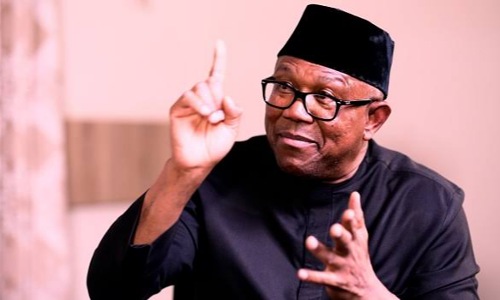
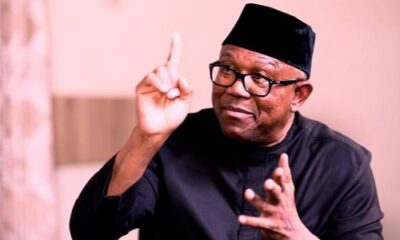
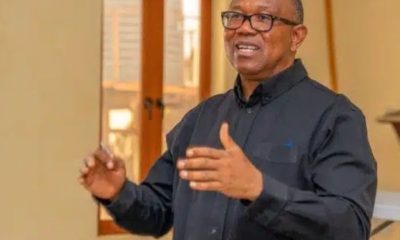
The presidential candidate of the Nigeria Democratic Congress (NDC), Peter Obi, has called for collective efforts to rebuild Nigeria, tackle corruption and end bad leadership, saying the country must work for everyone rather than a privileged few.
Obi made the call on in a statement titled “Rebuilding Nigeria” following his arrival in London from Basel, Switzerland, at 7 a.m. on Wednesday, October 21, 2026.
He disclosed that his busy schedule included several engagements and meetings with stakeholders in the United Kingdom, including British government officials and members of the Nigerian diaspora.
SEE ALSO: Peter Obi Slams Tinubu Over ₦7.7tn Debt Interest Against ₦6.2tn Revenue
According to him, he rounded off the day with an evening meeting organised by the COPDEM Chief and the NDC Director of Diaspora Affairs, which brought together other stakeholders in London.
Obi said the discussions centred on the collective responsibility of Nigerians to free the country from bad leadership, corruption and a lack of accountability, which he identified as challenges undermining national development.
He noted that these challenges had deprived millions of Nigerians of access to basic necessities, including quality healthcare, education and decent employment.
The former Anambra State governor stressed that Nigerians deserved a country where every life mattered, hard work was rewarded and citizens had a fair opportunity to succeed regardless of their backgrounds or connections.
“We must build a Nigeria where the child of nobody can become somebody without knowing anybody. A country that works for everyone, not just a privileged few,” he said.
Obi expressed optimism about the country’s future, declaring that “A New Nigeria is POssible.”





Fears of Fresh US Strikes on Iran Fuels Crude Price Surge

Navy Uncovers 132,000 Litres of Stolen Crude Oil in Bonny

Delta Police Arrest School Bus Driver Over Alleged Kidnap, Rape of 14-Year-Old Student

₦2.3tn Kaduna Rally Claim: APC Accuses Atiku, ADC of Fake News Plot

Dangote Identifies Power, Financing as Possible Keys to Africa’s Industrial Revolution

Dangote Calls for Stronger Protection of Local Industries, Unveils Pan-African Energy Distribution Network

Trump’s Family Unveils New Cryptocurrency Platform

Senate Denies Receiving Petitions Against Tinubu’s Ambassadorial Nominees

Dangote Cement Lights Up Benue Host Communities With CSR Initiatives

Reps Recommend 3-year Jail Term For Aviation minister

Tems Sets New Record On Billboard Hot 100 Chart
