
Business
60 Bank Chiefs Risk Jail Over N17bn Anchor Borrowers Debt

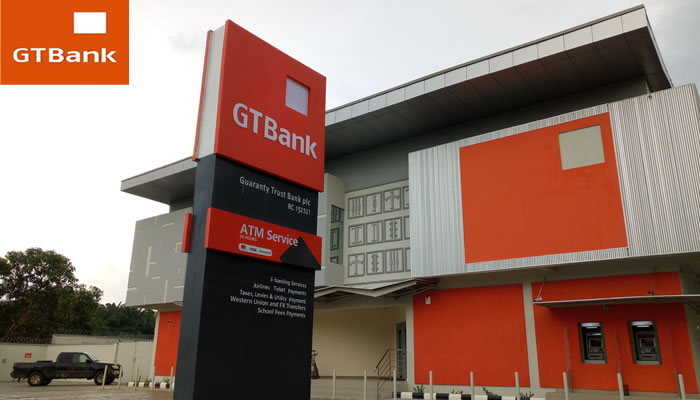
Failure to comply with court order to honour obligations in excess of N17 billion has seen the Guaranty Trust Bank (GTBank) and the Afex Commodity Exchange (Afex) insist that over 60 top executives of 13 commercial banks must be committed to jail.
The debt, it was gathered was from the Anchor Borrowers Programme loan, while the executives range from chairmen, chief executive officers, directors, and company secretaries, spanning through 13 banks.
They are facing contempt proceedings for allegedly failing to implement a No-Debit-Order reportedly placed on the accounts of Afex Commodity Exchange with the banks.
In suit no FHC/L/CS/911/2024 involving Guaranty Trust Bank Limited and AFEX Commodities Exchange Limited, the Federal High Court, Lagos division presided by Justice CJ Aneke signed an order for the bank chairmen, MDs, directors, company secretaries and the liquidator of Heritage Bank (Nigeria Deposit Insurance Corporation) to be committed to jail for failing to obey its May 27, 2024 ruling.
This detailed in a legal notice titled ‘Order to serve notice of disobedience to order of court vide newspaper publication’ published in some national dailies on Thursday, partly read, “An order granting leave to the Plaintiff Applicant to serve Form 48 (Notice of Consequences of Disobedience to Order of Court) dated 11th June, 2024 and all other forms and processes that may be issued in this contempt proceedings inclusive of Form 49 on the 1st-60st parties cited for contempt.
The matter was adjourned to next Thursday.
The parties cited for contempt include Access Bank, Citibank, Jaiz Bank, Union Bank, Fidelity Bank, First Bank of Nigeria Plc, First City Monument Bank, NDIC (liquidator for Heritage Bank), Polaris Bank, Stanbic IBTC Bank, Standard Chartered Bank, Taj Bank, United Bank for Africa and Zenith Bank alongside its principal officers.
According to the ruling of the court, 20 banks were directed to transfer monies standing to the credit of the respondent into the AFEX’s account with GTB until the N17.81bn is repaid.
The court ruling dated May 27, 2024, shows that the N17.81bn loans comprise N15.77bn; the amount outstanding and unpaid, as of April 17, 2024, while the cost of recovery and incidental expenses in the sum of N2.04bn.
The court also granted an injunction allowing the GTBank to takeover AFEX 16 warehouses located across seven states and sell the commodities stored in them, on the premised that they were procured with the Central Bank of Nigeria’s (CBN) Anchor Borrowers’ loan facility.
Earlier in the month, the court had served contempt proceedings against AFEX and some of its principal officers including Ayodele Balogun, Jendayi Fraaser, Justin Topilow, Mobolaji Adeoye and Koonal Ghandi.
It was gathered from the court papers, that AFEX had sourced the Anchor Borrowers Programme Loan facility from GTB to provide finance for smallholder farmers registered under the CBN Anchor Borrower’s programme.
The loan was expected to be repaid from the sale of commodities. However, AFEX failed to uphold its end of the deal even after an extension.
In a statement following the interim court order, AFEX claimed that it had repaid about 90 percent of the loan facility.
“However, a portion of the loan remains outstanding with the farmers and while we have paid out a portion out of our own purse, we remain in discussions with CBN over the outstanding amounts of the said facility,” the exchange said.
It also averred that the full value of the loan was utilised to provide input to farmers in three consecutive seasons, starting in 2020.
The exchange added that it had remained consistent with repaying the loans until economic headwinds impacted the operations of the farmers that they had disbursed the money to.
“Over 800,000 hectares of farmland were financed through the course of the programme’s operationalisation; however, significant macro and policy headwinds, including the cash crunch on the back of the Naira redesign policy, severely impacted the productive capacity and market participation of the smallholder farmers in the 2022/2023 season.
“This resulted in less than 40 cent repayment from farmers on their input loan bundles, down from our 90per cent repayment rates in the previous eight years of providing input financing for farmers. The low repayment rate ultimately impacted on our ability to refund the full value of the loan at the end of Q1 2023 and following a 6-month extension period,” AFEX added.
The commodities exchange also stated that the lingering effects of the cash crunch have continued to impact farmers, who sold at below market value to get immediate cash inflows to sustain their families in the period and remain unable to pay back.
To save the situation, AFEX has called on the CBN to activate the collateral guarantee of up to 70 percent clause included in the Anchor Borrowers programme.
“Evidenced in the attached letters, our engagements with Guaranty Trust Bank Limited, a Participating Financial Institution in the program, as well as the apex bank have seen us highlight these limitations on the part of the defaulting farmers with suggestions being made to the CBN to activate the risk-sharing structure put in place for the program and release funds accordingly to sustain activities and allow for needed recovery efforts in our agriculture sector.
“In light of these engagements, we consider the recent steps by Guaranty Trust Bank Limited to be premature, coming in the midst of open conversations that are being had with all parties to find a path to resolution that does not unduly punish farmers, who have been the biggest hit by macroeconomic conditions that they had no control over,” AFEX concluded.
The CBN at the inception of the programme in 2015 said the broad objective was to create economic linkages between smallholder farmers and processors to increase agricultural output and ensure food price stability.
The Anchor Borrowers’ Programme guidelines stipulate that upon harvest, benefiting farmers are to repay their loans with produce (which must cover the loan principal and interest) to an anchor, who pays the cash equivalent to the farmer’s account.
By 2022, at least 4.8 million people had benefitted from the Anchor Borrowers Programme and the CBN in a 2023 statement said it released N1.079tn under the programme, out of which over N500bn is due for repayment.
The programme has since been discontinued by the CBN as it pivots from development financing interventions to its core duty of price and monetary stability.













Sahara Energy Geneva has highlighted the power of business collaboration to deliver lasting impact, with Mercy Ships Cargo Day celebrating more than $20 million raised over the past decade to support healthcare interventions in Africa.
More than 500 guests from over 150 shipping and trading companies gathered in Geneva recently for the 10th anniversary Gala of Mercy Ships Cargo Day, celebrating a decade of industry support for the international charity.
David Walker, Head of Chartering at Sahara Energy Geneva and Chairman of the Cargo Day Geneva Committee, joined industry leaders at the event, where he thanked the global shipping community, sponsors, media partners and Cargo Day committees in Geneva, London, Houston, Dubai and Singapore for supporting the initiative.
Cargo Day brings together charterers, shipowners, shipbrokers, and other shipping professionals who contribute through pledges, cargo commissions, and address commissions to support the work of Mercy Ships.
READ ALSO: 30 Nigerians Bag Postgraduate Scholarship from NNPC Ltd, Eni
Kola Motajo, Director, Sahara Geneva said Sahara’s involvement reflects the company’s belief in the ability of enterprise and partnerships to deliver impact beyond business.
“At Sahara, our focus is always on impact and lives transformed. Cargo Day demonstrates what is possible when businesses and individuals unite around a shared purpose. The $20 million milestone reflects the collective commitment of the global shipping community to improving healthcare in Africa. As Sahara looks Beyond XXX, we remain committed to building connections that create lasting value and possibilities for generations to come,” Motajo said.
Reflecting on Cargo Day’s growth, Walker said: “Ten years ago, we raised $300,000 and there were 70 people at the Gala. Today, we have more than 500 people coming from around the world to support such a great cause.”
Cargo Day 2025 raised more than $2.5 million, with 93 companies participating, including charterers, brokers, shipowners, and other partners.
Mercy Ships operates two hospital ships supporting patients in Africa with free life-changing surgeries, while also providing training and mentoring for local healthcare professionals. Cargo Day funding contributes to expenses associated with operating the hospital ships.
The 2026 Cargo Day campaign begins November 4 and will run through November and December, with companies participating through Mercy Cargoes, address commissions and pledges.

Up to 30 Nigerian graduates have bagged postgraduate scholarships to pursue further studies both locally and in the Diaspora.
According to the Nigerian National Petroleum Company Limited (NNPC Ltd) and Italian energy company, Eni have awarded postgraduate scholarships
The beneficiaries emerged from more than 3,000 applicants following assessments of their academic records and performances in a recently conducted computer-based test (CBT).
The awards are under the 2026/2027 Postgraduate Scholarship Scheme of Nigerian Agip Exploration Limited (NAE), an Eni subsidiary, on behalf of the NNPC-NAE Production Sharing Contract (PSC) partners.
In a statement, NAE’s Vice Chairman and Managing Director, Maurizio Pinna, said the initiative was designed to develop local talent and equip young Nigerians with skills relevant to the oil and gas industry. Pinna congratulated the beneficiaries, noting that the scholarships would enable them to pursue their academic ambitions and achieve their career goals.
According to NAE, the programme reflects its commitment to education, innovation and capacity building in Nigeria.
The company urged the beneficiaries to make good use of the opportunity by acquiring valuable knowledge and skills that would contribute to national development, particularly in the energy sector.
Ten of the awardees will undertake postgraduate studies in universities abroad, including Imperial College London, Robert Gordon University in Aberdeen, Newcastle University, the University of Aberdeen and the University of Hull in the United Kingdom.
READ ALSO: Navy Recovers 98,000 Litres of Suspected Stolen Crude in Rivers
The remaining 20 beneficiaries will study at Nigerian universities in fields including engineering, geosciences, petroleum and environmental technology, energy economics, renewable energy and energy transition.
Established in 2007, the NNPC-NAE PSC postgraduate scholarship scheme is part of the partners’ human capital development programme aimed at promoting specialised knowledge and addressing skills shortages in Nigeria’s deep offshore oil and gas operations.
NAE said 380 Nigerian graduates had benefited from the scheme since its inception, gaining knowledge and skills required by the oil and gas industry.
Beyond education, Eni, through NAE, has implemented sustainability initiatives in Nigeria covering healthcare, access to water, infrastructure and community empowerment.
Eni has operated in Nigeria since 1962 and currently has an equity production of about 55,000 barrels of oil equivalent per day. The company also holds a 10.4 per cent stake in Nigeria LNG.
NAE was incorporated in 1996 to manage Eni’s deep offshore exploration and production assets. It became the first oil and gas company in Nigeria to produce oil from the country’s deep offshore when its Abo floating production, storage and offloading (FPSO) vessel began operations in 2003.
The company has interests in nine offshore blocks in Nigeria, either as operator or co-venturer, including PML 102 and PML 103, where the Zabazaba-Etan fields are being developed.
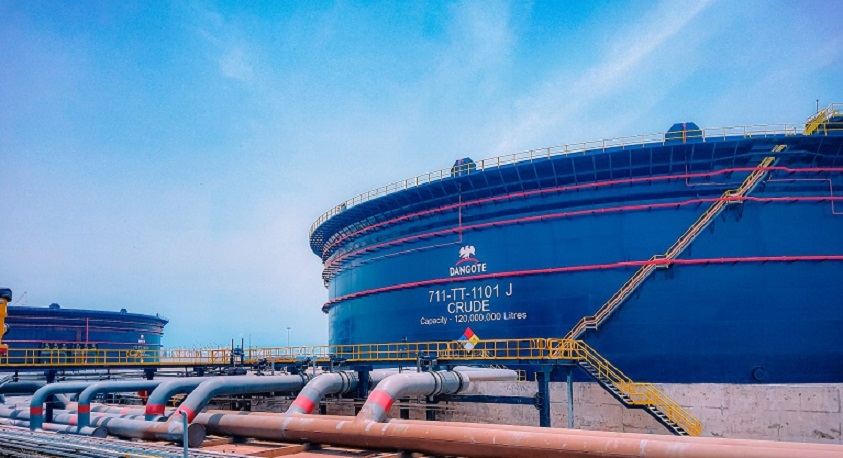
The Dangote Petroleum Refinery and Petrochemicals’ (DPRP) decision to seek leave to appeal a Federal High Court (FHC) judgment directing the Nigerian Midstream and Downstream Petroleum Regulatory Authority (NMDPRA) to continue issuing petroleum product import licences to three major oil marketers is being backed by the Energy Watchdog.
This was detailed in a statement by Martins Tayo, which considers the move as necessary to protect Nigeria’s domestic refining industry and reduce dependence on imported petroleum products.
The judgment, delivered on September 28, 2026, by Justice Inyang E. Ekwo in Suit No. FHC/ABJ/CS/1363/2026, ordered the NMDPRA to continue issuing import licences to Matrix Energy, AA Rano and AYM Shafa.
The Energy Watchdog argued that the ruling undermined the objectives of the Petroleum Industry Act (PIA) and threatened investments in domestic refining capacity.
“We completely reject and condemn in totality the judgment of the lower court. It is a deeply flawed decision that disregards the clear intent of the Petroleum Industry Act and the national interest in building a robust domestic refining industry,” the statement said.
READ ALSO: NNPC Petrol Discount: Oyedele Explains How Lower Margins Could Boost Profits
The group further cited a reported decline in petrol imports in the first quarter of 2026, alongside increased supplies from local refineries, particularly the Dangote facility, as evidence of the country’s growing domestic refining capacity.
It argued that sustaining import licences despite rising local production could undermine efforts to achieve self-sufficiency in refined petroleum products and weaken investor confidence in the sector.
According to the organisation, Dangote Refinery’s decision to seek leave to appeal as an interested party was timely, given the potential implications of the judgment for the future of Nigeria’s downstream petroleum industry.
“The lower court’s decision amounts to a judicial endorsement of continued importation irrespective of local capacity.
“We condemn it without reservation because it threatens to reverse the hard-won gains of the last few years,” Tayo stated
The Energy Watchdog maintained that the Petroleum Industry Act was designed to encourage investment in midstream and downstream infrastructure, warning that allowing the ruling to stand could send a negative signal to investors who have committed substantial resources to domestic refining projects.
The group urged the Court of Appeal to grant the DPRP leave to appeal and ultimately set aside the FHC’s order, describing the case as significant to Nigeria’s energy security and the development of its refining industry.
“Any judgment that forces the continued importation of fuel products when local refineries can supply the market is a setback for Nigeria.
“We condemn the lower court ruling in the strongest terms and fully support the appeal filed by Dangote Refinery,” the statement concluded, “The Court of Appeal must correct this error and reaffirm that the era of automatic import licences is over.”





Sahara Champions Global Shipping Collaboration for $20m Mercy Ships Healthcare Impact

30 Nigerians Bag Postgraduate Scholarship from NNPC Ltd, Eni

2027: ‘Algorithms Will Not Decide Election Results’, INEC Chairman Declares

Navy Recovers 98,000 Litres of Suspected Stolen Crude in Rivers

DPRP’s Appeal Against Fuel Import Licence Ruling Earns Stakeholder Backing

State Govs, Wike Endorse One-Party State, Join APC Campaign Council

Trump’s Family Unveils New Cryptocurrency Platform

Senate Denies Receiving Petitions Against Tinubu’s Ambassadorial Nominees

Dangote Cement Lights Up Benue Host Communities With CSR Initiatives

Reps Recommend 3-year Jail Term For Aviation minister

Tems Sets New Record On Billboard Hot 100 Chart
