
Business
African Ministers and Experts Spotlight Efforts to Incorporate Natural Wealth Accounting in Development Planning


NAIROBI – Wealth accounting and the valuation of ecosystem services are critical to Africa’s future growth, as the continent undergoes unprecedented development.
Projections point, for example, to broad-based acceleration in growth in Sub-Saharan Africa to around 5.5 per cent in 2013-2014, reflecting robust domestic demand and increased investment in export-oriented sectors as the main economic drivers, according to the IMF World Outlook 2013.
Achieving long term development and poverty alleviation in Africa relies on the sustainable and optimal management of the natural resource base.
Natural capital is a critical asset, especially for low-income countries, where it makes up around 36 per cent of total wealth, according to recent World Bank estimates.
The international conference on “Valuation and Accounting of Natural Capital for Green Economy (VANTAGE)” in Africa – taking place in Nairobi on 3 and 4 December 2013 – brings together African ministers, renowned economists, scientists and development experts to review and recommend policy action towards incorporating the valuation of natural resources and ecosystems services in development planning and accounting.
 UN Under-Secretary General and UNEP Executive Director, Achim Steiner, said, “Natural accounting and valuation is not a fringe activity, but a cornerstone of the wealth of nations upon which sustainable, equitable and prosperous societies will be built.”
“Africa stands to be a key player in the framing of a landscape of more intelligent management of the natural world – because Africa still has many of the resources that elsewhere in the world are increasingly in short supply. Sustainably managed resources can benefit and grow Africa domestically and globally while becoming a beacon of profiting from its rich and abundant nature-based assets,” said Mr. Steiner.
“The time has now come to ensure that by 2015 – when the UN’s Millennium Development Goals transcend into the Sustainable Development Goals – the global community has the strategies and the policies in place to ensure that nature is fully integrated into economies everywhere in a convincing way that leaves no margin of doubt in the minds of governments, business and wider society that a transition towards an inclusive Green Economy is not just about reforming and retooling energy infrastructure to new patterns of mobility – but is predicated on a new and fundamental relationship between economy and the ‘soft infrastructure’ of nature and its true wealth and value to us all”, he added.
As of 2005, half of Africa’s most biologically rich terrestrial areas lost more than 50 per cent of their area due to cultivation, degradation or urbanisation.
In Kenya, for example, deforestation stripped the country’s economy of an estimated US $68 million in 2010, dwarfing the economic benefits gained from industries such as forestry and logging.
According to the World Bank, Africa’s population is expected to increase by approximately 800 million people by 2040.
This projected increase will put even more pressure on the continent’s natural resources.
“This year marked the celebration of the 50th Anniversary of the Organization of African Unity predecessor to the African Union with a new vision, Africa’s ‘Agenda 2063′ which charts the continent’s trajectory to prosperity,” said Tumusiime Rhoda Peace, Commissioner of the Department of Rural Economy and Agriculture of the African Union Commission.
She added: “Natural resources are a critical asset to many African communities and nations who depend almost entirely on ecosystems for their survival and economic development. Knowing the value of our natural capital does not only contribute to the optimal use of our resources but also makes it possible to resolve trade offs across time and space. The VANTAGE initiative is exactly what we need in this continent. This will pave the path for effective and efficient use of natural capital.”
Innovative wealth indicators
Recent years have seen a growing recognition that a new system of resource valuation and accounting is urgently needed, in particular to help countries more accurately assess the wealth and wellbeing of their populations.
In May 2012, 10 African countries, along with various public and private organizations, adopted the Gaborone Declaration, which outlines a set of concrete principles and development goals that include valuing natural capital in the development planning process.
One month later, the Rio+20 Summit outcome document, The Future We Want – endorsed by more than 190 countries – called for broader measures of progress to complement conventional indices, such as GDP.
Released alongside the Rio conference, the Inclusive Wealth Report 2012 – published jointly by UNEP and the United Nations University’s International Human Dimensions Programme on Global Environmental Change (UHU-IHDP) – provided a rethink of traditional economic and development yardsticks. It introduced a new indicator, known as the Inclusive Wealth Index (IWI), which is aimed at revealing the true state of a nation’s wealth and the sustainability of its growth, beyond GDP.
For example, if measured by GDP, the economies of China, the United States, Brazil and South Africa grew by 422 percent, 37 percent, 31 percent, and 24 percent respectively between 1990 and 2008. However, when assessed by the IWI, the Chinese and Brazilian economies only increased by 45 percent and 18 percent. The United States’ grew by just 13 percent, while South Africa’s actually decreased by 1 percent.
In fact, a full 25 percent of the countries studied by the report showed a positive trend when measured by GDP per capita and by the Human Development Index (HDI) were found to have a negative IWI per capita. The primary driver of this difference in performance was those countries’ declines in natural capital.
Valuing ecosystems
Other recent studies have also explored the benefits of placing a value on critical natural resources.
A 2011 UNEP report entitled, Putting Ecosystem Management in the Vision of Africa’s Development, focuses specifically on ecosystems and ecosystem services – which include the multitude of resources and processes that are supplied by ecosystems, from the production of food and water, to the control of climate and disease, to water cycling and crop pollination.
According to the report, growth accounting without explicit valuation of ecosystem services is an incomplete analytical framework
It finds that there is an urgent need to increase national awareness of the role of ecosystem services in the development process and to work towards relevant legislation and institutional reforms.
Ecosystems serve a myriad of purposes in both the earth’s natural processes and in human life, and contribute significantly to a nation’s wealth. Without full valuation of less-tangible benefits from ecosystems, their exploitation will remain unsustainable and degradation inevitable.
Some examples of the potential economic value of ecosystems are:
• Forestry in Tanzania is officially close to 2.3 percent of GDP, however research suggests that if the wider benefits are factored in, the real contribution is over 4 percent of GDP.
• Emerging research suggests that the contribution of the value of forests to the GDP of Uganda is around US $136 million, which amounts to about 4 percent of GDP.
An estimated 486,000 work opportunities were created in South Africa in environmental rehabilitation programmes since 1995. In addition, 85,000 jobs were created through formal conservation of protected areas in game ranching and ecotourism. “Decoupling” resource consumption and economic growth
Placing a value on natural resources also demands a rethink of the traditional links between resource use and economic prosperity – separating environmental “bads” from economic “goods”.
By 2050, humanity could devour an estimated 140 billion tonnes of minerals, ores, fossil fuels and biomass per year – three times its current appetite – unless the economic growth rate is “decoupled” from the rate of natural resource consumption.
According to a UNEP report entitled, Decoupling natural resource use and environmental impacts from economic growth, technologies that have helped humanity extract ever-greater quantities of natural resources must be redirected to more efficient ways of using them.
Some improvements have been seen. Over the past century, pollution controls and other measures have reduced the environmental impacts of economic growth. And, thanks to innovations in manufacturing, product design and energy use – aided by the rising number of people living more efficient lifestyles in cities – the global economy has grown faster than resource consumption growth.
However, the report notes that those improvements have been relative. In absolute terms, total resource use grew eight-fold, from 6 billion tonnes in 1900 to 49 billion tonnes in 2000. It stresses that more remains to be done to reduce resource consumption while meeting the development needs of an equitable and sustainable society.
Deforestation in Kenya: a case study in natural resource accounting
In Kenya, recent economic valuations of the country’s forests have catalyzed a response to conserve and rehabilitate that vast natural resource.
Deforestation deprived Kenya’s economy of an estimated 5.8 billion shillings (US $68 million) in 2010, far outstripping the roughly 1.3 billion shillings injected from forestry and logging each year, according to a joint report by the Kenya Forest Service (KFS) and UNEP.
The Role and Contribution of Montane Forests and Related Ecosystem Services to the Kenyan Economy, released in 2012, points out that the contribution of forests is undervalued by some 2.5 per cent, putting the estimate of its annual contribution to GDP at around 3.6 percent.
Between 2000 and 2010, deforestation of the country’s water towers amounted to an estimated 50,000 hectares, leading to a reduced water availability of approximately 62 million cubic metres per year. This has also affected Kenya’s economy, which is vulnerable to inflation spikes during periods of drought.
In response, the Kenyan government is now working to rehabilitate the water towers, in particular the Mau Forest Complex. Between 2011 and late 2012, more than 21,000 hectares of forestland were repossessed and some 10,000 hectares were rehabilitated. A number of programmes and activities also were launched to improve the livelihoods of communities living in and adjacent to the forests.

The persistent war between the United States and Iran, and the recent attacks on Saudi Arabia’s oil infrastructure continue to mount pressure on the global crude oil market, pushing prices northwards.
While the hostilities have disrupted crude shipments, the attacks on Saudi Arabia’s oil infrastructure by Iran-backed Houthis have added a new vent to an already longsuffering global energy market.
With the escalation resulting in higher crude prices, Nigeria would see herself earning more from her crude exports, while the citizens would bear the brunt, as she imports refined products and sells at commercial rates, owing to the deregulation of the market.
Already, petrol prices have climbed to N1,500/litre in some parts of Nigeria, with Lagos being the cheapest at N1,395/litre.
Cries from businesses and households crescendoed this week when pump prices of petrol were jacked up with no hope of an imminent fall.
For consumers around the world, the consequences are already becoming visible.
Higher crude prices feed into the cost of petrol, diesel, aviation fuel, transportation and industrial production.
Diesel is particularly important because it powers trucks, generators, agricultural machinery and other equipment across many economies.
Brent crude, the international benchmark, climbed above $108 a barrel yesterday after Saudi Arabia suspended operations on its strategic East-West Pipeline following attacks in the Riyadh and Madinah regions.
The pipeline is a critical alternative route for Saudi crude, particularly at a time when shipments through the Strait of Hormuz have been severely disrupted by the conflict. Although prices eased slightly on Tuesday, after new data showed an unexpected rise in United States crude inventories, the retreat did little to remove the underlying supply concerns. Brent, which Nigeria’s crude is benchmarked on, gained more than $3 in the previous session.
According to experts, Nigeria, as a major crude oil producer, stands to receive higher export earnings when international oil prices rise, provided production and export volumes are maintained.
Higher prices could strengthen government oil revenues and foreign-exchange inflows. But the benefits, experts note, are not automatic.
READ ALSO: Gas Industry Must Commercialise Methane – NLNG
The country also imports refined petroleum products and remains exposed to international energy prices through the wider economy.
Higher crude prices can, therefore, improve government revenue while simultaneously increasing costs for businesses and households.
The impact will also depend on domestic crude production, refinery output, exchange-rate movements and the volume of oil Nigeria actually exports.
Reuters reported that Saudi Arabia had been rerouting roughly four million barrels per day through the pipeline, equivalent to about four per cent of global oil supply. The closure therefore immediately raised concerns among traders about how much crude could continue reaching international markets if the disruption persists.
The crisis has also affected Saudi Arabia’s Yanbu export hub.
Oil loadings at Yanbu were suspended following the attack, while Saudi Arabia reduced shipments to Europe. The development sent physical crude prices sharply higher as refiners competed for alternative supplies.
That is where the current oil crisis differs from an ordinary price rally.
The market is not reacting to one isolated disruption. Several important links in the global oil supply chain are being threatened at the same time.
The Strait of Hormuz, one of the world’s most important oil chokepoints, has experienced a dramatic reduction in traffic since the war began.
Before the conflict, more than 20 million barrels of oil and petroleum products passed through the strait each day, representing more than one-fifth of global oil consumption.
With shipping through the waterway heavily disrupted, Saudi Arabia had increasingly turned to its East-West Pipeline as a way of keeping exports moving.
That alternative has now been hit.
The Red Sea route is also under pressure. Iran-aligned Houthi forces in Yemen have intensified attacks around the Red Sea and the Bab el-Mandeb, another strategic maritime passage connecting the Red Sea to the Gulf of Aden.
The result is a complicated squeeze on global energy supplies: the traditional route through the Strait of Hormuz is severely disrupted, while an important Saudi alternative through the Red Sea is also facing attacks.
The longer this situation continues, the greater the pressure on oil inventories and alternative suppliers.
The International Energy Agency has previously warned that prolonged disruption to Middle Eastern supplies could create a significant global shortfall. The present crisis has, therefore, raised questions about how long strategic stockpiles and alternative routes can cushion the market.
For countries that import large quantities of petroleum products, a prolonged period of crude prices above $100 could therefore translate into renewed inflationary pressure.
For the global economy, the biggest danger is not simply that Brent has crossed $100.
It is that a prolonged conflict could remove more barrels from the market at a time when alternative supply routes are themselves becoming vulnerable.
Yesterday’s fall in crude prices following the unexpected 7.1 million-barrel increase in US crude inventories provided temporary relief. Saudi Arabia has also begun offering additional crude shipments through Oman’s Sohar port, helping to ease immediate fears of a complete supply squeeze. But the fundamental risk remains.
If attacks continue to hit Saudi infrastructure, shipping through the Strait of Hormuz remains restricted and Red Sea routes become increasingly unsafe, the world’s oil market could face a prolonged supply squeeze.
That would make the Middle East conflict not just a geopolitical crisis, but a global economic problem with the price of every barrel increasingly determined by the safety of the roads, pipelines and seas through which it must travel.

Veteran journalist and strategic communication professional, Paul Nwabuikwu, has reflected on Nigeria’s troubled history, present realities and enduring possibilities in his latest book, “The Pain and the Promise”: Insights and Fragments on Nigeria and People, Public and Personal (1990–2025).
Nwabuikwu spoke on Tuesday in Yenagoa, Bayelsa State, during the fifth edition of the Nigerian Content Development and Monitoring Board (NCDMB), Book Reading Programme, held at the Conference Centre of the Nigerian Content Tower.
In his opening remarks, the NCDMB Executive Secretary, Engr. Felix Ogbe, represented by the General Manager, Corporate Communications Division, Dr. Obinna Ezeobi, said the Book Reading Programme reflected the Board’s mandate of capacity building, creating opportunities and enhancing the intellectual capacity of Nigerians to enable them contribute to national development.
READ ALSO: Gas Industry Must Commercialise Methane – NLNG
His word: “This book reading event reflects our belief and value in reading, in learning, and in continuous exchange of ideas. Knowledge, you know, plays an important role in personal growth, in professional development, and national progress.
“Books give us the opportunity to learn from the experience of others, question familiar ideas, and engage issues from different perspectives. Over the years, and of course last year and even the year before, we have organized this book reading event to enhance meaningful conversations with authors and thought leaders.
“At the NCDMB, our mandate, is not only about oil and gas, not only about developing capacity, not only about trying to increase Nigeria being a more oil and gas industry, but also we also support businesses. We develop institutions.
“We also create opportunities for Nigerians to participate meaningfully in the energy sector. And we also enable literature. We enable thought processes. We enable people to also enhance their intellectual capacities, which is why we are organizing this book reading program.
“For this reason, our commitment to human capacity development extends beyond technical and professional skills. We must continue to encourage a culture of learning. We must read widely, think critically, and engage with ideas.
“We are proud and pleased that this initiative provides a platform to celebrate Nigerian authors and intellectuals whose work contribute to national conversation, because Nigerians we have important stories to tell.”
Nwabuikwu, while discussing the book, said his experience as a newspaper columnist had shaped his humanist approach to writing, particularly his determination to provide context and depth to issues.
He said much of the writing contained in the book was his response to events that occurred during the period covered by the publication, from 1990 to 2025.
Explaining the title, “The Pain and the Promise,” Nwabuikwu said the “pain” reflected the difficulties Nigerians encounter in their daily lives, while the “promise” represented the possibilities that still exist within the country
He said: “Everybody is a story, everything you see in this world is a story, we are all stories. So the kind of writing I do is the one that captures different types of stories. And what I try to do throughout my career is not to forget the human story.”
The event was attended by members of the Association of Nigerian Authors (ANA), Bayelsa State chapter, the Nigerian Institute of Public Relations (NIPR), and the Nigeria Union of Journalists (NUJ), alongside academics and university undergraduates.
Excerpts from topical chapters of the book were read at the event and followed by question-and-answer sessions with the author and signing of autographs by the author.
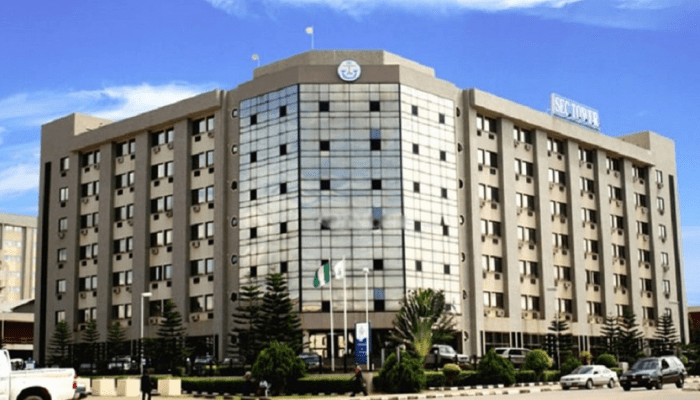
With members of the public showing much zeal to take up the equities made available by the Dangote Petroleum Refinery and Petrochemicals (DPRP), in its Initial Public Offering (IPO), financial institutions have warned against the activities of scammers.
On Tuesday, they counselled investors against disclosing sensitive banking information to parties claiming to facilitate the purchase of the refinery’s shares.
This is coming after the IPO drew about N1.5 trillion in subscriptions within the first 6 hours of trade on the floor of the Nigerian Exchange Limited (NGX), signaling extraordinary investor appetite for what could be one of Africa’s biggest share sales after the likes of MTN.
READ ALSO: Smart Filling Stations: NNPC Ltd Assuages Job-loss Worries
The rush by Nigerians to buy shares in the DPRP overwhelmed some local investment and trading platforms, with investors reporting difficulties accessing the apps as the IPO opened last Monday.
The unprecedented demand followed the commencement of the N2.15 trillion share offer by the Dangote Industries Limited (DIL), which sought to sell 4.1 billion shares in the refinery at N525 per share.
Urging Nigerians to participate, Chief Executive, Dangote Industries Limited, Aliko Dangote, assured investors that the public offering presents a compelling opportunity for strong returns and sustainable wealth creation.
Following the announcement, the Securities and Exchange Commission (SEC) in a public statement, cautioned prospective investors to be vigilant and use only approved channels when subscribing to the IPO.
The Commission confirmed that it had approved the refinery’s public offer and urged investors to ensure that all applications and payments are processed exclusively through authorised receiving agents, approved subscription platforms, and designated channels.
In the same vein, banks urged customers to be particularly careful with unsolicited messages, calls and social-media offers promising access to shares or preferential allocations.
They pointed out that legitimate banks will not request highly sensitive information such as a customer’s full card number, personal identification number (PIN), card verification value (CVV) or one-time password (OTP) through unsolicited calls, text messages or online communications.
In a notification sent to its customers, Access Bank, said, “Buying the Dangote Refinery IPO? Remember, Access Bank will never ever ask for your full card number, PIN, CVV or OTP.
If you have shared the above information with anyone, please dial *901*911# to block your account”.
The warning highlights a familiar tactic used by financial fraudsters: exploiting public interest in a major corporate transaction to make fraudulent requests appear legitimate.
Scammers may present themselves as bank officials, investment advisers, brokers or representatives involved in the share offering. They can use official-looking logos, convincing language and references to well-known companies to persuade potential victims that a transaction is genuine.
Banks are therefore advising customers to independently verify investment opportunities before transferring money or providing personal information. Investors should rely on official communications and established financial channels rather than links or contact details supplied through unexpected messages.
The DPRP, one of Africa’s most prominent industrial projects, has generated significant interest in Nigeria’s capital markets and broader business community. Any potential share offering connected to the company is likely to attract considerable attention from retail and institutional investors.
That visibility, however, also creates an opportunity for criminals.
Financial institutions say customers who have already disclosed sensitive banking information should act immediately rather than wait to determine whether their accounts have been compromised. Promptly contacting the bank and taking steps to block or secure an account can help limit potential losses.
The latest warnings also underscore the wider challenge facing Nigeria’s financial sector as digital banking and mobile transactions become increasingly common. Fraudsters have increasingly sought to exploit moments of heightened public interest, particularly when consumers are eager to participate in investments that appear to offer significant returns.
For prospective investors, the message from banks is straightforward, enthusiasm for an investment opportunity should not override basic security precautions.






Terror Threats: Osun Establishes Joint Security Task Force

Shettima Arrives Yola to Condole With Bamanga Tukur’s Family

Middle East Crises Pump Fuel Prices Upwards with Attacks on Iran, Saudi Arabia
NCDMB Book Reading Features Nwabuikwu

Gas Industry Must Commercialise Methane – NLNG

2027: South Should Complete 8 Years Before North Takes Over — Shehu Sani

Trump’s Family Unveils New Cryptocurrency Platform

Senate Denies Receiving Petitions Against Tinubu’s Ambassadorial Nominees

Dangote Cement Lights Up Benue Host Communities With CSR Initiatives

Reps Recommend 3-year Jail Term For Aviation minister

Tems Sets New Record On Billboard Hot 100 Chart