
Business
ALLEGED 7.7 BILLION NAIRA EXPENDITURE ON CONSULTANCY: SAHARA REPORTERS REPORT IS FALSE AND MALICIOUS

*NCDMB OBSERVES THE HIGHEST STANDARDS OF ACCOUNTABILITY, TRANSPARENCY, AND DUE PROCESS IN ITS OPERATIONS
The Nigerian Content Development and Monitoring Board (NCDMB) wishes to firmly and unequivocally rebut the false, malicious, and misleading publication by Sahara Reporters on February 12, 2025, titled – EXCLUSIVE: NIGERIAN CONTENT BOARD NCDMB BOSS OGBE SPENDS N7 BILLION ON CONSULTANCY, OVER 580 MILLION ON 5-DAY LONDON TRAINING, LOGISTICS, ALLOWANCES.
The publication is riddled with falsehoods, gross inaccuracies and baseless inferences.
We wish to state that neither the Board nor the Executive Secretary spent the amount stated in the headline of the referenced statement.
It is a fact that in 2017, the Board developed a 10-Year Strategic Roadmap underpinned by five pillars and four enablers. The 10-Year Strategic Roadmap targets in-country retention of 70% spend in the oil and gas industry by 2027, amongst other measurable targets.
ALSO READ: Adeleke Raises Alarm Over Plot To Destabilise Osun State
One of the four enablers of the 10-Year Strategic Roadmap is Stakeholder Collaboration and Engagement, borne out of a need to ensure harmonious policy and regulatory implementation by all agencies and institutions of government. It is against this background that the Board has every two years organised a Strategic Workshop with Heads of Ministries, Departments, and Agencies of government that pertain to the oil and gas industry to interrogate and find areas of alignment in the implementation of the Nigerian Oil and Gas Industry Content Development (NOGICD) Act, 2010.
In carrying out this Strategic Workshop and every other activity of NCDMB, due process was followed in ensuring that all financial expenditures were made following approved financial and procurement guidelines.
We wish to emphasize that NCDMB operates under strict government regulations and oversight bodies.
It is regrettable that Sahara Reporters, known for its sensationalism and lack of investigative rigour, has once again published unverified claims designed to mislead the public and tarnish the hard-earned reputation of our Executive Secretary and esteemed organization.
The NCDMB categorically refutes the false claims made in the publication.
The allegations of misappropriation to the tune of N7.7 billion without due approval are entirely baseless, mischievous, and aimed at tarnishing the reputation of the Board and the Executive Secretary.
There was no such expenditure of N7.7 billion naira by the Board for consultancy services.
We wish to emphasize that the NCDMB led by Engr. Felix Omatsola Ogbe, operates with the highest standards of accountability, transparency, and due process in all its operations. All expenditures in the Board are subjected to rigorous approval processes in accordance with the provisions of the Public Procurement Act 2007, our enabling law, the Nigerian Oil and Gas Industry Content Development Act (NOGICD) Act 2010 and other relevant statutes and policies. The Board remains committed to upholding the principles of good governance in line with its statutory mandate.
It is on account of our strict adherence to due process that the NCDMB achieved remarkable milestones, including ranking first three consecutive times in the Presidential Enabling Business Environment Council (PEBEC) Compliance Report in the Ease of Doing Business, Transparency and Accountability among Ministries, Departments, and Agencies (MDAs) of government in Nigeria.
Additionally, the Board received the Nigeria Govtech Award and the Distinguished Govtech Trailblazers Award from the Bureau for Public Sector Reform (BPSR) for excellence in digital governance and public sector innovation.
The NCDMB remains resolutely committed to its core mandate of building local capacity and empowering Nigerians to participate effectively in the Nigerian oil and gas industry. Our initiatives are aligned with the Renewed Hope Agenda of President Bola Ahmed Tinubu, GCFR, aimed at empowering Nigerians and creating sustainable jobs.
We encourage members of the public and media houses to always verify their sources of information before rushing to publish the “so-called exclusive report.’’
The NCDMB has an open and accessible corporate communications team with verifiable addresses and contact details that if the above referenced online platform had bothered to reach out to for clarification, this undue sensationalism would not have happened.
We believe this is a hatchet job and thus avoided the time held journalism practice of hearing the other side.
We assure the public that this malicious, false, and misleading publication will not distract the Executive Secretary from his commitment to driving the Board’s mission.
The Executive Secretary remains steadfast in advancing the goals of the organization and delivering on its mandate for the benefit of all Nigerians.
Corporate Communications Department
Nigerian Content Development and Monitoring Board (NCDMB)


Nigeria’s bakery industry is facing mounting pressure as rising energy costs, expensive raw materials, high borrowing rates and declining consumer purchasing power threaten the survival of businesses across the country.
The growing strain on the sector has raised concerns about the future of local bread production, employment and the affordability of one of Nigeria’s most widely consumed food products.
The scale of the challenge became clearer following a disclosure by the Premium Breadmakers Association of Nigeria (PBAN) that it had lost approximately 40 per cent of its membership over the past two years as operators struggled to cope with worsening economic conditions.
SEE MORE: 40% of Breadmakers Shut Down as Atiku Accuses Tinubu of Economic Failure
The disclosure has raised fresh concerns about the sustainability of local food production, employment and the affordability of bread, one of the food products widely consumed by Nigerian households.
Speaking at the association’s fourth Day-Out Exhibition and Masterclass in Lagos on Thursday, November 12, 2026, PBAN President, Emmanuel Onuorah, described the situation facing bakery operators as extremely difficult.
He said the industry had experienced significant business closures due largely to rising energy expenses and the increasing cost of doing business.
“Business in these past years has been very tough. It’s been terrible. Words cannot even say how we feel. Businesses are going down; my members are closing,” Onuorah said.
He identified energy costs, expensive credit facilities and rising prices of production materials as major challenges threatening the industry’s survival.
Energy costs are squeezing bakery operators
One of the biggest challenges confronting Nigerian bakeries is the cost of powering production facilities.
Bakeries depend heavily on electricity, diesel and other energy sources to operate ovens, mixers, refrigeration equipment and other machinery.
However, unreliable electricity supply has forced many operators to depend on generators and alternative energy sources, adding significantly to their operating expenses.
PBAN Financial Secretary, Adijat Olaniyi-Olopade, disclosed that energy accounts for approximately 50 per cent of bakery production costs.
She illustrated the pressure by revealing that her bakery’s monthly diesel expenditure had increased from about ₦9 million to ₦19 million, despite the business being unable to increase bread prices.
The situation highlights the difficult position facing operators who must contend with higher production expenses while dealing with consumers whose purchasing power has weakened.
For many businesses, passing additional costs to customers could result in further reductions in sales, while absorbing the increases threatens profitability.
The result is a difficult balancing act between keeping bread affordable and maintaining business operations.
Expensive loans make survival and expansion difficult
Access to affordable financing has also emerged as a major obstacle.
According to Onuorah, bakery operators seeking funds to improve their businesses or invest in alternative energy systems are confronted with borrowing costs that are difficult to sustain.
He disclosed that a bank offered him a ₦12 million loan for a solar energy project at an interest rate of 34 per cent, alongside a 20 per cent counterpart funding requirement.
The PBAN president also estimated that a small bakery could require between ₦40 million and ₦50 million to install a hybrid energy system capable of operating on diesel and compressed natural gas.
Such investment requirements place smaller operators at a disadvantage, particularly when their existing businesses are already struggling with rising expenses.
Olaniyi-Olopade also argued that the industry’s financial position was becoming increasingly difficult because borrowing costs were higher than the profit margins available to many operators.
She put the average cost of funds at approximately 33 per cent, compared with bread sales profit margins of below 30 per cent.
This gap raises questions about how smaller bakeries can obtain the financing required to modernise their operations without exposing themselves to further financial difficulties.
Declining production signals a wider economic problem
The crisis is not limited to bakery owners.
The effects are spreading across the wider wheat-flour value chain, including flour millers, suppliers, distributors, transport operators and workers whose livelihoods depend on the industry.
At the Lagos gathering, Onuorah illustrated the decline in production by citing a bakery that previously processed 120 bags of flour daily but now processes only 40 bags.
That represents a reduction of approximately 67 per cent in the bakery’s daily flour consumption.
The example provides an indication of how rising operating costs and weaker consumer demand are affecting production capacity.
PBAN Deputy President, Abayomi Awe, also disclosed that bread sales had declined by 50 per cent or more in recent years, while revealing that about 50 bakery operators known to him had shut down.
Although these figures represent industry leaders’ accounts rather than a comprehensive nationwide survey, they point to serious difficulties within the sector.
When bakeries reduce production or shut down completely, the consequences extend beyond business owners to employees, suppliers and other small businesses that depend on their activities.
What does the crisis mean for ordinary Nigerians?
For Nigerian households, the challenges facing bakeries could translate into more expensive bread, smaller product sizes or fewer affordable options.
Bread remains an important part of the diets of many households, particularly families seeking relatively convenient and accessible food.
However, declining purchasing power means consumers are increasingly sensitive to price changes.
The Guardian reported that PBAN’s president had observed that some customers who previously purchased two loaves could now afford only one, while others had stopped buying altogether.
This creates a difficult situation for the industry.
Increasing prices may help bakeries recover some production expenses, but it could further discourage purchases. Keeping prices unchanged, on the other hand, may leave operators with insufficient revenue to cover their costs.
The pressure is therefore not simply about the price of bread. It reflects the broader relationship between household income, food affordability and the cost of local production.
Government intervention and the search for sustainable solutions
PBAN has called on the Federal Government to support bakery operators through grants, affordable financing and policies that reduce energy costs.
Onuorah specifically advocated single-digit interest loans to help businesses invest in alternative energy systems and improve production efficiency.
The association has also encouraged operators to explore solar energy and compressed natural gas as possible alternatives to expensive conventional energy sources.
However, the high initial investment required to adopt these technologies remains a major barrier.
The challenge for policymakers is to ensure that support reaches genuine businesses, particularly small and medium-sized enterprises that may not have the financial capacity to independently undertake expensive energy transitions.
Improving electricity supply, expanding access to affordable credit and addressing the costs of essential production inputs could help ease the pressure on the industry.
The Central Bank of Nigeria’s second-quarter 2026 economic report also highlighted the relationship between energy costs and food inflation, reporting that year-on-year food inflation rose to 17.52 per cent in the second quarter from 14.31 per cent in the first quarter.
This reinforces the importance of addressing production and transportation expenses as part of wider efforts to improve food affordability.
A warning beyond the bakery industry
Nigeria’s bakery crisis raises a bigger question about the ability of local businesses to survive in an environment where production expenses continue to put pressure on profit margins.
The reported loss of 40 per cent of PBAN’s membership in two years is a significant warning from an industry that plays a role in food supply, employment and small-scale manufacturing.
While the association’s figures should not be mistaken for a nationwide census of bakery closures, the accounts of reduced production, declining sales and rising operating expenses demonstrate the difficulties facing operators.
The immediate concern is whether more bakeries will be forced to close if the cost of production remains high and affordable financing remains difficult to access.
For the government, the issue goes beyond the survival of individual businesses. It touches on employment, food security, household purchasing power and the broader ambition of strengthening domestic production.
Ultimately, keeping bread affordable will require more than appeals to bakers to hold down prices.
It will depend on creating an economic environment in which producing and distributing bread can remain commercially viable without placing an unbearable burden on consumers.

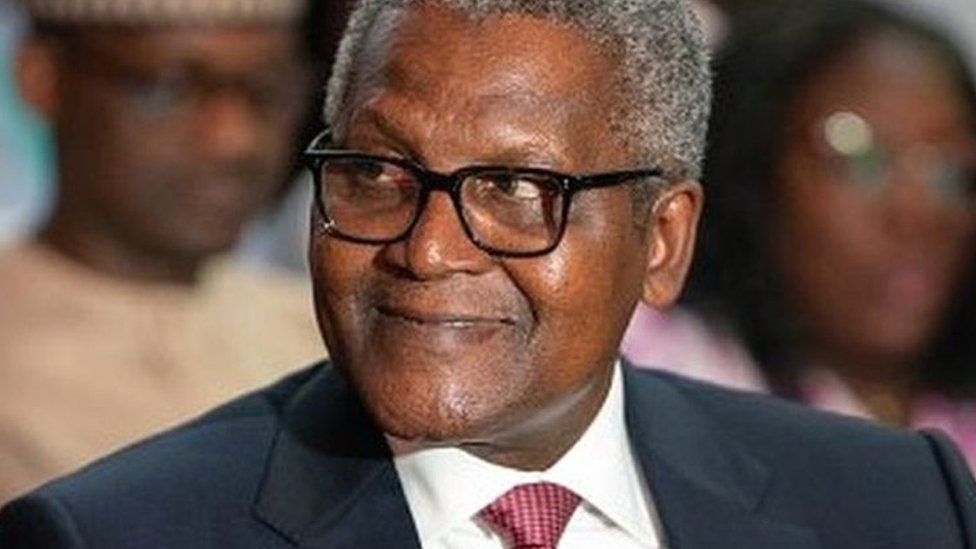
President/Chief Executive, Dangote Industries Limited, Aliko Dangote, has disclosed plans to increase the group’s investment programme in Africa from $50 billion to about $70 billion under its Vision 2030.
Biztellers reports that this strategy would witness a major intervention in electricity generation to support industrial growth, to the tune of 10,000-megawatt.
Addressing creative industry stakeholders from Northern Nigeria, including content creators, journalists, bloggers, entertainers and Kannywood stars, Dangote said expanding production, creating jobs and providing reliable electricity were essential to unlocking Nigeria’s economic potential.
He identified inadequate power supply as a major obstacle to the survival of small and medium-sized enterprises, warning that businesses dependent on petrol and diesel generators would struggle to remain profitable. Dangote said the group was considering a 10,000-megawatt power programme across Africa, potentially including Nigeria, alongside an expansion of the generating capacity dedicated to its own operations.
“We initially planned to invest $50 billion. We are now looking at increasing that to about $70 billion in Africa,” he said.
Explaining the ambition behind Vision 2030, Dangote said African businesses must take greater responsibility for investing in the continent and addressing the infrastructure constraints that discourage other investors.
READ ALSO: Chevron Nigeria Emerges Second-best Exhibitor at NAPE 2026
According to him, inconsistent government policies and unreliable electricity remain significant barriers to investment. He said the group had largely addressed the power challenge within its operations by generating its own electricity.
“Across the group, we currently have almost 1,500 megawatts. By the time we complete Vision 2030, that could rise to between 4,500 and 5,000 megawatts,” he said. “That is captive power—electricity for our own operations. Separately, part of the vision is to intervene in power generation with 10,000 megawatts across Africa, potentially including Nigeria.”
Responding to a question about the economic decision that would most improve the lives of ordinary Nigerians, Dangote placed electricity at the centre of the country’s development needs.
He argued that individual households and companies installing alternative power systems would not, by itself, resolve the wider economic problem.
“Installing solar power for yourself does not mean the wider problem has been solved. Other people may not have that option,” he said. “A vibrant economy is driven by small and medium-sized enterprises. Large companies such as ours help sustain those businesses, but SMEs are essential to economic activity. When you generate electricity using diesel or petrol, it becomes very difficult to make money.”
Dangote expressed confidence in Nigeria’s entrepreneurial strength, saying the country had yet to realise the full benefits of its large and dynamic economy. He said businesses had a responsibility to invest and create opportunities, while the government should concentrate on providing policies and conditions that allow enterprises to grow.
“The government’s principal responsibility is to create an enabling environment through good policies. With the right policies, businesses can invest and create jobs,” he said.
The industrialist identified agriculture and solid minerals as areas with substantial potential, particularly in Northern Nigeria, but stressed that the country must move beyond exporting unprocessed resources. He said investment in infrastructure, including ports, could open markets for other producers and make it easier for businesses to develop and export their products.
“It is not only about us; it is about Nigeria and the African continent,” he said. “We should not simply export raw materials and then buy back the processed products at many times the price. That is the pattern we want to change. Without production, we will continue to face economic difficulties. We must build a productive economy.”
Sharing lessons from his business career, Dangote attributed the group’s expansion to focus, financial discipline and the consistent reinvestment of earnings. He said the transition from trading to manufacturing was built around products the group already understood, supported by established customers, distribution networks and market knowledge.
“The logical next step was backward integration: producing the things we were already importing,” he said.
Dangote also urged entrepreneurs to avoid spending anticipated profits and to recognise when a venture was no longer commercially viable.
“Give it your best effort, but when you do the numbers and they are not adding up, you must be willing to leave,” he said.
Despite the challenges facing businesses, he maintained that the group would continue investing and encouraged smaller enterprises to build opportunities around major industrial projects.
“People like us will continue investing. People like you can build businesses around those investments—as suppliers, producers and service providers,” he said.
Chevron Nigeria won the second-best exhibitor award at the just-concluded 2026 Nigerian Association of Petroleum Explorationists (NAPE) conference and exhibition at Eko Hotels and Suites, Victoria Island, Lagos.
Biztellers reports that Olajumoke Cecilia Ajayi, FNAPE, NAPE President (2025–2026) and Managing Director/CEO of Ingentia Energies Limited, presented the award to Chevron, during the awards dinner on November 12, 2026.
The award is in recognition of Chevron’s outstanding exhibition, where visitors to its booth, particularly students, took part in Geology/Geophysics presentations and quizzes, word games, and Human Resources/Nigerian Content presentations and quizzes, with gifts for winners and participants.
Commenting on the award, the leader of the Chevron’s exhibition team, Dr. Victor Anyaegbudike, Manager Communications, Chevron companies in Nigeria and the Mid Africa Region, commended NAPE for its commitment to hosting the annual conference and exhibition. He noted that Chevron has operated in Nigeria for over 60 years, contributing to the country’s growth and development and making human investments that yield long-term, transformative returns.
READ ALSO: Tinubu, Shettima Head to Jos for APC Presidential Campaign Rally
“At Chevron Nigeria, we drive innovation and investment to open up opportunities for growth, jobs, productivity and lasting value. Forums like the NAPE conference and exhibition matter because they bring government, academia, students and industry together around shared goals and a better understanding of one another,” he remarked.
Victor noted that Chevron is committed to building productive, collaborative and mutually beneficial relationships, grounded in trust, with governments, partners, customers, communities and employees. “We believe that affordable, reliable and ever-cleaner energy is vital to a more prosperous and sustainable world,” he said.
Attendees at the NAPE conference and exhibition included representatives of the Federal Government of Nigeria, industry regulators, industry leaders, academics, and students from tertiary institutions across the country.





How Rising Costs Are Pushing Nigerian Bakeries to the Brink

FULL LIST: 18 Nollywood Actors and Actresses Who Died in 2026

Tinubu Gov’t Unveils North Central Development Projects Across Eight Sectors

Obi, Kwankwaso Pledge to Tackle Corruption, Reduce Cost of Living

Dangote Plans 10,000MW Power Intervention, Raises Africa Investment Ambition to $70bn

40% of Breadmakers Shut Down as Atiku Accuses Tinubu of Economic Failure

Trump’s Family Unveils New Cryptocurrency Platform

Senate Denies Receiving Petitions Against Tinubu’s Ambassadorial Nominees

Dangote Cement Lights Up Benue Host Communities With CSR Initiatives

Reps Recommend 3-year Jail Term For Aviation minister

Tems Sets New Record On Billboard Hot 100 Chart

F*ckin’ amazing things here. I’m very satisfied to see your post. Thanks a lot and i am looking forward to contact you. Will you kindly drop me a mail?
fascinate este conteúdo. Gostei muito. Aproveitem e vejam este site. informações, novidades e muito mais. Não deixem de acessar para aprender mais. Obrigado a todos e até mais. 🙂
You could certainly see your enthusiasm in the work you write. The world hopes for more passionate writers like you who are not afraid to say how they believe. Always go after your heart.
I haven’t checked in here for some time as I thought it was getting boring, but the last few posts are good quality so I guess I’ll add you back to my everyday bloglist. You deserve it my friend 🙂
Some truly interesting information, well written and broadly speaking user pleasant.
Howdy! This is kind of off topic but I need some help from an established blog. Is it hard to set up your own blog? I’m not very techincal but I can figure things out pretty quick. I’m thinking about setting up my own but I’m not sure where to start. Do you have any points or suggestions? Cheers
Hi, Neat post. There is a problem with your site in web explorer, could test this?K IE nonetheless is the marketplace chief and a big element of people will leave out your magnificent writing because of this problem.
Someone essentially help to make seriously posts I would state. This is the first time I frequented your website page and thus far? I amazed with the research you made to create this particular publish extraordinary. Magnificent job!
I haven’t checked in here for a while since I thought it was getting boring, but the last few posts are good quality so I guess I’ll add you back to my everyday bloglist. You deserve it my friend 🙂
Definitely, what a splendid site and instructive posts, I will bookmark your website.All the Best!
Nice post. I was checking constantly this weblog and I am impressed! Extremely helpful information specially the remaining phase 🙂 I take care of such information a lot. I was looking for this particular info for a very lengthy time. Thanks and best of luck.
I was looking at some of your content on this website and I believe this website is real informative ! Continue posting.
I am pleased that I detected this web site, exactly the right info that I was looking for! .
It’s best to participate in a contest for one of the best blogs on the web. I will recommend this site!
Thanks for the sensible critique. Me and my neighbor were just preparing to do a little research about this. We got a grab a book from our area library but I think I learned more clear from this post. I’m very glad to see such great info being shared freely out there.