
NEWS
Almost Half of Nigeria’s Revenue Goes to Debt Servicing – Oyedele


Nigeria now spends less than 50 percent of her revenue on debt servicing, down from 90 percent where it was two years ago.
The Chairman of the Presidential Fiscal Policy and Tax Reforms Committee (FPTRC), Taiwo Oyedele, made the disclosure in Lagos on Monday, while presenting his keynote at PwC’s Executive Summit on Nigeria’s Tax Reform.
It held under the theme “The New Tax Era: What Nigeria’s Tax Reform Means to Individuals and Businesses”, and Oyedele highighted that the government was spending almost 97 percent of its revenue on debt servicing before the economic reforms.
“We’ve cleared unmet forex futures that were more than $7bn. And we moved from under $4 bn external reserve to over $20bn today. Budget deficit is declining, and we’re spending more on infrastructure.
ALSO READ: My Pact with Osun People Unbreakable – Gov Adeleke
“Tax to GDP ratio moved from under 10 percent is now 13.5 percent in two years. Instead of 97 percent, service debt is now under 50 percent in two years. We no longer print money to spend. Rather, we’ve paid down part of the ways and means that the previous administration printed,” he stated.
He explained that the country’s currency could have become worthless if the Federal Government had not embarked on the current economic reforms.
According to him, Nigeria was heading in the direction of Zimbabwe and Venezuela, whose economies had collapsed.
“Nigeria today, without reforms, would have looked like that. Bigger deficits, more naira printed. We will have easily over $10bn unmet forwards. Tax to GDP ratio will be less than 10 percent. We’ll be spending over 100 percent of our revenue to service debts. You hold money; you will not find PMS to buy. There’ll be more poverty, and there will be more ways and means.
“I thought to bring the currency. I’ll show you. So, this currency, this banknote in my hand, is 100 trillion Zimbabwean dollars. I’m not 100 trillion one notes. This note, at the time I got it, was barely enough to buy a loaf of bread. I gave my friend, whom I got this from, $10 and he is still grateful till tomorrow. This is what would have happened to Nigeria. Nigeria was the road to Venezuela and Zimbabwe.”
According to the FPTRC chair, the country could have reached a $1bn economy by now if the government had begun the ongoing economic reforms a decade ago.
“If some of these reforms that were done in the past two years had been done 10 years ago. I tell you authoritatively today, Nigeria will be a $1bn economy guaranteed. And the price of PMS will be under N300/litre because the exchange rate will be under N300 to the USD.
“We’ve done this analysis over the past 10 years. Comparable balance of payment between Nigeria, Kenya and South Africa. Yet naira has lost six and a half times more value than Kenya shillings and South African rand. If only we had maintained the same level of stability as those two other countries. Nigeria will be a $1tn economy. What that means is the size of the middle class will probably be 10 times what it is. Every single investor in the world will take a seriously enough about,” Oyedele asserted.
He argued that the government was wasting trillions of naira subsidising petrol, spending a large chunk of its revenue to service debt and was just printing naira at will.
“We committed them to subsidise PMS. It still wasn’t enough. NNPC took the taxes they were supposed to pay and they used that as well. It was not enough. They started taking the taxes of the other operators in the industry to also pay for the PMS. It still wasn’t enough. If we had continued till this day, the subsidy regime would have collapsed.
“Naturally, you would hold N100,000; you will not find a litre of PMS to buy. And I said that with all sense of responsibility. Responsibility because we’re running out of fiscal space to deal with the subsidy.
“Many people like you, including myself, knew there was a lot of corruption in it. That’s true. Could we have removed the corruption in the time frame? No. We had a huge budget deficit. We printed over N30tn to spend. We’re not building roads. It wasn’t that we’re building electricity. We were paying salaries,” he emphasised.
“Many people like you, including myself, knew there was a lot of corruption in it. That’s true. Could we have removed the corruption in the time frame? No. We had a huge budget deficit. We printed over N30tn to spend. We’re not building roads. It wasn’t that we’re building electricity. We were paying salaries,” he emphasised.
Oyedele disclosed that only three per cent of informal sector operators could pay taxes in Nigeria.
He explained, “From our analysis, it is only the top three per cent of the informal sector that has the ability to pay. Therefore, in these reforms, we have legally exempted the bottom 97 per cent from paying taxes. Let them breathe. When they grow, they will have the capacity to pay. And many people would ask me, ‘Are you sure that all the companies in Nigeria will not become small?’.
“This will happen anywhere in the world if you create an exemption threshold. People want to force themselves to be under the threshold. Isn’t it because they don’t want to pay tax? It’s hard to pay tax anywhere in the world. Nigerians are not bad people. They’re not worse than people who live in other countries where things work. The difference is the system. So, the system we are building is that if you like to go and lie and say your business is small when it is not, we will find out, and there shall be consequences for those who underdeclare and engage in tax evasion.”
According to the FPTRC chair, the country’s tax is now progressive, and all the major taxes have become progressive.
Oyedele also disclosed that the gazette of the recently signed tax law was being printed in Lagos, and the final copy of the tax would be released to the public afterwards.
Recall that President Bola Tinubu signed four bills into law on June 26, but they would become effective on January 1, 2026.
Also, the Regional Senior Partner, PwC West Market Area, Sam Abu, noted that the reforms embarked on by the government were a good starting point for engaging in that conversation very robustly.
“Policy alone won’t deliver. Real change requires partnership and commitment. It required every single one of us here, the government, business leaders, and private sector individuals, to collaborate and work together to shape what will come up, to shape the kind of society and the kind of business community that we want to operate together, that we want to believe is okay. It requires us to engage with the spirit of these reforms, with sincerity, with integrity and with optimism,” he emphasised.
He said perspectives of stakeholders were critical in ensuring that those reforms take root and deliver on the outcomes that had been promised.
“Everybody has had a part to play in this regard. So, a PWC objective is clear. We want to remove complexity from tax. We want to help our clients anticipate risk and deliver solutions that are practical and tailored to their businesses, so that you, as business leaders, can focus on what you do best, which is making an impact on growing your businesses,” Abu added.
Major highlights of the new tax law are the exemption of employees who earn less than N800,000 annually from the personal income tax, the harmonisation of federal taxes and making the Federal Inland Revenue Service the sole collector of federal taxes.
Meanwhile, Partner and Tax and Regulatory Service Leader, Chijioke Uwaegbute, added that with the new tax law, by January 1, 2026, an entity that is resident abroad will be fully taxed in Nigeria if it is being controlled from the country.
“Control meaning where the board sits and things like that, or it is being effectively managed in Nigeria, being where the people who make the decisions sit. That is potentially a big one.
“Similarly, we have rules around indirect transfers as well. I have a situation where you dispose of or there’s a disposal of the shares of a foreign entity that owns a Nigerian company. And if that disposal means that there’s a change in the ownership of the Nigerian company, that disposal then is seen as a taxable event in Nigeria, not minding the fact that the shares that were disposed of are not of the Nigerian company.
“So all of these rules that we see here are really to reflect some of the advances we’ve seen in other countries, minimise opportunities for avoidance and ensure that Nigeria is able to tax its fair share of taxes,” he said while highlighting major changes in the new tax law.







Nigerian women allegedly being held at a deportation facility in India have cried out over their treatment, with a video circulating online showing some of them displaying injuries and alleging that security personnel flogged detainees.
The video began circulating online on Wednesday and shows a group of Nigerian women inside and around what they described as a deportation camp.
Several of the women pointed to marks, bruises and apparent injuries on their legs, feet and bodies while alleging that they were beaten with sticks or canes.
SEE ALSO: Rufai Oseni Row: NiDCOM Breaks Silence on Nigerians Detained in India, Addresses Ekene’s Case
“See my video, see my leg,” one of the women could be heard saying in the footage.
Another woman said, “Mona see wetin dem dey do for deportation camp.”
“Deportation camp, na dem flog person, see,” another woman said while showing what appeared to be an injury.
The women further alleged that female detainees were beaten with sticks.
“Dem dey use stick dey flog women, mona dey see am,” one of them said.
Another woman, while pointing at an injured detainee, said, “Dem carry cane flog o… see her body, dem flog am.”
The women also alleged that police officers carried sticks inside the facility.
“Police carry stick like say dem dey cut firewood,” one of the women said.
The footage shows the women appearing distressed as they moved through the facility and gathered in an outdoor area.
They repeatedly appealed to Nigerians to share the video and draw attention to their situation.
“Make una see… make this video trend/go,” one woman said.
“Make una share am,” another added.
One of the women also expressed frustration over their alleged experience at the facility, saying, “We don suffer, every time, every time.”
The footage comes amid ongoing concerns over Nigerians detained at the Lampur detention centre, also known as Sewa Sadan, in New Delhi.
Recall that in September, reports emerged that more than 200 Nigerians were being held at the facility, with some detainees alleging poor food, inadequate medical care and prolonged detention.
The Nigerians in Diaspora Commission (NiDCOM) subsequently defended its handling of the situation and said the Nigerian High Commission in India was seeking another amnesty period to facilitate the departure of Nigerians without proper immigration documentation.
No official response from the Indian authorities or the Nigerian government specifically addressing the allegations in the latest video had been made available at the time of publication.
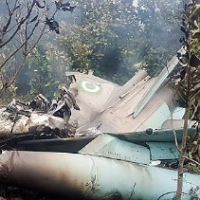
Rights activist, public affairs analyst and Chief Executive Officer of The Dialogue, Shehu Muhammad, has questioned the continued occurrence of military aircraft crashes despite the huge budgetary allocations to the country’s defence and security sector.
Muhammad spoke while reacting to the recent Nigerian Navy aircraft crash in Irele Local Government Area of Ondo State during an interview on Channels Television’s The Morning Brief.
Describing the incident as “one incident too many,” he recalled that Nigeria had recorded several military aircraft crashes involving the Nigerian Air Force and Nigerian Army over the years.
RELATED NEWS: Military Gear Found at Ondo Crash Site as Helicopter Burns to Rubble
He said the recurring incidents had raised concerns among members of the public about the condition of military aircraft and the process through which military hardware is procured.
“People have begun to cast aspersions as to the honesty, sincerity, and openness in the purchase of military hardware, including airplanes,” Muhammad said.
According to him, the concerns are heightened by the substantial funds allocated to the military and other security agencies over the years.
“There are insinuations by the public that, after all, the military receive the highest amount of money from the budget year in, year out,” he said.
Muhammad also questioned the transparency of defence procurement, particularly the process of selecting contractors for the supply of military equipment.
He argued that the repeated crashes should prompt authorities to examine military aviation operations, aircraft procurement and the management of defence resources.
The latest crash occurred in Irele, Ondo State, with recovery efforts reportedly complicated by the difficult terrain around the crash site.
Muhammad said the latest incident should not be treated in isolation, but should lead to broader questions about military aviation safety and the management of resources allocated to the defence sector.
He called for greater transparency and accountability in the procurement and management of military hardware to restore public confidence.

Rights activist and public affairs analyst, Shehu Mohammed, has called for the scrapping of the National Youth Service Corps (NYSC), saying the scheme has outlived its usefulness amid growing security concerns across the country.
Shehu made the call on Wednesday during an interview on Channels Television’s The Morning Brief, while reacting to the kidnapping of prospective corps members travelling to orientation camps in Akwa Ibom and Anambra states.
He described the incident as “one incident too many,” noting that kidnapping, maiming and the detention of victims in kidnappers’ camps had become frequent in several parts of the country.
SEE ALSO: 2027: North Should Back South-West To Complete 8 Years In Power — Shehu Sani
“I think it is just a case of one incident too many. There are more unreported cases of kidnapping and maiming and detention in kidnappers’ den, almost all over the country, especially in the northern part of the country: the Middle North West, North East, and North Central. It’s a daily, daily happening,” Sani said.
He said the security situation had made him question the continued relevance of the NYSC scheme, which was established to promote national unity.
“When Bukola was saying that she objects to the scrapping of NYSC, I tend to take a different view. My view is that the entire NYSC was meant to unite Nigeria, but if in uniting Nigeria you lose your daughter, you lose your son, you lose your uncle, you lose your sister, you lose your neighbour, then it’s not worth the trouble,” he said.
Shehu argued that corps members should instead be allowed to serve in their respective states, eliminating the need for young Nigerians to travel long distances to orientation camps.
“This NYSC issue should be scrapped, removed from the constitution, allow each and every corps member to serve in his own state, traveling with all the dangers, with all the costs,” he said.
He also highlighted the financial burden placed on families when corps members are posted far from their home states.
“If a child is going from Katsina to Anambra State to report to the camp, minimum that you give him is three hundred thousand naira for transfer cost, three hundred. How many parents have three hundred thousand naira to give their wards?” Sani asked.
He said the financial burden was only one aspect of the problem, with corps members also facing security risks and possible trauma during interstate travel.
“Minus all the dangers, the consequences, the uncertainties, the traumas involved. If your child has to go through a trauma, through uncertainty, through pain, through kidnapping, through raping, eventually through killing, why do you have to go for NYSC?” he said.
“As far as I’m concerned, the NYSC project has outlived its usefulness. It should be scrapped.”
Shehu also warned that kidnapping in Nigeria was taking a new dimension, with criminal groups increasingly targeting vulnerable groups.
“Corps members are vulnerable groups. Travelers for commercial purposes all over the country are vulnerable groups. Therefore they are now going for soft targets,” he said.
According to him, kidnappers also use abductions to blackmail victims’ families and government authorities into paying ransom.
“The next one is blackmailing either the parents or blackmailing government to collect money,” he said.
Sani alleged that ransom payments were subsequently used to finance criminal activities.
“So they can finance their arm purchase. They can finance their purchase of hard drugs to enable them operate without pity and compassion, and to send permanent fear into the community,” he said.
He added that the kidnappers were using their activities to create fear within communities, despite being relatively few in number.






IPO: ADF Opens Wealth Creation Pathway for 2m Vulnerable Nigerian Women

2027: Tinubu Will Beat Atiku, Obi by Wide Margin, Says Bwala

‘Dem Dey Use Stick Dey Flog Women’ — Nigerians in India Camp Cry Out

2027: I’ll Bring Petrol Price Down to ₦300, Says Donald Duke
2027: INEC Must Prove Nigerians Wrong on Election Credibility — Donald Duke

‘Military Gets Huge Budgets, Yet Air Crashes Persist’ — Shehu Muhammad

Trump’s Family Unveils New Cryptocurrency Platform

Senate Denies Receiving Petitions Against Tinubu’s Ambassadorial Nominees

Dangote Cement Lights Up Benue Host Communities With CSR Initiatives

Reps Recommend 3-year Jail Term For Aviation minister

Tems Sets New Record On Billboard Hot 100 Chart

saxg4j
Very good information can be found on weblog. “I said I didn’t want to run for president. I didn’t ask you to believe me.” by Mario M Cuomo.
I love your blog.. very nice colors & theme. Did you create this website yourself? Plz reply back as I’m looking to create my own blog and would like to know wheere u got this from. thanks
I like the helpful info you provide in your articles. I’ll bookmark your weblog and check again here frequently. I am quite certain I’ll learn plenty of new stuff right here! Best of luck for the next!
Hi there! Someone in my Myspace group shared this website with us so I came to check it out. I’m definitely loving the information. I’m bookmarking and will be tweeting this to my followers! Fantastic blog and outstanding style and design.
Excellent weblog right here! Also your site a lot up very fast! What host are you the use of? Can I am getting your affiliate link to your host? I want my website loaded up as fast as yours lol
I like this blog very much, Its a rattling nice berth to read and get info .
I love your blog.. very nice colors & theme. Did you create this website yourself? Plz reply back as I’m looking to create my own blog and would like to know wheere u got this from. thanks
I will immediately grab your rss as I can’t find your email subscription link or newsletter service. Do you’ve any? Kindly permit me recognize so that I may subscribe. Thanks.
Glad to be one of the visitors on this amazing website : D.