
NEWS
APC Primary: Tinubu strengthens lead after Box 20

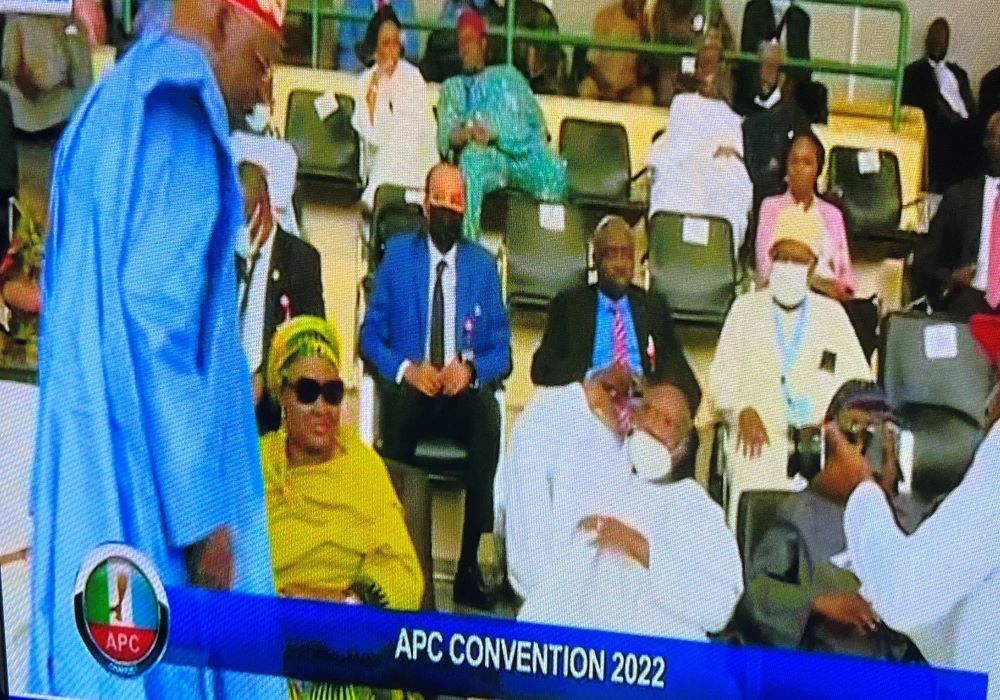
The All Progressives Congress’s APC, national leader, Bola Tinubu, is leading the party’s ongoing presidential primary in Abuja.
After Box 20 was counted, Tinubu expanded his lead.
He currently leads his closest rivals, Rotimi Amaechi and Yemi Osinbajo, with over 890 votes.
So far, Amaechi has received 175 votes, while Osibanjo has received 126.
In a few hours, the winner should be announced.
Mr. Chukwuemeka Nwajuba, Pastor Tunde Bakare, Mr. Ahmed Rufai, Senator Rochas Okorocha, Mr. Jack Rich, Gov. Ben Ayade, Gov. David Umuahi, Asiwaju Bola Tinubu, Sen. Ahmed Yarima, Dr. Ahmed Lawal, Vice-President Yemi Osinbajo, Mr Rotimi Amaechi, Gov. Yahaya Bello,
Nine aspirants had earlier withdrawn from the race including Mrs Uju Kennedy-Ohnenye, Dr Felix Nicholas, former Gov. Godswill Akpabio, former Gov. Ibikunle Amosun, former Speaker Dimeji Bankole, Sen. Ajayi Boroffice, Gov. Muhammad Badaru, Sen. Ken Nnamani and Gov. Kayode Fayemi.
Read Also >> 2023: SDP Female Presidential Aspirant, Nuhu-Aken’Ova Steps Down For Prince Adebayo
However, the Special Adviser to the President on Political Matters, Senator Babafemi Ojudu, has hailed Vice President Yemi Osinbajo as counting and sorting are underway.
“PYO you remain my hero for life. Congratulations to everyone who has been part of this movement. God bless you all and may we not trade our nation away as some did yesterday,” Ojodu said.
A total of 2,260 delegates of the All Progressives Congress voted at the ongoing party’s Presidential Primary at Eagle Square, Abuja.
The total rundown of states and their respective accredited delegates are as follows:
Abia – 50; Adamawa- 62; Anambra- 63; Bayelsa- 24; Bauchi- 55; Benue- 64; Borno- 81; Cross River- 54; Delta- 73; Enugu- 51; Ekiti- 48; Edo- 54; Ebonyi- 38; FCT- 80.
Others are Gombe- 33; Imo- 81; Jigawa- 81; Lagos- 60; Plateau- 51; Katsina- 102; Kebbi- 63; Kwara- 48; Kogi- 63; Kaduna- 61; Kano- 126; Nasarawa- 39; Niger- 75; Ondo- 54; Ogun- 60; Oyo- 99; Osun- 90; Rivers- 69; Sokoto- 69; Taraba- 46; Yobe- 51 and Zamfara- 42.
The PUNCH had reported that selected members of APC have gathered to choose a candidate for next year’s election to replace the President, Major General Muhammadu Buhari (retd.).
They are to select a candidate to face 75-year-old Atiku Abubakar of the opposition Peoples Democratic Party among others in the February 25 presidential ballot.
Buhari, who is stepping down after the two terms he is allowed in the constitution, arrived at the Eagle Square convention centre early in the evening before voting was to start.
The Nigerian leader has spent days leading up to the convention in negotiations with the APC’s leaders seeking unity over a party candidate.
“The fate of the party depends on what we do here,” APC party chairman Abdullahi Adamu said, echoing Buhari’s call for unity in the ranks.
“We cannot go into the general election next year without putting our house together.”
Part of the APC’s debate over candidates relates to “zoning” – an unofficial agreement among political elites that Nigeria’s presidency should rotate between those from the predominantly Christian south and those from the largely Muslim north.
After northern Buhari, observers expected the presidency to go to a candidate from the south.
But the PDP – which held its primary on May 28 and 29 – chose Abubakar, a former vice president and a political stalwart who is a northern Muslim.
The opposition’s choice to ignore “zoning” has made the APC reconsider how their candidate will appeal to the north, where voter numbers and participation are traditionally higher.
Buhari, who is the leader of the ruling party, has not declared support for any candidate and instructed APC members to “allow the delegates to decide.”
“Our objective must be the victory of our party and our choice of candidate must be someone who would give the Nigerian masses a sense of victory and confidence even before the elections,” he said last week.
Hundreds of APC supporters dressed in party colors of green, white, and red gathered in and around the location early Tuesday, prompting heavy security deployment in central Abuja.




Otunba Segun Showunmi, a member of the Tinubu/Shettima Presidential Campaign Council (PCC) for 2027, has urged the South-East to assess President Bola Tinubu’s administration based on verifiable projects and measurable results rather than political propaganda.
Showunmi made the call in a statement posted on X on Saturday, urging Nigerians to evaluate the government’s performance based on infrastructure delivery, funds committed to projects and their impact on communities.
He said federal infrastructure initiatives targeting the South-East under Tinubu’s administration deserved serious scrutiny and factual assessment, adding that unfulfilled promises should continue to be pursued until the expected results were delivered.
SEE ALSO: 2027 Election: ‘Look Beyond the Noise’ – Showunmi Urges Nigerians to Give Tinubu More Time
“Our message is clear: We will not trade facts for propaganda, nor accountability for political loyalty!” he said.
The political figure challenged critics of the administration to provide evidence to support their claims, while urging those defending the government to present the projects and demonstrate their impact.
He also called on government officials to publish relevant figures, disclose project timelines and provide measurable results, insisting that no public official should be exempt from scrutiny.
According to Showunmi, the South-East deserves infrastructure that supports economic growth, including roads that connect markets, investments that create jobs and policies that expand economic opportunities.
He maintained that political representation must translate into tangible benefits for citizens, stressing that public office should deliver value to the people.
As part of his call to action, Showunmi urged Nigerians to scrutinise government records, challenge misinformation with evidence and demand the completion of outstanding projects.
He further called for public commitments to be matched by measurable delivery, arguing that leadership should be assessed by facts and results rather than political rhetoric.
Ending his statement with the slogan, “Asiwaju is a goal,” Showunmi called for accountability and greater inclusion of the South-East in Nigeria’s development.
Showunmi is associated with The Alternative and is a member of the Tinubu/Shettima Presidential Campaign Council for the 2027 elections.
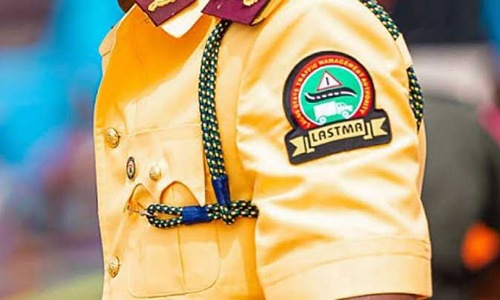
The Lagos State Traffic Management Authority (LASTMA) on Saturday announced a temporary road closure near Apostolic Church, inward Toll Gate, to allow engineers to install a beam on a height-restriction structure.
The agency said the installation was aimed at preventing high-rise trailers from accessing the newly constructed pedestrian bridge.
ALSO READ: LASTMA Alerts Motorists to Traffic Delays on Ogunnusi Road
“Currently, one lane has been occupied to facilitate the ongoing construction work, while the remaining two lanes are available to motorists,” LASTMA stated.
The agency advised road users to approach the affected corridor with caution and follow the directions of its personnel deployed to the area.
“Road users are advised to approach the affected corridor with caution and follow the directions of our personnel who are on ground to ensure the smooth flow of vehicular movement,” the statement added.
LASTMA also urged motorists to remain patient while the installation work continued.
“Motorists are encouraged to exercise patience while the installation work is in progress,” the agency stated.
Nigerian national Ekene Chukwuma has said he returned to Nigeria with assistance linked to Oseni Rufai rather than the Nigerians in Diaspora Commission (NiDCOM), while renewing allegations against the commission’s chairperson, Abike Dabiri-Erewa, over his travel documents.
Chukwuma made the remarks in an interview in which he explained how he returned to Nigeria after spending months at a deportation camp in India.
RELATED NEWS: Rufai Oseni Row: NiDCOM Breaks Silence on Nigerians Detained in India, Addresses Ekene’s Case
“My name is Kenneth Chukwu, from Enugu State,” he said, introducing himself before explaining how he returned to the country.
“I came back here with the assist of Osini Roufai, a good friend of him,” he said.
Chukwuma denied that NiDCOM facilitated his return, alleging that the commission had published false information about his case.
“NiDCOM made a lots of false, uh, news acquisition against me, which is still in Abike Dabiri handle in Twitter,” he said.
He also accused Dabiri-Erewa of sharing his expired international passport and a travel certificate he claimed was issued six months after he entered the detention camp.
“He also, she also posted my international passport that expired. He also, she also posted my TC that issued after 6 months,” he said.
His comments renew questions surrounding the handling of his case and the circumstances under which he obtained the documents needed to return to Nigeria.
Chukwuma’s detention in India previously sparked a public disagreement between ARISE News presenter Oseni Rufai and Dabiri-Erewa over NiDCOM’s response to reports of his situation.
Oseni raised concerns about Chukwuma’s detention and the commission’s handling of the case, while Dabiri-Erewa defended NiDCOM’s position and explained the process for submitting information to the commission.
NiDCOM subsequently issued its account of Chukwuma’s detention, stating that he had been arrested in India over a visa overstay and addressing the circumstances surrounding his travel documents.
The differing accounts prompted public debate about the commission’s response to Nigerians facing immigration difficulties abroad.






Showunmi Urges South-East to Judge Tinubu by Projects, Not Propaganda

2027: ‘North Has No Reason to Break Agreement’ — Gov Yusuf Backs Tinubu

Aircraft Averts Crash, After Losing Door Mid-Air in Abuja

Bandits Kill 70-Year-Old Man in Katsina, 27 Victims Rescued

‘Nigeria Is Doomed Under Tinubu’ — Kenneth Okonkwo Backs Atiku for 2027

Lagos: LASTMA Announces Traffic Restrictions Along Route to Toll Gate

Trump’s Family Unveils New Cryptocurrency Platform

Senate Denies Receiving Petitions Against Tinubu’s Ambassadorial Nominees

Dangote Cement Lights Up Benue Host Communities With CSR Initiatives

Reps Recommend 3-year Jail Term For Aviation minister

Tems Sets New Record On Billboard Hot 100 Chart
