
Banking
Beyond Mt. Gox, bitcoin believers keep the faith, see more robust system


SINGAPORE – The apparent collapse of Tokyo-based bitcoin exchange Mt. Gox isn’t bothering Anthony Hope and others who have ditched steady careers in government and finance to build bitcoin companies – and who stand to lose money they have in Mt. Gox.
Hope, a former British Treasury official and now head of compliance at Hong Kong-based MatrixVision, says that while Mt. Gox’s fate is unclear, its troubles form part of a wider shift as more professional players move into the bitcoin mainstream.
“It’s good for us as a business, not so good for us as consumers,” he said. “Over the longer term it will be good for bitcoin because over time the entire ecosystem will be made more robust.”
Steve Beauregard, CEO and founder of Singapore-based GoCoin, is more blunt about Mt. Gox’s woes: “It’s important in the sense of sweeping away a lot of the early unsophisticated folk who got into this and made a name for themselves, but didn’t have the management horsepower to manage a company.”
Mt. Gox, at one time the biggest bitcoin exchange, abruptly stopped trading this week amid reports on the internet that more than 744,000 bitcoins – worth around $380 million at prevailing rates – had been stolen. If accurate, that would mean around 6 percent of the world’s 12.4 million bitcoins minted would be missing. The exchange’s CEO Mark Karpeles told Reuters in an email that his company was “at a turning point” and would issue a statement “soon-ish.” His LinkedIn profile reads: “I have a long experience in company creation, and experienced almost any imaginable kind of trouble.”
On Wednesday, Japan said its authorities were looking into the Mt. Gox closure, and The Wall Street Journal reported that the virtual currency’s exchange had received a subpoena from federal prosecutors in New York. A spokesman for the U.S. Attorney’s office in Manhattan did not respond to requests for comment.
Also, the European Banking Authority warned bitcoin users they were on their own when it comes to losses from using unregulated online currencies, noting there is no safety net as with mainstream bank deposits. “Currently, no specific regulatory protections exist in the EU that would protect consumers from financial losses if a platform that exchanges or holds virtual currencies fails or goes out of business,” it said in a statement.
Bitcoins rallied more than 10 percent on Wednesday, trading at close to $580, according to coinorama.net, which tracks the rate on various exchanges.
“FINANCE HAS GOT BORING”
While bitcoin’s public image remains one of a network of subversive, libertarian geeks, the past year or so has seen a change in the kind of people launching start-ups, say Hope, Beauregard and others in the fledgling industry.
Hope’s colleagues, for example, include a serial entrepreneur, a former Morgan Stanley mergers and acquisitions specialist and a respected figure from the bitcoin community. Hope handled banking policy, taxation rules and freezing suspected terrorists’ assets for the UK government before he moved to Hong Kong.
Antony Lewis, meanwhile, joined Singapore-based bitcoin exchange itBit from Credit Suisse last November. His colleagues include a former hedge fund analyst, a venture capitalist who invested in IT start-ups on behalf of the Singapore government and a former forex spot trader. “Finance has got boring in the past five years,” Lewis said. “It’s not fun, it’s very backward looking and all the innovation is in virtual currencies.”
Such companies are examples of a maturing – not just of the kinds of people attracted to bitcoin, but of the specialist roles companies play in the nascent bitcoin ecosystem.
MatrixVision, for example, helps bitcoin exchanges integrate with the traditional banking system by complying with local laws and regulations, while GoCoin acts as a “PayPal for bitcoin users”, allowing merchants and others to accept bitcoins without the problems of currency volatility and security risk.
MORE DISCERNING USERS
For sure, the crisis surrounding Mt. Gox is the worst the young crypto-currency has faced, damaging trust and challenging all bitcoin-related companies to respond.
“Other major players need to show they avoid the mistakes Mt. Gox made, which they are trying hard to do,” said Tomas Forgac, who founded Singapore-based Coin Of Sale, a service for merchants to accept bitcoins as payment.
That, adds Masa Nakatsu, a Japanese entrepreneur who this month founded his own bitcoin start-up, means bringing in more professional technology companies which are able to work with governments and central banks – a skill he says some of the early bitcoin players have not shown.
“Players will change,” he says, “as the characteristics of the market change.”
This shake-out is already underway as users learn to be more discerning about where to put or exchange their money.
ItBiT’s Lewis says his exchange has seen a steady flow of funds and new accounts, with trading jumping to 10 times normal levels in just the past few days. “ItBit represents the next wave of exchanges where we care about customers and want to have a go at this,” he says.
Lewis points to key questions that users need to ask of exchanges before entrusting money to them: how easy are they to hack? How well capitalised is the company? Are the deposits insured?
ItBit, he says, ticks most of those boxes. Clients’ bitcoin funds are held on a computer that’s not connected to the internet, and doesn’t even have a hard drive or network card. Only itBit’s funds are used for transactions. It has reached out to auditing firms to inspect its procedures and holds regular meetings with global regulators. Such things aren’t cheap, says Lewis, noting ItBit has raised $5.5 million “and we’ll need more as regulation gets tighter.”
“The next generation of bitcoin companies will be run by people with previous experience of financial service companies and they will need to be capitalised like financial service companies,” he says.
“VIBRANT ECOSYSTEM”
Beauregard, who divides his time between his Singapore start-up and his California home, says financing this won’t be a problem. His GoCoin has raised $500,000 and is about to close out another round of funding. While the number of bitcoin companies raising six figure sums is limited, that will change, he said.
“Every venture capital firm will have to have their bitcoin plays in 2014,” he said. “Otherwise they’ll be missing the single greatest asset class that’s emerging at the moment.”
Hakim Mamoni, Hong Kong-based chief technology officer at bitcoin incubator Seedcoin, says a new raft of exchanges are set to appear in the months ahead. He declined to identify them, since most are operating in what the start-up world calls ‘stealth mode.’
“That’s why the Mt. Gox event is not troubling me,” he said. “I know we’ll have a vibrant ecosystem in a few months.”
– REUTERS
Socio-Economic Rights and Accountability Project (SERAP) announced that it has filed a lawsuit against the Central Bank of Nigeria (CBN) “over the failure to account for and explain the whereabouts of the missing or diverted N3 trillion of public funds, including the over N629 billion paid to ‘unknown beneficiaries’ as part of the Anchor Borrowers’ Programme.”
The lawsuit followed the grave allegations contained in the latest annual report by the Auditor-General of the Federation, which was published on 9 September 2025.
In the suit number FHC/ABJ/CS/250/2026 filed last week at the Federal High Court in Abuja, SERAP stated that it is seeking “an order of mandamus to direct and compel the CBN to account for and explain the whereabouts of the missing or diverted N3 trillion of public funds, including detailed reports of how exactly the funds were spent.”
In the suit, SERAP is arguing that, “These grim allegations by the Auditor-General suggest grave violations of the public trust, the provisions of the Nigerian Constitution 1999 [as amended], the CBN Act, and anticorruption standards.”
SERAP is also arguing that, “These grave violations also reflect a failure of CBN accountability more generally and are directly linked to the institution’s persistent failure to comply with its Act and to uphold the principles of transparency and accountability.”
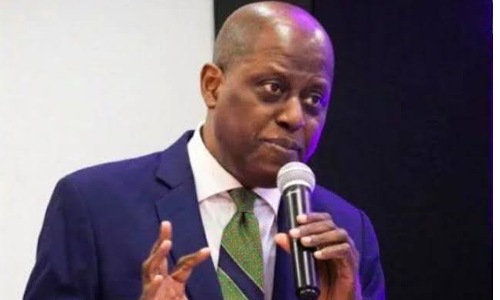
CBN Gov, Olayemi Cardoso
According to SERAP, “These violations have seriously undermined the ability of the CBN to effectively discharge its statutory functions and the public trust and confidence in the bank. The CBN ought to be committed to transparency and accountability in its operations.”
SERAP also stated in its suit that, “Nigerians have the right to know the whereabouts of the missing or diverted public funds. Granting the reliefs sought would advance the right of Nigerians to restitution, compensation and guarantee of non-repetition.”
SERAP said, “Section 15(5) of the Nigerian Constitution requires public institutions to abolish all corrupt practices and abuse of power. Section 13 of the Constitution imposes clear responsibility on the CBN to conform to, observe and apply the provisions of Chapter 2 of the constitution.”
The suit filed on behalf of SERAP by its lawyers Oluwakemi Agunbiade and Valentina Adegoke, read in part: “According to the Auditor-General, the CBN in 2022 failed to remit over N1 trillion [N1,445,593,400,000.00] of ‘the Federal Government’s portion of operating surplus’ into the Consolidated Revenue Fund (CRF) account.”
“The Auditor-General fears that the money may have been ‘diverted.’ He wants the money recovered and remitted to the treasury.”
“The CBN also failed to recover over N629 billion [N629,040,000,000.00] paid to ‘unknown beneficiaries’ as part of the Anchor Borrowers’ Programme, a programme ‘meant to support farmers to ensure sustainable food production in the country.’”
“But ‘the numbers of beneficiaries who collected the money are unknown.’ The CBN has also failed to ‘recover the money.’ The Auditor-General fears ‘the money may have been diverted’, which could have ‘contributed to the difficulty in sustaining food security in the Nation.’”
“He wants the money recovered and remitted to the treasury.”
“The CBN has also failed to recover over N784 billion [N784,410,108,864.47] ‘being 32 unpaid, overdue loans and interventions disbursed by the Bank between 2018 and May 2022.’”
“The Auditor-General said ‘there was no evidence that the Bank was doing enough to recover the loans/interventions, which ought to have been paid.’ He wants the money recovered and remitted to the treasury.”
“The CBN in 2022 also spent over N125 billion [N125,374,000,000.00] ‘on questionable intervention activities.’ The CBN claimed it spent the money ‘on intervention activities in connection with national security, the federal government, state securities, armed forces and to build the capacity of the financial sector’.”
“But the Auditor-General is concerned that the money may have been spent ‘without the approval of the National Assembly.’ There was also no document to ‘support the expenditure.’”
“The ‘expenditure also may not have been in the public interest and consistent with the objectives of the CBN in section 2 of the CBN Act.’ The Auditor-General fears the money may have been ‘diverted.’ He wants the money recovered and remitted to the treasury.”
“The CBN in 2022 also ‘unjustifiably’ spent over N1 billion [N1,792,769,160.00] to buy 43 operational vehicles for the Nigeria Immigration Service (NIS).”
“According to the Auditor-General, ‘the spending is unjustified because there is no connection with buying operational vehicles for the NIS and the objectives of the CBN as stated in section 2 of the CBN Act.’”
“The NIS also ‘failed to provide any evidence to show that the vehicles were actually supplied and delivered.’ There ‘were also no procurement and payment records or documents.’ The Auditor-General fears the money may have been ‘diverted’. He wants the money recovered and remitted to the treasury.”
“The CBN also awarded 43 contracts for over N189 billion [N189,50,066,756.73]. The Auditor-General said that ‘the contractors deliberately delayed completion of these contracts by seeking extension of the completion period.’”
“The contractors then ‘requested for variation of the contracts due to extension of completion period.’ Following the request, the CBN paid the contractors over N9 billion [N9,270,849,691.61] ‘irregular variation of contract price.’”
“There ‘were no relevant procurement documents such as contract files, procurement records, and payment vouchers’ for the payment. The Auditor-General fears ‘the money may have been diverted’ and the projects may have been abandoned.’ He wants the money recovered and remitted to the treasury.”
“The Katsina state branch of the CBN also failed to recover over N90 million [N90,163,610.00] being ‘outstanding loans and interventions disbursed to 33 small and medium enterprises during Covid 19 in 2020.’”
“The Auditor-General fears ‘the money may have been ‘diverted’ or ‘mismanaged’. He wants the money recovered and remitted to the treasury.”
“Paragraph 3112(ii) of the Financial Regulations 2009 provides: ‘Where a public officer fails to account for government revenue, such officer shall be surcharged for the full amount involved and such officer shall be handed over to either the EFCC or the ICPC.’”
“Section 51 of the Fiscal Responsibility Act provides that, ‘A person shall have legal capacity to enforce the provision of this Act by obtaining prerogative orders or other remedies at the Federal High Court, without having to show any special particular interest.’”
“The Nigerian Constitution, Freedom of Information Act, and the country’s anti-corruption and human rights obligations rest on the principle that citizens should have access to information regarding their public institutions’ activities.”
No date has been fixed for the hearing of the suit.
Banking
Millions of customers still stranded worldwide 24 hours after GT Bank online operations suffered attacks
By Yemie ADEOYE
GT Bank, one of Nigeria’s leading banks, with operations across Africa and the United kingdom, and with an asset base of about US$3.11 trillion is under a cyber attack which has left millions of its customers across the world stranded in the last 24 hours.
The bank which was renowned for its seamless online operations at inception has suffered dwindling online efficiency in recent years and this current attack didn’t come as a surprise to many of its numerous customers. However, it is becoming worrisome that over 24 hours after its online operations went down, the bank has not been able to arrest the situation and restore its online services.
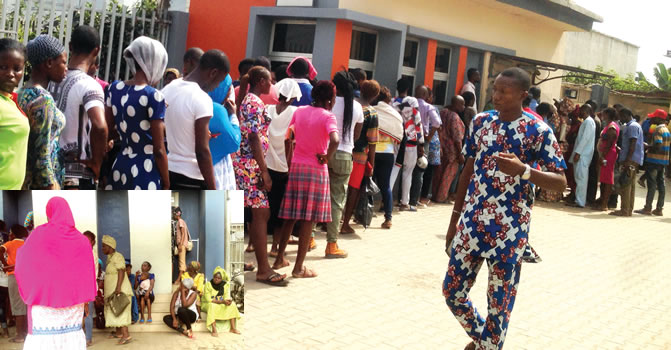
Stranded GT Bank customers outside the banks premises
Several customers of the bank took to their X (formerly known as twitter) handles to express their frustrations at the bank, as several of the customers in the diaspora are unable to access their accounts and carry on with their transactions. A customer , Jeff55 who lamented on his X handle about the development, stated that it is a thing of shock that a bank of this size couldn’t afford to have the necessary tools and experts to ensure a full protection of its online operations in this age and time.
Another customer Dimma stated that while Cybersecurity training may seem tedious, the recent #GTBank hack is a stark reminder that everyone is just a click away from a devastating attack.
Several media organisations had reported that hackers have stolen GT Bank website, and intercepted customers Data in massive phishing operation.
At the time of filing this report, Biztellers.com.ng checks on the banks website shows that it is still down and unaccessible, and neither GT Bank media and communications unit nor any of its agencies or surrogates have commented officially on the development.
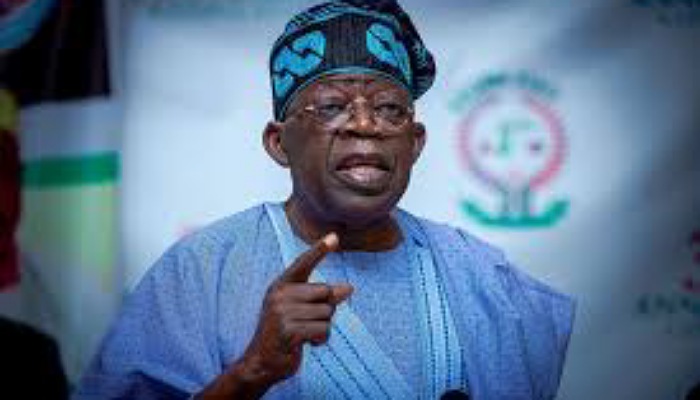
Says output surge buoyed by reforms he announced in May 2024 to address gaps in PIA
President Bola Ahmed Tinubu on Sunday declared a resurgence in the oil & gas industry, commending the increased crude production to 1.6 million barrels per day.
The president, who said this in a national broadcast, maintained that the resurgence was buoyed by the reforms he announced in May 2024 to address the gaps in the Petroleum Industry Act (PIA).
Nigeria’s crude oil output got a boost to 1.61 million barrels per day in July 2024 through the president’s directive and the industry leadership provided by the Nigerian National Petroleum Company Limited (NNPCL).
Acknowledging what he called a resurgence of the once-declining oil and gas industry in his Sunday-morning broadcast to the nation, President Tinubu said that oil investors are coming back to Nigeria.
He said; “Our once-declining oil and gas industry is experiencing a resurgence on the back of the reforms I announced in May 2024 to address the gaps in the Petroleum Industry Act. Last month, we increased our oil production to 1.61 million barrels per day, and our gas assets are receiving the attention they deserve. Investors are coming back, and we have already seen two Foreign Direct Investments signed of over half a billion dollars since then.
Read Also : BREAKING: Sell Crude To Dangote Refinery In Naira – Tinubu To NNPC Ltd
“Fellow Nigerians, we are a country blessed with both oil and gas resources, but we met a country that had been dependent solely on oil-based petrol, neglecting its gas resources to power the economy.
We were also using our hard-earned foreign exchange to pay for and subsidise its use. To address this, we immediately launched our Compressed Natural Gas Initiative (CNG) to power our transportation economy and bring costs down.
This will save over two trillion Naira a month, being used to import PMS and AGO and free up our resources for more investment in healthcare and education.
“To this end, we will be distributing a million kits of extremely low or no cost to commercial vehicles that transport people and goods and who currently consume 80% of the imported PMS and AGO.
“We have started the distribution of conversion kits and the setting up of conversion centres across the country in conjunction with the private sector. We believe that this CNG initiative will reduce transportation costs by approximately 60 per cent and help to curb inflation.”






Shell Identifies Keys to Nigeria’s Energy Future

Nigeria Records Biggest Rise in Multidimensional Poverty Among Five Countries – UN

Katsina Students Get ₦689.79m Bursary as Gov Radda Doubles Allowances
DOJ Confirms Federal Criminal Investigation After Agents Raid Ilhan Omar’s Home

Peter Obi Slams Tinubu Over ₦7.7tn Debt Interest Against ₦6.2tn Revenue

‘140 Million Nigerians Are Poor Despite Tinubu’s Economic Reforms’ – Peter Obi

Trump’s Family Unveils New Cryptocurrency Platform

Senate Denies Receiving Petitions Against Tinubu’s Ambassadorial Nominees

Dangote Cement Lights Up Benue Host Communities With CSR Initiatives

Reps Recommend 3-year Jail Term For Aviation minister

Tems Sets New Record On Billboard Hot 100 Chart
