
NEWS
Businessman Alleges Paying PFIPC DG ₦400m To Secure Gov’t Contract

A businessman, Gbenga Collins, has told the House of Representatives Ad Hoc Committee investigating the Presidential Foreign Investment Promotion Council (PFIPC) that he paid ₦400 million to the council’s embattled Director-General, Adeniyi Adeyemi, to facilitate the award of a government contract.
Collins made the allegation on Wednesday while testifying before the committee probing the establishment and operations of the controversial council.
According to the businessman, he travelled to Abuja where he was officially received by Adeyemi in what he described as an atmosphere befitting the head of a government agency, a development that convinced him the council was legitimate.
SEE ALSO: PFIPCgate: Wike Fires Back at Opposition Over Calls to Sack Gbajabiamila
He told lawmakers that Adeyemi later handed him a contract award letter, the scope of work, and an agreement authorising his company to execute the renovation and furnishing of the Director-General’s official residence.
“He gave me a contract award letter, the scope of work and, at the same time, the agreement with my company to execute that refurbishment project and asked me to pay the sum of ₦400 million for the facilitation of that project to show my strength that I would be able to handle it and that it would also fast-track the mobilisation for the contract,” Collins told the committee.
Chairman of the ad hoc committee, Yusuf Gagdi, disclosed that Adeyemi’s continued absence from the hearings was because he is currently in police custody and is also being investigated by anti-graft agencies.
Gagdi further revealed that the committee intends to meet with Adeyemi discreetly as part of its ongoing investigation.
As part of the probe, the committee also summoned the Corps Marshal of the Federal Road Safety Corps (FRSC) over the alleged use of official Federal Government number plates on vehicles linked to the disputed council.
The House panel is investigating allegations that the PFIPC operated without lawful authority despite being captured in the 2026 Appropriation Act.
The probe followed allegations by Adeyemi that the Chief of Staff to the President, Femi Gbajabiamila, demanded 48 per cent of the council’s proposed ₦27.3 billion take-off grant. Adeyemi also alleged that the Chief of Staff received ₦400 million through a proxy and later requested an additional ₦200 million to facilitate presidential approvals.
Gbajabiamila has denied all the allegations, maintaining that he has no personal, official or professional relationship with Adeyemi.
He also rejected claims that he demanded or received money, interfered with investigations, or had any connection to allegations surrounding the death of Babatunde Tanimola or an alleged assassination attempt on Adeyemi.
Following the allegations, President Bola Tinubu directed the Independent Corrupt Practices and Other Related Offences Commission (ICPC) to investigate the matter.
The House of Representatives subsequently constituted a 12-member ad hoc committee to investigate the circumstances surrounding the establishment of the PFIPC, how it was included in the 2026 Appropriation Act, and the alleged allocation of about ₦1.3 billion to the council.
Meanwhile, the Director-General of the Budget Office of the Federation, Tanimu Yakubu, had earlier informed the committee that none of the funds appropriated for the PFIPC had been released or spent because the statutory conditions required for their disbursement and utilisation were never met.

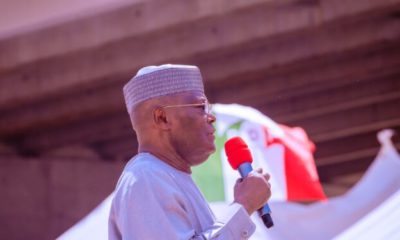

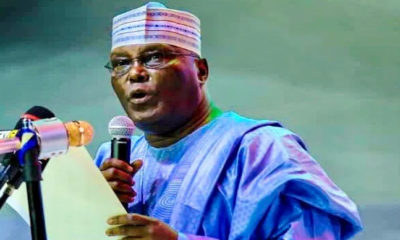

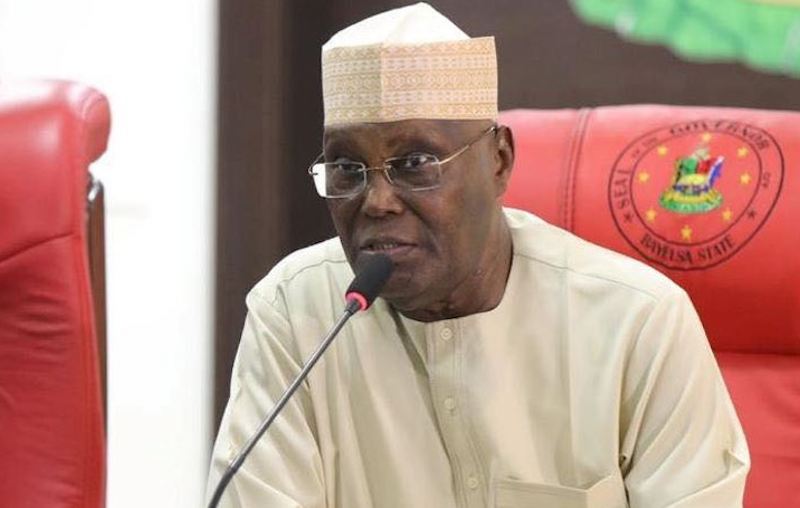
Former Vice President and African Democratic Congress (ADC) presidential candidate for the 2027 election, Atiku Abubakar, has expressed deep sadness over the Nigerian Air Force aircraft crash in Ondo State that claimed 25 lives.
Atiku disclosed this in a statement posted on X on Tuesday, describing the tragedy as heartbreaking and extending his condolences to the families of the victims and the Nigerian Armed Forces.
The Nigerian Air Force ATR-42 aircraft, with registration number NGR 931, crashed in the Inbound area of Ilaje Local Government Area of Ondo State on Monday while on a routine mission from Benin to Lagos.
ALSO READ: Moment Military Aircraft Crashes During Airshow Near Athens (Video)
The aircraft disappeared from radar after air traffic controllers lost contact with it at about 9:13 a.m.
Its wreckage was later located near the Naval Base in Igbokoda, where search-and-rescue operations were launched.
The Nigerian Air Force subsequently confirmed that 25 people were on board, comprising five crew members and 20 passengers, with no survivors.
Reacting to the tragedy, Atiku said the scale and circumstances of the crash were heartbreaking.
“Among those who lost their lives were airmen, soldiers and members of their families,” he said.
He added that the victims included people whose lives were dedicated to service, as well as families and individuals whose lives were cut short in the tragedy.
“My thoughts and prayers are with the families of all the deceased,” Atiku said.
He noted that no words could adequately comfort parents who had lost their children, children who had lost their parents, or families suddenly deprived of their loved ones.
Atiku also extended his heartfelt condolences to the Nigerian Air Force and the Armed Forces of Nigeria, as well as the governments and people of Nigeria and Ondo State.
He prayed that Almighty God would grant eternal rest to the souls of the departed, comfort their grieving families and give the Nigerian Air Force and the nation the strength to bear the painful loss.
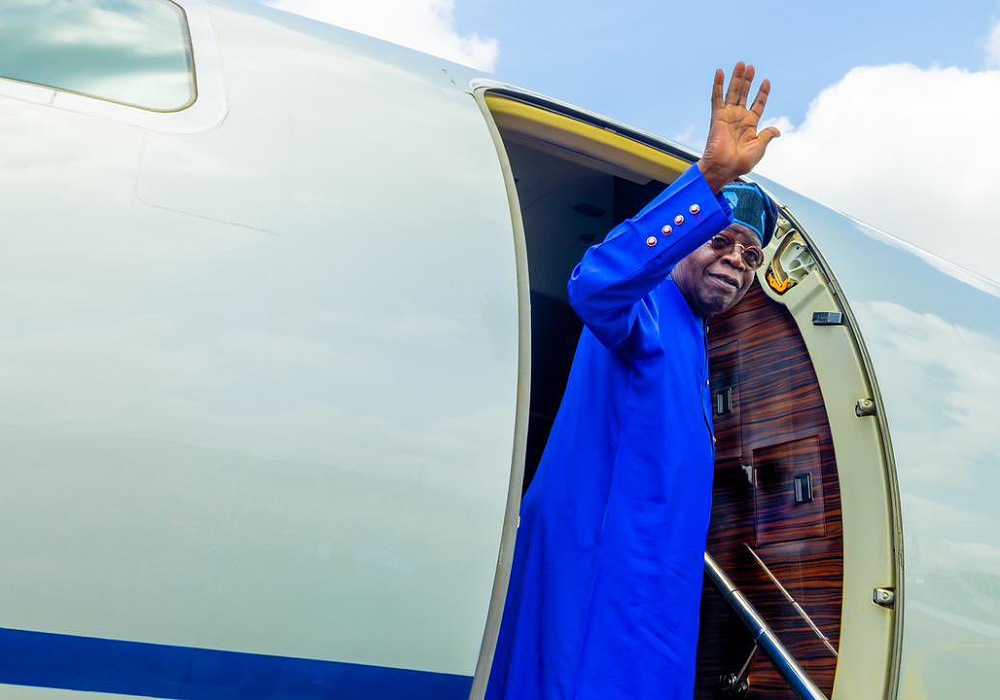
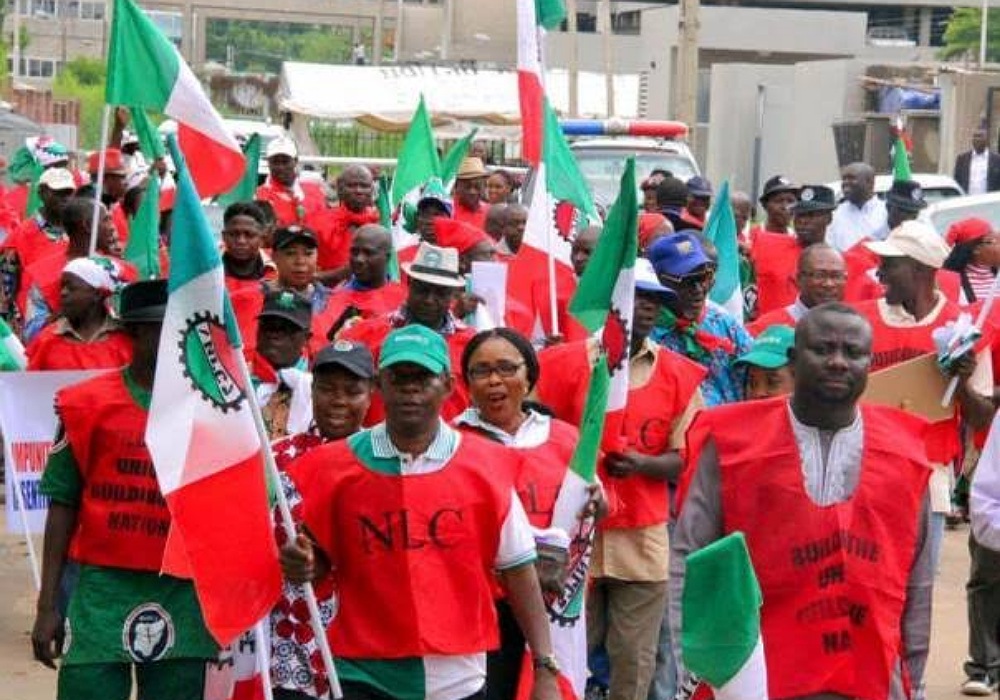
The Director-General of the Michael Imoudu National Institute for Labour Studies, Issa Aremu, has said deliberate and intentional job creation is the key to tackling poverty and moving Nigeria into an “age of prosperity.”
Aremu stated this during an interview on Arise TV on Tuesday, while reflecting on President Bola Ahmed Tinubu’s Independence Day address and the administration’s economic reforms.
SEE ALSO: Tinubu Gov’t Does Not Engage, Everybody Is Its Enemy — Ajaero
He said the President’s speech contained several policy signals that gave hope that Nigeria was moving towards prosperity after navigating the challenges associated with its macroeconomic reforms.
According to Aremu, Nigeria’s path out of the current economic crisis should be driven by job-led and wage-led growth.
“The way out of the economic crisis we have today is to have a job-led growth, job-led growth. And if I want to add further, wage-led growth,” he said.
Aremu said Tinubu’s emphasis on productive work, employment and industrialisation showed that the government was looking beyond cheaper goods to creating opportunities for Nigerians to earn sustainable incomes.
He argued that tackling poverty requires a deliberate effort to create employment rather than relying solely on market forces or trickle-down economics.
“The key out of poverty, I think, also in our proverbs, you know, it’s work. Yoruba are very poetic: ‘Iṣẹ́ l’ọ̀ògùn iṣẹ́.’ You want to get out of poverty, you need to have jobs,” Aremu said.
“We have to be deliberate, intentional to create jobs. We can’t leave job creation to market forces, trickle-down economics of the recent times. So we have to be deliberate.”
The labour expert also praised the Tinubu administration for what he described as a different approach to economic reform, particularly its retention of public-sector employment.
Aremu contrasted the current administration’s approach with reforms under former President Olusegun Obasanjo, when policies such as downsizing, rightsizing and monetisation resulted in significant reductions in public-sector jobs.
He said the Tinubu administration had demonstrated that economic reforms could be implemented without necessarily sacrificing public-sector employment.
“President Bola Ahmed Tinubu has shown a different approach to reform, that you can have reforms not at the expense of public jobs,” he said.
Aremu further claimed that the number of federal employees had increased from about 720,000 in 2023 to nearly two million, attributing the rise partly to the creation of new institutions and agencies.
He cited the Regional Development Council and the Nigerian Education Loan Fund among institutions he said had contributed to additional employment opportunities.
He added that when state and local government employment were included, millions of jobs had been created across the public sector.
However, Aremu said the next priority should be ensuring that the jobs created are decent and capable of improving workers’ living standards.
He maintained that employment, industrialisation and productive work must remain central to Nigeria’s transition from economic reforms to broad-based prosperity.
Military gear has reportedly been found at the scene of a helicopter crash in Igbokoda, headquarters of Ilaje Local Government Area of Ondo State.
The helicopter crashed in a swampy area of the coastal community on Monday, October 5, 2026, sparking panic among residents.
The Chairman of Ilaje Local Government Area, Maurice Oripelaye, said military personnel and equipment were seen at the crash site, raising the possibility that the aircraft could have been a military helicopter.
READ ALSO:Shell Endorses Regional Action Plan for Safe Helicopter Services
However, the identity of the helicopter and its operator had not been officially established as of the time of filing this report.
Oripelaye said the aircraft crashed near the Naval Base area and was burnt to rubble following the incident.
He also said the number of people who were aboard the helicopter could not immediately be ascertained, while the fate of those on board remained unclear.
Earlier, residents reported hearing a loud sound from the direction of the crash before discovering that an aircraft had gone down in the swampy area.
The difficult terrain has also made access to the crash site challenging, with security personnel and other responders deployed to the area.
The Ondo State Police Command has confirmed the aircraft crash and said investigations are ongoing to establish the circumstances surrounding the incident.
The police urged residents of Igbokoda and adjoining communities to remain calm and avoid spreading unverified information, promising to provide further details as credible information becomes available.






Middle East Push, G7’s Strategic Reserve Release Arrest Oil Prices

Petrol, Diesel Prices Rise 86% in Eight Months – Report

NNPC Ltd Celebrates Second Year of Zero Voluntary Resignations

Atiku Mourns 25 Killed in NAF Aircraft Crash in Ondo

‘Age of Prosperity’: Intentional Job Creation Is Nigeria’s Cure for Poverty – Aremu

‘Tinubu Has Put Nigeria’s Economy on Growth Path’, Says Minister Udeh

Trump’s Family Unveils New Cryptocurrency Platform

Senate Denies Receiving Petitions Against Tinubu’s Ambassadorial Nominees

Dangote Cement Lights Up Benue Host Communities With CSR Initiatives

Reps Recommend 3-year Jail Term For Aviation minister

Tems Sets New Record On Billboard Hot 100 Chart
