
Maritime
Capacity Development: 235 NSDP Beneficiaries Depart For India, Greece

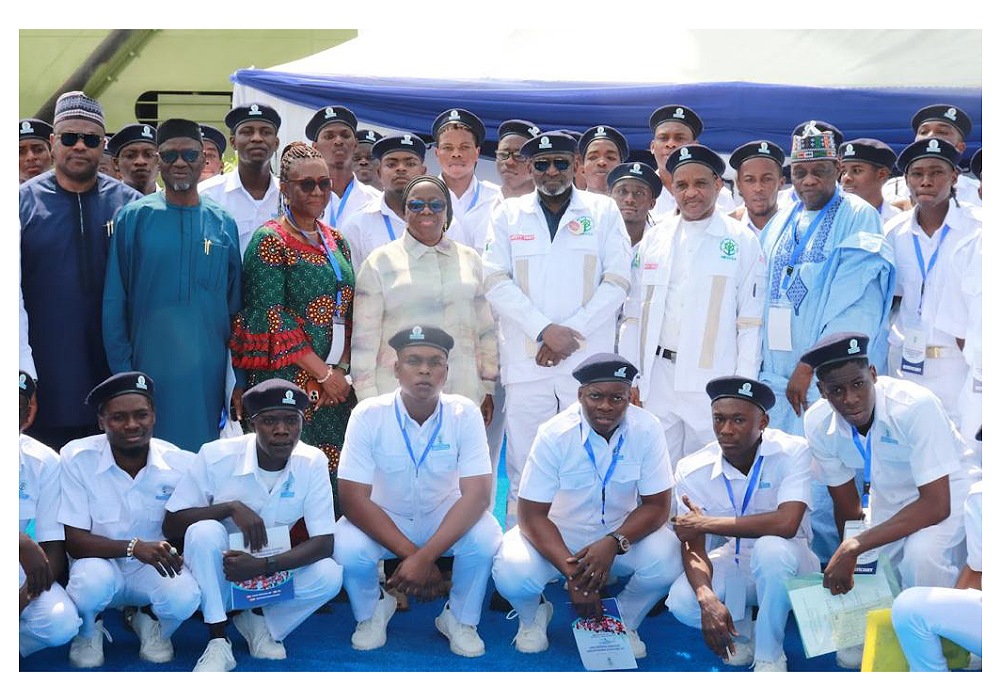
The Nigerian Maritime Administration and Safety Agency, NIMASA, has sent forth 235 Nigerians to India and Greece as batch B of the 435 young Nigerians to be trained as Licenced Deck and Engine Officers including Naval Architects under the Nigerian Seafarers Development Programme, NSDP.
The Honourable Minister of Transportation Engineer Muazu Jaji Sambo who was the special guest of honor during the sent-forth ceremony christened NSDP phase 3, TERRA II over the weekend in Lagos, noted that the Federal Government’s decision to continue with the project is based on the role its playing in developing capacity for the Nigerian maritime industry.
In his words “The success of this laudable policy cannot be overemphasised, therefore the Federal Ministry of Transportation will continue to encourage and partner with NIMASA on NSDP and other policies on the development of a sustainable maritime based economy (Blue Economy).
Hence, the Ministry explicitly gave its nod on the expansion of the Programme by another set of 435 new students to be recruited into the NSDP. The flag off of the 3rd phase of NSDP ‘’Christened NSDP-TERRA’’ marks another milestone in the development of manpower in line with the Federal Government’s policy on youth empowerment.”
On his part, the Director General of NIMASA, Dr Bashir Jamoh, OFR, noted that the Agency is working with countries who are committed to an understanding for mutual recognition of Certificate of Competency, CoC, in selecting the Institutes to train the beneficiaries.
While acknowledging some teething challenges experienced by the NSDP scholarship scheme in the earlier Phases, the NIMASA DG noted that all grey areas have been addressed to ensure a better deal for both beneficiaries and the Nigerian Government.
In his words “We have taken measures to ensure that all encumbrances experienced in previous phases of the programme are avoided in this new phase. These include improved recruitment process spread across the six (6) geo-political zones, introduction of a code of conduct for the beneficiaries and most importantly, engaging Maritime Training Institutions (MTIs) that offer shore-based training, shipboard training and the Certificate of Competency licencing to eliminate the long delay in securing sea time training berths that was experienced with the previous set of students. NIMASA comparatively got the most reasonable cost for the training and in countries with mutual recognition of CoC with Nigeria.”
Giving a breakdown of the number of seafarer enrolment, graduates and those already employed, Jamoh said: “It is important to note that from inception to 2020, the programme has enrolled 2,041 students, while 892 are now licensed deck and engine officers including Naval Architects, the rest are in their final stage of the programme.
“It may please the Minister to know that about 486 of the graduates are now gainfully employed and sailing in both coastal and ocean going vessels, adding that the NLNG Ship Management Limited is the leading employer of NSDP beneficiaries in the country, with over 40 on their pay roll already.
Stakeholders at the sendforth ceremony included former DG of NIMASA, Dr. Ade Dosunmu, the President General of the Maritime Workers Union of Nigeria, Comrade Adewale Adeyanju, Secretary General of Abuja MoU, Captain Sunday Umoren. Among them; Engineer Greg Ogbeifun, Alhaji Aminu Umar and Mrs Margaret Orakwusi, who are shipowners, urged the beneficiaries to be good ambassadors of the country, noting that they can be described as privileged Nigerians.
NIMASA in 2008 initiated the NSDP with the sole mandate of training Nigerian youths to become seafarers and Naval Architects in fulfilling one of its core in the area of Maritime Capacity Building.
The programme was designed to train Nigerian youths up to Degree level in Marine Engineering, Nautical Sciences and Naval Architecture in some of the best Maritime Training Institutions (MTIs) abroad and to position them to compete effectively in the global Maritime Industry.
It was noted that the number of Nigerian seafarers on ocean going vessels as at then had depleted over the years and the urgent need to boost it adequately for effective implementation of the coastal and inland shipping policy of the Government, informed the initiative.


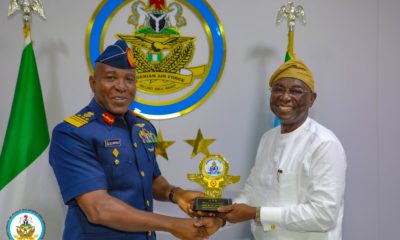








The Nigerian Maritime Administration and Safety Agency (NIMASA) and the Nigerian Navy have renewed their strategic partnership with the endorsement of a Memorandum of Understanding (MoU) to strengthen maritime security, enhance safety and deepen coordinated enforcement across Nigeria’s maritime domain.
The MoU was signed at the Nigerian Navy Headquarters, Abuja, by the Director General of NIMASA, Dr Dayo Mobereola, and the Chief of the Naval Staff, Vice Admiral Idi Abbas.
The renewed agreement marks a significant milestone in the longstanding relationship between both institutions and represents the first formal renewal of their partnership since the original MoU was signed in 2007.
The agreement provides a framework for enhanced collaboration in the promotion and maintenance of maritime security and the effective implementation of the Suppression of Piracy and Other Maritime Offences (SPOMO) Act, the International Ship and Port Facility Security (ISPS) Code and other relevant maritime laws and regulations within NIMASA’s mandate.
READ ALSO: NNPC/Shell Vision First Initiative Impact over 10,000
Speaking at the signing ceremony, the NIMASA Director General, Dr Dayo Mobereola, commended the commitment of the Honourable Minister of Marine and Blue Economy, Adegboyega Oyetola, to strengthening inter-agency collaboration as a key driver of maritime security and the development of Nigeria’s Blue Economy.
He said the renewed MoU would provide a stronger institutional framework for both organisations to discharge their respective statutory mandates while consolidating the gains already recorded in securing Nigeria’s maritime domain. This he said will enhance achieving the goals of President Bola Tinubu GCFR for the Blue Economy.
According to him, the agreement is also designed to address emerging maritime security challenges through improved coordination, information sharing and operational cooperation.
“As we renew this partnership today, I urge our respective teams to ensure that the spirit of this agreement translates into practical and measurable outcomes,” Dr Mobereola said.
Dr Mobereola also expressed appreciation to the Chief of the Naval Staff and the Nigerian Navy for their continued support and commitment to the renewal of the partnership.
In his remarks, the Chief of the Naval Staff, Vice Admiral Idi Abbas, described the signing as a milestone in the enduring relationship between the Nigerian Navy and NIMASA.
He noted that the renewed MoU contained important additions aimed at strengthening the response to the evolving nature of maritime security challenges.
One of the key provisions, he said, is the integration of the Deep Blue Project into the collaborative framework, providing a stronger basis for cooperation between the Nigerian Navy’s Maritime Guard Command and the project.
He also highlighted the introduction of a joint reporting protocol for communication and information sharing during operations, which he said would facilitate timely decision-making and a more coordinated response to maritime incidents.
Vice Admiral Abbas further welcomed provisions for greater institutional engagement, including an annual conference to enhance collaboration, review progress and address emerging challenges.
“Whether we like it or not, the water is where we get whatever we are getting—our revenue, everything and even the trade we engage in, in large percentages, is done through the water. So this institution has to be very strong,” he said.
The renewed MoU is expected to deepen operational cooperation between NIMASA and the Nigerian Navy, particularly in maritime security, information sharing, coordinated responses to maritime incidents, enforcement of applicable maritime laws amongst others.
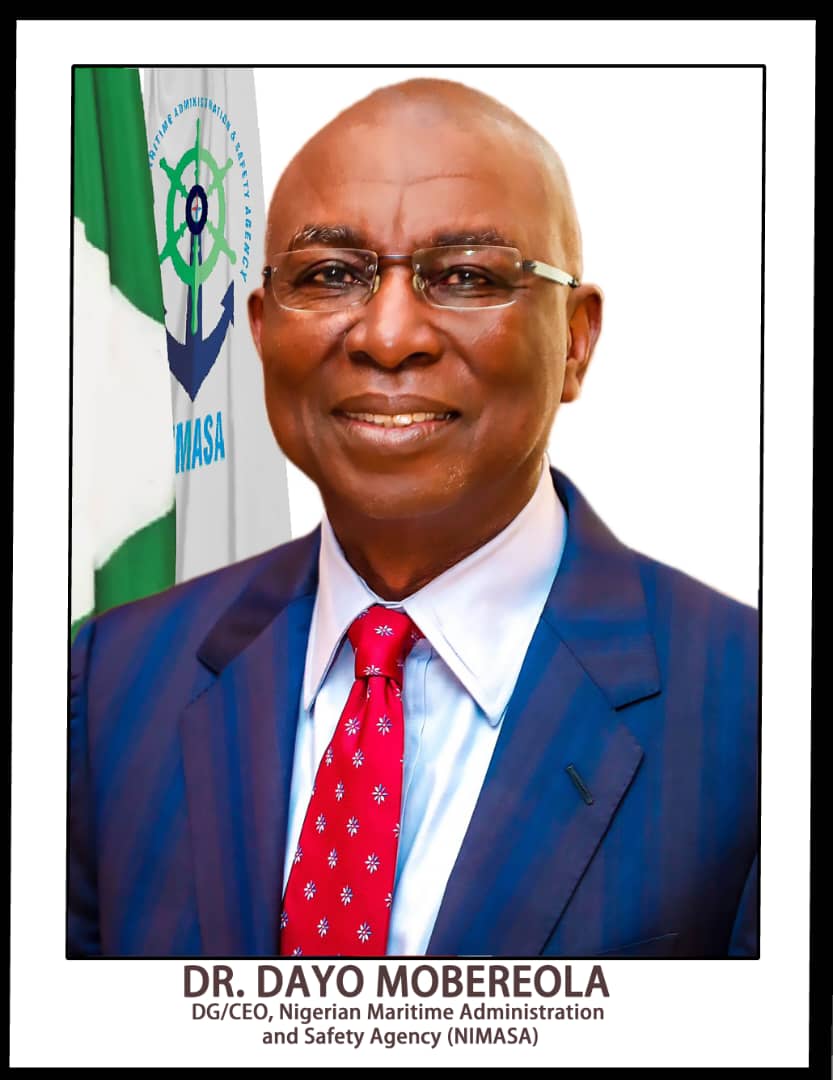
The Director General of the Nigerian Maritime Administration and Safety Agency (NIMASA), Dr. Dayo Mobereola, has reaffirmed the Agency’s commitment to advancing regional maritime integration, cooperation and capacity development across Africa.
Mobereola made this known when he received the Honorary Consul of the Republic of Liberia in Lagos, Dapo Akinosun, at the Agency’s headquarters in Lagos.
The NIMASA DG described the meeting as a reflection of the longstanding and mutually beneficial relationship between Nigeria and Liberia, particularly within the maritime sector.
According to him, stronger collaboration among African nations remains critical to unlocking the continent’s maritime potential, strengthening the Blue Economy, and promoting sustainable regional growth of the continent.
On the significance of maritime cooperation, Mobereola said: “The time has come for African nations to upscale maritime collaboration. The partnership between Nigeria and Liberia will help us build capacity, strengthen regional cooperation, and create opportunities for African youths within the global maritime industry.
“We must collectively build maritime capacity beyond borders. Sea-time training and practical exposure will position Nigerian and African youths to compete effectively in the international maritime space.”
ALSO READ: Workers Suspend Strike at NUPRC
He also appreciated the Liberian Government for supporting Nigeria’s successful bid for the Category C seat of the International Maritime Organization (IMO), noting that both countries have sustained productive maritime relations over the years.
In his address, Akinosun stated that the visit was aimed at reinforcing the enduring relationship between Nigeria and Liberia while promoting stronger maritime cooperation between both countries.
The Envoy described the maritime sector as a key driver of economic growth, regional integration, and Blue Economy development, while commending the management of NIMASA for efforts towards repositioning Nigeria’s maritime industry for sustainable growth and investment.
“Nigeria has demonstrated genuine commitment to maritime partnership and regional growth. Liberia looks forward to deeper collaboration with NIMASA in maritime administration, safety, capacity development, and trade promotion for the advancement of Africa’s Blue Economy,” Akinosun said.
Modupe Asudo
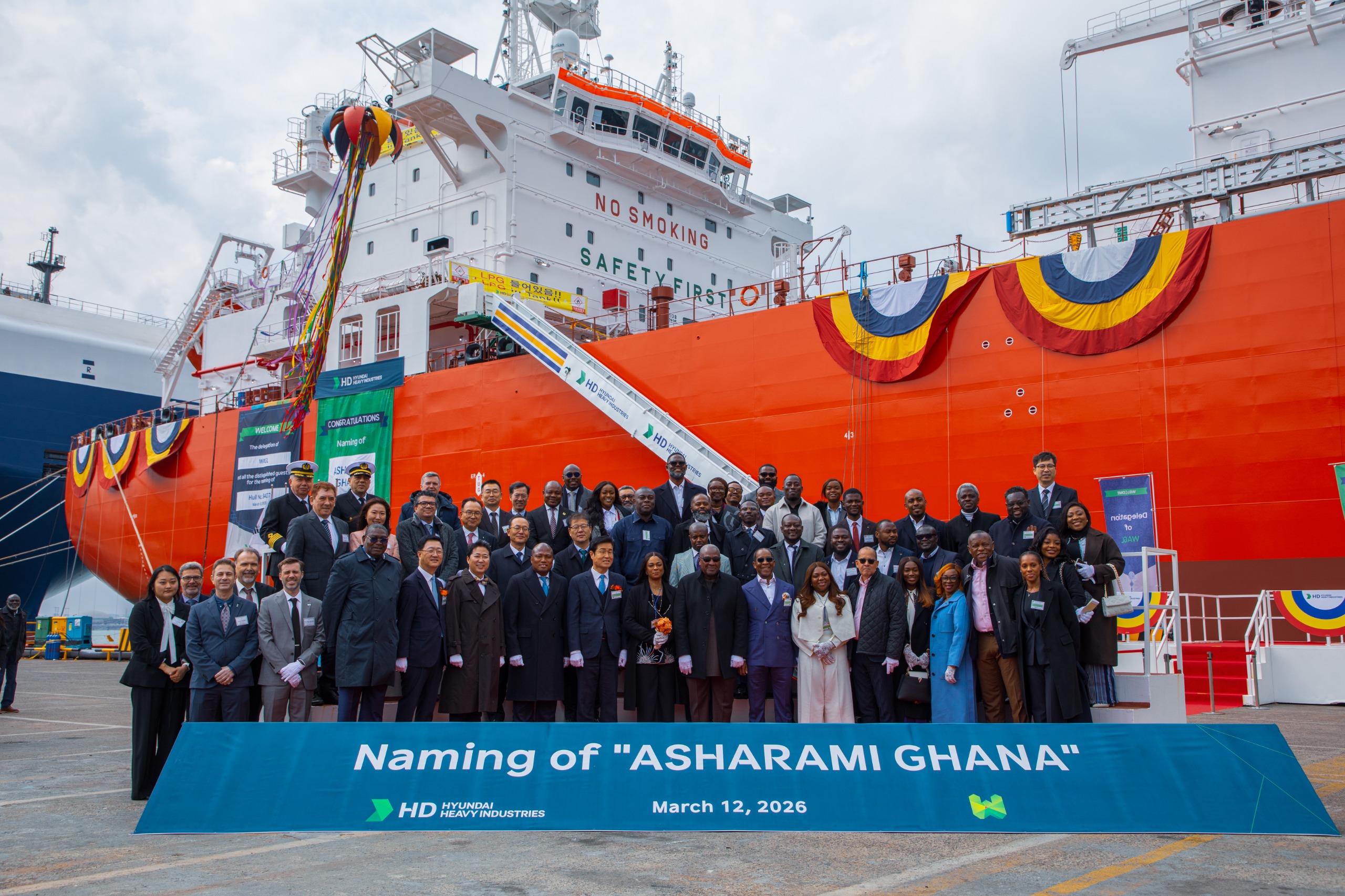
Sahara Group, a leading global energy and infrastructure conglomerate, has commissioned MT Asharami Ghana, a 40,000‑cubic‑metre Liquefied Petroleum Gas (LPG) carrier, expanding its fleet capacity, while strengthening Ghana’s clean energy supply chain and LPG distribution network.
The dual‑fuel vessel improves operational efficiency, enhances supply reliability, and supports lower‑emission LPG logistics as consumption grows across Ghana and the wider sub‑region.
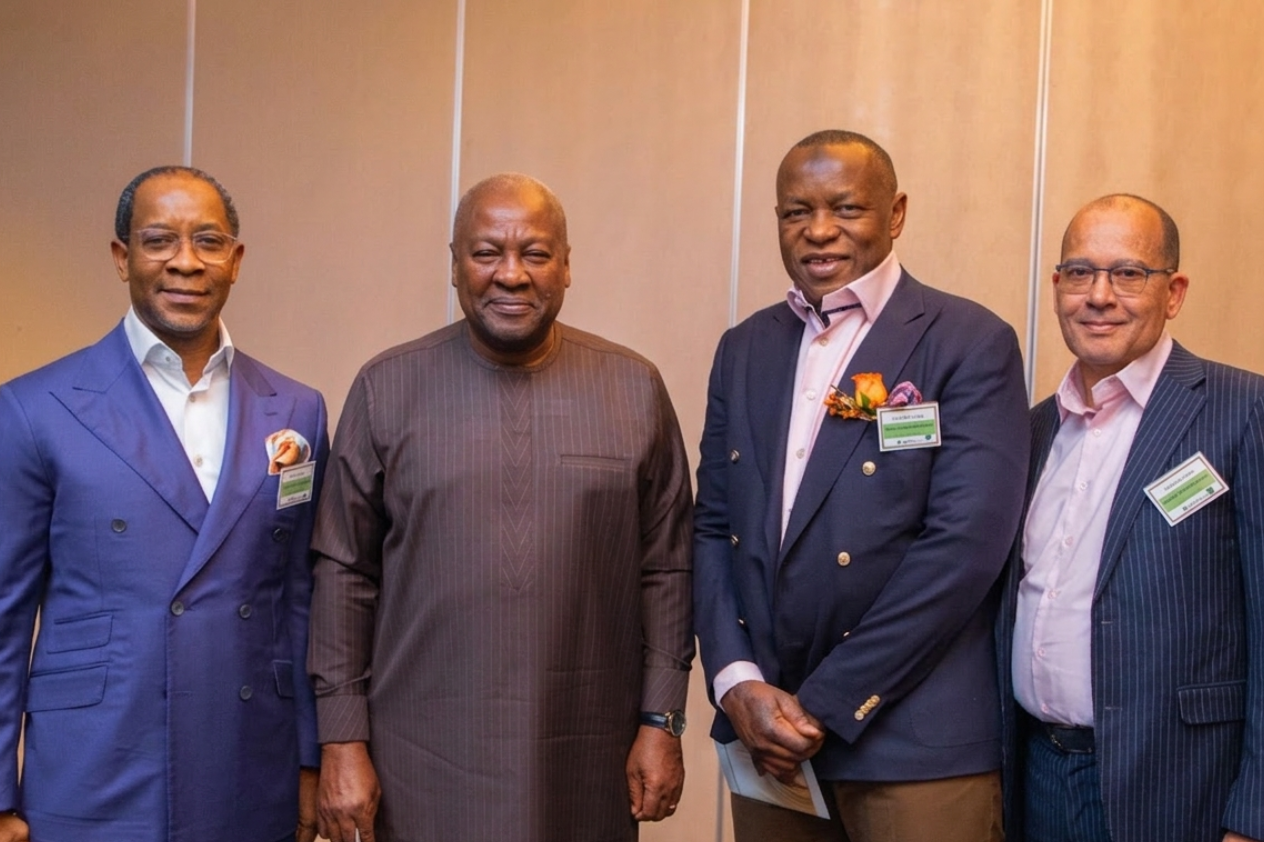
Ghanaian President Mahama and Sahara Executive Directors
Speaking at the commissioning in Ulsan, South Korea, President John Dramani Mahama described the vessel as “a significant milestone in strengthening the infrastructure that underpins the global LPG supply chain,” noting that expanded shipping capacity is critical to improving supply security, reliability and efficiency for countries that rely partly on LPG imports.
He commended Sahara Group, WAGL Energy and all partners involved for their “leadership, technical expertise and strategic foresight,” adding that the project reflects “the power of partnership” in advancing safe, efficient, and responsible energy distribution.
President Mahama wished the MT Asharami Ghana safe sails, expressing confidence that the vessel would inspire further investment and collaboration across Africa’s energy value chain.
According to Wale Ajibade, Executive Director, Sahara Group, the vessel supports Ghana’s clean energy ambitions through integrated infrastructure.
“MT Asharami Ghana is more than a vessel; it is part of a deliberate strategy to strengthen LPG supply security and support Ghana’s clean energy ambitions. It secures an additional 25,000-Metric-tonne stock security for the Ghana economy, alongside the soon to be commissioned 6000-metric-tonee of 12.000-metric-tonne land storage in Tema,” he said.
With the addition of Asharami Ghana, Sahara Group’s LPG carrier fleet now comprises six delivered vessels with a combined capacity of 202,000 cubic metres. Supported by partnerships with WAGL Energy, NNPC Limited and other stakeholders, an additional 270,000 cubic metres of capacity is under construction and due for delivery by September 2028.
Temitope Shonubi, Executive Director, Sahara Group, said Asharami Ghana is part of Sahara’s integrated LPG infrastructure strategy spanning shipping, storage, and downstream distribution globally, including the development of a 12,000‑metric‑tonne land‑based LPG storage terminal in Tema, with a 6,000‑metric‑tonne first phase scheduled for completion in May 2026.
He thanked Yaa Serwaa Alifo, MD of Asharami Ghana, for her resilience and insistence to dedicate a ship of “this magnitude solely to the Ghana Market and its landlocked neighbours.”
Ghana is targeting LPG adoption of 50 per cent of households by 2030, up from about 30 per cent today. Sahara’s investments will support clean energy access for more than 35 million people, while strengthening Ghana’s role in regional LPG trade to neighbouring and landlocked West African markets.
The commissioning comes in Sahara Group’s 30th anniversary year, guided by the Sahara Beyond XXX milestone, underscoring Sahara’s focus on building an enduring enterprise that delivers responsible growth, shared prosperity and long‑term impact across its markets.





FG Withdraws Charges Against ‘Fake Agency’ DG, Adeniyi Adeyemi

Shell Identifies Keys to Nigeria’s Energy Future

Nigeria Records Biggest Rise in Multidimensional Poverty Among Five Countries – UN

Katsina Students Get ₦689.79m Bursary as Gov Radda Doubles Allowances
DOJ Confirms Federal Criminal Investigation After Agents Raid Ilhan Omar’s Home

Peter Obi Slams Tinubu Over ₦7.7tn Debt Interest Against ₦6.2tn Revenue

Trump’s Family Unveils New Cryptocurrency Platform

Senate Denies Receiving Petitions Against Tinubu’s Ambassadorial Nominees

Dangote Cement Lights Up Benue Host Communities With CSR Initiatives

Reps Recommend 3-year Jail Term For Aviation minister

Tems Sets New Record On Billboard Hot 100 Chart
