
Business
Caribbean Countries To Partner With Dangote On Cement, Fertiliser Manufacturing

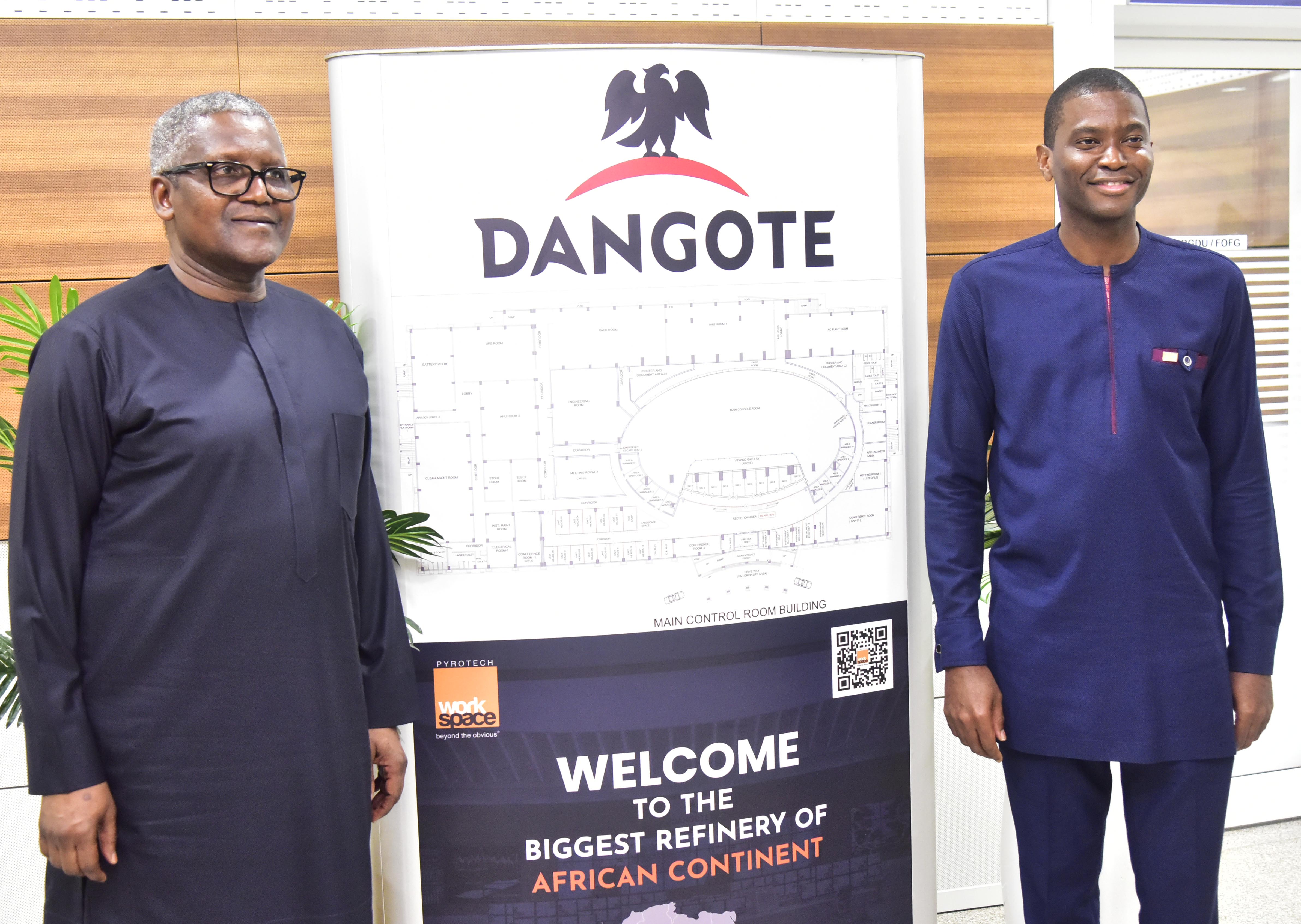
. . . Dangote Refinery will save Africa from being a dumping ground – Grenada PM
The Prime Minister of Grenada, Dickon Mitchell, has described the Dangote Petroleum Refinery and Petrochemicals as a significant investment in industrialisation and manufacturing needed by developing countries for their industrial growth.
He maintained that through this type of investment Africa and indeed the developing countries can reverse the cycle of exporting raw materials while importing finished products from developed countries.
This is as Dangote hinted at potential partnerships with the Caribbean community in the production of cement and fertilisers as well as petroleum products.
ALSO READ: How Nigeria Can Become A Net Exporter Of Petroleum Products – Dangote
Mitchell, who is the chairman of the Caribbean Community (CARICOM or CC) – a political and economic union of 15 member states and five associated members throughout the Americas, The Caribbean and Atlantic Ocean, disclosed this on Thursday during his tour of the Dangote Petroleum refinery and Petrochemicals complex in Ibeju Lekki, Lagos.
Mitchell said the investment is a tribute to the President of Dangote Group, Aliko Dangote and his vision not just for Nigeria but Africa as a whole.
“This investment is a tribute to Dangote and his remarkable vision. It is the first of its kind in Nigeria and Africa, symbolising what the developing world needs: significant investment in industrialisation and manufacturing. This is an incredible achievement and a testament to Mr. Dangote’s vision, not just for his company, but for Nigeria and Africa as a whole.
“Dangote exemplifies what an African leader should be. We need not just political leaders, but business leaders who are willing to invest in Africa, particularly in manufacturing and industrialisation. We must ensure that we don’t continue to export our raw materials to the developed world, where they can be turned into sophisticated products and sent back to us. We need to reverse that cycle; it is the only way to grow the wealth of Africa and the developing world. Additionally, we need to support this with training and invest in job opportunities,” he said.
Applauding the sophistication and automation at the refinery, the Prime Minister expressed optimism for Nigeria’s future, especially given the number of young Nigerians trained and working at both the refinery and fertiliser plants. The $20 billion refinery, the largest private investment in Africa, stands out for its team of young professionals, predominantly aged between 26 and 28, most of whom hold advanced degrees and were educated in Nigeria.
“It has been a wonderful experience to witness the shared skills, depth of sophistication, and automation here. Seeing so many bright young Nigerians, particularly in the laboratories, is truly inspiring. I believe this bodes well for the future development of Nigeria,” he added.
Mitchell stated that the Caribbean Community would be exploring partnership opportunities with the Dangote Group to enhance its economy.
“One of the reasons I am here is to pursue synergies and partnerships between the diaspora and Africa, particularly in areas such as the refinery, cement, and fertiliser. We believe there are fantastic opportunities to develop partnerships between the Caribbean and Africa,” he added.
On his part, Dangote described the visit as symbolic, noting that many Caribbean countries are beginning to discover crude oil and are exploring opportunities to build their own refineries. This would help them address the challenge of exporting crude while importing refined petroleum products at high costs.
“The visit shows that many countries are proud of what we have been able to achieve because a lot of countries have been unable to deliver their refineries. It shows their pride in seeing a Black person like them at the Caribbean, although I am from Nigeria, succeed. For them, this is a dream, especially as many Caribbean countries are beginning to discover oil but still depend largely on exporting crude while importing petroleum products, which is costlier than in America. Their dream is to set up a refinery — perhaps not of this size — but one that would cater to their people,” he said.
Africa’s wealthiest man emphasized that the company is looking for partnerships in the Caribbean not only in petroleum products but also in cement and fertilizer production. He mentioned ongoing discussions about importing crude from these countries while supplying them with refined products.
“There are numerous partnerships in place. He is not only the Prime Minister of Grenada but also the Chairman of the Caribbean Community (CARICOM). We are exploring collaboration in areas such as cement and petroleum, including the possibility of buying crude from them while selling some of our petroleum products to them. We already export to the U.S., Mexico, and other regions, so there is significant collaboration we are looking to develop between us and them,” he added.
The 650,000 barrels per day (bpd) Dangote Oil Refinery — the largest single-train refinery in the world — is designed to process a wide variety of crude oils, including those from Africa, the Middle East, and US Light Tight Oil. It conforms to Euro V specifications and is built to meet stringent standards set by the US Environmental Protection Agency (EPA), European emission norms, the Department of Petroleum Resources (DPR), and the African Refiners and Distributors Association (ARDA). The refinery has the capacity to satisfy 100% of Nigeria’s demand for petrol, diesel, kerosene, and aviation jet fuel, with additional surplus available for export.

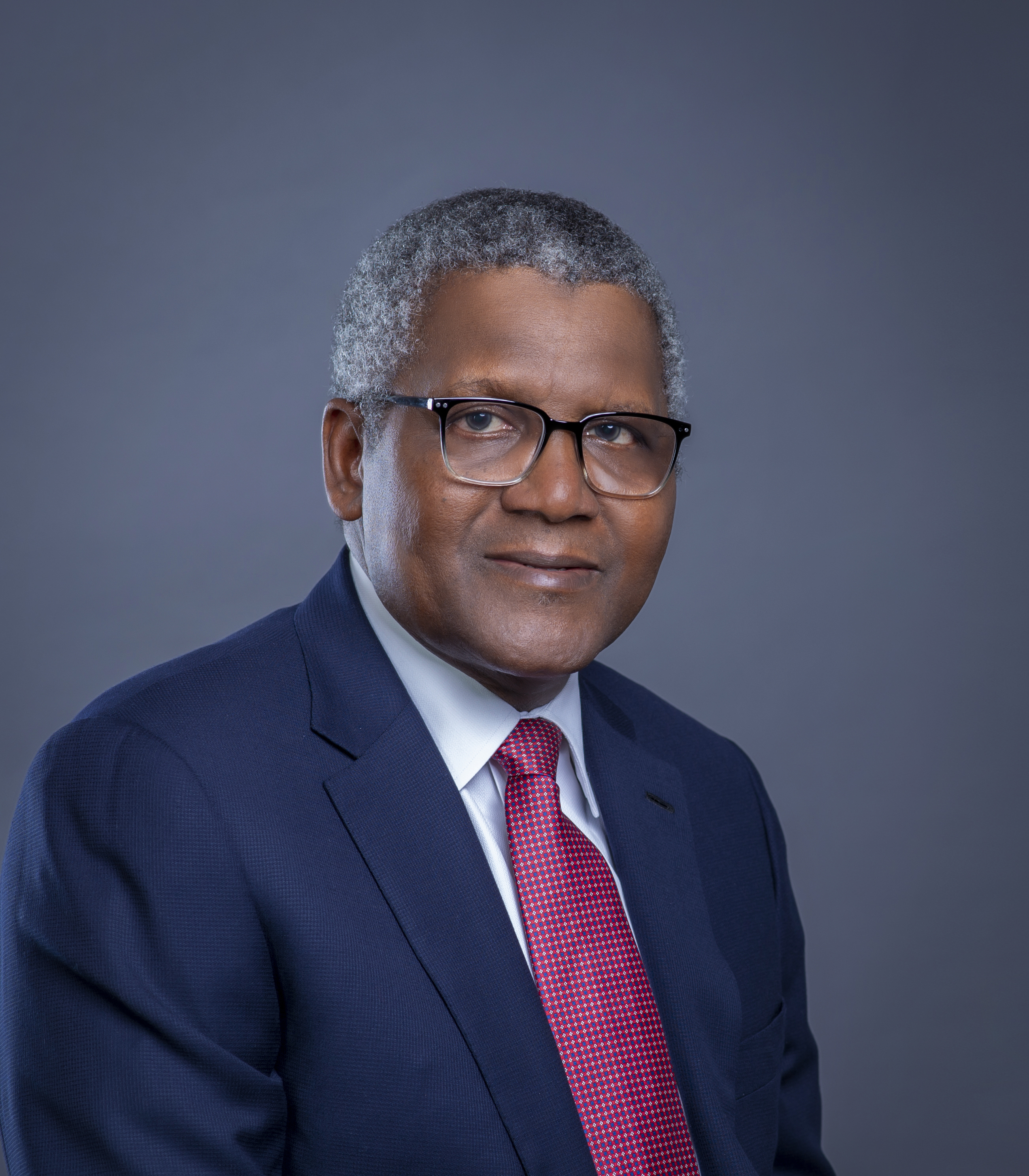







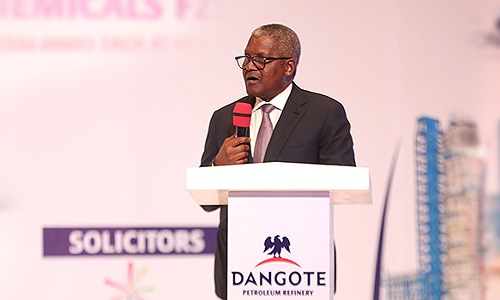
President of Dangote Group, Aliko Dangote, has reaffirmed his commitment to ensuring broad-based participation in the Dangote Refinery’s Initial Public Offering (IPO).
In a statement, the industrialist announced that investors applying with ₦50,000 and below will receive priority consideration as the company seeks to democratize ownership of one of Africa’s most significant industrial assets.
Dangote made the declaration during the final leg of the nationwide IPO roadshow held in Port Harcourt, Rivers State, where investors, financial market experts, business leaders and other stakeholders gathered to discuss the investment opportunity and its implications for Nigeria’s economic transformation.
READ ALSO: Sahara Champions Global Shipping Collaboration for $20m Mercy Ships Healthcare Impact
Speaking at the event, Dangote emphasised that the IPO should be viewed not merely as an investment opportunity, but as a chance for Nigerians to become shareholders in a landmark enterprise that is reshaping the country’s industrial landscape.
“We will prioritise people with ₦50,000 and below,” Dangote stated, underscoring the Group’s determination to make the offering accessible to small and medium-scale investors across the country.
He noted that while international and African investors had already committed substantial capital to the refinery, the IPO now offers Nigerians a rare opportunity to participate directly in the ownership of a world-class industrial project built on Nigerian soil.
According to him, investing in the refinery goes beyond financial returns, representing a vote of confidence in Nigeria’s future, institutional development, corporate governance standards and industrial capacity.
“African investors have invested in this refinery. Now it is time for Nigerians to invest in themselves and participate in a project that is creating value, jobs and opportunities for generations to come,” he said.
Dangote also encouraged prospective shareholders to adopt a long-term investment perspective, noting that participation in the IPO presents a pathway to wealth creation, portfolio diversification and increased public engagement with the capital market.
He added that wider participation in the stock market would deepen financial literacy, promote a savings and investment culture, and enable more Nigerians to better understand how businesses create value and contribute to economic growth.
The roadshow also featured insightful presentations from leading economists and market analysts on the refinery’s economic significance and the broader opportunities associated with the public offering.
Renowned economist Bismarck Rewane highlighted the enormous economic potential of the South-South region and stressed the need to convert the area’s resource endowment into sustainable prosperity, infrastructure development and improved living standards. He also noted that the IPO presents an opportunity to deepen Nigeria’s capital market by encouraging citizens to participate actively in wealth creation.
Similarly, economist Dr. Muda Yusuf outlined the refinery’s far-reaching impact on economic diversification, domestic value addition, energy security, capital formation and employment generation.
According to Yusuf, the refinery represents far more than a petroleum-processing facility, serving as a catalyst for growth across multiple sectors including petrochemicals, packaging, manufacturing, logistics and other downstream industries.
He further emphasized that policy consistency, regulatory stability and sustained stakeholder engagement remain critical to maintaining investor confidence and attracting long-term capital into Nigeria’s industrial sector.
Speaking on the investment outlook, stakeholders urged prospective investors to consider the company’s operational performance, valuation metrics and long-term fundamentals when evaluating the offer.
Yusuf also described the refinery as a major example of domestic value addition, noting that its extensive local content and industrial linkages would significantly amplify its contribution to the Nigerian economy.
Discussions at the event further highlighted the importance of sound monetary policy, affordable financing and a predictable business environment in supporting investment-led growth and industrial expansion.
The Port Harcourt engagement was particularly significant for the South-South region, with legal luminary and business leader Paul Usoro expressing satisfaction at the level of participation from investors across the region.
“My joy is to see the South-South well represented,” Usoro said, stressing the importance of ensuring that investors from the region take advantage of the opportunity presented by the IPO.
The Port Harcourt event marked the final stop of the nationwide IPO roadshow, concluding a series of engagements designed to deepen public awareness and expand participation in what is widely regarded as one of the most significant capital market offerings in Nigeria’s history.
For Dangote Group, the objective remains clear: to provide Nigerians from all backgrounds with an opportunity to participate in the ownership of a transformative industrial enterprise while contributing to economic growth, employment generation and national development.
Sahara Energy Geneva has highlighted the power of business collaboration to deliver lasting impact, with Mercy Ships Cargo Day celebrating more than $20 million raised over the past decade to support healthcare interventions in Africa.
More than 500 guests from over 150 shipping and trading companies gathered in Geneva recently for the 10th anniversary Gala of Mercy Ships Cargo Day, celebrating a decade of industry support for the international charity.
David Walker, Head of Chartering at Sahara Energy Geneva and Chairman of the Cargo Day Geneva Committee, joined industry leaders at the event, where he thanked the global shipping community, sponsors, media partners and Cargo Day committees in Geneva, London, Houston, Dubai and Singapore for supporting the initiative.
Cargo Day brings together charterers, shipowners, shipbrokers, and other shipping professionals who contribute through pledges, cargo commissions, and address commissions to support the work of Mercy Ships.
READ ALSO: 30 Nigerians Bag Postgraduate Scholarship from NNPC Ltd, Eni
Kola Motajo, Director, Sahara Geneva said Sahara’s involvement reflects the company’s belief in the ability of enterprise and partnerships to deliver impact beyond business.
“At Sahara, our focus is always on impact and lives transformed. Cargo Day demonstrates what is possible when businesses and individuals unite around a shared purpose. The $20 million milestone reflects the collective commitment of the global shipping community to improving healthcare in Africa. As Sahara looks Beyond XXX, we remain committed to building connections that create lasting value and possibilities for generations to come,” Motajo said.
Reflecting on Cargo Day’s growth, Walker said: “Ten years ago, we raised $300,000 and there were 70 people at the Gala. Today, we have more than 500 people coming from around the world to support such a great cause.”
Cargo Day 2025 raised more than $2.5 million, with 93 companies participating, including charterers, brokers, shipowners, and other partners.
Mercy Ships operates two hospital ships supporting patients in Africa with free life-changing surgeries, while also providing training and mentoring for local healthcare professionals. Cargo Day funding contributes to expenses associated with operating the hospital ships.
The 2026 Cargo Day campaign begins November 4 and will run through November and December, with companies participating through Mercy Cargoes, address commissions and pledges.

Up to 30 Nigerian graduates have bagged postgraduate scholarships to pursue further studies both locally and in the Diaspora.
According to the Nigerian National Petroleum Company Limited (NNPC Ltd) and Italian energy company, Eni have awarded postgraduate scholarships
The beneficiaries emerged from more than 3,000 applicants following assessments of their academic records and performances in a recently conducted computer-based test (CBT).
The awards are under the 2026/2027 Postgraduate Scholarship Scheme of Nigerian Agip Exploration Limited (NAE), an Eni subsidiary, on behalf of the NNPC-NAE Production Sharing Contract (PSC) partners.
In a statement, NAE’s Vice Chairman and Managing Director, Maurizio Pinna, said the initiative was designed to develop local talent and equip young Nigerians with skills relevant to the oil and gas industry. Pinna congratulated the beneficiaries, noting that the scholarships would enable them to pursue their academic ambitions and achieve their career goals.
According to NAE, the programme reflects its commitment to education, innovation and capacity building in Nigeria.
The company urged the beneficiaries to make good use of the opportunity by acquiring valuable knowledge and skills that would contribute to national development, particularly in the energy sector.
Ten of the awardees will undertake postgraduate studies in universities abroad, including Imperial College London, Robert Gordon University in Aberdeen, Newcastle University, the University of Aberdeen and the University of Hull in the United Kingdom.
READ ALSO: Navy Recovers 98,000 Litres of Suspected Stolen Crude in Rivers
The remaining 20 beneficiaries will study at Nigerian universities in fields including engineering, geosciences, petroleum and environmental technology, energy economics, renewable energy and energy transition.
Established in 2007, the NNPC-NAE PSC postgraduate scholarship scheme is part of the partners’ human capital development programme aimed at promoting specialised knowledge and addressing skills shortages in Nigeria’s deep offshore oil and gas operations.
NAE said 380 Nigerian graduates had benefited from the scheme since its inception, gaining knowledge and skills required by the oil and gas industry.
Beyond education, Eni, through NAE, has implemented sustainability initiatives in Nigeria covering healthcare, access to water, infrastructure and community empowerment.
Eni has operated in Nigeria since 1962 and currently has an equity production of about 55,000 barrels of oil equivalent per day. The company also holds a 10.4 per cent stake in Nigeria LNG.
NAE was incorporated in 1996 to manage Eni’s deep offshore exploration and production assets. It became the first oil and gas company in Nigeria to produce oil from the country’s deep offshore when its Abo floating production, storage and offloading (FPSO) vessel began operations in 2003.
The company has interests in nine offshore blocks in Nigeria, either as operator or co-venturer, including PML 102 and PML 103, where the Zabazaba-Etan fields are being developed.






Africa’s Energy Security Conversations Pull Industry Executives Together
‘Oseni Rufai Helped Me, Not NiDCOM’ — Ekene Chukwuma on Return to Nigeria

‘Who Owns NNPC?’ Rufai Grills Olabode Sowunmi Over Fuel Subsidy

JUST IN: Amnesty Volunteer Lawrence Zongo Regains Freedom After 10 Days In Custody

2027: Tinubu Won’t Abandon Governance for Campaigns, Says Aide

Atiku Launches ‘Ask AA’ Portal, Invites Nigerians to Question His Record

Trump’s Family Unveils New Cryptocurrency Platform

Senate Denies Receiving Petitions Against Tinubu’s Ambassadorial Nominees

Dangote Cement Lights Up Benue Host Communities With CSR Initiatives

Reps Recommend 3-year Jail Term For Aviation minister

Tems Sets New Record On Billboard Hot 100 Chart
