“So, I’m envisaging that as from May 2023, the government will empanel the new minimum wage review committee for the nation.

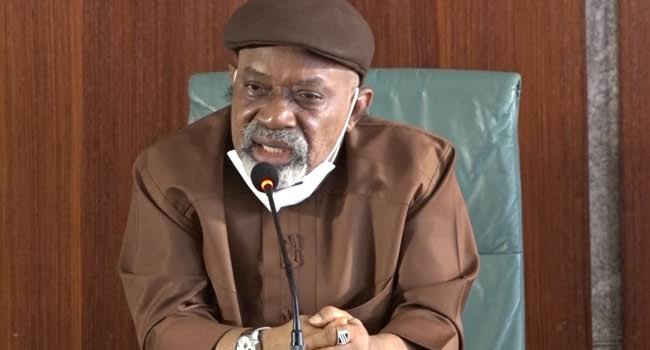
The current Nigerian Minister of Labour and Employment, Chris Ngige, has recently suggested that the incoming administration of President-elect Bola Tinubu should consider reviewing the current minimum wage of N30,000.
Ngige, who was previously a member of the committee responsible for negotiating the current minimum wage in 2019, has pointed out that the minimum wage in Nigeria should be reviewed every five years to ensure that it aligns with the current standard of living.
He disclosed this during his appearance on Channels Television’s Politics Today on Wednesday.
He further stated that he intends to include a recommendation in his handover notes for the incoming administration to begin discussions around the minimum wage as soon as they are sworn in, with a view to implementing any changes by May 2024.
He mentioned that these discussions would involve representatives from the public sector, private sector, and state governments.
Additionally, he noted that the minimum wage bill should be passed a year before its official implementation date, in accordance with the last bill passed on the issue.
“It is a tripartite negotiation involving public sector, private sector and state governments. We entrenched in that bill or law that minimum wage will now have an automaticity of review every five years.
“So, from 2019 when it came into effect to 2024 will be five years but we also made a recommendation in our document which we submitted that the discussion, the negotiation should start one year from May 2024 when it supposed to kick-start.
“So, I’m envisaging that as from May 2023, the government will empanel the new minimum wage review committee for the nation.
“In my handover note which I am going to hand over to the transition committee and the next government, I am recommending that the discussions start anytime from May 2023.” He said.
Ngige also shared some updates on the current status of civil servant pay in Nigeria.
He revealed that the Federal Government has approved a pay increase for civil servants, which will take effect from January 1, 2023 adding that the provision has already been included in the 2023 budget.
The minister explained that the decision to increase salaries was motivated by the current economic situation in the country.
However, Ngige also mentioned that the exact percentage increase has not yet been approved by President Muhammadu Buhari.
He said, “In the Presidential Committee on Salaries, we have done something for the civil servants for those who are on Consolidated Public Service Salary Structure and some corporations, MDAs that are on that CONPSS. CONPSS is the salary scale for civil servants.
“We put a percentage for the President to approve, we have approved it at our own committee level. We said it should take effect from January 1, 2023.”
Ngige praised the Central Bank of Nigeria’s recent policy to redesign the naira note.
He commented that the policy had delivered some “sound benefits.” However, while acknowledging the positive impact of the redesign policy, Ngige also emphasized that the economic challenges facing the country had necessitated the recent pay increase for civil servants.
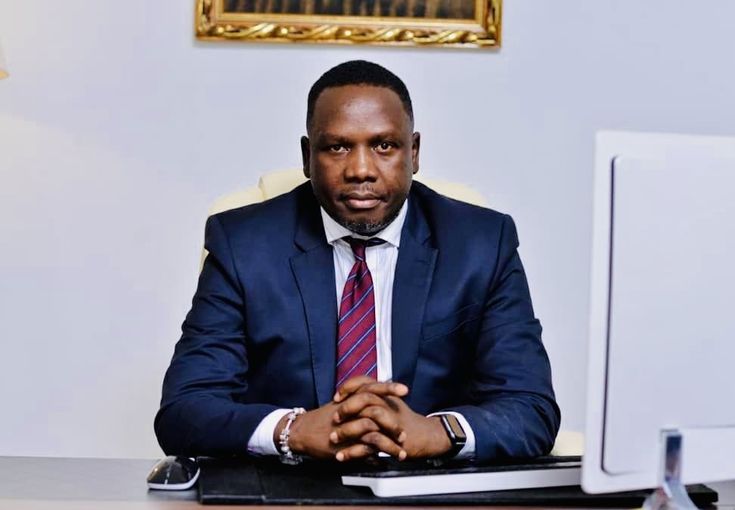
Daniel Bwala, Special Adviser to President Bola Tinubu on Policy Communication, has predicted that President Tinubu will defeat his major challengers by a wide margin in the 2027 presidential election.
Bwala made the prediction on Wednesday during an appearance on Channels Television’s Politics Today, where he discussed the political strength of the Tinubu administration and the state of the opposition ahead of the 2027 elections.
He said the margin of victory for Tinubu would be so wide that Nigerians would be surprised.
SEE ALSO: Tinubu Celebrates Adviser Daniel Bwala On 50th Birthday
“Let me tell you, and let me say it categorically, and I’ll be happy to come back. The margin of gap that President Bola Tinubu will give each and every one of these candidates will be so much that you won’t believe it,” Bwala said.
Explaining the basis for his prediction, Bwala pointed to the number of governors he said had aligned with the president, arguing that governors control important political structures within their respective states.
“No, I am saying—you asked me to give data now. So this is data. You used to conjecture, I speak to data,” he said.
“Since then, President Bola Tinubu has got how many governors on his side? How many governors have joined him? The governors are the chief executive officers of their respective states. They coordinate the structures of the state. They won their own election to be governors.”
Bwala said the support of the governors would translate into political structures, resources and goodwill for Tinubu ahead of the election.
“These people say, ‘We are putting our goodwill, our resources, our structure, and our support to the President.’ You multiply that by the number of people that have come to him, then you stretch it further by the people who are impacted positively by his… what do you call it? By his policy,” he added.
The presidential aide also cited what he described as progress under Tinubu since 2023.
“Then you look at how his… Before he became President, the Naira… you couldn’t trade with the Naira around the world. You can do it now!” he said.
“So these are facts, verifiable data to suggest that President Bola from 2023 to now has made a marked progress.”
Bwala Claims Atiku, Obi Have Lost Key Supporters
Bwala also turned his attention to former Vice President Atiku Abubakar and former Anambra State Governor Peter Obi, who are among the prominent opposition figures expected to feature prominently in the 2027 presidential contest.
He claimed Atiku had lost a significant number of key political figures who previously worked with him.
“But in terms of the other candidates who said he will not win: Atiku Abubakar lost close to 35% of key people that you know around him,” Bwala said.
“All the governors that worked for him that time are not going to be with him, I need you to know that in case you don’t know.”
Bwala also claimed Obi had lost most of the critical figures who supported his 2023 presidential campaign.
“Peter Obi lost 75% of the critical people that carried his campaign—they’ve all disappeared,” he said.
“And some of them went to Atiku, some of them went wherever they could go to. In terms of the other candidate, they just came to mark presence there.”
‘They Lost the Election Already’
Bwala further accused some opposition politicians of displaying what he described as a “defeatist attitude” ahead of the 2027 election.
“But I’m talking of these people that you think they are making a case—what they have is what we call defeatist attitude,” he said.
“How can you in one breath say you’re winning election, and in another breath you’re already threatening Nigeria will be… there will be no Nigeria, there will be all those things?”
He added: “Even the talking points of their campaign will suggest to you that they’ve lost the victory. They lost the election already.”
Bwala Defends Tinubu’s Policies
The presidential aide also defended the administration’s policies, arguing that they were improving the lives of Nigerians, particularly those in the informal sector.
“See, how can our policy… Our policy is raising a lot of people from the doldrums,” Bwala said.
“Look at the people in the informal sector of the economy, the women… You need to see—some of these your news media have been covering it.”
He also questioned the level of engagement some opposition politicians had with ordinary Nigerians before becoming prominent political figures.
“In terms of these people you’ve mentioned, tell me the last time they were actively involved in caring about the internal… When was the last time Amechi, before today, before he was made Vice President, that he had any engagement with the masses?” he asked.
“So you can come overnight, immediately, and just start talking?”
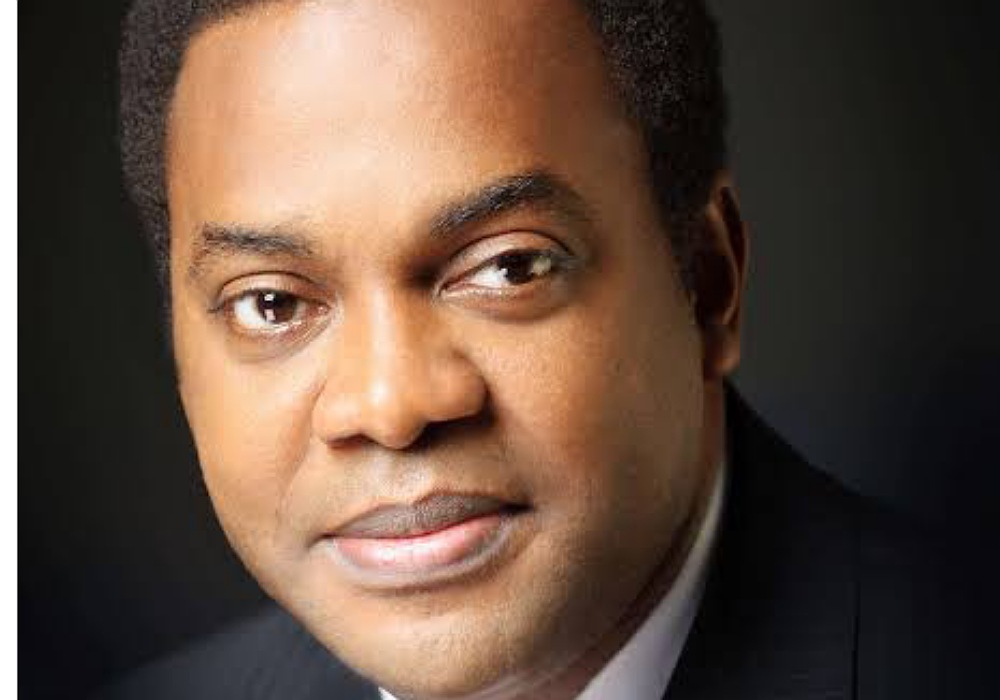
Peoples Redemption Party (PRP) presidential candidate, Donald Duke, has said he would bring the price of petrol down to about ₦300 per litre if elected president in the 2027 general election.
Duke disclosed this on Wednesday while explaining his proposed approach to crude oil production and domestic fuel supply.
ALSO READ: 2027: INEC Must Prove Nigerians Wrong on Election Credibility — Donald Duke
When asked about the realistic price of petrol under his presidency, the former Cross River State governor said his target would be to reduce the pump price to about ₦300 per litre.
“To bring it to about 300 Naira. I’ve told you… it sounds so outlandish, but I’ve given you the arithmetic,” Duke said.
He explained that his proposal would be based on allocating a portion of Nigeria’s crude oil production for domestic consumption and selling the remaining volume.
According to him, if the country’s daily consumption requires 600,000 barrels, that volume would be allocated for domestic use, while the remaining one million barrels would be sold.
“Because I allocate 600,000 barrels if that’s what you consume daily. Allocate that to yourself. The other one million, you can sell,” he said.
His proposal comes as the cost of petrol remains a major issue in Nigeria, with fuel prices having significant implications for transportation, businesses and household expenses.
Duke is seeking the presidency on the platform of the PRP in the 2027 general election.
Peoples Redemption Party (PRP) presidential candidate for the 2027 general election, Donald Duke, has challenged the Independent National Electoral Commission (INEC) to prove to Nigerians that it can deliver a free and fair election.
Duke made the call on Wednesday while speaking about the credibility of Nigeria’s electoral process and public confidence in INEC.
The former Cross River State governor said the onus was on the electoral commission to convince Nigerians that the 2027 election would be free and fair, noting that previous developments had left many citizens sceptical about INEC.
SEE ALSO: 2027: Donald Duke Reveals Why He Wants to Be Nigeria’s President
“INEC has to prove… the onus is on them actually to convince Nigerians that there will be a free and fair election,” Duke said.
He recalled the postponement of the 2019 general election, which was announced just hours before voting was scheduled to begin.
According to him, the development contributed to Nigerians’ growing distrust of the electoral commission.
Duke said INEC had assured the public of its preparedness for the election before the postponement, which was announced around 4am on election day.
He criticised the explanations given for the postponement, saying the commission should have taken responsibility for the situation.
The PRP candidate, who contested the 2019 presidential election on the platform of the Social Democratic Party (SDP), said he was on the ballot at the time but did not participate because his party was involved in court proceedings.
Duke further said the fact that the same electoral institution remains responsible for conducting elections means INEC must now work to restore public confidence.
“That same INEC, the institution still exists, so the onus is on them,” he said.
He added: “The onus is really on INEC. They’ve got to prove the skeptics wrong. But so far, their records in the past, there’s a lot to… expectations are poor.”
Duke also recalled concerns surrounding the Bimodal Voter Accreditation System (BVAS) during the 2023 general election.
“The last election in ’23, the BVAS suddenly stopped working. Now, he says it’s going to work. Let’s see,” he said.
The PRP candidate’s comments come as political parties and candidates intensify preparations for the 2027 general election, with INEC expected to conduct the presidential and National Assembly elections in January 2027.