
Business
Crypto Reigns As Nigeria Sees $50bn Trade Volume, SEC Raises Alarm


Nigeria’s cryptocurrency market has continued to surge, recording more than $50 billion in transactions between July 2023 and June 2024, according to the Securities and Exchange Commission (SEC).
The Director-General of SEC, Dr. Emomotimi Agama, disclosed this in a statement on Sunday, warning that the country’s growing dependence on digital assets poses challenges for the traditional capital market.
Agama said that despite the massive inflow into cryptocurrency trading, only about four per cent of Nigeria’s adult population currently participates in the capital market.
SEE ALSO: $1bn Crypto Fraud: Court Authorizes EFCC To Arrest Six CBEX Promoters
He described the low participation rate as “a major impediment to economic growth and capital formation.”
“This reveals a paradox — Nigerians have an appetite for risk, but not the trust or access needed to channel that energy into productive investment,” Agama said.
According to him, while fewer than three million Nigerians invest in the capital market, more than 60 million people engage in gambling daily, spending an estimated $5.5 million every day.
He further noted that Nigeria’s market capitalisation-to-GDP ratio remains at 30 per cent, far below that of South Africa (320 per cent), Malaysia (123 per cent), and India (92 per cent) — an indication that the country’s financial system still lacks depth.
Agama warned that Nigeria’s $150 billion annual infrastructure deficit continues to outpace market contributions, with only ₦1.5 trillion approved in Public-Private Partnership (PPP) bonds so far.
“This shows a clear misalignment between financial innovation and national priorities,” he said.
The SEC chief therefore called for a “reimagined SEC” — one that not only regulates the financial sector but also actively enables private-sector-led growth and promotes investor confidence.
Agama also urged Nigerians to see the capital market as a safer, long-term wealth-building avenue rather than relying solely on speculative crypto trades and gambling.









The Nigerian National Petroleum Company Limited (NNPC Ltd) slashed additions to its exploration and evaluation assets by 87.7 percent to N78.8 billion in 2025, from N640.5 billion in 2024, according to its latest Annual Financial Report (AFS).
In the same vein, the national oil company’s gas flaring charges during the period under consideration fell by 62.2 percent from N1.32 trillion in 2024 to N499 billion in 2025, the financial report indicated.
However, the decline in exploration funding may not be unconnected with the slowdown in the search for hydrocarbons in underexplored areas, including the Chad Basin, Benue Trough, Bida Basin and Sokoto Basin, all in the northern part of Nigeria.
Despite billions of naira committed to the programme, projects such as Kolmani, straddling Bauchi and Gombe States; drilling and appraisal activities such as the Wadi-2 exploratory well in Borno and exploration activities and seismic data gathering in Nasarawa State have yet to reach breakthrough levels.
READ ALSO: 200 Imo Teachers Benefit from NCDMB’s Effective Curriculum Training
To compound the matter. President Bola Tinubu’s Executive Order 9 of 2026, has now suspended the state oil major’s collection and management of the 30 percent Frontier Exploration Fund (FEF) and ordered that the money be remitted directly to the Federation Account for distribution among the federal, state and local governments.
On gas flaring, the group’s total charges declined to N499 billion from N1.32 trillion in 2024. The amount comprised N247.8 billion in flare fees, down from N708.6 billion, and N251.2 billion in penalties for flaring above approved limits, compared with N610.4 billion previously.
The fees are statutory charges based on limits approved by the Nigerian Upstream Petroleum Regulatory Commission (NUPRC) under Section 104 of the Petroleum Industry Act (PIA). Despite the reduction, penalties accounted for approximately half of the group’s total gas flaring charges.
At the parent company level, gas flaring charges dropped to N317.3 billion from N1.04 trillion.
The decline came as the NNPC Ltd paid N11.56 trillion to settle royalties, rentals and gas flare obligations during the year, more than four times the N2.83 trillion recorded in 2024.
The reduction in outstanding liabilities also reflected a N1.18 trillion write-back of excess provisions from earlier years. Consequently, the group’s outstanding liability under the category fell by 86.2 percent to N1.27 trillion from N9.21 trillion.
Royalty charges, however, increased by 4.1 percent to N4.66 trillion, while the levy payable to the Niger Delta Development Commission (NDDC) rose by 29.2 percent to N514.7 billion.
Overall, total additions across intangible asset classes fell by 88.6 percent to N79 billion, from N692.7 billion in 2024, while additions to mineral rights were nil, compared with N46.3 billion a year earlier.
Mineral rights represent rights associated with exploring for or extracting oil and gas from specified acreage.
In Nigeria’s petroleum industry, these rights are linked to legally recognised entitlements to undertake petroleum operations, subject to applicable laws, lease terms and regulatory approvals. The absence of additions means the NNPC Ltd recorded no new expenditure in that asset category during the year.
The report also showed that mineral rights valued at N16.4 billion relating to oil mining leases 64 and 66 were removed after being fully impaired. An impairment occurs when an asset’s recorded value is no longer considered recoverable under applicable accounting rules.
The report also disclosed lower spending on selected operational activities, as rig site and stimulation expenses declined to N2.9 billion from N16.5 billion earlier recorded by the national oil company. Besides, the AFS showed that allocated technical and production costs fell to N144.4 billion from N489.6 billion, while crude handling and port charges declined to N1.06 trillion from N1.52 trillion.
However, direct well expenses increased by 65.9 percent to N4.15 trillion from N2.50 trillion, while depreciation of oil and gas properties rose by 15 percent to N3.71 trillion. Spending on safety, environmental and pollution control activities also increased to N74.5 billion from N2.3 billion.
In the same vein, labour costs charged to the cost of sales rose more than fourfold to N254.5 billion from N59.7 billion, while insurance and security expenses increased to N213.9 billion from N182.2 billion.
Elsewhere, the NNPC Ltd’s financials showed that investments in subsidiaries in the parent company’s accounts declined to N6.23 trillion from N6.65 trillion, with the three refineries carried at a combined value of N2.72 trillion.
The wider group recorded weaker revenue performance, with revenue falling by 23.4 percent to N34.52 trillion in 2025 from N45.08 trillion a year earlier. In the same vein, Anoh Gas, in which the NNPC Ltd holds a 50 percent interest, recorded a loss of N4.86 billion.
Nigeria faces fresh pressure on petrol and diesel prices following a sharp rally in global crude oil prices to nearly $110 per barrel at the weekend.
Already, industry experts are warning that sustained increases could raise domestic fuel costs despite expanding local refining capacity.
For Nigerian businesses, sustained increases in diesel and petrol prices could raise the cost of running generators, transporting goods and operating equipment. Manufacturers, farmers and transport operators could pass some of the additional expenses to consumers, while higher haulage costs could increase the prices of food and other essential goods.
The development, analysts note, presents a dilemma for Africa’s largest oil producer, which stands to earn more from crude exports but remains vulnerable to rising energy costs that could further squeeze households, manufacturers, transport operators and other businesses.
Brent crude, the international benchmark, rose 3.72 per cent to about $109.90 per barrel, while West Texas Intermediate, the US benchmark, gained 3.51 per cent to $101.40 per barrel. Murban crude also advanced 3.08 per cent to $113.40 per barrel, according to market data published by Oilprice.com.
The rally followed escalating geopolitical tensions and attacks on energy infrastructure, heightening fears of supply disruptions and sustained pressure on global energy markets.
Publicity Secretary of the Crude Oil Refiners Association of Nigeria (CORAN), Mr. Eche Stephen Idoko, while commenting on the development, said the central concern was the contradiction of an oil-producing country potentially earning more from crude exports while its citizens remained exposed to higher energy costs.
“Ordinarily, rising crude prices should be good news for Nigeria’s revenues and foreign exchange position. However, the benefits could be substantially undermined by rising costs of transportation, manufacturing, agriculture and ultimately the general cost of living,” Idoko said.
READ ALSO: NIPCO Gas Licences, NNPC Ltd Management Face Reps Probe
He argued that higher crude prices also increase the cost of feedstock for Nigerian refiners, stressing that domestic refining alone cannot insulate consumers from international oil price movements.
According to him, the naira-for-crude arrangement addresses the currency of settlement but does not necessarily reduce the underlying cost of crude oil.
Idoko called for a commercially sustainable domestic crude supply and pricing framework, arguing that local refiners should not have to bear unnecessary logistics, financing and transactional costs associated with crude supply arrangements.
He also questioned how much of the additional revenue accruing to Nigeria from higher crude prices would translate into reducing the structural cost of supplying energy to Nigerians.
For CORAN, he said, the priority should be to strengthen domestic refining competitiveness rather than rely on further government-administered retail discounts or price ceilings.
Idoko noted that there was a real risk of higher fuel prices if crude oil remained at elevated levels, although the extent of any increase would depend on exchange rates, international petroleum product prices, refining margins and domestic supply conditions.
Executive Secretary and Chief Executive Officer of the Major Energies Marketers Association of Nigeria (MEMAN), Mr. Clement Isong, also identified rising international product prices and distribution expenses as potential sources of additional pressure on domestic fuel prices.
In a webinar presentation titled “Structuring Nigeria’s Domestic Market Distribution Framework” delivered at the weekend, Isong said the final price paid by consumers reflected not only international product prices and foreign exchange movements, but also freight, financing, transportation, regulatory charges and distribution costs.
He further warned that rising diesel prices could compound the cost of distributing petrol because diesel is a critical input in road transport and the movement of petroleum products.
According to the presentation, petrol prices rose by 33 per cent to N1,378 per litre between January and October 2026, while automotive gas oil, commonly known as diesel, increased by 36 per cent to N1,853 per litre.
Isong said higher diesel prices increased the cost of transporting petroleum products, including petrol, adding to distribution expenses and wider economic pressures.
The latest crude oil rally could intensify these pressures if it translates into higher international petroleum product prices and replacement costs for refiners and marketers. Any impact on pump prices, however, would depend on movements in international product prices, exchange rates, refining margins and domestic supply conditions.
The pressure on refined products is also being compounded by tight global diesel supplies. According to the market report published by Oilprice.com on October 16, the International Energy Agency warned that diesel supplies could remain tight into 2027, with inventories unlikely to be rebuilt before the third quarter of next year.
Global diesel production reportedly fell by 1.7 million barrels per day year-on-year to 27.2 million barrels per day, highlighting the pressure on supplies of a fuel widely used in transportation, manufacturing, agriculture and electricity generation.
Isong added that Nigeria also needed a more efficient distribution system to minimise avoidable expenses between refineries and consumers.
He recommended that domestic refineries serve as a major source of supply as production becomes commercially available, with imports used to bridge domestic supply deficits through competitive procurement based on the lowest evaluated price.
He also called for predictable bulk supply arrangements, transparent pricing methodologies and better coordination among suppliers, depot operators, transporters and purchasers to reduce operational delays and logistics costs.
The MEMAN chief executive further advocated supply-chain cost reductions, targeted and temporary relief for essential economic activities, and reduced dependence on petrol and diesel through alternatives such as compressed natural gas, electric vehicles and small-scale solar power.
He maintained that efforts to reduce costs should preserve market-based pricing.
Also commenting, energy policy analyst and partner, Bloomfield Law Practice, Mr. Ayodele Oni, posited that Friday’s $110 is not a new crisis.
“Brent topped $120 in April, and Nigerians have already absorbed much of this shock. The real question is whether $110 becomes the floor,”.
Oni argued that in a deregulated market, there is no subsidy buffer, so a sustained rise will reach the pump, warning that if Brent holds above $105 for a few weeks, the recent easing of gantry prices will reverse.
According to him, domestic refining softens the blow by removing freight, import costs and foreign exchange demand for imported fuel, saying without the Dangote refinery, the pass-through today would be far steeper.
“Price shocks come from abroad. Our vulnerability to them is a choice,”.
Courtesy – The Sun Nigeria
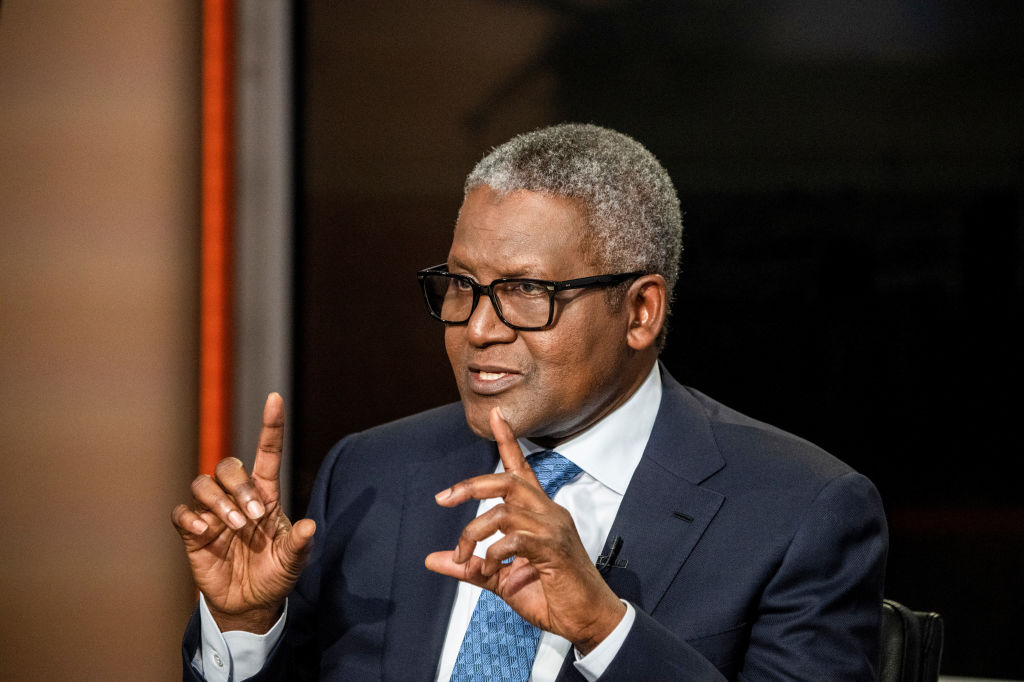
Leading investment research firm Renaissance Capital Africa (RCA) has upgraded its valuation of Dangote Petroleum Refinery and Petrochemicals (DPRP) to N700.41 per share, implying a 33.4 percent upside from the refinery’s IPO offer price of N525 per share.
According to RCA, the valuation increase reflects the refinery’s exceptional earnings performance in the first nine months of 2026, driven by stronger refining margins and better-than-anticipated operational results. Revenue, EBITDA and net profit all exceeded the firm’s expectations during the period.
READ ALSO: Dangote Refinery IPO Elicits Participation in 90 Countries Globally
In its October 16, 2026, update, titled “Stronger Refining Margins Drive Earnings Outperformance,” the investment firm cited robust refining margins and stronger operating results as key drivers of the enhanced valuation.
The remarkable investor interest comes against the backdrop of the refinery’s strong operational and financial performance. For the nine months ended September 30, 2026, the DPRP reported revenue of US22.5 billion and net profit of US4.7 billion, representing one of the strongest financial performances recorded by an African industrial enterprise in recent years.
The results marked a significant turnaround from the corresponding period in 2025, when the company recorded a loss of US117.2 million. Revenue grew by 144 percent from US9.2 billion, while EBITDA increased nearly nine-fold to US5.5billionfromUS627.6 million. Operating cash flow rose more than ten-fold to US$3.68 billion, underscoring the refinery’s growing ability to generate substantial earnings and cash flow from its operations.
The company also strengthened its balance sheet considerably, moving from a net debt position of US1.73 billion as of September 2025 to a net cash position of US651 million by September 2026, reflecting improved liquidity and financial resilience.






Renaissance, Sterling Bank Back Indigenous Oil and Gas Contractors Financially
Group Demands Fair Share of NNPC Jobs for Ogoni Oil Exploration

NNPC Ltd Exploration Spending Down 87%

200 Imo Teachers Benefit from NCDMB’s Effective Curriculum Training

FG to Launch National Lead Poisoning Prevention Plan Wednesday

EndSARS Memorial: ‘Nigerians Still Deserve Answers’ – Atiku

Trump’s Family Unveils New Cryptocurrency Platform

Senate Denies Receiving Petitions Against Tinubu’s Ambassadorial Nominees

Dangote Cement Lights Up Benue Host Communities With CSR Initiatives

Reps Recommend 3-year Jail Term For Aviation minister

Tems Sets New Record On Billboard Hot 100 Chart

https://shorturl.fm/LZyRl
https://shorturl.fm/Bf2mY
Very interesting info !Perfect just what I was looking for!
https://shorturl.fm/uJ1qO
xeos7a
I have been surfing online more than 3 hours these days, but I never discovered any attention-grabbing article like yours. It’s lovely price sufficient for me. Personally, if all webmasters and bloggers made just right content as you probably did, the web can be a lot more useful than ever before. “I finally realized that being grateful to my body was key to giving more love to myself.” by Oprah Winfrey.
Keep up the wonderful piece of work, I read few blog posts on this website and I conceive that your web blog is really interesting and has got lots of wonderful info .
I truly appreciate this post. I?¦ve been looking all over for this! Thank goodness I found it on Bing. You have made my day! Thx again
I too conceive therefore, perfectly pent post! .
Very interesting topic, appreciate it for putting up.
Good – I should certainly pronounce, impressed with your site. I had no trouble navigating through all the tabs as well as related info ended up being truly simple to do to access. I recently found what I hoped for before you know it in the least. Quite unusual. Is likely to appreciate it for those who add forums or something, website theme . a tones way for your client to communicate. Excellent task.
I regard something genuinely interesting about your site so I saved to bookmarks.
so much excellent info on here, : D.
There is noticeably a bundle to identify about this. I consider you made some nice points in features also.
Howdy! This post couldn’t be written any better! Reading this post reminds me of my good old room mate! He always kept talking about this. I will forward this article to him. Pretty sure he will have a good read. Thank you for sharing!