
Maritime
DANGER! Shipload of toxic waste at Lagos port

LAGOS —Security and environmental officials, yesterday, quarantined a ship laden with e-waste which they said is toxic and posed major threat to humans. The ship, M.V Marevia brought in two containers considered very dangerous and sent port officials into a panic mode.
 e-Waste consists of old and outdated electronic gadgets and materials such as refrigerators, containing chlorofluro carbons (CFC) or green house gases. According to Mr Dike Ejiogu, a computer Engineer at the Ikeja Computer Village: “Although some of these gadgets were manufactured for human good, the expiration of the chemicals used in manufacturing them converts them to toxins which ironically becomes injurious to human health particularly when the gases are inhaled.
“Besides, they are also environmentally unfriendly as they pollute the air and reduce the oxygen which is the main ingredient of the air we breathe for life” he added.
The vessel which is currently anchored at the Tin-can Island Container Terminal (TICT), was quarantined by officials of the National Environmental Standards and Regulations Enforcement Agency (NESREA) with other port agencies keeping vigil on it.
Reliable sources said the vessel which berthed on January 5 originated from Tilbury in England and that the importers were based at Alaba International Market.
Customs confirm report
Confirming this to Biztellers, Public Relations Officer of Tin-Can Island Command of the Nigeria Customs Service (NCS), Mr. Chris Osunkwo, said that NESREA had written to the Command informing them that they have intelligence report that a vessel which is erroneously called M.V. Mavia, was coming into the country with two container loads of e-waste.
Osunkwo said that the NESREA officials in the letter said that the vessel should not be allowed to discharge, adding that the inspection would be done onboard the vessel before it is sent back to it’s country of origin. The numbers of the containers are ECMU 9894590 and ECMU 9870858.
Also contacted, Assistant General Manager in charge of Public Affairs of the Nigerian Ports Authority (NPA), Ileya Musa, told Biztellers that the management of Tin-Can Island Port was aware of the development, adding that the vessel has since been isolated while the relevant agencies were on ground awaiting the inspection of the vessel.
On where the ship came from, Musa said he did not know but promised to get back to our reporter. He never did at press time.
Efforts to get to the area where the vessel was anchored proved abortive but a source at the TICT told Biztellers that the crew of the vessel had told them that the containers were in transit, adding that the final destination was the United Kingdom.
However, a senior Customs officer who spoke with Biztellers on condition of anonymity , explained that the claim might just be a way of avoiding detention by officials of the Nigerian government.
It would be recalled that NESREA had on several occasions detained some vessels that had brought in e-waste into the country.
Some vessels detained before now were MV Maersk Nashville and M.V. Gumel.
Head of NESREA at the port, Mrs. Miranda Amachree, told Biztellers when M.V Gumel was detained that they got intelligence report from their counterparts in Antwerp, Belgium, that the vessel was bringing used fridges, television sets, compressor pots and batteries.
Amachree explained that the report from Antwerp was a result of the agreement entered into by Nigeria and European countries to do away with CFC, which were brought in by the vessel.
Modupe Asudo
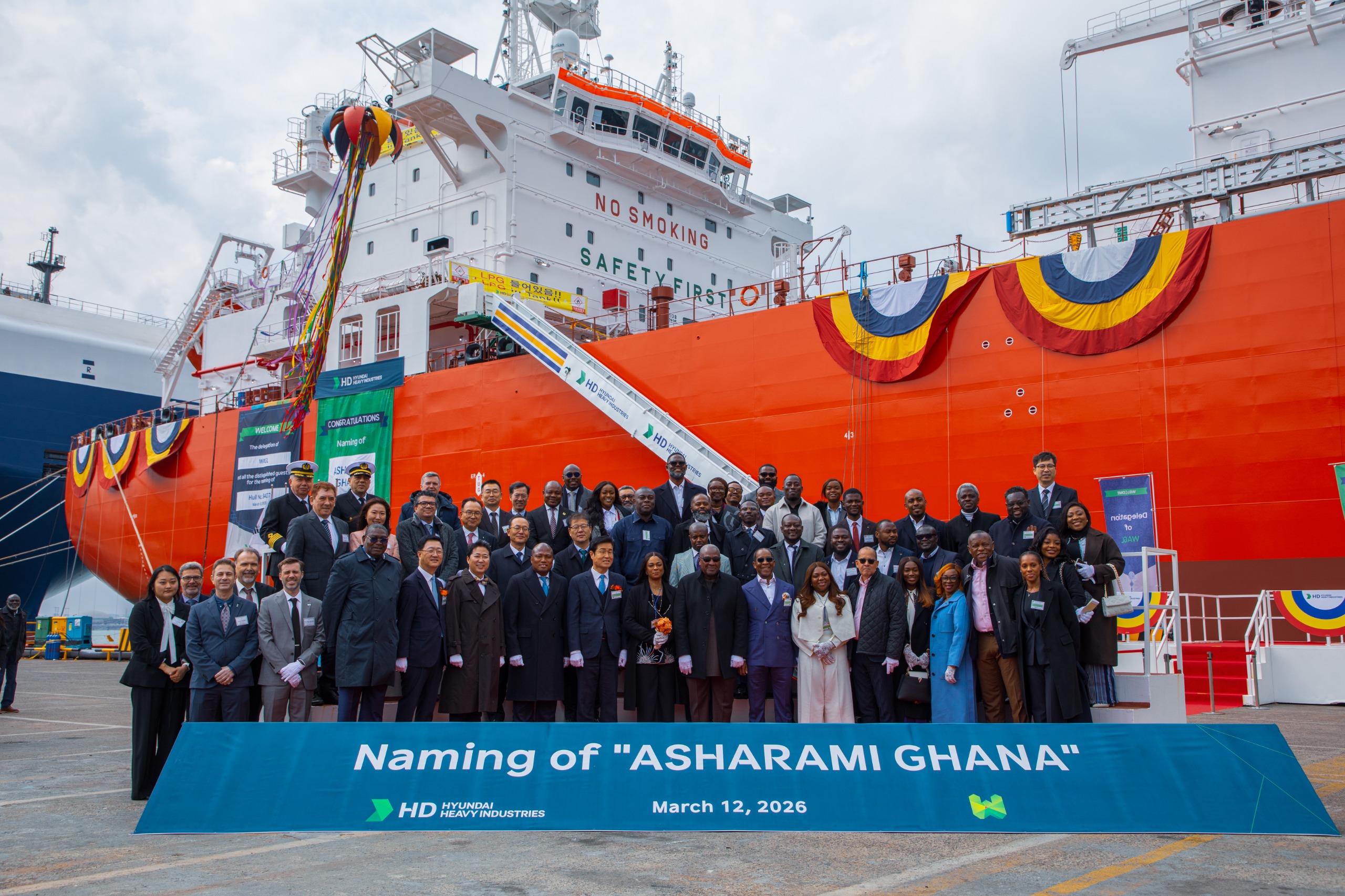
Sahara Group, a leading global energy and infrastructure conglomerate, has commissioned MT Asharami Ghana, a 40,000‑cubic‑metre Liquefied Petroleum Gas (LPG) carrier, expanding its fleet capacity, while strengthening Ghana’s clean energy supply chain and LPG distribution network.
The dual‑fuel vessel improves operational efficiency, enhances supply reliability, and supports lower‑emission LPG logistics as consumption grows across Ghana and the wider sub‑region.
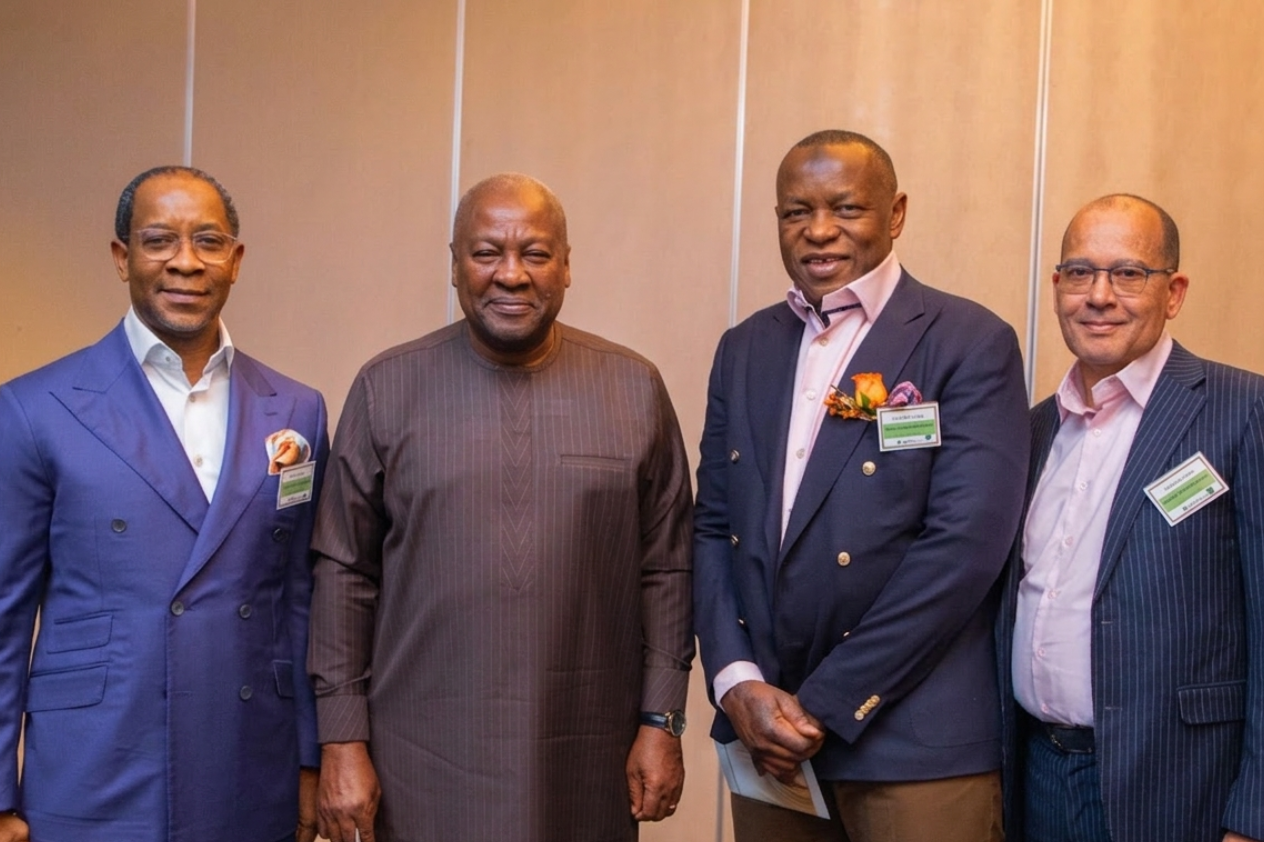
Ghanaian President Mahama and Sahara Executive Directors
Speaking at the commissioning in Ulsan, South Korea, President John Dramani Mahama described the vessel as “a significant milestone in strengthening the infrastructure that underpins the global LPG supply chain,” noting that expanded shipping capacity is critical to improving supply security, reliability and efficiency for countries that rely partly on LPG imports.
He commended Sahara Group, WAGL Energy and all partners involved for their “leadership, technical expertise and strategic foresight,” adding that the project reflects “the power of partnership” in advancing safe, efficient, and responsible energy distribution.
President Mahama wished the MT Asharami Ghana safe sails, expressing confidence that the vessel would inspire further investment and collaboration across Africa’s energy value chain.
According to Wale Ajibade, Executive Director, Sahara Group, the vessel supports Ghana’s clean energy ambitions through integrated infrastructure.
“MT Asharami Ghana is more than a vessel; it is part of a deliberate strategy to strengthen LPG supply security and support Ghana’s clean energy ambitions. It secures an additional 25,000-Metric-tonne stock security for the Ghana economy, alongside the soon to be commissioned 6000-metric-tonee of 12.000-metric-tonne land storage in Tema,” he said.
With the addition of Asharami Ghana, Sahara Group’s LPG carrier fleet now comprises six delivered vessels with a combined capacity of 202,000 cubic metres. Supported by partnerships with WAGL Energy, NNPC Limited and other stakeholders, an additional 270,000 cubic metres of capacity is under construction and due for delivery by September 2028.
Temitope Shonubi, Executive Director, Sahara Group, said Asharami Ghana is part of Sahara’s integrated LPG infrastructure strategy spanning shipping, storage, and downstream distribution globally, including the development of a 12,000‑metric‑tonne land‑based LPG storage terminal in Tema, with a 6,000‑metric‑tonne first phase scheduled for completion in May 2026.
He thanked Yaa Serwaa Alifo, MD of Asharami Ghana, for her resilience and insistence to dedicate a ship of “this magnitude solely to the Ghana Market and its landlocked neighbours.”
Ghana is targeting LPG adoption of 50 per cent of households by 2030, up from about 30 per cent today. Sahara’s investments will support clean energy access for more than 35 million people, while strengthening Ghana’s role in regional LPG trade to neighbouring and landlocked West African markets.
The commissioning comes in Sahara Group’s 30th anniversary year, guided by the Sahara Beyond XXX milestone, underscoring Sahara’s focus on building an enduring enterprise that delivers responsible growth, shared prosperity and long‑term impact across its markets.
Maritime
Anchored in Partnership: IMO Secretary General’s Visit Rekindles Nigeria’s Maritime Ambition

In a visit that underscored unity of purpose and the power of collaboration, the Secretary-General of the International Maritime Organization (IMO), Mr. Arsenio Dominguez, engaged with Nigeria’s leadership to strengthen maritime partnerships, deepen capacity, and reaffirm the country’s rising influence in global maritime affairs. His engagements, from his courtesy visit to President Bola Ahmed Tinubu, GCFR, to his tours of key maritime infrastructure and the Institute of Maritime Studies at the University of Lagos, among others; the engagements reflected a renewed momentum in Nigeria’s blue economy journey.
In this article, Oluwafemi Kumuyi highlights the importance of this visit and its implications for the future of Nigeria’s maritime sector.
“No man is an island,” goes the old saying; a reminder that progress, whether personal or institutional, is rarely achieved in isolation. Every thriving system is built on the strength of its partnerships, the alignment of shared visions, and the willingness to work together for common good. This principle sits at the core of United Nations Sustainable Development Goal 17: Partnership for the Goals, which emphasizes collaboration as the cornerstone of sustainable development. It is in this spirit that the recent visit of the Secretary-General of the International Maritime Organization (IMO), Mr. Arsenio Dominguez, to Nigeria took place; a visit that underscores the importance of partnerships in driving the nation’s maritime ambitions and deepening global cooperation within the blue economy space.
Accompanied by the Director General of the Nigerian Maritime Administration and Safety Agency, NIMASA, Dr. Dayo Mobereola; the IMO Secretary-General was warmly received by the Honorable Minister of Marine and Blue Economy; His Excellency Adegboyega Oyetola, CON, whose leadership continues to steer Nigeria’s Blue Economy sector towards operational excellence and global relevance. His itinerary was a carefully woven tapestry of engagements; from high-level discussions with President Bola Ahmed Tinubu, GCFR, to tours of strategic maritime infrastructure and educational institutions, all reflecting Nigeria’s steady and deliberate march toward a more vibrant and globally competitive maritime sector.
During his courtesy call on the Nigerian President, both leaders explored new frontiers of partnership aimed at strengthening Nigeria’s aspiration to stand among the world’s foremost maritime nations. Their discussions, anchored on shared values of safety, sustainability, and innovation, reflected the strong alignment between Nigeria’s Blue Economy agenda and the IMO’s global mission of ensuring safer seas and cleaner oceans.
Interestingly, Dominguez’s tour of strategic maritime facilities further brought Nigeria’s growing capabilities into the spotlight. A major highlight was his visit to the NNS Lana, the Nigerian Navy’s purpose-built hydrographic and oceanographic research vessel. The NNS Lana, a 60-metre marvel of marine engineering, is equipped with sophisticated multi-beam echo sounders, side-scan sonar, and advanced oceanographic sensors. It serves as a vital tool for hydrographic surveying, seabed mapping, and environmental monitoring, all of which contribute significantly to safer navigation and maritime environmental protection.
At the NIMASA C4i Centre, Mr. Dominguez witnessed a live demonstration of how technology and strategy converge to safeguard Nigeria’s waters. The Centre, an acronym for Command, Control, Communication, Computer, and Intelligence, serves as the heartbeat of Nigeria’s maritime security architecture. Integrated with radar stations, coastal cameras, and satellite feeds, it provides real-time surveillance and enables rapid response to maritime incidents. Operated under the Deep Blue Project, the C4i Centre stands as a testament to Nigeria’s unwavering commitment to combating piracy, illegal fishing, smuggling, and other maritime crimes across the Gulf of Guinea.
To further demonstrate operational readiness, the delegation visited the Ojo Cantonment, where a simulation exercise vividly showcased the seamless coordination between NIMASA’s Deep Blue assets and the Nigerian Armed Forces. The synchronized display of air, land, and sea platforms working in unison underscored the effectiveness of Nigeria’s multi-agency approach to maritime security, a model that has contributed significantly to the remarkable reduction of piracy incidents in recent years.
In continuation of his engagements, Mr. Dominguez held an interactive session with Nigerian seafarers, a rare and valuable opportunity for the nation’s maritime workforce to share their experiences, challenges, and aspirations directly with the IMO’s top leadership. The discussions covered key issues such as certification, welfare, training, and global employability of Nigerian seafarers. Mr. Dominguez commended their resilience and professionalism, averring that the heart of global shipping beats through the dedication of seafarers.
He encouraged Nigerian seafarers to continually upgrade their skills and competencies in line with evolving international standards, while reiterating the IMO’s commitment to promoting fair treatment, mental well-being, and equal opportunities for all maritime professionals.
Interestingly, during his tour, he visited the Institute of Maritime Studies (IMS) building at the University of Lagos, a project sponsored and delivered by NIMASA. The establishment of the institute marked a significant milestone in Nigeria’s long-term vision to strengthen maritime education, bridge capacity gaps, and empower a new generation of professionals equipped to drive the nation’s Blue Economy forward.
Speaking during the visit, Honourable Minister of Marine and economy, His Excellency Adegboyega Oyetola, CON, described the maritime sector as Nigeria’s next frontier of opportunity in a post-oil era. “With a 200-nautical-mile Exclusive Economic Zone (EEZ), 853 kilometres of coastline, and over 10,000 kilometres of inland waterways, Nigeria is strategically positioned. It is time to unlock the full potential of the maritime sector, and that starts with building local capacity,” he stated.
The Minister further emphasized that maritime education must be at the heart of Nigeria’s development strategies, given the sector’s vast potential to generate foreign exchange, create jobs, and drive sustainable economic transformation. He also urged Nigerian youths to embrace maritime careers, noting that the government and its partners have laid a solid foundation for a prosperous and globally competitive Blue Economy.
For the IMO Secretary-General, the initiative resonated deeply with the organization’s own goals of inclusivity and sustainability in maritime governance. “The maritime sector is an incredible one with boundless opportunities. Bringing maritime into universities like UNILAG connects students directly with the industry. It’s how we attract and equip the next generation of maritime professionals,” Mr. Dominguez noted. He further encouraged students and faculty members to explore the IMO’s e-Learning platform and programmes of the World Maritime University (WMU), affirming that knowledge remains the strongest anchor of maritime progress.
In his remarks, the Director-General of NIMASA, Dr. Dayo Mobereola, expressed pride in NIMASA’s commitment to supporting educational development. “This Institute is a strategic investment in Nigeria’s maritime future. We are proud to support the University of Lagos in shaping a new generation of professionals who will drive the sector forward,” he stated. The commissioning ceremony not only celebrated infrastructure but symbolized a deeper commitment to learning, innovation, and long-term capacity building. The interaction between Mr. Dominguez and the students of the Institute served as a bridge between aspiration and opportunity, between local vision and global relevance.
Ultimately, the visit of Mr. Arsenio Dominguez reaffirmed what Nigeria has long stood for; that progress in the maritime domain thrives on partnerships built on trust, shared purpose, and sustainable values. From technology to education, and from diplomacy to security, his engagements showcased the multi-dimensional strength of Nigeria’s maritime ecosystem; one that continues to evolve under the visionary coordination of the Federal Ministry of Marine and Blue Economy.
ALSO READ: SERAP Urges Akpabio, Abbas to Account Missing N18.6bn for NASS Commission Office Complex
Under the leadership of the Honourable Minister of Marine and Blue Economy, His Excellency Adegboyega Oyetola, CON, and the strategic direction of NIMASA under Dr. Dayo Mobereola, Nigeria is repositioning its maritime narrative, from reactive to proactive, and from potential to performance. Every new investment, whether in education, safety, infrastructure, or environmental stewardship, represents a deliberate stride toward unlocking the nation’s vast maritime potential and reaffirming its status as Africa’s maritime hub.
As the tide of global collaboration continues to rise, one message resounds clearly; Nigeria is ready to lead, not merely as a beneficiary of international partnerships, but as an equal player in shaping the future of global maritime governance. Anchored in partnership, powered by vision, and sailing with purpose, Nigeria is confidently charting a course toward a sustainable blue future.
Oluwafemi Kumuyi; An Assistant Chief Public Relations Officer with NIMASA, writes from Lagos.
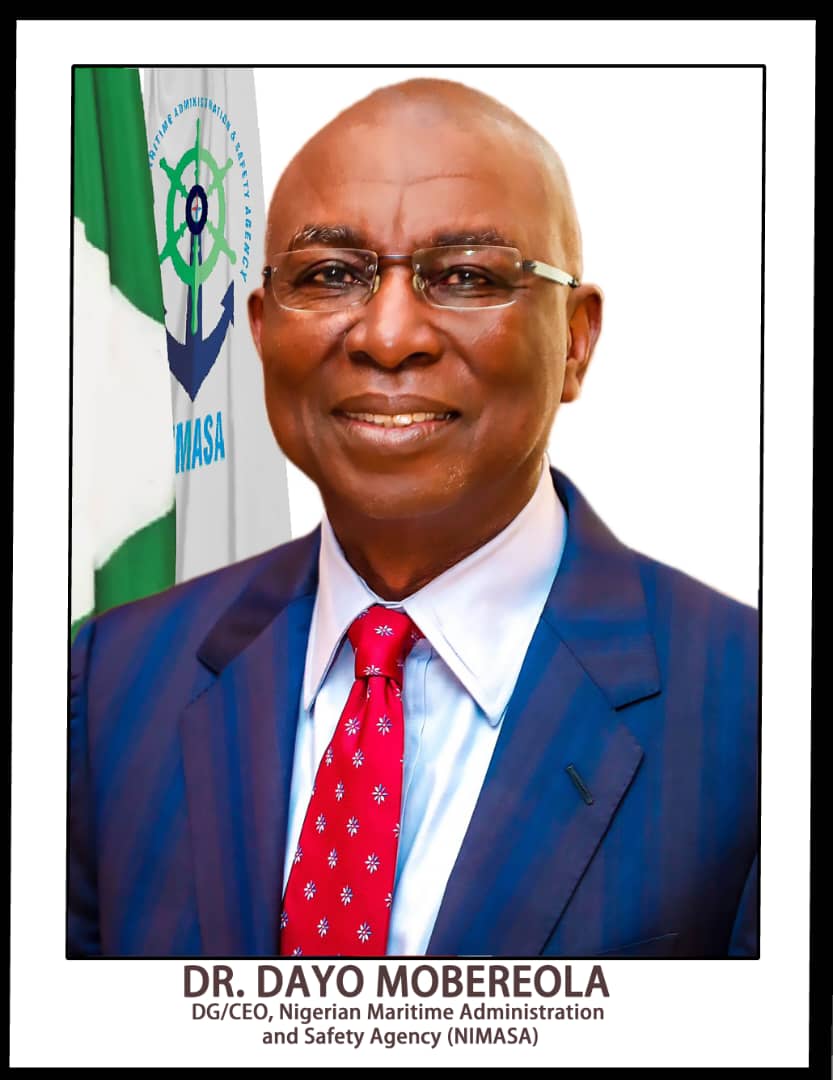
These are days of joy for employees of the Nigerian Maritime Administration and Safety Agency (NIMASA) with promotions running across levels for many.
This was detailed in a statement in Lagos by Deputy Director/Head, Public Relations, Osagie Edward.
The statement reads, “The Governing Board of the Nigerian Maritime Administration and Safety Agency (NIMASA) has approved the promotion of nine Deputy Directors to Directors. In addition, the Board approved the promotion of 30 Assistant Directors to Deputy Directors, 35 Chiefs to Assistant Directors, and ratified the promotion of 169 other staff members from one grade level to the next grade level.
ALSO READ: Zenith and Summit: A Cursory Look at Striking Similarities Between Two Banks
“The newly appointed Directors include the Coordinator, Abuja Liaison Office, Mrs. Moji Jimoh; Director Internal Audit, Dr. Odunayo Ani; Special Adviser to the DG, Mrs. Nneka Obianyor; Director Procurement, Mrs. Biodun Fatade; Dr. Oma Ofodile; Ms. Gloria Anyasodo; Mr. Abdulahi Yelwa; Umar Buba and Mr. Umar Ibrahim Sidi.
“While congratulating the newly promoted officers, the Director General of NIMASA, Dr. Dayo Mobereola, reaffirmed Management’s commitment to staff welfare and a transparent, merit-based career progression system.
“He charged the beneficiaries to rededicate themselves to excellence in service delivery.
“Our administration is committed to improved staff welfare. This promotion exercise is strictly merit-based, and we expect staff to reciprocate by rededicating themselves to higher productivity. We will continue to prioritize staff welfare, while counting on your commitment to the ideals of the Agency in helping Management actualize its mandate,” Mobereola stated.





NCDMB, Renaissance Africa Train Pipeline Engineers

NLNG Inducts 103 Trainees Into Empowerment Scheme
NCDMB Sponsored Oracle Primavera P6 Training Underway In Rivers State

Senate Approves Abe as Chairman, NUPRC Board

Tinubu Swears in Taiwo Oyedele as Finance Minister

Burna Boy Breaks Record as Africa’s Top-Grossing Concert Artist

Trump’s Family Unveils New Cryptocurrency Platform

Reps Recommend 3-year Jail Term For Aviation minister

Dangote Cement Lights Up Benue Host Communities With CSR Initiatives

Senate Denies Receiving Petitions Against Tinubu’s Ambassadorial Nominees

Tems Sets New Record On Billboard Hot 100 Chart
