
NEWS
Dangote Expects over $4bn Annual Forex Earnings from Fertiliser Exports

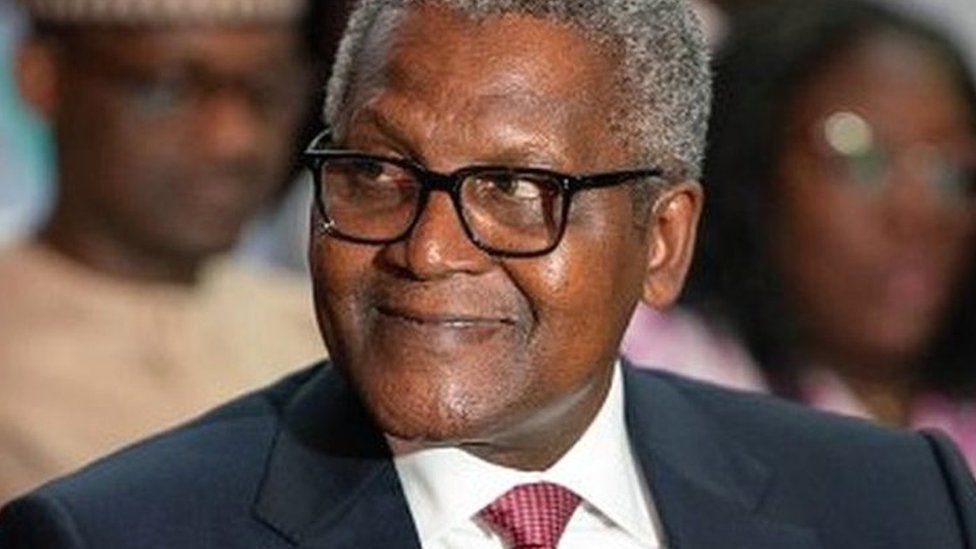
The Dangote Group has reinforced its long-standing partnership with the Africa Finance Corporation (AFC) through the signing of a $600 million loan facility to support the expansion of its fertiliser production capacity, an important milestone in advancing food security across Nigeria and the African continent.
The financing, extended to GreenView Fertilizer Corporation (Greenview), the Dangote Fertiliser Holding Company, will partly fund the expansion of urea production capacity in Nigeria as well as the development of a new fertiliser plant in Ethiopia.
This investment forms a key component of the Dangote Group’s broader $7 billion fertiliser expansion programme. The initiative is expected to increase production capacity in Nigeria from 3 million metric tonnes per annum (MTPA) to 9 MTPA, while also supporting the establishment of a new 3 MTPA urea plant in Ethiopia. Upon completion, the programme will significantly boost Africa’s fertiliser output, strengthen regional food security, enhance agricultural productivity, and reduce dependence on imports.
The facility underscores AFC’s strong confidence in Dangote Group’s vision to drive industrial growth and agricultural transformation through large-scale infrastructure investments. The funds will primarily support the ongoing expansion of the Dangote Fertiliser Plant at Ibeju-Lekki, Lagos, one of the largest granulated urea fertiliser complexes in the world.
The expansion is expected to substantially scale up production, improve supply chain efficiency, and ensure consistent availability of high-quality fertilisers to farmers across the continent. It will also contribute to price stability, reduce import dependency, and enhance crop yields, strengthening Africa’s overall food security framework.
Speaking on the development, President of Dangote Group, Aliko Dangote, said the expansion would generate significant foreign exchange earnings for Nigeria. “This investment positions us to deliver over $4 billion annually in fertiliser exports within the next three years. It represents a major contribution to Nigeria’s foreign exchange earnings and underscores our commitment to national economic growth.
“Our growth vision is not in isolation, we are building alongside strategic African partners like AFC and other institutions committed to the continent’s progress.”
Also commenting on the transaction, President and CEO of Africa Finance Corporation, Samaila Zubairu, highlighted the strategic importance of the deal: “This transaction reflects AFC’s capital recycling model in action. Following the successful repayment of our earlier investment in Dangote Industries Limited, we are reinvesting and doubling that capital into Dangote Group’s next growth phase.
By supporting the expansion of Dangote Fertilizer, AFC is backing a proven African industrial leader whose investments will strengthen food security, reduce import dependence, and create long-term economic value across the continent.”
This development builds on AFC’s strong track record of successful investments and exits across Africa, including projects in renewable energy, port infrastructure, digital connectivity, and industrial platforms.
ALSO READ: Food Security: AFC Deepens Partnership with Dangote Group with $600m Loan for Fertilizer Expansion
The Dangote Fertiliser Plant currently plays a critical role in meeting domestic demand while exporting to international markets, thereby generating valuable foreign exchange for Nigeria. With this new phase of expansion, the company is poised to consolidate its leadership position in the global fertiliser market while advancing Africa’s agricultural and economic resilience.







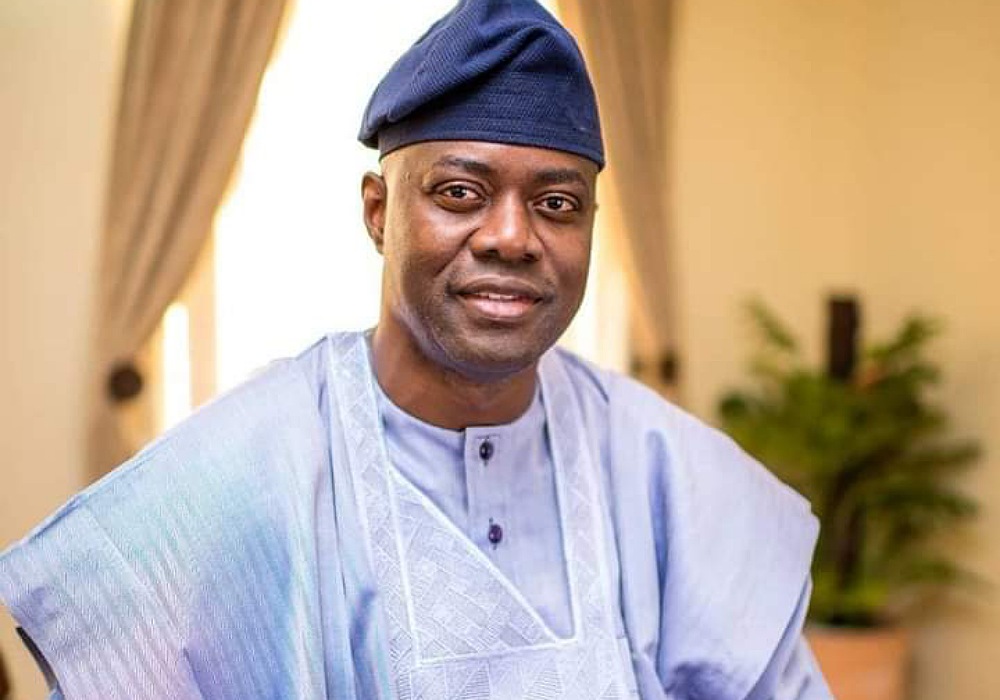
Oyo State Governor Seyi Makinde has challenged the Presidency to explain how Nigeria Liquefied Natural Gas (NLNG) dividends were distributed among states and local governments, insisting that a reconciliation exercise identified a shortfall of about ₦9 trillion.
Makinde’s position was contained in a statement issued on Sunday by his Special Adviser on Media, Dr Sulaimon Olanrewaju, in response to the Presidency’s rejection of the governor’s earlier claims over NLNG dividend payments.
RELATED NEWS: JUST IN: Presidency Rejects Makinde’s Claim of ₦250bn NLNG Dividends for Each State
The statement said the Nigeria Governors’ Forum (NGF), with the support of the Federal Government, engaged a consultant to reconcile NLNG dividend payments, adding that the exercise identified approximately ₦9 trillion allegedly due to states and local governments.
“The exercise identified a shortfall of about ₦9 trillion due to states and local governments. The Federal Government accepted the findings,” the statement said.
The governor maintained that the reconciliation report remained in the custody of both the Federal Government and the NGF.
“The report remains in the custody of both the Federal Government and the NGF. We trust the Presidency will not deny its existence,” the statement added.
The statement also noted that Makinde is the incumbent Vice-Chairman of the NGF.
Makinde Questions $21.5bn NLNG Dividend Payments
The governor questioned the Presidency’s statement that NLNG had paid $21.5 billion in dividends into the Federation Account since its inception, including $3 billion received under the current administration.
According to Makinde, the Presidency’s response did not explain how the payments were distributed or establish the amounts received by states and local governments.
“The Presidency stated that NLNG had paid $21.5 billion in dividends into the Federation Account since inception, including $3 billion received under the current administration. But it did not explain how these funds were disbursed,” the statement said.
The governor also questioned whether states and local governments had received their shares, how much they received and the basis for calculating their allocations.
“Have states and local governments received their shares? How much did they receive, and how were those amounts calculated? What happened to the $3 billion received under this administration?” the statement asked.
Makinde defended the figures he had previously cited, maintaining that his claims were based on verifiable information.
“Governor Makinde conducts public discourse with decorum and does not make unfounded claims or quote figures without a basis,” the statement said.
The governor maintained that he was ready to provide further clarification on the matter while urging the Presidency to address the substance of the allegations.
“We remain ready to provide further clarification while we urge the presidency to address the substance of the matter,” the statement added.
Recall that Biztellers had earlier reported the Presidency’s rejection of Makinde’s claim concerning NLNG dividends allegedly withheld from states and local governments.
The Presidency stated that NLNG had paid $21.5 billion in dividends into the Federation Account since its inception, including $3 billion received under the current administration.
However, in his latest response, Makinde argued that disclosing the total amount paid into the Federation Account did not address how the funds were distributed among the different tiers of government.
The governor is now demanding clarification on the distribution of the dividends and the findings of the reconciliation exercise that reportedly identified the ₦9 trillion shortfall.

The National Association of Nigerian Students (NANS) has threatened to shut down Alex Ekwueme Federal University, Ndufu-Alike (AE-FUNAI), Ebonyi State, if the institution’s management fails to reverse the reported increase in school fees.
The association, in a press release dated Sunday, October 18, 2026, described the reported tuition increment as insensitive, unjustifiable and unacceptable, citing the economic difficulties confronting Nigerian students.
The statement was signed by the NANS President, Dist. Comr. Akinteye Babatunde Afeez, GCNS, who warned that the increase could frustrate the academic aspirations of countless students.
SEE MORE: BREAKING: OAUSTECH Student Akinteye Babatunde Elected New NANS National President
“To be clear, education cannot be commercialised. Students cannot be made to pay for the financial challenges confronting our universities,” the statement read.
NANS acknowledged that universities require adequate funding but argued that their managements, particularly vice-chancellors, should explore innovative revenue-generating opportunities rather than impose additional financial burdens on students.
The association maintained that the Federal Government was investing heavily in education to keep students in school and ensure that access to education was not determined by their financial background or status.
NANS Gives University Management Conditions
The student body warned the vice-chancellor and the entire university management against policies capable of pushing students out of school.
It said the national leadership would not stand by while Nigerian students faced additional financial pressure that could threaten their academic futures.
“Going forward, we wish to make it clear to the Vice-Chancellor and the entire University Management that the National Leadership of NANS will not stand by while Nigerian students are subjected to policies capable of pushing them out of school,” the statement said.
NANS subsequently demanded an immediate reversal of the reported tuition increase and called on the university to restore fees to the affordable and reasonable levels that existed before the increment.
The association warned that failure to meet its demand would lead to a mobilisation of its national leadership to the institution.
“To this end, we call on the management of Alex Ekwueme Federal University to immediately reverse the reported tuition increment and return the fees to the affordable and reasonable level that existed before the increment. Otherwise, we will mobilise the National Secretariat of NANS to Alex Ekwueme Federal University and shut down the school until the fee is reversed,” the statement added.
NANS Reaffirms Commitment to Students
The association reiterated its commitment to defending the interests, welfare and aspirations of Nigerian students.
It pledged to continue speaking firmly against policies that place unnecessary and unbearable financial burdens on students.
NANS maintained that students should not be made to bear the financial challenges confronting universities and called on the management of AE-FUNAI to reverse the reported increase.

Kaduna State Governor Uba Sani has handed over land titles to displaced residents of nine communities in Birnin Yero, Igabi Local Government Area, to enable them to rebuild their homes and regain shelter.
The Kaduna State Ministry of Information and Culture disclosed the development on Sunday, October 18, 2026, describing the exercise as an intervention aimed at helping displaced residents rebuild their homes.
According to the ministry, each beneficiary is being allocated a plot of land to support resettlement and provide shelter for affected residents.
SEE ALSO: Kaduna Moves to Clear 5-Year Promotion Backlog for 24,000 Teachers
“ He is officially handing over land titles, giving each person a plot of land to rebuild their homes and regain shelter,” the ministry’s announcement stated.
The ministry also noted that Governor Sani had continued to support displaced communities across Kaduna State since assuming office.
The latest exercise focuses on nine communities in Igabi Local Government Area, with the allocation of land intended to help affected residents rebuild their homes and regain stability.
The development comes amid previous reports concerning land disputes and displacement affecting communities in Kaduna State.
In September 2026, reports indicated that the Kaduna Geographic Information Service (KADGIS) had resolved more than 5,000 land disputes and restored over 150 property titles.
The agency also reported that alternative plots had been provided to some communities affected by previous demolitions.





APC Campaign Council Sets Inaugural Meeting for Tuesday Ahead of Kaduna Flag-Off

Renaissance Capital Sees Significant Upside in Dangote Refinery, Lifts Valuation by 33.4%

Dangote Refinery IPO Elicits Participation in 90 Countries Globally

Makinde Fires Back at Presidency, Insists on ₦9tn NLNG Dividend Shortfall

‘NELFUND Is Not an Excuse for School Fees Hikes’ – NANS Warns Universities

NANS Threatens to Shut Down AE-FUNAI Over School Fees Hike

Trump’s Family Unveils New Cryptocurrency Platform

Senate Denies Receiving Petitions Against Tinubu’s Ambassadorial Nominees

Dangote Cement Lights Up Benue Host Communities With CSR Initiatives

Reps Recommend 3-year Jail Term For Aviation minister

Tems Sets New Record On Billboard Hot 100 Chart
