
Business
Dangote IPO Will Spread Wealth Across Nigeria – Emir Sanusi

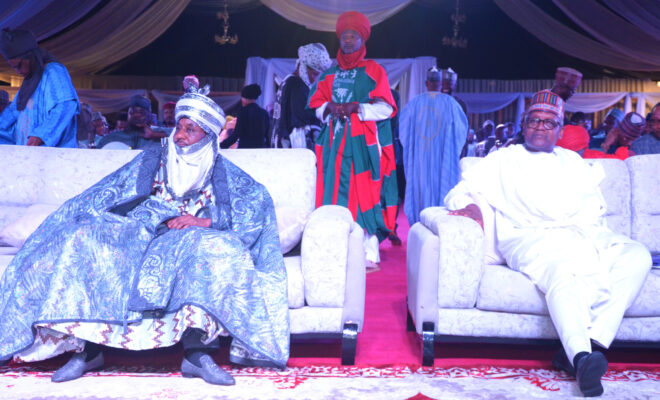
A prominent royal father has mounted a spirited defence of the Dangote Petroleum Refinery and Petrochemicals Limited (DPRP), dismissing criticisms of the Initial Public Offering (IPO) and challenging detractors to replicate its scale by raising the estimated $22 billion required to build a competing refinery.
The Emir of Kano, His Royal Highness Khalifa Muhammadu Sanusi II, on Thursday made the remarks during the DPRP’s “People’s IPO” roadshow in Kano, where he passionately advocated broader Nigerian participation in the IPO as a pathway to wealth creation and economic inclusion.
Addressing a gathering of investors, business leaders, professionals and members of the public, the former Central Bank Governor described the refinery as one of the most significant industrial projects in Africa’s history and urged Kano residents to seize the opportunity to become shareholders.
According to the Emir, equity ownership represents one of the most effective means through which ordinary citizens can participate directly in national economic growth and build long-term financial security.
“Kano is a commercial city with a long tradition of trade, investment and entrepreneurship. Our people understand business, and they should understand the value of owning shares in productive enterprises,” he said.
READ ALSO: The Soludo, Obi Spat – When Brothers Fight to the Finish
Drawing from personal experience, Sanusi recounted his interactions with Aliko Dangote during his banking career in the late 1990s when Dangote Group was evolving from a trading company into a manufacturing powerhouse.
The Emir revealed that many observers at the time questioned Dangote’s strategy of deploying short-term financing to support long-term industrial investments. However, he noted that what critics considered risky was actually a demonstration of strategic foresight and a deep commitment to transforming Nigeria’s productive capacity.
Recalling the philosophy that drove the company’s industrial expansion, the monarch said the vision was anchored on a simple principle: producing domestically what Nigerians consume daily instead of relying excessively on imports.
“Somebody needs to produce the petrol for your cars, somebody needs to produce the cement for your houses, somebody needs to produce the food that you eat. We are importing these things from Asia, Europe and America. Our strategy is to produce those things here,” he stated.
The Emir described the Dangote Refinery as a game-changing investment that could fundamentally alter the structure of the Nigerian economy by reducing dependence on imported petroleum products and preserving foreign exchange.
Drawing on his experience at the nation’s apex bank, Sanusi explained that Nigeria had historically earned foreign exchange through crude oil exports only to expend a substantial portion of it importing refined fuel.
“What Aliko has done is disrupt that model,” he said.
According to him, the emergence of a world-class refinery on Nigerian soil positions the country not merely as an exporter of crude oil but as a major supplier of refined petroleum products to regional and international markets.
As evidence of the refinery’s growing global relevance, he cited reports that European airlines had sourced aviation fuel from the facility during recent supply disruptions linked to tensions around the Strait of Hormuz, underscoring its ability to compete effectively on the global stage.
Sanusi also addressed concerns raised by critics who have accused the refinery of seeking market dominance. The monarch firmly rejected such claims, arguing that competition remains open to anyone willing to undertake the financial and operational challenges associated with large-scale refining.
“There is no monopoly if a monopoly is not protected by law,” he declared.
“Anybody who wants to build a refinery, anybody who wants to raise $22 billion, invest and go through what Aliko went through is welcome to do so.”
The comment drew applause from participants at the roadshow, many of whom viewed the statement as a direct response to persistent criticism of the refinery’s market influence.
The Emir stressed that Nigeria’s economic future depends on encouraging more investments in productive industries capable of creating jobs, generating exports and strengthening local value chains. He warned against a culture that prioritises speculation and the accumulation of overseas assets at the expense of domestic industrial development.
He therefore described the Dangote Refinery IPO as a historic opportunity for millions of Nigerians to own a stake in one of Africa’s most strategic industrial assets.
“It is the shareholders who own it. It is the shareholders who take the returns. It is the shareholders who own the profits,” he said.
While encouraging broad participation, the respected traditional ruler advised prospective investors to approach the market responsibly. He urged citizens to invest only funds they could afford to commit for the long term and not resources earmarked for essential family needs.
In his closing remarks, Sanusi called on Kano residents and Nigerians generally to embrace the capital market and take advantage of the IPO, arguing that widespread ownership would democratise wealth generation and deepen public participation in national economic development.
He said broader participation in the Dangote Refinery IPO would not only reward investors financially but also strengthen local ownership of critical national infrastructure, expand financial inclusion and ensure that the benefits of industrialisation are shared more widely across the country.
“The opportunity is here. The question is whether you will participate,” the Emir told the audience.
The DPRP IPO roadshow, tagged “Kano Grand Homecoming,” brought together leading figures from Nigeria’s business, investment and financial sectors, including Aliko Dangote, President of Dangote Industries Limited; Bismarck Rewane, Managing Director of Financial Derivatives Company; Adetilewa Adebajo, CEO of CFG Advisory; and other capital market stakeholders.
Photo Caption – From Left: Emir of Kano, His Highness, Muhammadu Sanusi II (Special Guest of Honour & Chairman); President/CE, Dangote Industries Limited, Aliko Dangote, at the Dangote Petroleum Refinery IPO Roadshow tagged “Kano Grand Homecoming” in Kano on Thursday, September 17, 2026.






Guinness Nigeria Plc is focused on sustaining growth through wider product availability, commercial expansion and disciplined pricing.
Managing Director and Chief Executive Officer, Guinness Nigeria, Girish Sharma made the disclosure in an interview with CNBC Africa, in which he outlined the priorities expected to shape the company’s performance in the coming quarters.
According to Sharma, the company would keep focusing on making its products more accessible to consumers while strengthening its presence across markets and distribution channels.
“The strategy has always been growing by being available at more places, having our beer, having our products cold in a lot of places and ensuring that we are playing at the right price points,” he said.
READ ALSO: Osun Tackles Sanitation with Adhoc Road Sweepers
Sharma explained that the company’s approach was centred on expanding its reach rather than relying on price increases to drive growth.
He said Guinness Nigeria had increased the number of locations and cities in which its products were available, alongside growth in its distributor network.
He maintained that the company’s commercial expansion is part of a longer-term plan that will continue over the next three to five years.
“In terms of number of touch points where we’re available to the Guinness Nigeria products, number of cities where we’re available today, number of distributors that we have that distribute our products today, on every single count we have grown multi-fold,” Sharma said.
He described the expansion as a significant undertaking for the business, noting that the effort began with his first 100-day plan and remains a key part of the company’s direction.
Sharma also pointed to operational discipline and improvements made over the past year as important foundations for the business. He said earlier decisions to address the balance sheet, adjust pricing and make fundamental corrections were now supporting the company’s growth trajectory.
He added that teams across operations and procurement were working to keep price increases to a minimum while increasing output, while a more stable currency environment had also been helpful.
Looking ahead, Sharma said the company would focus on maintaining consistency rather than promising a particular growth rate for the next quarter.
“I’m not here to stand and say that we’re going to do better than the third quarter, but what I see is we will be consistent in terms of delivering healthy results,” he said. “Consistency is the word.”
He also highlighted the importance of the final quarter of the year to the beverage industry, citing increased consumer activity around the festive season. Guinness Nigeria, he said, had strategic partnerships planned across the period, with some extending into the first quarter of the following year.
Sharma said the company’s broader ambition was to build a stronger business capable of funding its growth, rewarding shareholders and sustaining performance over time.
“The business is sturdy, business is strong, business is good, and I’m confident that we will continue to grow sustainably,” he said.
His comments underline Guinness Nigeria’s focus on extending its market reach, strengthening execution and building consistency as it pursues its longer-term growth ambitions.
Nigeria must be surefooted to attract the right investment to harness her full potential in the oil and gas industry.
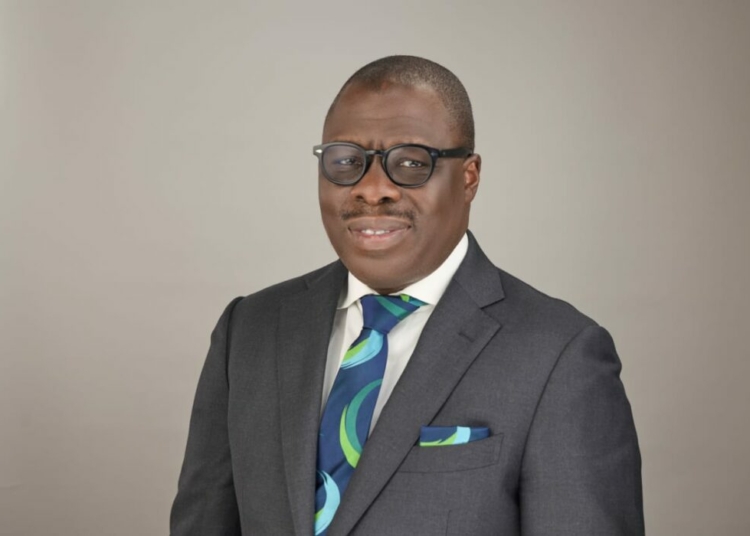
At the 32nd Nigerian Economic Summit (NES) during a panel session titled, “Unlocking Nigeria’s Oil Potential: The Push for More Oil”, in Abuja, the Managing Director and Chief Executive Officer of NLNG, Adeleye Falade, decried the lack of certainties in the investment environment in Nigeria’s oil industry.
He traced Nigeria’s inability to attract sufficient financing for major oil and gas projects to uncertainties over investment terms, project execution and guaranteed markets for output.
According to Falade, investors and lenders must be confident that contractual agreements will be honoured, projects will deliver as planned and buyers will be available to purchase production before committing billions of dollars to capital-intensive energy developments.
READ ALSO: OTL Africa Urges ECOWAS to Adopt Regional Standardisation
He cited the financing of NLNG’s Train 7 expansion as evidence that investment certainty, a proven delivery record and credible commercial agreements could unlock substantial funding, even under challenging global economic conditions.
Falade explained that projects requiring huge upfront capital and 20 to 30 years to recover investments depend on confidence that the terms underpinning them will remain stable throughout their lifespan.
According to him, lenders assess not just the quality of an oil or gas resource but also the durability of the investment framework, the predictability of future earnings and the capacity of project sponsors to meet their obligations.
Falade pointed to the $3 billion in external financing secured from 31 local and international financial institutions for Train 7 in 2020, at the height of the COVID-19 pandemic, as proof of the importance of a credible investment proposition.
The project is being financed through a combination of internally generated cash flows and external funding, underpinned by NLNG’s record of developing six operating trains and repaying the loans used to finance their construction.
He said that track record gave lenders tangible evidence of the company’s capacity to execute complex projects and honour financial commitments, reducing the uncertainty that often discourages investment in capital-intensive developments.
He noted that each successful expansion strengthened NLNG’s credibility and positioned it to secure subsequent financing on more competitive terms.
He identified three fundamental questions that lenders seek answers to before financing major energy projects: “Who buys the product? Who carries the risk? Who stands behind the project?”
For NLNG, he said, long-term sales and purchase agreements, some spanning 20 years, provide the commercial foundation required to secure funding before a final investment decision is taken.

A call has gone to West African countries to adopt uniform fuel specifications, strengthen testing capacity, address infrastructure gaps and improve enforcement systems to facilitate more effective regional petroleum trade.
This formed the bulk of the submission of petroleum regulators at a panel session during the 20th OTL Africa Downstream Energy Week that ended in Lagos.
It is the considered opinion of the regulators that inconsistencies in standards across the region remain a huge disservice to fair competition. Therefore, they expressed a common view that putting in place an acceptable standard will ensure a harmonised fuel quality, improve infrastructure and stronger regulatory coordination which will facilitate cross-border trade and reduce market barriers across the region.
Speaking at the session themed: “Regulatory Convergence in African Oil and Gas Markets,” the Authority Chief Executive (ACE), Nigerian Midstream and Downstream Petroleum Regulatory Authority (NMDPRA), Rabiu Umar, argued that differences in fuel specifications across countries made it difficult to compare products and ensure fair competition.
READ ALSO: NUPRC Resorts to Technology to Reduce Emissions by 60%
For instance, he explained that the disparity between diesel specifications of 50 parts per million (ppm) and 1,500 ppm, presents a complication in efforts to harmonise standards across the region.
To this end, the ACE said the sub regional countries needed common product specifications and coordinated production rules to facilitate trade and promote competition.
Umar also advocated the establishment of a West African reference price for petroleum products, saying regional markets needed to strengthen trade among African producers.
On his part, the Chief Executive Officer of Ghana’s National Petroleum Authority (NPA), Godwin Tameklo, said that inadequate infrastructure was a major constraint to regional petroleum trade.
According to him, countries needed to address infrastructure gaps, regulatory differences and market constraints to improve the cross-border movement of petroleum products.
For instance, he disclosed that Ghana’s port and storage facilities could not always accommodate volumes delivered by larger vessels, forcing operators to consider smaller shipments or alternative arrangements.
Tameklo also stressed the need for clear implementation timelines to ensure that regional harmonisation initiatives translated into practical results.
In a similar vein, the Director of Water, Petroleum and Electricity at The Gambia’s Public Utilities Regulatory Authority (PURA), Musa Njie, highlighted the importance of laboratory facilities in testing petroleum product quality.
Njie identified the absence of a laboratory for petroleum product testing as one of the challenges facing The Gambia, and stressed the need to strengthen national quality assurance systems.
He said that harmonisation efforts should protect public health and the environment while improving market efficiency.
Njie also called for stronger coordination between regional frameworks and national regulatory institutions to ensure effective implementation of agreed standards.






‘I’ve Been a Threat to Gov’t Since Age 20’ – Sowore

Guinness Nigeria CEO Shares Sustainable Growth Strategy

Tinubu Sends Six NMDPRA Executive Director Nominees to Senate, Retains Three

Osun Tackles Sanitation with Adhoc Road Sweepers

NLNG: Nigeria’s Oil Ambitions Require Investor Guarantees
OTL Africa Urges ECOWAS to Adopt Regional Standardisation

Trump’s Family Unveils New Cryptocurrency Platform

Senate Denies Receiving Petitions Against Tinubu’s Ambassadorial Nominees

Dangote Cement Lights Up Benue Host Communities With CSR Initiatives

Reps Recommend 3-year Jail Term For Aviation minister

Tems Sets New Record On Billboard Hot 100 Chart