
NEWS
Delta Takes Decisive Steps On New Minimum Wage

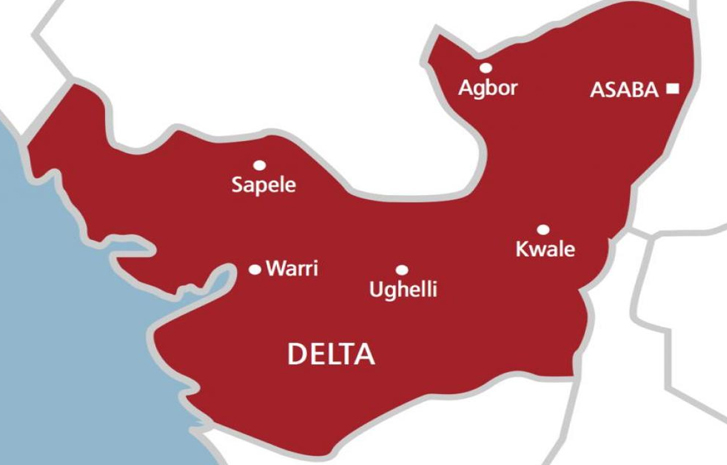
The new national minimum wage will soon become the reality of employees of the Delta State Government.
Gov Sheriff Oborevwori made the disclosure in a statement on his verified handle on micro-blogging site, X, on Saturday.
According to him the state government “has has taken significant steps regarding the new minimum wage”.
ALSO READ: Delta Govt Sets Up IDP Camps In Readiness For Flooding
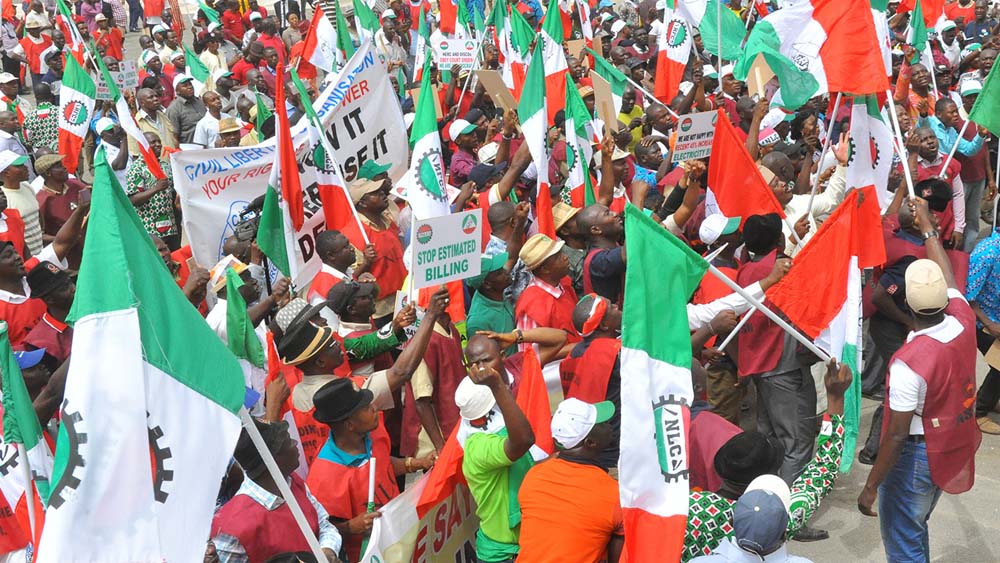
He revealed that the state government was already in conversations with the Nigeria Labour Congress (NLC) to discuss the consequential adjustments related to this wage implementation.
Gov Oborevwori wrote, “It is gratifying to announce that my administration has taken significant steps regarding the new minimum wage. I have directed the Secretary to the State Government (SSG), Dr. Kingsley Emu, and the Commissioner for Finance, Chief Fidelis Tilije, to engage with the State Chapter of the Nigeria Labour Congress (NLC) to discuss the consequential adjustments related to this wage implementation.
“During our recent State Executive Council meeting, held on Wednesday, the 14th of August 2024, which I presided over, we also approved the payment of N3.55 billion as counterpart funding for the 2024 Universal Basic Education Programme.
“The Executive Council also approved several road construction initiatives, including the rehabilitation of the Ohoro/Bomadi 30.5 KM Road in Bomadi Local Government Area, the reconstruction of the Olomoro-Igbide Road in Isoko South Local Government Area, and the Emevor-Ivrogbo/Orogun Road (Phase 2) from KM 4+040 to KM 8+840 in Isoko North Local Government Area. Additionally, we approved the rehabilitation and asphalt overlay of failed sections on the NNPC Housing Complex Road (from Refinery Road to Edjeba Junction), the construction of Ekaye Street and Ovedje Close in Okumagba Layout, Warri South Local Government Area, and the reconstruction of General Hospital Road in Oghara, Ethiope West Local Government Area.
“Furthermore, we approved the rehabilitation of the old Sapele-Warri Road from Amukpe Junction to Ikwewu Community by the Expressway, Amukpe Town. We are also reconstructing the Orerokpe/Okuloho/Oviri Road and undertaking the construction and maintenance of roads within Osubi, Okuokoko, and Environs (Phase 1) in Okpe Local Government Area.
“Other projects include the construction of internal roads and drains in Kurutie Town, Warri South-West Local Government Area, as well as the construction of Okeye Street and Chief Iyke Oputa Street in Onu Obi-Uku Quarters, Aboh in Ndokwa East Local Government Area. We will also construct rigid pavement at the Obitobon-Elolo-Ajaokurogbo Orubu Road (Phase II) in Ogidigben, Warri South-West Local Government Area.
“Additionally, we will construct Idumu Etiti Street, with a spur to Market Road, Owerre-Olubor in Ika North-East Local Government Area, and complete the Issele-Azagba/Otulu Road in Aniocha North Local Government Area.
“We are also undertaking the reclamation of gullies and erosion control along Okpanam/Ibusa in Oshimili North Local Government Area, as well as the rehabilitation and asphalt overlay of Okirighwre-Benin Road from Sapele-Warri Road to Gammon Bridge in Okirighwre, Sapele Local Government Area.
“We are committed to rehabilitating and overlaying failed sections of various roads across the state, impacting 23 out of 25 local government areas directly.
“In light of the ongoing hardships faced by our citizens, I have instructed the Commissioner for Agriculture and the Chief Job Creation Officer to develop programs aimed at alleviating these challenges, particularly for our youth.
“The health sector will also benefit from the purchase of two computerized tomography (CT) scanning machines for the Warri Central Hospital and Delta State University Teaching Hospital in Oghara. This investment is crucial for diagnosing diseases and internal injuries, significantly enhancing our healthcare services.
“Finally, I have also given approval to the Ministry of Health to renovate over 150 primary health centers across the state, as I believe that properly maintained primary healthcare facilities can effectively address the majority of health challenges faced by our people. Together, we are committed to meaningful development and improving the lives of all Deltans.”





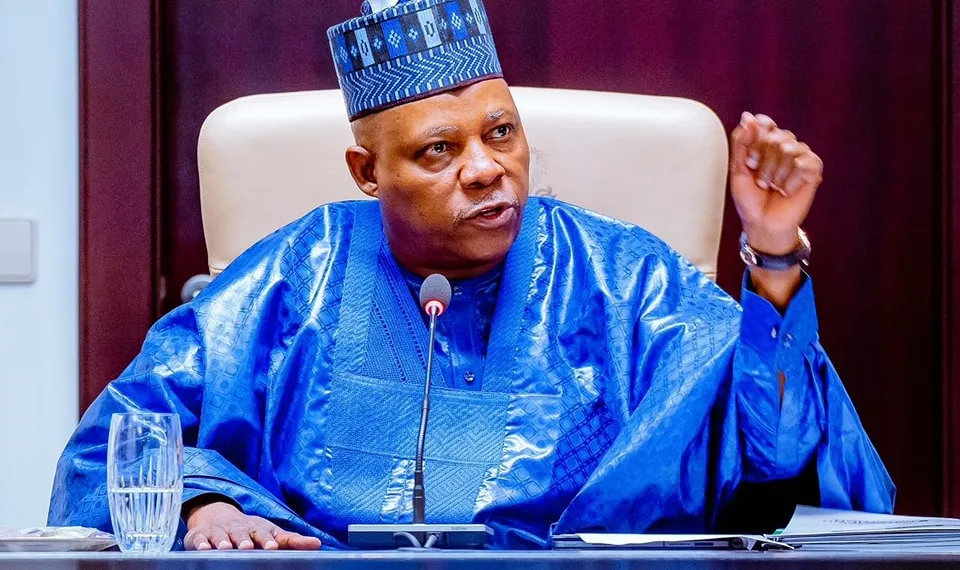
Vice President Kashim Shettima has urged Nigerians to celebrate President Bola Tinubu, saying his leadership saved the country from a potential implosion.
Shettima said Nigeria’s economy had been teetering on the edge of collapse before Tinubu’s intervention, adding that the country could have faced a different situation.
“The economy was teetering on the edge of collapse, we were on a cliff edge,” the Vice President said.
ALSO READ: Subsidy Removal, FX Reforms Driving Fresh Oil Sector Investment – Shettima
“So he literally saved the nation from an implosion. That could have been the scenario. So, instead of demonizing him, Nigerians ought to celebrate this poor man.”
Shettima also called for a return to the drawing board, expressing confidence in the leadership’s commitment and the prospects for the 2027 elections.
“I believe on the bottom of my heart that with this presentation I have seen, and with the commitment of our leadership, by the grace of God, we are going to win,” he said.
Speaking about the 2027 elections, the Vice President reminded his audience that social media platforms should not be mistaken for actual polling stations.
“There are no polling stations on Facebook or Instagram,” he said.
Shettima also expressed gratitude for the efforts made towards promoting the cause of the 2027 elections.

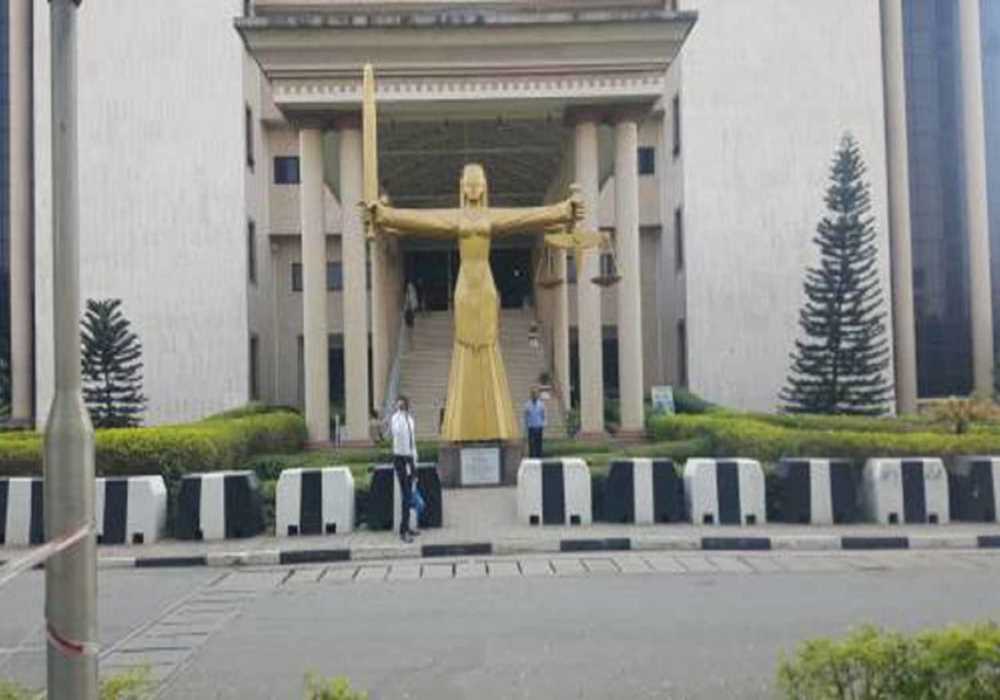
Following observed mis-steps, the Federal Government of Nigeria has withdrawn the eight-count criminal charge brought against the alleged fake Director General (DG) of the Presidential Foreign Intervention Promotion Council (PFIPC), Adeniyi Adeyemi.
Biztellers reports that the matter, in accordance with the counsel of the Attorney General of the Federation (AGF) and Minister of Justice, Prince Lateef Olasunkanmi Fagbemi, (SAN), the matter will be filed at the High Court of the Federal Capital Territory (FCT), instead of the Federal High Court (FHC).
Consequently, upon an unopposed application for termination by the prosecution counsel and Director of the Public Prosecution of the Federation (DPPF), Rotimi Oyedepo (SAN), on Monday, Justice Mohammed Umar of a Federal High Court, Abuja on Monday, struck out the matter.
READ ALSO: Shell Identifies Keys to Nigeria’s Energy Future
In a motion for the termination of the charges, Oyedepo informed the court that the Attorney General of the Federation (AGF) and Minister of Justice has carried out a review of the case file of Adeyemi and the charge filed by the Inspector General of Police (IGP) and found some loopholes.
The DPPF added that the documents allegedly forged by Adeyemi during his operations of the fake agency are those that can be prosecuted by the High Court of the Federal Capital Territory (FCT).
He also informed the court that a new charge has been filed at the High Court of the FCT and that Adeyemi would be expeditiously arraigned afresh.
He therefore urged the judge to strike out the charge as required by law.
Following no objections from Ibrahim Angulu (SAN), who stood in for Adeyemi, Justice Umar subsequently terminated the charge.
Adeniyi, 38, was being tried alongside two others whose whereabouts are unknown, on charges bordering on conspiracy and forgery.
The two others said to be at large were identified as Femi (surname unknown) and Anu (surname unknown).
The charge marked: FHC/ABJ/CR/25/2025, was entered against the defendant by the DPPF.

To secure a bright energy for her teeming population, Nigeria must sustain the momentum of reform, accelerate investment, and deepen partnerships.
This view was expressed by Managing Director, Shell Nigeria Exploration and Production Company of Nigeria Limited (SNEPCo) Ronald Adams in Lagos at the weekend.
Delivering a keynote address at the Africa Energy Conference (AEC) of the Lagos Business School (LBS), Adams called for regulatory certainty through efficient execution of reforms, sustained investment appeal to enable projects to move more swiftly from opportunity to production and partnership by operators, regulators, NNPC Limited and communities to unlock the full value of Nigeria’s resources.
Adams cited Nigeria’s huge oil and gas resources as an advantage but pointed out: “Resources alone do not guarantee prosperity. Prosperity comes when resources are matched with investment, technology, sound policy and disciplined execution. Success will be determined not by the size of our resources, but by our ability to convert them into investment and economic growth.”
Adams pledged the support of Shell towards a bright energy future of Nigerians. He said: “For more than six decades, Shell has been part of Nigeria’s energy journey. Together with our partners, we have helped develop major energy infrastructure, supported Nigerian businesses, invested in talent, and contributed to economic development. Bonga remains a powerful example of what technology, partnership and Nigerian capability can achieve in deepwater operations. Today, that story continues through Bonga North.”
READ ALSO: ADF Targets 5 Million Students, 2 Million Vulnerable Women
Issuing a clarion call for action by all stakeholders, he added: “The world is not standing still. Capital is moving, technology is advancing and competition is intensifying. The countries that attract investment tomorrow are those that improve competitiveness today. Nigeria has begun that journey. Our task is to sustain the momentum and translate reform into projects, projects into growth, and growth into shared prosperity.”
The conference, the 4th in the series had at its theme; “Securing Nigeria’s Energy Future: Policy Reform, Capital Mobilisation, and Pathways to a Sustainable Power and Energy Market” and was attended by top government officials, industry captains, energy professionals, and students.
Lagos State Deputy Governor Obafemi Hamzat represented Lagos State Governor Babajide Sanwo-Olu as the guest of honour. SNEPCo was a principal sponsor of the Africa Energy Conference (AEC) and mounted a well-received exhibition on its deepwater operations and social investments across Nigeria.






State Govs, Wike Endorse One-Party State, Join APC Campaign Council

2027: ‘Tinubu Has Done Well’ – Wike Tells Opposition to Speak the Truth

‘Celebrate This Poor Man’ – Shettima Defends Tinubu Over Economic Crisis
FG Withdraws Charges Against ‘Fake Agency’ DG, Adeniyi Adeyemi

Shell Identifies Keys to Nigeria’s Energy Future

Nigeria Records Biggest Rise in Multidimensional Poverty Among Five Countries – UN

Trump’s Family Unveils New Cryptocurrency Platform

Senate Denies Receiving Petitions Against Tinubu’s Ambassadorial Nominees

Dangote Cement Lights Up Benue Host Communities With CSR Initiatives

Reps Recommend 3-year Jail Term For Aviation minister

Tems Sets New Record On Billboard Hot 100 Chart
