
Politics
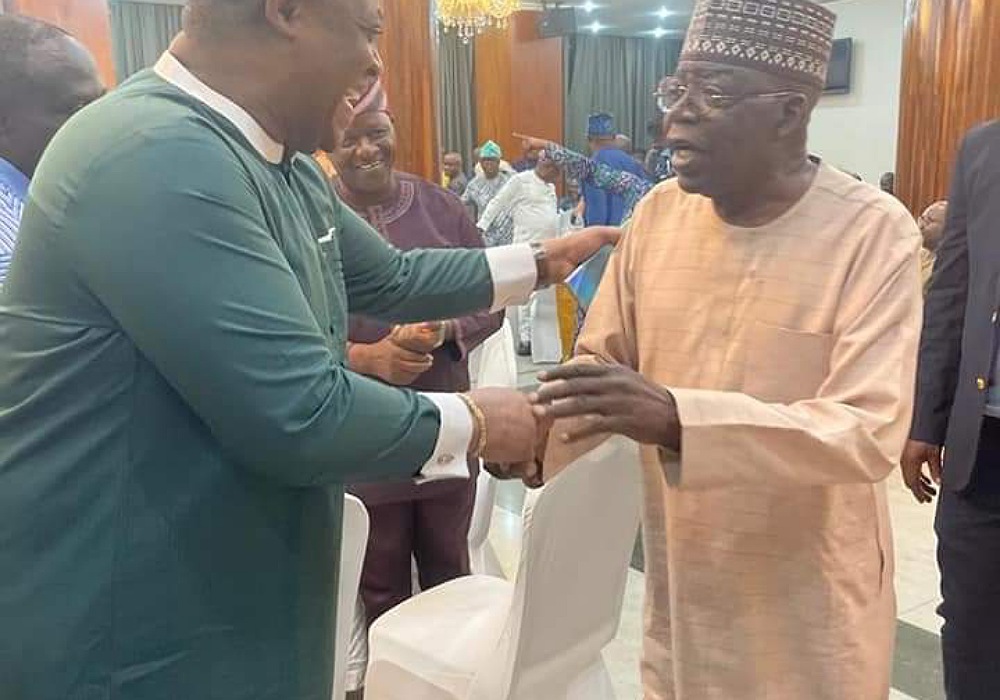
Drug Trafficking: Fani-Kayode Speaks On Tinubu’s Ordeal In US

Jimoh Taofik
A former Minister of Aviation in Nigeria, Chief Femi Fani-Kayode has stated that it is pure falsehood that the presidential candidate of the All Progressives Congress (APC) Bola Ahmed Tinubu was indicted and convicted of drug trafficking in the United States.
In a statement on his official website titled ‘To Those That Claim That Bola Tinubu Is A Drug Baron’, Fani-Kayode claimed that Tinubu is erroneously being painted as a drug baron by political opponents.
He added that it has been almost three decades since Tinubu’s case with the US been declared dead, yet his opponents keep waking up its corpse, in futile efforts to malign him (Tinubu).
He wrote, “One of the unconscionable and wicked lies peddled by political opponents about Bola Ahmed Tinubu was to paint him erroneously as a drug baron.
“The accusation arose out of an investigation by FBI agent Kevin Moss of Tinubu and Compass Investment and Finance accounts at First Heritage Bank and Citi- Bank in the U.S..
“On January 10, 1992, Mr Kevin Moss requested and obtained a court order to freeze the accounts.
“On January 13, 1992, Mr Moss telephoned Tinubu in Nigeria to justify the amounts in the accounts, running into $1.4 million. Part of the money was said to have been deposited by two Nigerians, being investigated for drug offences.
“After the telephone conversation, Tinubu instructed his lawyer in the US to file a lawsuit against the order freezing his accounts.
“This dragged on till 15 September 1993, when an agreement was reached for an out of court settlement. Judge John A Nordberg, of the US district court for the Northern District of Illinois, read out the agreement reached by the two parties. Part of the funds, $460,000 was seized by the government.
The FBI never charged Tinubu with any drug offence; the case did not go on trial. Tinubu was never convicted.
“And he was never barred from entering the United States.
“In 2003, ten years after, when the PDP opponents wanted to use the shuttered allegation to disqualify Tinubu from running for a second term in Lagos, the Inspector General of Police, Tafa Balogun made an enquiry with the American Consulate on Tinubu’s status.
“The Consulate gave Tinubu a clean bill in a reply by the Legal Attache, Michael H. Bonner.
“The letter reads:
““Our sincerest greetings to you and all of the law enforcement personnel in the Nigeria Police Force, whose continued assistance is very much appreciated.
““In relation to your letter, dated February 3, 2003, reference number SR. 3000/IGPSEC/ABJ/VOL. 24/287, regarding Governor Bola Ahmed Tinubu, a records check of the Federal Bureau of Investigation’s (FBI) National Crime Information Centre (NCIC) was conducted.
““The results of the checks were negative for any criminal arrest records, wants,�or warrants for Bola Ahmed Tinubu (DOB 29 March 1952).
““For information of your department, NCIC is a very centralised information centre that maintains the records of every criminal arrest and conviction within the United States and its territories.””








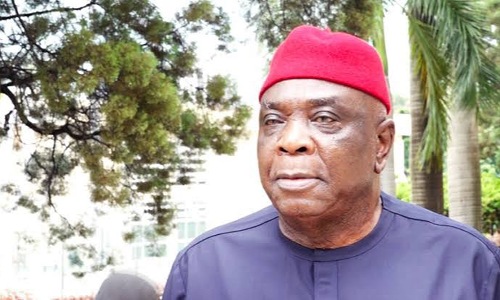
A chieftain of the Peoples Democratic Party (PDP), Dan Ulasi, has questioned the moral justification for another eight-year presidential tenure for northern Nigeria following the completion of former President Muhammadu Buhari’s two terms in office.
Ulasi argued that although the Constitution does not prohibit another northern president from serving after Buhari, such an arrangement would be morally wrong in view of the informal power rotation between the northern and southern parts of the country.
SEE ALSO: Nigerians Must Rise, Reject Inducement and Intimidation at Polls — PDP Chairman
He made the remarks on Arise News’ The Morning Show on Friday, October 16, 2026, during a discussion on opposition politics and the political calculations ahead of the 2027 general elections.
According to the PDP chieftain, Nigeria’s political leadership has traditionally been shaped by an informal understanding that presidential power should alternate between the North and the South to promote fairness and a sense of inclusion.
He argued that the North having completed eight years under Buhari should be a consideration in determining the region that produces the next president.
“So if Buhari just finished eight years, I don’t see how nothing will again come out to run eight years. It is morally wrong. It is not constitutionally wrong, but it’s morally wrong. It is wrong,” Ulasi said.
His comments came as the discussion turned to the challenges confronting opposition parties and their preparations for the 2027 presidential election.
During the interview, Ulasi also addressed the role of religion in Nigerian politics, dismissing the suggestion that religious identity should determine political support.
He said he had never considered religion a decisive factor in his political discussions, stressing that the character and quality of individuals seeking public office should matter more.
“For me, they are Nigerians. Religion has never been part of my discussion in politics. Absolutely not,” he said.
The PDP chieftain maintained that Nigerians should be assessed as citizens regardless of their religious backgrounds.
When the discussion shifted to ethnicity, Ulasi acknowledged that ethnic identity was an undeniable part of Nigerian society but cautioned against using it as an instrument of political division.
He explained that a person’s name or ethnic background did not diminish their status as a Nigerian, arguing that national identity should remain central to political participation.
Ulasi also criticised opposition parties for failing to make sufficient use of Nigerians’ economic grievances against the ruling All Progressives Congress (APC).
He cited inflation, rising food prices and other economic difficulties as issues opposition parties could use to present alternative policies to voters ahead of the 2027 elections.
However, he questioned whether opposition figures were doing enough to engage Nigerians and explain how they would address the country’s challenges.
Ulasi said opposition parties should organise town hall meetings across the geopolitical zones to communicate their programmes and engage citizens directly.
He added that he had not seen the level of nationwide engagement he expected from opposition leaders.
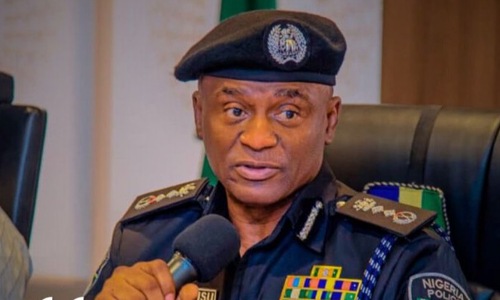
The Nigeria Police Force has warned Nigerian youths against allowing themselves to be used as instruments of political violence ahead of the 2027 general elections, saying their future is more valuable than temporary political inducements.
The warning was contained in a goodwill message delivered by the Force Public Relations Officer, CSP Annie Iniedu, on behalf of the Inspector-General of Police, Olatunji Rilwan Disu, at a National Orientation Agency (NOA) initiative to mobilise Nigerians at the grassroots ahead of the elections on Thursday.
SEE ALSO: IGP Disu Proposes New Police Desk for Nigeria’s Creative Economy, Intellectual Property
The initiative was held under the theme, “Your Vote, Your Voice, Your Future.”
In the message, the Inspector-General urged political parties, candidates and their supporters to embrace issue-based campaigns, tolerance and respect for the rule of law.
“Elections must never become a licence for thuggery, intimidation, vote-buying, ballot-snatching, destruction of electoral materials, or violence,” he said.
Addressing young Nigerians, the police chief warned them against becoming instruments of political violence.
“To our youths in particular: do not allow yourselves to be used as instruments of political violence. Your future is more valuable than any temporary political inducement,” he said.
He also urged eligible voters to reject voter apathy and vote-buying, encouraging them to protect their votes and participate peacefully in the electoral process.
“To all our eligible voters, I urge you to reject voter apathy and vote-buying. Your vote is your voice. Protect it, exercise it peacefully, and allow democracy to work for our nation,” he said.
The Inspector-General assured Nigerians that the police would work with the Independent National Electoral Commission (INEC), other security agencies and relevant stakeholders to protect the integrity of the 2027 elections.
He said the collaboration would involve intelligence sharing, inter-agency cooperation and professional policing to provide a safe and secure environment for voters.
“The Nigerian Police Force assures all Nigerians that we shall remain professional, impartial, and firm against criminal elements seeking to undermine the electoral process,” he said.
The police chief further called for collective efforts to ensure peaceful and credible elections in 2027.
“Let us collectively ensure that in 2027, the ballot defeats the bullet, ideas defeat intimidation, and democracy defeats violence,” he said.
He also urged Nigerians to mobilise for peace, responsible leadership and a credible electoral process ahead of the general elections.

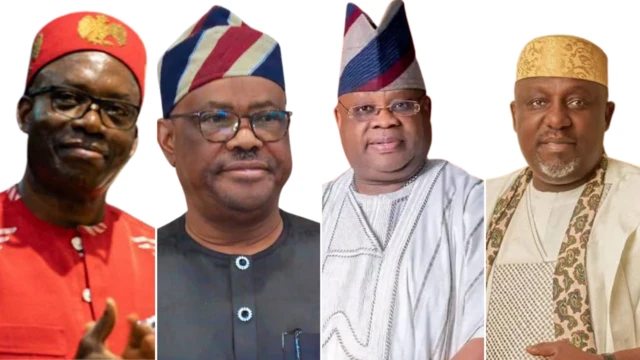
The efforts of the members of the All Progressives Congress (APC) Presidential Campaign Council (PCC) would count for nothing, except for the person who delivers his or her ward at the polls.
Nigeria’s President, and party’s presidential candidate for the 2027 election, Bola Ahmed Tinubu made it clear during the inauguration of the council at the Banquet Hall of the Presidential Villa in Abuja, on Wednesday.
“No one gets credit for an incomplete assignment. So, until you deliver the next election, until you deliver your wards, until you deliver the votes, before we can say thank you,” he said.
READ ALSO:Marketers Eye Portion of FG’s Petrol Discount
The president, who expressed gratitude to party members for their support in the previous election, said the inauguration was more than a formal gathering, describing it as a renewed commitment to Nigerians.
“The APC is ready. We have not gathered merely to inaugurate a council; we have gathered to renew a covenant, a covenant with the Nigerian people and the historic responsibility they have entrusted to us as Nigeria’s governing party. We promise we will not let them down,” he said.
Tinubu also expressed confidence in the party’s ability to secure victory.
“I celebrate you. I celebrate you, no doubt about that. Nigeria will continue to celebrate you. You will see the joy of this victory. You will share in the joy,” he said.
The president also said he would not participate in every aspect of the campaign, stressing that his responsibilities as head of state would remain a priority.
He said party members had cautioned him against allowing the demands of campaigning to distract him from governance, adding that he agreed with their position.
“You have warned me and asked me not to allow the rigour of the campaign to distract me from governance. I hear you. I am in full agreement with your decision. Nigeria needs more attention now than ever before.
“The responsibility of this office does not pause. That responsibility did not recognise our agenda here today. The Constitution allows INEC to make room for parliament but not for the campaign. The job must go on,” he stated.
He, however, pledged to make time to address Nigerians directly while the campaign council coordinates activities across the country.
“However, I will still make time to speak directly with Nigerians even as you lead the campaign in the states and local government areas, so you will excuse me from going everywhere with you,” he said.
The campaign council is chaired by Tinubu, with Vice-President Kashim Shettima and APC National Chairman Nentawe Yilwatda serving as first and second vice-chairmen, respectively.
Senate President Godswill Akpabio, Speaker of the House of Representatives Tajudeen Abbas and Kwara State Governor AbdulRahman AbdulRazaq are the deputy vice-chairmen.
Former Zamfara State Governor Abdulaziz Yari was named director-general of the council.
Other appointments include Femi Gbajabiamila as head of administration, Imo State Governor Hope Uzodimma as secretary, and former APC National Chairman Abdullahi Ganduje as director of stakeholder mobilisation.
Lagos State Governor Babajide Sanwo-Olu was also listed among the party’s campaign officials, while Dele Alake was named spokesman.
The council’s structure includes directorates responsible for mobilisation, election planning and monitoring, finance, fundraising and regional coordination.
The party has also named political figures outside its ranks to coordinate support in some states and regions, including Federal Capital Territory Minister Nyesom Wike for Rivers State and the FCT, Anambra State Governor Chukwuma Soludo for Anambra, and Osun State Governor Ademola Adeleke for Osun.
President Tinubu is seeking a second term in the 2027 presidential election, which the Independent National Electoral Commission has scheduled for January 16, 2027.






Tesla Aims for 2028 Commercial Production of Flying Car

Corruption Trials: EFCC, NJI Push Specialised Judges, Digital Evidence Reforms

‘It Is Morally Wrong’ — PDP Chieftain Questions North’s Bid for Another Eight Years

2027 Election: ‘Your Future Is More Valuable’ — IGP Warn Youths Against Political Violence

Tinubu Charges PCC Members to Deliver Wards

Marketers Eye Portion of FG’s Petrol Discount

Trump’s Family Unveils New Cryptocurrency Platform

Senate Denies Receiving Petitions Against Tinubu’s Ambassadorial Nominees

Dangote Cement Lights Up Benue Host Communities With CSR Initiatives

Reps Recommend 3-year Jail Term For Aviation minister

Tems Sets New Record On Billboard Hot 100 Chart

803241 140328Good read. I just passed this onto a buddy who was performing some research on that. He just bought me lunch since I located it for him! Thus let me rephrase: Thanx for lunch! 179954
148300 957714Hello there, just became alert to your blog by means of Google, and identified that its genuinely informative. Im gonna watch out for brussels. Ill be grateful should you continue this in future. Numerous folks is going to be benefited from your writing. Cheers! 894094