
Politics
Electoral Act: Party Membership Cannot Disqualify Candidate — Lawyer


A public interest lawyer and political analyst, Damien Ajayi, has said membership of a political party cannot, on its own, constitute a ground for disqualifying a candidate from an election.
Ajayi made the submission during an interview on Arise TV on Saturday while discussing the provisions of the Electoral Act 2026 on political-party membership registers, candidate nomination and constitutional qualifications.
SEE MORE: ‘Why The Rush?’ LP Questions Tinubu’s Quick Nod To Electoral Act
According to him, the question of whether an individual belongs to a particular political party is different from the constitutional requirements for contesting an election.
“The issue of membership register belonging to a political party, being a member of a political party, is a different kettle of fish entirely.”
Ajayi referenced the 2023 legal challenge involving Peter Obi and the Labour Party, arguing that the courts had made it clear that the grounds for disqualifying a candidate are contained in the Constitution.
“The court was clear that the only disqualification for a candidate are the provisions in the Constitution; that membership of a political party is an internal affair of a political party.”
He said questions surrounding whether a politician belonged to one party when an election was held and subsequently moved to another party should be considered within the context of the internal affairs of political parties and applicable electoral laws.
Ajayi also discussed Section 77 of the Electoral Act, noting that the 2022 legislation contained subsections one to three, while the 2026 Act expanded the provision to seven subsections.
He said the relevant provisions should be interpreted alongside previous Supreme Court pronouncements on constitutional qualifications and political-party membership.
“If we put this in line with Supreme Court’s pronouncements over the years, it’s been that the criteria in the Constitution are only the criteria that can disqualify a candidate.”
The lawyer also referred to litigation involving the NNPP, the Kano State governorship election and the APC, saying the courts had considered how membership of a political party could be established.
He further recalled arguments made by senior lawyer Wole Olanipekun before the Supreme Court that there were different ways of proving membership of a political party.
“There are other ways you can prove the membership of a political party.”
Ajayi maintained that the Supreme Court’s previous decisions had addressed the issue of party membership and candidate eligibility, including situations where a politician moves from one political party to another.
He, however, noted that the Electoral Act provides specific timelines for certain electoral processes.
Referring to Section 33, which deals with substitution following the withdrawal of a candidate, Ajayi said there is a statutory window within which such substitution must take place.
“If you look at Section 33, where you talk about substitution based on withdrawal, there’s a window there that must be done 90 days before the general election.”
This comes amid the Supreme Court’s restoration of key provisions of the Electoral Act 2026 that had earlier been voided by the Court of Appeal.
On September 24, the Supreme Court allowed an appeal by the Independent National Electoral Commission (INEC) and restored Sections 77(5), 77(6), 77(7) and 84(2) of the Electoral Act 2026. The apex court held that the disputed provisions were not inconsistent with the 1999 Constitution.
The restored provisions deal with political-party membership registers and candidate nomination. Section 77(5) provides that only members whose names appear on a party’s register submitted to INEC within the stipulated period can vote in party primaries, congresses and conventions, while Section 77(6) requires parties to use the submitted register for those activities.
Section 77(7) provides that a political party that fails to submit its membership register within the prescribed period will not be eligible to field a candidate for an election.
Section 84(2) provides for direct primaries or consensus as methods for nominating candidates.
The Supreme Court ruling followed a July decision by the Court of Appeal, which had struck down the same provisions after Zenith Labour Party challenged their constitutionality.
The Court of Appeal had held that the provisions conflicted with Sections 221 and 222 of the Constitution.






The Nigeria Democratic Congress (NDC) has warned the judiciary against allowing itself to be used to undermine democracy following the Federal High Court judgment nullifying the David Mark-led leadership of the African Democratic Congress (ADC).
The party expressed concern that the judgment, alongside other recent court decisions involving opposition parties, could weaken Nigeria’s multi-party democracy and restrict political participation ahead of the 2027 general elections.
SEE ALSO: APC Pressuring Hotels to Deny Opposition Parties Venues – NDC Raises Alarm
In a statement signed by its National Publicity Secretary, Osa Director, Esq. On Friday, the NDC said the manner in which some judgments, particularly those emanating from High Courts, were being delivered raised concerns about a possible attempt to exclude the ADC from the forthcoming elections.
While acknowledging the judiciary as the last hope of the common man, the party warned that court decisions capable of weakening opposition parties could create the impression that the judicial system was being used to frustrate democratic competition.
“The way some of these judgements are being churned out, especially from the High Courts suggests a deliberate effort to shut out the ADC from the forthcoming general elections by other means,” the statement read.
The NDC further argued that such developments could shrink the space for multi-party democracy, which it said was already facing significant threats under the administration of President Bola Ahmed Tinubu and the All Progressives Congress (APC).
The party consequently urged the judiciary to safeguard its independence, impartiality and integrity, stressing the need to protect public confidence in the institution.
It also called on the ADC to appeal the judgment without delay, urging the appellate court to grant an accelerated hearing to ensure the leadership dispute does not linger ahead of the 2027 elections.
According to the NDC, resolving the matter promptly would prevent uncertainty from undermining democratic participation and the ability of political parties to prepare for the forthcoming polls.
The party concluded its statement with the declaration: “A New Nigeria is Possible!”
The Nigeria Democratic Congress (NDC) has accused the ruling All Progressives Congress (APC) of allegedly pressuring hotels in Abuja to deny the opposition party access to their facilities, describing the development as an attempt to undermine democratic participation ahead of the 2027 general elections.
The party raised the allegation in a statement signed by its National Publicity Secretary, Osa Director on Thursday, who expressed concern over what it described as increasing attempts to restrict the democratic space and silence opposition voices.
According to the NDC, it has faced not only alleged violent attacks by agents of the ruling APC but also discrimination from hotels and hospitality businesses in Abuja.
SEE ALSO: Two Suspected Political Thugs Killed After Attacking NDC Candidate’s Convoy in Ebonyi
The party specifically accused Rockview Hotel of cancelling agreements to provide facilities for its meetings on two separate occasions.
The first incident, according to the statement, occurred in June 2026 when the hotel allegedly withdrew its agreement to host the party’s second National Executive Committee (NEC) meeting shortly before the scheduled event.
The NDC claimed that the hotel recently rejected another request to use its facilities for a meeting, allegedly informing the party that the decision came through an “order from above.”
The party also accused BON Hotel in Wuse, Abuja, of refusing to provide its facilities for a meeting despite the NDC claiming it had fulfilled all the conditions required.
The statement further alleged that the unveiling of the party’s National Campaign Council (NCC) was nearly disrupted after its event venue initially asked the party to refund its payment, saying it was no longer interested in making its facilities available.
The NDC suggested that the decision might have resulted from alleged threats or instructions from influential quarters.
However, the party said its insistence on using the facility after making payment eventually compelled the hotel to honour the arrangement.
Describing the alleged incidents as a threat to democratic participation, the NDC called on the APC to allow opposition parties to operate freely and campaign without interference.
“This is not democracy. The APC should allow all parties to campaign without let or hindrance, and give Nigerians the opportunity to make their choice on who governs them,” the statement said.
The party also urged Nigerians and supporters of democracy to call out Rockview Hotel and BON Hotel over what it described as their “anti-people and anti-democratic actions.”
Reaffirming its commitment to national development, the NDC declared that Nigerians deserved better governance and insisted that it was prepared to serve with passion and patriotism.
“Nigerians deserve better, and NDC is prepared to serve with passion and patriotism,” the statement added.
The party concluded with its declaration that “A New Nigeria is Possible.”

Former Vice President Atiku Abubakar has accused the ruling All Progressives Congress (APC) of orchestrating moves to weaken the African Democratic Congress (ADC) and frustrate his 2027 presidential ambition following a court judgment against the party’s leadership.
Atiku described the development as a calculated attempt to undermine the ADC, insisting that the timing of the judgment, which came barely a day after his campaign rally in Sokoto, was suspicious.
In a statement issued on Thursday by Phrank Shaibu, Director of Strategic Communication of the ADC Presidential Campaign Council, Atiku said the ruling party was unsettled by the growing support for his candidacy.
ALSO READ: ‘Don’t Set Nigeria on Fire’ – ADC Sends Warning to APC Over Lifu Judgment
The Federal High Court in Abuja had on Thursday, November 5, 2026, delivered a judgment affecting the leadership of the David Mark-led ADC, nullifying the party’s leadership structure and raising questions over the legitimacy of Atiku’s presidential candidacy.
Reacting to the ruling, Atiku alleged that the development was part of a broader strategy to weaken his political support, particularly in Northern Nigeria, and frustrate the ADC’s growing campaign.
“The timing of this judgment is no coincidence. It is part of a strategy to weaken my support in the North and frustrate a campaign whose message is resonating across the country,” he said.
He, however, maintained that his political ambition was not limited to Northern Nigeria, arguing that the economic hardship facing Nigerians cuts across regional boundaries.
“My roots are in Northern Nigeria, but my candidacy belongs to all Nigerians. There is a difference between being from the North and being a candidate only for the North,” Atiku stated.
The former vice president also linked the judgment to the massive turnout at the ADC presidential campaign launch in Sokoto on Wednesday, November 4, where supporters gathered to welcome him.
He said the reception demonstrated Nigerians’ desire for political change and confidence in the ADC’s promise to make life more affordable.
“What we witnessed in Sokoto is only the beginning. The people of Kebbi will have their say, and so will Nigerians across the country as our campaign moves forward,” he added.
Atiku also questioned the legal basis for reopening the dispute over the ADC leadership, recalling that Justice Musa Liman of the Federal High Court had earlier dismissed a challenge to the David Mark-led leadership in Suit No. FHC/ABJ/CS/1637/2025.
According to him, the earlier judgment upheld the defendants’ objections on jurisdiction, standing and failure to exhaust internal party remedies, while resolving the substantive issues in their favour.
He questioned why another case was subsequently filed to reopen the same dispute, describing it as an attempt to circumvent an existing court judgment.
Atiku said the ADC would challenge the latest ruling at the Court of Appeal.
“We will challenge this judicial manoeuvre at the Court of Appeal,” he declared.
Despite the legal setback, the ADC presidential candidate urged party supporters to remain calm, peaceful and committed to the campaign, insisting that the development would not derail the party’s political activities.
He said the ADC campaign train was already in Kebbi State and would continue its nationwide mobilisation.
“Our Affordable Life campaign will continue because Nigerians deserve relief from this crushing cost-of-living crisis,” Atiku said.
He also urged supporters to take the party’s message to Nigerians through house-to-house and door-to-door mobilisation, adding that the campaign remained focused on rescuing the country from economic hardship.
“There is no shaking,” he declared.






FCT Police Chief Inspects Worship Centres, Commends Residents for Peaceful Conduct
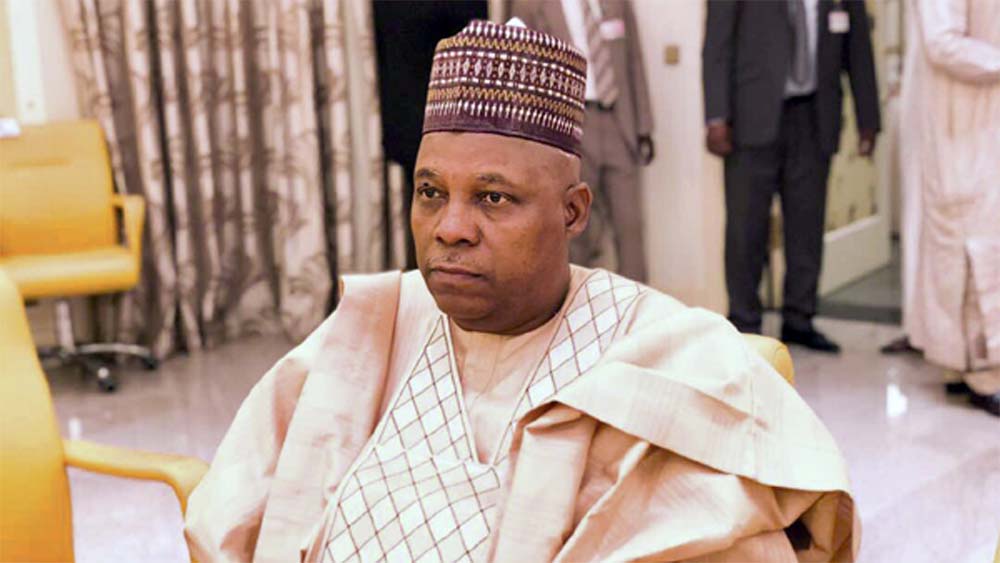
2027: Shettima Arrives in Uyo for APC Presidential Campaign Rally

NDC Warns Judiciary Against Turning Courts Into Tools for Political Opposition

Elohor Aiboni Honoured with DTN@100 Changemaker Award
APC Pressuring Hotels to Deny Opposition Parties Venues – NDC Raises Alarm

Tinubu Hails Flamingos After Historic World Cup Final Qualification, Urges Team to Win Trophy

Trump’s Family Unveils New Cryptocurrency Platform

Senate Denies Receiving Petitions Against Tinubu’s Ambassadorial Nominees

Dangote Cement Lights Up Benue Host Communities With CSR Initiatives

Reps Recommend 3-year Jail Term For Aviation minister

Tems Sets New Record On Billboard Hot 100 Chart
