
NEWS
Fake Degrees: FG Orders Probe Of Nigeria’s Private Varsities

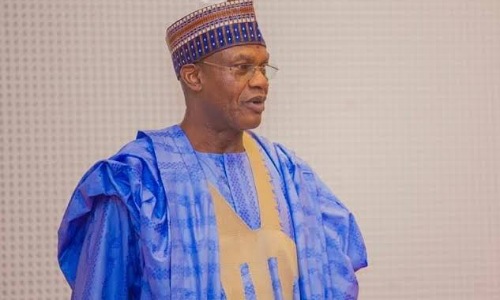
The Federal Ministry of Education has established a committee to scrutinize the operations of private universities founded within the last 15 years.
Prof. Tahir Mamman, the Minister of Education, announced on Tuesday that the committee’s focus was to assess whether the institutions possess the required facilities, a sound management framework, and sufficient funding for their programs, among other criteria.
Moreover, Prof. Mamman highlighted that the inter-ministerial committee tasked with investigating illegal universities would also delve into verifying claims of degree certificate irregularities within both local and foreign private universities operating in Nigeria.
He made these remarks while inaugurating the inter-ministerial committee responsible for addressing the issue of degree mills in the country.
While listing the functions of the Committee, the minister said, “Review the role of any MDA or its officials (including identifying such officials) in facilitation of the recognition and procurement of the fake certificate in question;
“Review existing policies and procedures related to accreditation and certification to identify weaknesses contributing to the issue; examine the rules, procedures and processes for recognition and accreditation of foreign universities and programmes by the Federal Ministry of Education.
“Establish if unapproved foreign institutions (Degree Mills) exist or not in Nigeria in whatever form with their identities and locations if any.
“Make appropriate recommendations for review of any rules, procedures, processes to prevent re-occurrence and sanctions for identified erring officials;
“Make other recommendation that will strengthen the system of recognitions, accreditations and quality assurance of degrees in Nigeria.
“Examine the extant rules, procedures and processes for granting of provisional licenses to new universities by the National Universities Commission.
“Examine the procedures and processes for periodic accreditation of programmes in the universities by the NUC and examine their effectiveness in quality assurance of the programmes;
“Without prejudice to the periodic accreditation exercise of the NUC, examine whether or not Private Universities established in the last 15 years have in the place prescribed facilities, appropriate management structure, adequate funding of programmes, requisite staff (nature of staff-full time, contract, adjunct, visiting, other types).”
BIZTELLERS reports that the discussions on degree mills gained prominence in Nigeria after an investigative report by Umar Audu, a journalist from the Daily Nigerian newspaper.
Audu’s investigation focused on the operations of degree mills in Benin Republic and Togo. He uncovered his ability to obtain a degree in just six weeks and subsequently participate in the mandatory National Youth Service Corps scheme.
Audu’s interaction with a syndicate specializing in the sale of degree certificates in December 2022 led to his graduation in February 2023, acquiring a Bachelor of Science in Mass Communication from the Ecole Superieure de Gestion et de Technologies in Cotonou, Benin Republic.
Following the report exposing illegal practices by some higher education institutions in West African states, the Nigerian government imposed a ban on accrediting and evaluating degrees from Benin Republic and Togo.
Minister of Education, Prof. Tahir Mamman, later announced the extension of this scrutiny to institutions in other African nations, including Ghana.
Statistics from the National Association of Nigerian Students in Benin Republic and Togo suggest that the Nigerian government’s ban could impact around 10,900 Nigerian students enrolled in universities in Benin and Togo.
The National Universities Commission, responsible for regulating universities in Nigeria, disclosed that among the 58 universities whose operations have been suspended in the country, at least 18 are foreign-owned institutions.

The Minister of Education, Dr Maruf Tunji Alausa, has commended Alhaji Aliko Dangote and the Aliko Dangote Foundation for plans to acquire Initial Public Offering (IPO) shares of Dangote Refinery on behalf of eligible Nigerian tertiary institution students.
Alausa described the initiative as an innovative approach to promoting financial literacy, youth empowerment and wealth creation among young Nigerians.
According to a press release issued by the Federal Ministry of Education on Monday, October 19, 2026, the initiative is expected to benefit up to four million students aged 18 and above, with each eligible student expected to receive 10 IPO shares without requiring prior investment or share purchase.
The minister said the programme would expose students to capital markets, responsible investing and long-term financial planning, preparing them for greater economic participation and financial independence.
He noted that the initiative aligns with the Nigeria Education Sector Renewal Initiative (NESRI) and President Bola Ahmed Tinubu’s Renewed Hope Agenda by connecting education with enterprise, human capital development and inclusive economic growth.
According to Alausa, the initiative reflects the importance of partnerships between the education sector and private organisations in equipping young Nigerians with the knowledge and skills needed to participate in the economy.
He said the Federal Ministry of Education remained committed to strengthening private-sector partnerships to improve educational quality, relevance, equity and efficiency while preparing learners for a changing economy.
While appreciating the foundation’s contribution to youth development, the minister clarified that the ministry’s commendation was based on the initiative’s educational and developmental value.
He stressed that the ministry’s position “does not constitute an endorsement of any particular investment decision.”
Alausa also encouraged other corporate organisations to support similar initiatives that promote financial awareness, economic productivity and entrepreneurship among young Nigerians.
He urged businesses to support NESRI and the Renewed Hope Agenda in building a financially informed and economically productive generation.
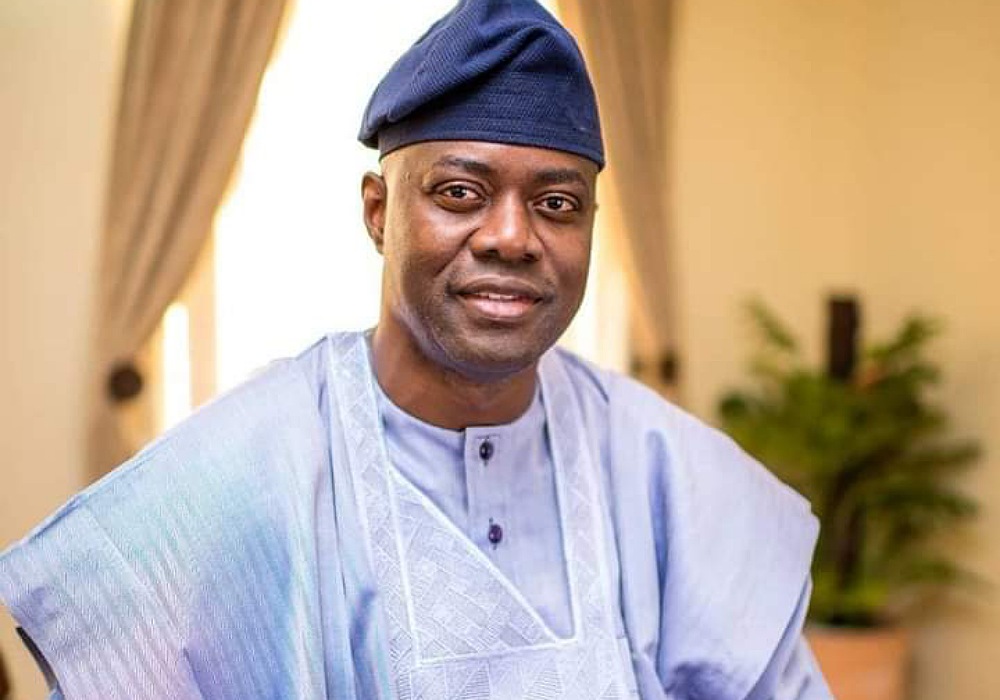
Oyo State Governor Seyi Makinde has challenged the Presidency to explain how Nigeria Liquefied Natural Gas (NLNG) dividends were distributed among states and local governments, insisting that a reconciliation exercise identified a shortfall of about ₦9 trillion.
Makinde’s position was contained in a statement issued on Sunday by his Special Adviser on Media, Dr Sulaimon Olanrewaju, in response to the Presidency’s rejection of the governor’s earlier claims over NLNG dividend payments.
RELATED NEWS: JUST IN: Presidency Rejects Makinde’s Claim of ₦250bn NLNG Dividends for Each State
The statement said the Nigeria Governors’ Forum (NGF), with the support of the Federal Government, engaged a consultant to reconcile NLNG dividend payments, adding that the exercise identified approximately ₦9 trillion allegedly due to states and local governments.
“The exercise identified a shortfall of about ₦9 trillion due to states and local governments. The Federal Government accepted the findings,” the statement said.
The governor maintained that the reconciliation report remained in the custody of both the Federal Government and the NGF.
“The report remains in the custody of both the Federal Government and the NGF. We trust the Presidency will not deny its existence,” the statement added.
The statement also noted that Makinde is the incumbent Vice-Chairman of the NGF.
Makinde Questions $21.5bn NLNG Dividend Payments
The governor questioned the Presidency’s statement that NLNG had paid $21.5 billion in dividends into the Federation Account since its inception, including $3 billion received under the current administration.
According to Makinde, the Presidency’s response did not explain how the payments were distributed or establish the amounts received by states and local governments.
“The Presidency stated that NLNG had paid $21.5 billion in dividends into the Federation Account since inception, including $3 billion received under the current administration. But it did not explain how these funds were disbursed,” the statement said.
The governor also questioned whether states and local governments had received their shares, how much they received and the basis for calculating their allocations.
“Have states and local governments received their shares? How much did they receive, and how were those amounts calculated? What happened to the $3 billion received under this administration?” the statement asked.
Makinde defended the figures he had previously cited, maintaining that his claims were based on verifiable information.
“Governor Makinde conducts public discourse with decorum and does not make unfounded claims or quote figures without a basis,” the statement said.
The governor maintained that he was ready to provide further clarification on the matter while urging the Presidency to address the substance of the allegations.
“We remain ready to provide further clarification while we urge the presidency to address the substance of the matter,” the statement added.
Recall that Biztellers had earlier reported the Presidency’s rejection of Makinde’s claim concerning NLNG dividends allegedly withheld from states and local governments.
The Presidency stated that NLNG had paid $21.5 billion in dividends into the Federation Account since its inception, including $3 billion received under the current administration.
However, in his latest response, Makinde argued that disclosing the total amount paid into the Federation Account did not address how the funds were distributed among the different tiers of government.
The governor is now demanding clarification on the distribution of the dividends and the findings of the reconciliation exercise that reportedly identified the ₦9 trillion shortfall.

The National Association of Nigerian Students (NANS) has threatened to shut down Alex Ekwueme Federal University, Ndufu-Alike (AE-FUNAI), Ebonyi State, if the institution’s management fails to reverse the reported increase in school fees.
The association, in a press release dated Sunday, October 18, 2026, described the reported tuition increment as insensitive, unjustifiable and unacceptable, citing the economic difficulties confronting Nigerian students.
The statement was signed by the NANS President, Dist. Comr. Akinteye Babatunde Afeez, GCNS, who warned that the increase could frustrate the academic aspirations of countless students.
SEE MORE: BREAKING: OAUSTECH Student Akinteye Babatunde Elected New NANS National President
“To be clear, education cannot be commercialised. Students cannot be made to pay for the financial challenges confronting our universities,” the statement read.
NANS acknowledged that universities require adequate funding but argued that their managements, particularly vice-chancellors, should explore innovative revenue-generating opportunities rather than impose additional financial burdens on students.
The association maintained that the Federal Government was investing heavily in education to keep students in school and ensure that access to education was not determined by their financial background or status.
NANS Gives University Management Conditions
The student body warned the vice-chancellor and the entire university management against policies capable of pushing students out of school.
It said the national leadership would not stand by while Nigerian students faced additional financial pressure that could threaten their academic futures.
“Going forward, we wish to make it clear to the Vice-Chancellor and the entire University Management that the National Leadership of NANS will not stand by while Nigerian students are subjected to policies capable of pushing them out of school,” the statement said.
NANS subsequently demanded an immediate reversal of the reported tuition increase and called on the university to restore fees to the affordable and reasonable levels that existed before the increment.
The association warned that failure to meet its demand would lead to a mobilisation of its national leadership to the institution.
“To this end, we call on the management of Alex Ekwueme Federal University to immediately reverse the reported tuition increment and return the fees to the affordable and reasonable level that existed before the increment. Otherwise, we will mobilise the National Secretariat of NANS to Alex Ekwueme Federal University and shut down the school until the fee is reversed,” the statement added.
NANS Reaffirms Commitment to Students
The association reiterated its commitment to defending the interests, welfare and aspirations of Nigerian students.
It pledged to continue speaking firmly against policies that place unnecessary and unbearable financial burdens on students.
NANS maintained that students should not be made to bear the financial challenges confronting universities and called on the management of AE-FUNAI to reverse the reported increase.





Alausa Hails Dangote Foundation’s Plan to Give Four Million Students IPO Shares
APC Campaign Council Sets Inaugural Meeting for Tuesday Ahead of Kaduna Flag-Off

Renaissance Capital Sees Significant Upside in Dangote Refinery, Lifts Valuation by 33.4%

Dangote Refinery IPO Elicits Participation in 90 Countries Globally

Makinde Fires Back at Presidency, Insists on ₦9tn NLNG Dividend Shortfall

‘NELFUND Is Not an Excuse for School Fees Hikes’ – NANS Warns Universities

Trump’s Family Unveils New Cryptocurrency Platform

Senate Denies Receiving Petitions Against Tinubu’s Ambassadorial Nominees

Dangote Cement Lights Up Benue Host Communities With CSR Initiatives

Reps Recommend 3-year Jail Term For Aviation minister

Tems Sets New Record On Billboard Hot 100 Chart

140737 938803Just wanna input on few general issues, The internet site design is perfect, the articles is really wonderful : D. 435022
82268 176548Good day very cool site!!Guy .. Beautiful .. Superb. 967484
95814 545833For anybody who is interested in enviromentally friendly things, might possibly surprise for you the crooks to keep in mind that and earn under a holder merely because kind dissolved acquire various liters to critical oil to make. daily deal livingsocial discount baltimore washington 73526