
Politics
FCT Residents Sues AGF, CJN Over Tinubu’s President-Elect Declaration

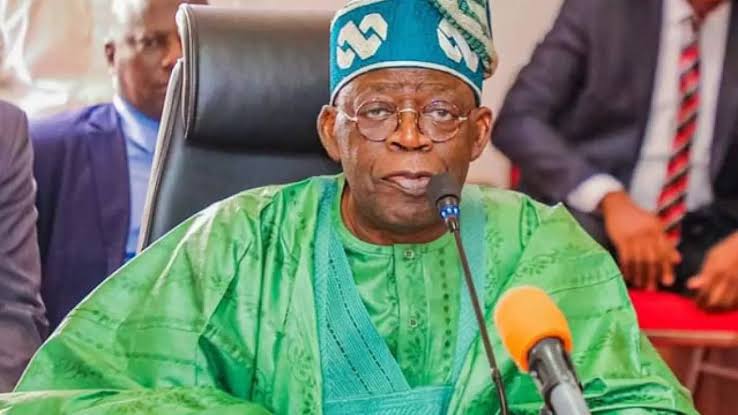
A group of five residents from the Federal Capital Territory (FCT) have filed a lawsuit against the Attorney-General of the Federation (AGF) and the Chief Justice of Nigeria (CJN) regarding the declaration of Senator Bola Tinubu as the country’s president-elect.
The plaintiffs, namely Anyaegbunam Okoye, David Adzer, Jeffrey Ucheh Osang Paul, and Chibuike Nwanchukwu, have taken their case to the Federal High Court in Abuja on April 28, 2023.
In their lawsuit, they argue that Senator Tinubu failed to secure the minimum requirement of at least 25 percent of the votes cast in the Federal Capital Territory (FCT) during the election.
The plaintiffs, acting on behalf of themselves and other residents and registered voters in the FCT, are seeking the court’s intervention to determine “whether or not the person who is to be elected president of the Federal Republic of Nigeria, and consequently administrator of the FCT through the Minister of the Federal Capital Territory and the Federal Capital Territory Development Authority, on the first ballot, is required by section 134(2)(b) of the Constitution to obtain at least 25% of the votes cast in the FCT”.
In addition to challenging the validity of Tinubu’s declaration, the plaintiffs are seeking a court declaration that would extend President Muhammadu Buhari’s tenure until a successor is determined in accordance with the Constitution.
The plaintiffs have further requested that the court sets aside the certificate of return issued to Senator Tinubu and issue an injunction restraining the Chief Justice of Nigeria (CJN) and any other judicial officer from swearing in any candidate as president or vice-president of Nigeria until the lawsuit has been resolved.
However, the Independent National Electoral Commission (INEC) maintains that a candidate does not have to obtain 25 percent of the votes in the FCT to be declared the winner, arguing that the FCT is not accorded any special status in the constitution as previously portrayed.










The All Progressives Congress (APC) Presidential Campaign Council is scheduled to hold its inaugural meeting on Tuesday, October 20, 2026, to consider its campaign calendar and preparations for the campaign flag-off in Kaduna.
The meeting, according to an internal memorandum released on Sunday and signed by Imo State Governor Hope Uzodimma, Secretary of the Presidential Campaign Council, will take place at 2 p.m. at the council’s headquarters, Plot 781, Herbert Macaulay Way, Central Business District, Abuja.
SEE ALSO: ‘The Entire North Has Made Up Its Mind for Tinubu’ — APC Chieftain
The notice states that attendance is “strictly by invitation” and restricted to the 134 members of the Presidential Campaign Council listed in the distribution list.
It explains that the meeting will formally commence the council’s collective assignment and provide an opportunity for members to consider and adopt the campaign calendar.
“The meeting will formally commence the collective assignment of the Council and provide an opportunity to consider and adopt the Campaign Calendar,” the memorandum stated.
It added that members would also deliberate on other related matters, including preparations for the campaign flag-off scheduled to take place in Kaduna on Saturday, October 24, 2026.
Governors, National Assembly Leaders Listed
The distribution list includes state governors, National Assembly leaders and officials assigned to various campaign directorates.
Among those listed as state coordinators are Imo State Governor Hope Uzodimma, Lagos State Governor Babajide Sanwo-Olu, Kaduna State Governor Uba Sani, Enugu State Governor Peter Mbah, Borno State Governor Babagana Zulum and Rivers State Governor Nyesom Wike.
Others include Akwa Ibom State Governor Umo Eno, Anambra State Governor Charles Soludo, Delta State Governor Sheriff Oborevwori, Ogun State Governor Dapo Abiodun and Osun State Governor Ademola Adeleke.
Senate President Godswill Akpabio and House of Representatives Speaker Tajudeen Abbas are also listed among the council’s leadership.
Campaign Directorates
The memorandum identifies officials responsible for coordinating different aspects of the campaign, including media and strategic communications, new media, finance and treasury, fundraising, policy and manifesto development, legal affairs, security and intelligence, data management, and contact and mobilisation.
The Directorate of Media and Strategic Communications lists Mohammed Idris Malagi as Coordinating Director I and Abdulaziz Abdulaziz as Coordinating Secretary I.
Segun Dada and Solomon Arowolo are listed as director and secretary, respectively, of the Directorate of New Media.
Other directorates listed include infrastructure mobilisation and sensitisation, creative sector mobilisation, artisan mobilisation, diaspora mobilisation, women mobilisation, sport sector mobilisation and mobilisation of people living with disabilities.
The document also identifies a Parliamentary Mobilisation Directorate for State Assemblies.
In the memorandum, Uzodimma thanked members for their cooperation and commitment to the assignment.
“Thank you for your usual cooperation and dedication to the success of this important assignment,” he stated.
The meeting is scheduled to hold four days before the campaign flag-off in Kaduna, which the memorandum identifies as a key item for discussion.
The Nigeria Democratic Congress (NDC) has withdrawn recognition of its diaspora chapters, citing a subsisting court judgment that reportedly restricts Nigerian political parties from establishing, operating or supervising chapters outside the country’s territorial boundaries.
The party announced the decision in a press statement released on Sunday October 18, 2026, signed by its National Publicity Secretary, Osa Director, Esq.
The statement followed a review of the party’s relationship with its foreign chapters operating across different countries, with the NDC explaining that its decision was informed by a court judgment concerning the legality of diaspora chapters belonging to Nigerian political parties.
SEE ALSO: Kwankwaso Rejects ADC Claims, Says NDC Won’t Withdraw From 2027 Race
The party referenced the case of Prof. Ali Alao v. All Progressives Congress (APC) & Anor, Suit No. CV/187/2025, decided by Justice Peter Kekemeke of the Federal Capital Territory High Court in Maitama.
According to the NDC, the court held that “no political party registered in Nigeria has the legal authority to establish, operate or supervise chapters outside the country’s territorial boundaries.”
The statement further quoted the court as ruling that “diaspora chapters of Nigerian political parties were illegal, unconstitutional, and unknown to the laws of the Federal Republic of Nigeria.”
Explaining its decision to comply with the reported judgment, the party said it was withdrawing all previous recognition granted to its foreign chapters.
“Therefore, the NDC, in deference to the said judgment, is halting recognition of foreign chapters of the party and all earlier recognitions are hereby withdrawn,” the statement read.
NDC Appreciates Diaspora Supporters
Despite the withdrawal of recognition, the party expressed appreciation to its diaspora supporters, acknowledging their contributions, loyalty, guidance and continued commitment to its activities.
The NDC said it remained grateful for the support it had received from the various foreign chapters, even as it moved to address the legal implications of the court judgment.
“We are deeply appreciative of the immense support of various foreign chapters in the diaspora. We are grateful for their unwavering loyalty, guidance, and contributions to the party,” the statement said.
The party also disclosed that a harmonisation process had been initiated in jurisdictions where more than one group existed, with the aim of bringing the different groups under a single umbrella.
It added that the judgment was still under review and had been referred to its Legal Department for further advice and guidance.
“The party is currently studying the judgment and has referred same to its Legal Department for further advice and guidance,” the statement added.
NDC Addresses Peter Obi’s Diaspora Supporters
The NDC also acknowledged the significant interest Nigerians living abroad have shown in its candidates, particularly its presidential candidate, Peter Obi.
The party encouraged diaspora supporters to sustain their interest and continue supporting its political activities despite the withdrawal of formal recognition from its foreign chapters.
“The party is aware of the tremendous interest that Nigerians in the diaspora have in our candidates, especially our presidential candidate, Mr Peter Obi and we thank them and encourage them to sustain such interest with more vigour,” the statement read.
The party further clarified that the withdrawal of recognition did not mean diaspora supporters should stop meeting or interacting with one another.
Instead, it encouraged them to maintain their engagements, assuring them that the party would continue to communicate with them through appropriate and lawful channels.
“We encourage our supporters in the diaspora to continue to meet and interact, and we shall remain in touch with them through appropriate and legal channels,” the statement said.
NDC Criticises APC, Calls for a New Nigeria
The party also used the statement to urge its supporters to remain committed to its political objectives, calling for collective efforts to address what it described as Nigeria’s present state of drift and hopelessness under the ruling All Progressives Congress (APC).
“Collectively, we must work hard to build a Nigeria of our dreams. We must rescue Nigeria from its present state of drift and hopelessness foisted on it by the rudderless APC,” the statement read.
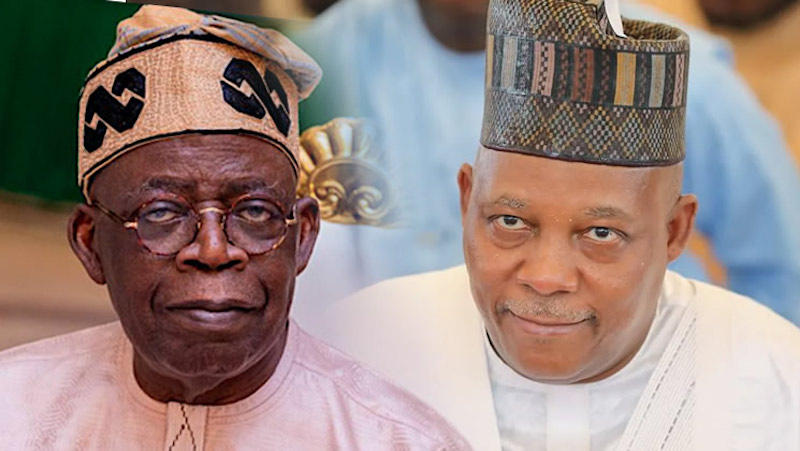
Senior Special Assistant to the President on Media and Communications in the Office of the Vice President, Stanley Nkwocha, has questioned the implications of a proposed one-term presidency arrangement involving former Anambra State Governor Peter Obi and former Kano State Governor Rabiu Musa Kwankwaso, warning that it could affect the South-East’s long-term political aspirations.
Nkwocha raised the concerns on Saturday during a strategic sensitisation meeting of the All Progressives Congress (APC) in Imerienwe Ward 5, Ngor Okpala Local Government Area of Imo State, where he urged the South-East to embrace strategic political alliances ahead of the 2027 general elections.
The presidential aide said the region needed to reassess its political strategy in view of its electoral strength, national political realities and the development opportunities available through engagement with the Federal Government.
ALSO READ: Tinubu vs Obi: Omokri Fires Back at Peter Okoye Over Call to Retire Older Politicians
He questioned whether a one-term presidency arrangement would serve the collective interests of the South-East, particularly in its pursuit of national political leadership.
Nkwocha also argued that the region’s comparatively smaller registered voter population made political partnerships with other geopolitical zones important to its long-term ambitions.
Nkwocha Urges South-East to Support Tinubu, Shettima
The presidential aide maintained that President Bola Tinubu’s administration had demonstrated its commitment to the South-East through infrastructure projects, institutional reforms and economic investments, despite the region’s voting pattern during the 2023 presidential election.
He cited the establishment of the South-East Development Commission, the reconstruction of major federal highways, improvements in transport infrastructure and other economic initiatives as evidence of the administration’s commitment to inclusive national development.
Nkwocha subsequently urged his kinsmen to support the Tinubu administration and Vice President Kashim Shettima ahead of the 2027 elections.
“My boss, Vice President Kashim Shettima, is on the ballot. Please support the Vice President,” he appealed.
His remarks came as the APC intensified grassroots mobilisation in Imo State, with community leaders and political stakeholders at the meeting pledging to consolidate their political structures under the ruling party.
Imo Government Official Backs APC Mobilisation
Speaking at the event, the Deputy Chief of Staff (Operations) to Imo State Governor Hope Uzodimma, Enyinnaya Onuegbu, recalled Imerienwe’s history of political organisation and grassroots mobilisation.
“We used to come to Imerienwe to learn how to play politics,” Onuegbu said, noting that Ngor Okpala had traditionally been recognised for delivering substantial bloc votes during elections.
He also commended Uzodimma for infrastructure development across Imo State, particularly improvements in aviation facilities that have enabled night flight operations at the Sam Mbakwe International Cargo Airport.
“Under Governor Hope Uzodimma, aeroplanes now land at the Imo State Airport at night. More good things are coming in the future,” he said.
Onuegbu expressed confidence in the community’s commitment to the ruling party ahead of the next general elections.
“Imerienwe will deliver all APC candidates in the coming elections,” he declared.
Community Leaders Pledge Support for Tinubu, Shettima
The Chairman of Ndi Nze Ngor-Okpala and Okenze Ngor-Okpala Ggburukuru, Chief Sylvester Okenze Obinna, urged community members to support Nkwocha, commending his contributions to the development of the area.
He called on the people to demonstrate their appreciation through unity and electoral support for Tinubu and Shettima in 2027.
“Our son, Stanley Nkwocha, has made us proud, and we must stand together to support him. The best way to appreciate his efforts and the opportunities his position has brought to our community is to remain united and vote overwhelmingly for President Bola Ahmed Tinubu and Vice President Kashim Shettima in the coming elections. We must show that Ngor Okpala stands firmly behind its own,” Obinna said.
Retired Air Vice Marshal Remigius Ekeh also stressed the importance of unity and strategic political engagement in advancing the community’s interests.
“Politics is both local and strategic. Strategic thinking must be used in order to make a success of our political ambitions,” he said.
Earlier, the Village Chairman of Umunakara Community, Ifeanyi Nwaiwu, announced that political leaders and supporters across seven villages had resolved to unite under the APC.
The villages are Umuchieze, Umukoha, Umundiukwu, Umunakara, Umunwoko, Umuodu and Umuokoji.
“There is no other party in contention. We are all collapsing our political affiliations into the APC,” Nwaiwu declared.
He also assured the party leadership of the community’s commitment to the mobilisation exercise, saying, “We will not shame you.”
During the meeting, the ward chairman presented requests for the grading of community roads and the installation of 50 additional solar-powered streetlights at strategic locations to improve accessibility, security and economic activities.
The meeting was attended by community leaders, women and youth representatives, political stakeholders and APC supporters from Imo State and other parts of the South-East, with discussions focusing on political participation, grassroots organisation and community development priorities.
Other attendees included APC Owerri Zonal Women Leader, Lady Tina Okere; APC Vice Chairman in Ngor Okpala Local Government Area, Georginia Onuoha; the party’s local government secretary, Emmanuel Ukachukwu Dubic; and its youth leader, Chinedu Uhuka, among other political stakeholders.





APC Campaign Council Sets Inaugural Meeting for Tuesday Ahead of Kaduna Flag-Off

Renaissance Capital Sees Significant Upside in Dangote Refinery, Lifts Valuation by 33.4%

Dangote Refinery IPO Elicits Participation in 90 Countries Globally

Makinde Fires Back at Presidency, Insists on ₦9tn NLNG Dividend Shortfall

‘NELFUND Is Not an Excuse for School Fees Hikes’ – NANS Warns Universities

NANS Threatens to Shut Down AE-FUNAI Over School Fees Hike

Trump’s Family Unveils New Cryptocurrency Platform

Senate Denies Receiving Petitions Against Tinubu’s Ambassadorial Nominees

Dangote Cement Lights Up Benue Host Communities With CSR Initiatives

Reps Recommend 3-year Jail Term For Aviation minister

Tems Sets New Record On Billboard Hot 100 Chart
