
Business
Federal Mortgage Bank Increases Loan Limit Amid Housing Challenges

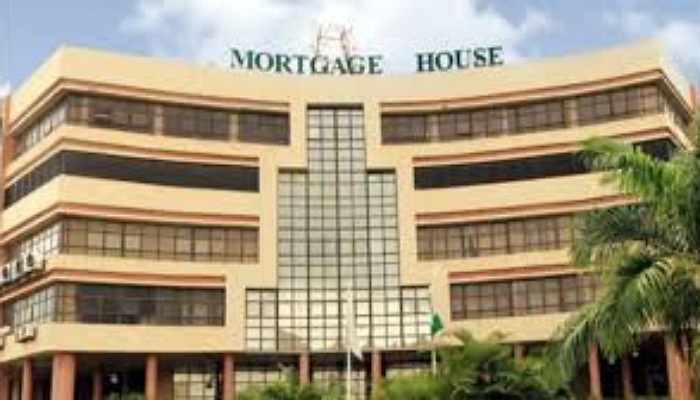
The Federal Mortgage Bank of Nigeria (FMBN) has raised its loan limit from N15 million to N50 million, aiming to address the housing challenges faced by higher and medium-income earners across the country.
This significant increase in the loan ceiling was announced by the FMBN’s Managing Director, Shehu Usman Osidi, during an oversight visit by the House of Representatives Committee on Housing and Habitat at the Bank’s headquarters in Abuja on Monday.
READ ALSO: Peter Obi Celebrates Miss Universe 2024 First Runner-Up
Osidi encouraged Nigerians to take advantage of this new opportunity to access funding for housing, highlighting that it is part of the government’s efforts to improve housing availability in the country.
The increased loan limit comes at a time when many Nigerians struggle with high construction costs and limited access to affordable housing.
During his presentation, Osidi also outlined the FMBN’s financial performance, revealing that the Bank had achieved an operational surplus of N4.9 billion in the first half of the year.
This success, he said, was a result of deliberate financial reengineering and effective strategic management under his leadership.
However, the FMBN is not without its challenges. Osidi pointed out that the Bank continues to grapple with issues of insufficient funding and a high volume of non-performing loans (NPLs).
To address these concerns, the Bank has established loan recovery task forces focused on improving the loan portfolio and reducing the NPLs.
One of the most persistent problems, according to Osidi, has been the non-performing loans associated with estate development.
He disclosed that more than a decade ago, the government placed a ministerial embargo on this category of loans to mitigate the growing NPLs, but challenges remain.
The oversight visit was led by the Chairman of the House of Representatives Committee on Housing and Habitat, Hon. Abdulmumin Jibrin Kofa, representing the Kiru/Bebeji federal constituency of Kano State.
The Committee members were briefed on FMBN’s progress and the key initiatives aimed at revamping the country’s housing sector.
In his concluding remarks, Osidi called for a review of the National Housing Fund (NHF) Act, which he believes will better support the Bank’s efforts to meet the housing needs of Nigerians.








The Nigerian equities market closed Friday’s trading session on a negative note, with the All-Share Index declining by 0.38 per cent to close at 252,113.41 points.
According to the Nigerian Exchange Group’s Daily Market Snapshot for Friday, September 25, 2026, equity market capitalisation stood at ₦163.65 trillion, representing a 0.01 per cent decline.
ALSO READ: NGX Invest Expands Primary Market Access with WhatsApp Subscription Channel
The fixed-income market capitalisation also fell by 0.01 per cent to ₦58.74 trillion, while the market capitalisation of Exchange-Traded Products (ETPs) declined by 2.15 per cent to ₦57.77 billion.
Meanwhile, the top five gainers were led by a stock that rose 10 per cent to close at ₦17.60, followed by CMFC, which gained 9.76 per cent to ₦3.26. Briscoe rose 9.74 per cent to ₦10.70, ABC Transport gained 9.68 per cent to ₦5.10, while Royal Exchange increased by 9.09 per cent to ₦1.08.
The figures were contained in the NGX Daily Market Snapshot released at the close of trading on Friday.

More than 100 Chinese original equipment manufacturers are being wooed for investment, technology and manufacturing capacity to aid growth in Nigeria’s oil and gas industry.
The Nigerian Content Development and Monitoring Board (NCDMB) made the disclosure through its Director, Project Certification and Authorisation Division and Senior Technical Adviser to the Executive Secretary, Austin Uzoka.
This was detailed in a statement issued by the Board which stated that Uzoka was representing the Executive Secretary, Felix Ogbe, at the 15th China Shale Oil and Gas Summit in Chengdu, China, where he made the disclosure.
READ ALSO: NIPCO Moots $3bn Gas Project with Local Construction
According to Ogbe, the board was seeking to move the relationship between Nigerian oil and gas operators and Chinese manufacturers beyond the conventional buyer-seller model to investment, manufacturing, technology transfer and integration into global supply chains.
He said the Nigerian Oil and Gas Content Development Act (NOGCDA) guaranteed patronage for oil and gas equipment manufacturing facilities established in Nigeria, adding that such investments could also provide access to opportunities across the Gulf of Guinea.
“We are looking beyond the traditional buyer-seller relationship. What can we build together? We want Chinese companies to see Nigeria not simply as a market for their products, but as a strategic investment destination, a platform for manufacturing and technology development, and a gateway to opportunities across the wider African market,” he said.
He highlighted the Nigerian Oil and Gas Park Scheme (NOGPS) as a platform for Chinese original equipment manufacturers to establish manufacturing, assembly and service operations in Nigeria.
He said the scheme would provide opportunities for technology transfer, technical arrangements and the integration of Nigerian businesses into the supply chains of Chinese companies.
The ES also identified China’s capabilities in manufacturing, engineering, technology and energy infrastructure as areas that could support Nigeria’s industrial development.
“China has developed tremendous capabilities in manufacturing, engineering, technology and energy infrastructure. We want to explore how those capabilities can be connected with the opportunities that exist in Nigeria, for mutual benefits,” he added.
Nigeria’s local content policy had evolved from increasing Nigerian participation in oil and gas projects to a broader industrial development agenda focused on manufacturing, technology ownership and global competitiveness, he pointed out.
“Nigeria’s local content journey has evolved significantly since the local content law was enacted in 2010. What began primarily as an effort to increase Nigerian participation in the oil and gas industry has developed into a broader industrial development agenda focused on building capabilities, deepening manufacturing, promoting technology ownership and positioning Nigerian businesses to compete within regional and global markets,” he observed.
The engagement formed part of Nigeria’s participation in the 15th China Shale Oil and Gas Summit, held from September 20 to 23 at the Chengdu Century City International Conference Centre.
The summit, themed ‘Empowering Efficient and Green Development via Intelligent Technologies, Innovating to Lead the Shale Oil and Gas Revolution’, provided a platform for Nigerian oil and gas stakeholders to showcase investment opportunities in manufacturing, technology and oil and gas services.
According to the NCDMB, several Chinese OEMs expressed interest in exploring business relationships with Nigerian companies and participating in the country’s growing oil and gas manufacturing ecosystem.
In her closing remarks, the General Manager, Midstream, PCAD, Ms Lekoma Phimia, urged stakeholders to build on the connections established at the session to develop commercially viable and sustainable business relationships.
The NCDMB also used the exhibition to provide prospective investors and industry players with information on Nigeria’s oil and gas sector, local content opportunities and avenues for establishing operations in the country.
The board said the Chengdu engagement was part of efforts to expand Nigeria’s international industrial connections and advance the objectives of the Nigerian Oil and Gas Industry Content Development Act (NOGICDA).
It added that its focus was to move the local content agenda from participation to capability, manufacturing, and ultimately technology ownership and regional competitiveness.
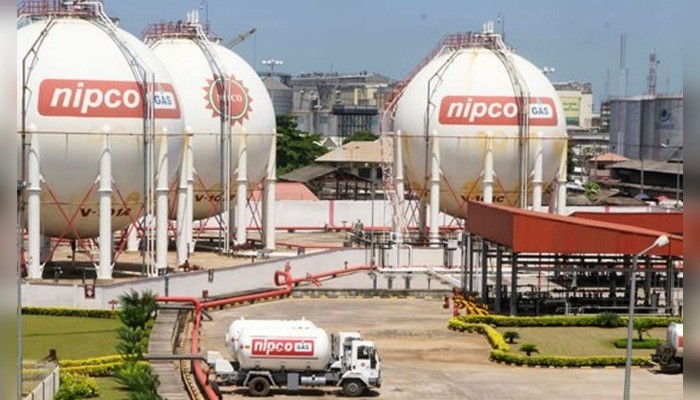
NIPCO Group has announced plans to develop a Floating Liquefied Natural Gas (FLNG) project in Nigeria, with the proposed development estimated to require more than $3bn in investment.
This statement was made at a press conference on Thursday by the Managing Director of NIPCO Group, Nagendra Verma, who said the proposed project would have an envisaged LNG production capacity of approximately three million tonnes per annum, subject to the outcome of feasibility studies, regulatory approvals and a final investment decision.
READ ALSO: Dangote to Support Two Million Women with Refinery IPO Share Ownership
Verma said the project, which would mark NIPCO’s entry into the Liquefied Natural Gas (LNG) sector, was being considered for locations in the Escravos area of Delta State and the Akwa Ibom region.
“This proposed development is envisaged to comprise an FLNG facility along with associated marine and export infrastructure with the potential to serve both the international LNG market and growing domestic LNG demand in Nigeria. The proposed project is presently envisaged to produce LNG unified LNG of approximately 3 million L per annum, 3 million metric tons per annum. The proposed development is expected to represent a significant investment currently estimated in excess of $3bn.
“The final location shall be determined subsequent to the ongoing feasibility study. We are looking at strategic locations that will facilitate access to upstream gas resources, LNG processing, marine transportation and both international and domestic markets,” he said.
According to him, NIPCO had been evaluating the proposed FLNG project for the past six to nine months and was currently undertaking preliminary technical, commercial and feasibility assessments.
“We are considering various development concepts, technology solutions, financing structures and commercial options with a view to establishing a technically robust and commercially sustainable project,” Verma said.
He said the proposed development would comprise an FLNG facility alongside associated marine and export infrastructure, with the potential to serve international LNG markets as well as Nigeria’s growing domestic gas demand.
“The project is presently envisaged to have an LNG production capacity of approximately three million tonnes per annum.
“However, this remains subject to the outcome of the ongoing feasibility and technical studies, project economics, regulatory approvals and final investment decisions,” he said.
Verma said NIPCO was also evaluating the shipping and logistics infrastructure required to support both export and domestic LNG supply.
The Managing Director said the ongoing assessment covers upstream gas supply and reserves, FLNG technology and configuration, LNG production capacity, marine and export infrastructure, domestic LNG supply opportunities, shipping and logistics requirements, project economics and financing structure.






Chairman NSC Secures FIFA Committee Backing for Nigeria Football Reforms

Lagos Naming Ceremony Turns Tragic As Police Shoot 11-Year-Old Girl, Elderly Man

Rivers 2027: ADC Still United, No Member Has Joined APC — Pidomson

Electoral Act: Party Membership Cannot Disqualify Candidate — Lawyer

‘Peter Obi’s Govt Left 101 Road Projects With ₦127bn Liabilities’, Says Anambra Govt

₦2.13bn Ecological Fund: Anambra Govt Releases Fresh Details on Peter Obi’s Claim

Trump’s Family Unveils New Cryptocurrency Platform

Senate Denies Receiving Petitions Against Tinubu’s Ambassadorial Nominees

Dangote Cement Lights Up Benue Host Communities With CSR Initiatives

Reps Recommend 3-year Jail Term For Aviation minister

Tems Sets New Record On Billboard Hot 100 Chart
