
NEWS
Federal University Lokoja Shut Down Indefinitely Over Tragic Accident


The management of Federal University Lokoja (FUL) has announced an indefinite shutdown of the institution following days of student protests over the tragic deaths of their colleagues in a road accident.
The protests erupted on Monday, February 17, 2025, after a trailer rammed into a school shuttle bus at Felele city center, killing seven students on the spot.
The incident sparked outrage among students, who blocked the university gates, demanding justice and improved safety measures.
READ MORE: NANS Protests Exclusion From NELFUND Board, Threatens Shutdown
Despite interventions by the Kogi State Government and repeated appeals from the university management, the demonstrations continued, prompting security concerns.
Acting on advice from state security agencies, the Vice-Chancellor, in consultation with the university management, ordered an immediate indefinite closure of both campuses.
The decision was confirmed in a circular issued on Thursday, February 20, 2025, by Dr. Rebecca Aimiohu Okojie, the university’s Registrar and Secretary to the Council.
The notice, referenced FUL/R/GEN/REGC/03, was also copied to the Kogi State Commissioner of Police and the Director of the Department of State Services (DSS).
The circular read, “Following the unfortunate loss of the lives of five students to a tragic trailer accident at Felele city centre on Monday, 17 February, 2025, students have barricaded the gates of the university despite magnanimous interventions from the State Government as well as frantic efforts and appeal by the University Management for calm.”
“Accordingly, arising from the advice of the State Security Agencies and to forestall further loss of lives, the Vice-Chancellor, after due consultation with Management, has decided on behalf of Senate, that the University (both campuses) be closed down indefinitely within one hour of release of this circular.”
Students were directed to vacate both campuses by 12 noon on Thursday, February 20, 2025, with strict compliance expected.










The 15th edition of the Practical Nigerian Content Forum (PNCF) is billed for Yenagoa, Bayelsa State from November 30.
This edition of the initiative of the Nigerian Content Development and Monitoring Board (NCDMB) would hold be in collaboration with the Bayelsa State Government as disclosed on Tuesday when a delegation of the NCDMB and DMG Events met with the Deputy Governor of Bayelsa State, Dr Peter Pereotubo Akpe, at the Government House, Yenagoa.
Leading the delegation, the General Manager, Corporate Communications Division of NCDMB, Dr Obinna Ezeobi, conveyed the appreciation of the Executive Secretary of the board, Felix Omatsola Ogbe, to the state government for its continued support for the forum.
He said, “We appreciate the Bayelsa State Government for its continued partnership and support for the PNC Forum”.
READ ALSO: 40 Oil Blocks up for Grabs as NUPRC Opens 2026 Bid Round
According to him, the Youth PNC was designed to expose young people in the Niger Delta to emerging opportunities in the oil and gas industry and the competencies required to build successful careers in other sectors of the economy.
Ezeobi added, “We have introduced new initiatives into this year’s programme to ensure that the PNC continues to deliver greater value to participants and address emerging issues in the Nigerian content space.”
The Senior Manager, Zonal Coordination, NCDMB, Mr Adebayo Joseph, spoke on plans for the Youth PNC, while the leader of the DMG Events delegation, Ms Olamide Oloko, outlined the major activities planned for the conference.
Oloko said the new initiatives would include a Local Content Roundtable and a two-day programme for Local Community Contractors aimed at helping them scale up their operations.
She added, “The 2026 edition will also feature a breakout session to collate stakeholders’ views on the future direction of Nigerian Content over the next decade.”
Responding, Akpe assured the NCDMB and DMG Events of the state government’s continued support for the PNC Forum.
Akpe said, “The Bayelsa State Government is committed to ensuring that the event is successful and that participants have a conducive and secure environment throughout their stay in the state.”
He said the initiative demonstrated the practical impact of the programme and urged the board to sustain efforts aimed at creating opportunities for young people in the region.


Nigerian women allegedly being held at a deportation facility in India have cried out over their treatment, with a video circulating online showing some of them displaying injuries and alleging that security personnel flogged detainees.
The video began circulating online on Wednesday and shows a group of Nigerian women inside and around what they described as a deportation camp.
Several of the women pointed to marks, bruises and apparent injuries on their legs, feet and bodies while alleging that they were beaten with sticks or canes.
SEE ALSO: Rufai Oseni Row: NiDCOM Breaks Silence on Nigerians Detained in India, Addresses Ekene’s Case
“See my video, see my leg,” one of the women could be heard saying in the footage.
Another woman said, “Mona see wetin dem dey do for deportation camp.”
“Deportation camp, na dem flog person, see,” another woman said while showing what appeared to be an injury.
The women further alleged that female detainees were beaten with sticks.
“Dem dey use stick dey flog women, mona dey see am,” one of them said.
Another woman, while pointing at an injured detainee, said, “Dem carry cane flog o… see her body, dem flog am.”
The women also alleged that police officers carried sticks inside the facility.
“Police carry stick like say dem dey cut firewood,” one of the women said.
The footage shows the women appearing distressed as they moved through the facility and gathered in an outdoor area.
They repeatedly appealed to Nigerians to share the video and draw attention to their situation.
“Make una see… make this video trend/go,” one woman said.
“Make una share am,” another added.
One of the women also expressed frustration over their alleged experience at the facility, saying, “We don suffer, every time, every time.”
The footage comes amid ongoing concerns over Nigerians detained at the Lampur detention centre, also known as Sewa Sadan, in New Delhi.
Recall that in September, reports emerged that more than 200 Nigerians were being held at the facility, with some detainees alleging poor food, inadequate medical care and prolonged detention.
The Nigerians in Diaspora Commission (NiDCOM) subsequently defended its handling of the situation and said the Nigerian High Commission in India was seeking another amnesty period to facilitate the departure of Nigerians without proper immigration documentation.
No official response from the Indian authorities or the Nigerian government specifically addressing the allegations in the latest video had been made available at the time of publication.
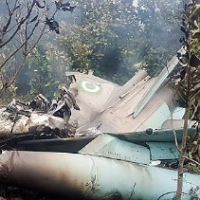
Rights activist, public affairs analyst and Chief Executive Officer of The Dialogue, Shehu Muhammad, has questioned the continued occurrence of military aircraft crashes despite the huge budgetary allocations to the country’s defence and security sector.
Muhammad spoke while reacting to the recent Nigerian Navy aircraft crash in Irele Local Government Area of Ondo State during an interview on Channels Television’s The Morning Brief.
Describing the incident as “one incident too many,” he recalled that Nigeria had recorded several military aircraft crashes involving the Nigerian Air Force and Nigerian Army over the years.
RELATED NEWS: Military Gear Found at Ondo Crash Site as Helicopter Burns to Rubble
He said the recurring incidents had raised concerns among members of the public about the condition of military aircraft and the process through which military hardware is procured.
“People have begun to cast aspersions as to the honesty, sincerity, and openness in the purchase of military hardware, including airplanes,” Muhammad said.
According to him, the concerns are heightened by the substantial funds allocated to the military and other security agencies over the years.
“There are insinuations by the public that, after all, the military receive the highest amount of money from the budget year in, year out,” he said.
Muhammad also questioned the transparency of defence procurement, particularly the process of selecting contractors for the supply of military equipment.
He argued that the repeated crashes should prompt authorities to examine military aviation operations, aircraft procurement and the management of defence resources.
The latest crash occurred in Irele, Ondo State, with recovery efforts reportedly complicated by the difficult terrain around the crash site.
Muhammad said the latest incident should not be treated in isolation, but should lead to broader questions about military aviation safety and the management of resources allocated to the defence sector.
He called for greater transparency and accountability in the procurement and management of military hardware to restore public confidence.





World Bank Report: ‘Nigeria Needs 10% Growth for 20 Years to Reduce Poverty’ — Ekpo
Yenagoa Hosts NCDMB 2026 Content Forum

IPO: ADF Opens Wealth Creation Pathway for 2m Vulnerable Nigerian Women

2027: Tinubu Will Beat Atiku, Obi by Wide Margin, Says Bwala

‘Dem Dey Use Stick Dey Flog Women’ — Nigerians in India Camp Cry Out

2027: I’ll Bring Petrol Price Down to ₦300, Says Donald Duke

Trump’s Family Unveils New Cryptocurrency Platform

Senate Denies Receiving Petitions Against Tinubu’s Ambassadorial Nominees

Dangote Cement Lights Up Benue Host Communities With CSR Initiatives

Reps Recommend 3-year Jail Term For Aviation minister

Tems Sets New Record On Billboard Hot 100 Chart

215887 541020Its superb as your other posts : D, regards for posting . 70088
988870 295107Sweet internet site , super layout, real clean and utilize pleasant. 975067