
NEWS
FG Awards Multi-Million Naira Security Contract To Alleged Terrorism Financier

By Paul Eso
Reports have shown that owner of one of the two security companies awarded Multi-million Naira contract to secure Abuja rail tracks and stations, has alleged links to terrorism financing.
 The Federal Government, FG, through the Minister of the Federal Capital Territory, FCT, Mohammed Bello, on Wednesday announced the award of the N718 million contract to Messers Al-Ahali Security Guards Limited and Messers Seaguard Security and Protective Company Limited.
The contract was in response to the terrorist attack on the rail line between Abuja and Kaduna, which forced the government to suspend the service.
Terrorists had used explosives placed along the tracks to derail a Kaduna-bound train with hundreds of passengers on March 28, 2022.
According to the Minister, the contract was awarded to two security service providers namely Messrs Al-Ahli Security Guards Ltd, at the cost of N407, 214, 000 million, covering a distance of 27.245 kilometers and comprising of eight rail stations and Messrs Segad Security Protective Company Ltd, at the cost of N310, 979, 250 million, covering a distance of 18 kilometers, comprising of four stations.
The scope of the contract, which will last for a period of two years, includes protection of the rail tracks, Communication and Control Centre infrastructure as well as electrical and signaling equipment.
However, Al-Ahli Security Guards Ltd is owned by the National Chairman, Jama’atu Izalatul Bidi’ah wa Ikamatus Sunnah (JIBWIS), Abbdullahi Bala-Lau.
Jama’atu Izalatul Bidi’ah wa Ikamatus Sunnah (JIBWIS), the Islamic group headed by Bala-Lau has at different times been linked to terrorism financing in the country.
An investigation done by Nigerian investigative journalist, David Hundeyin, revealed that Messers Al-Ahli Security Guards Limited is owned by the leader of the radical Izala movement.
READ ALSO: Buhari Pledges Support for Local Vaccine Production
A check on the Corporate Affairs Commission (CAC) showed that Al-Ahali which has its head office in Yola, capital city of Adamawa is owned by Alhaji Bala-Lau.
In 2021, an investigative report by Hundeyin revealed how the late NASCO Group’s multimillionaire founder, Ahmed Idris Nasreddin and Yakubu Musa Kafanchan, also known as Sheikh Yakubu Musa Katsina, an ally of Nigeria’s terror-linked Minister of Communications and Digital Economy, Isa Ali Pantami, funded Islamic terror cells in 2002.
Yakubu Musa Katsina also known as Yakubu Musa Hassan is a renowned Islamic scholar and a member of the founding leaders of one of the largest Islamic organizations in West Africa JIBWIS, where he still serves as the Chairman of the Board of Trustees.
According to the report published on West Africa Weekly, Hassan is a founding member of the Izala Movement (JIBWIS) and the Chairman of the Katsina State JIBWIS chapter.
They were alleged to have funded the activities of people like Kabiru Sokoto, the mastermind of the Christmas Day bombing of the St. Theresa Roman Catholic Church on December 25, 2011 in Madalla, Niger State which killed 37 Christians.





The Anambra State Government has released documents showing the payment of ₦363.381 million as the second tranche of salary arrears owed to former staff, pensioners and next-of-kin of workers of the defunct Anambra State Water Corporation (ANSWC) and Anambra State Environmental Protection Agency (ANSEPA).
The development has intensified the ongoing dispute between Governor Charles Soludo’s administration and former Governor Peter Obi over outstanding workers’ entitlements and the financial obligations allegedly inherited by successive administrations in the state.
Presenting the documents as “Part 3: Evidence that lying is in Peter Obi’s DNA,” the Soludo camp accused the former governor of misleading Nigerians over his record on workers’ entitlements.
ALSO READ: I Won’t Seek Governorship Again, Even If Constitution Is Amended -Peter Obi
“Peter Obi knows we know he’s lying,” the statement said, alleging that the arrears were among workers’ entitlements left unpaid during Obi’s eight years as governor.
According to the documents, the ₦363.381 million payment represents the second tranche provided for under an out-of-court settlement reached between the Anambra State Government and representatives of the affected workers on February 6, 2024.
A memo dated May 22, 2025, and signed by the then Head of Service, Dame Theodora Okwy Igwegbe, mni, requested the release of the second tranche, citing Article 7 of the Terms of Settlement.
The memo stated that ₦363.381 million was due for payment in 2025 under the agreement.
A subsequent Ministry of Finance document dated June 24, 2025, confirmed the release of the funds through Capital Expenditure Release Warrant (CERW) No. 67/2025.
The Soludo administration had earlier paid the first tranche under the settlement, with the government saying the payments were aimed at resolving long-standing salary claims involving workers of the two defunct agencies.
Dispute Over When the Arrears Originated
The latest documents have become central to the political disagreement over whether the outstanding entitlements can properly be attributed to Obi’s administration.
The Soludo camp argues that the continued settlement payments demonstrate that unresolved workers’ liabilities remained after Obi left office in 2014.
Obi’s camp, however, has disputed the characterization. His supporters maintain that his administration inherited substantial salary, pension and gratuity arrears from earlier administrations and cleared billions of naira in outstanding obligations during his tenure.
They have also argued that some of the liabilities involving workers of the defunct agencies originated before Obi became governor in 2006.
The settlement documents establish that the Anambra Government entered into an agreement in 2024 to resolve the outstanding claims and that a second payment of ₦363.381 million was subsequently released.
However, the documents themselves do not conclusively establish that all the underlying arrears were incurred during Obi’s tenure.
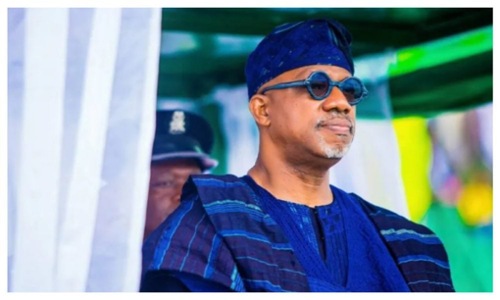
Ogun State Governor, Dapo Abiodun, has expressed appreciation to President Bola Ahmed Tinubu for his support towards the realisation of the Gateway Deep Seaport and Blue Marine Special Economic Zone in the state.
Abiodun described the deep seaport project as a long-standing vision that had been proposed and documented for nearly 30 years but remained unrealised until the intervention of the Tinubu administration.
ALSO READ: FG Preaches Support for Dangote Industrial City, Deep Seaport in Ogun, Ondo States
The governor, in a statement on Friday, acknowledged Tinubu as the “Facilitator-in-Chief” of the transformational project, crediting the President’s leadership and provision of strategic direction for helping to revive the initiative.
According to Abiodun, the vision of establishing a deep seaport along Ogun State’s coastline had been discussed and captured in official documents for decades, but had remained on the drawing board.
“Today, through the foresight, courage and determined leadership of President Tinubu, that long-standing aspiration is finally being transformed into reality,” the governor said.
Abiodun said the Gateway Deep Seaport and the Blue Marine Special Economic Zone would open a new chapter for Ogun State while strengthening Nigeria’s position in global trade, maritime commerce, industrialisation and economic development.
He added that major national projects require political will and leadership capable of turning long-standing plans into tangible development.
The governor also commended the Federal Government for what he described as its unwavering support and commitment towards making the project a reality.
“Posterity will indeed be kind to you, Mr. President,” Abiodun said.
The Gateway Deep Seaport project is expected to form part of Ogun State’s broader strategy to expand maritime infrastructure, attract investment and strengthen industrial and commercial activities along its coastline.
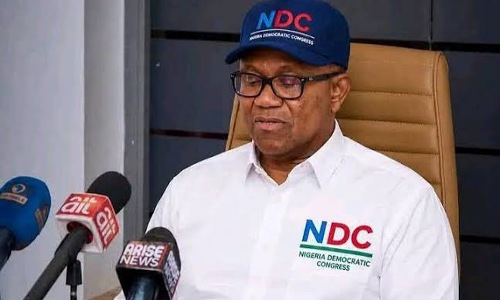
Former Anambra State Governor Peter Obi has called on the World Bank and Nigerian banks to verify records relating to the debt claims made against his administration, insisting that the figures being presented by the state government should be subjected to documentary scrutiny.
Obi made the call during an interview on Arise TV’s Prime Time programme on Thursday, September 24, 2026, while responding to the Anambra State Government’s claims over loans allegedly incurred during his eight-year tenure.
ALSO READ: 2027: Peter Obi Disowns OK Movement Campaign Council, Says ‘It Is Wrong’
The former governor specifically urged the World Bank to provide records showing the actual drawdowns from the facilities linked to Anambra, rather than relying on the total amount originally approved or contracted.
“Please publish these documents. I’m urging you, please. The World Bank is in Abuja; they can give you the history of the drawdowns,” Obi said.
He also challenged the relevant Nigerian banks to verify the financial records he said were contained in his 2014 handover documents.
“The banks mentioned here are Nigerian banks; you have access to their headquarters. Ask them whether this money was there,” he added.
Obi’s comments came amid a dispute over the Anambra Government’s earlier claim that eight external loan facilities associated with his administration had an outstanding balance of about N127.4bn as of June 30, 2026.
The state had linked the loans to projects in areas including education, healthcare, erosion control and malaria prevention.
The former governor disputed the presentation, arguing that approved loan facilities should not automatically be treated as money borrowed or spent if the funds were not actually drawn down.
He maintained that some of the funding arrangements involved Federal Government-backed concessionary financing and said the World Bank records could establish when the money was accessed.
The controversy has since shifted towards the actual amount drawn from some of the facilities.
Anambra State Commissioner for Information and Value Reorientation, Law Mefor, reportedly acknowledged during an Arise TV appearance that the government had not properly verified the amount actually drawn from a $123m facility before citing the larger figure. He said the government would seek clarification from the relevant authorities.
The development has added another layer to the disagreement between Obi and the Anambra Government over the state’s financial position at the end of his administration.
Obi has consistently maintained that he left office in March 2014 without outstanding salaries, pensions, gratuities or certified contractor obligations, while the state government has continued to dispute aspects of his account of the state’s inherited liabilities.






2027 Presidency: Otti Backs Labour Party Candidate, Says He Won’t Oppose Tinubu

‘Obi Knows He Is Lying’ — Soludo Camp Releases Documents on ₦363m Workers’ Arrears Payment

Ogun Deep Seaport: Abiodun Thanks Tinubu, Says 30-Year Dream Becoming Reality

I Won’t Seek Governorship Again, Even If Constitution Is Amended – Peter Obi

Obi Asks World Bank, Banks to Verify Anambra Debt Claims

2027: Peter Obi Disowns OK Movement Campaign Council, Says ‘It Is Wrong’

Trump’s Family Unveils New Cryptocurrency Platform

Senate Denies Receiving Petitions Against Tinubu’s Ambassadorial Nominees

Dangote Cement Lights Up Benue Host Communities With CSR Initiatives

Reps Recommend 3-year Jail Term For Aviation minister

Tems Sets New Record On Billboard Hot 100 Chart
