
NEWS
FG Moves To Expand Nigeria’s Power Grid With $238m Japan Loan

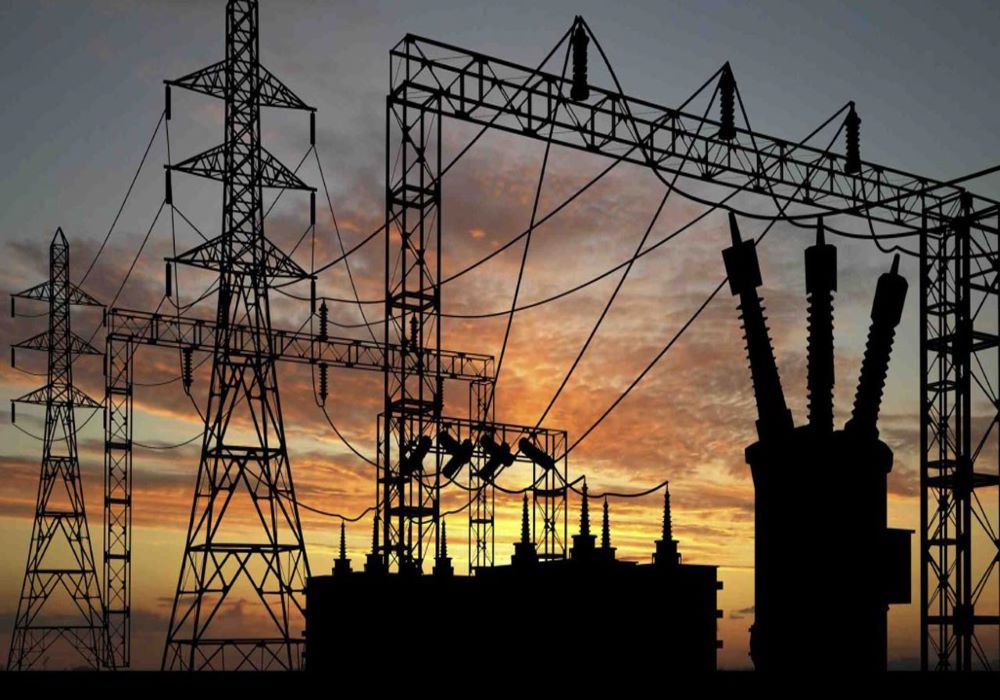
The Federal Government of Nigeria is exploring a $238 million loan from the Japan International Cooperation Agency (JICA) to expand the country’s electricity transmission network, a move aimed at strengthening the national grid and improving power supply across the country.
The proposal followed discussions at the Ninth Tokyo International Conference on African Development (TICAD 9) in Yokohama, Japan.
The Nigerian delegation, led by President Bola Tinubu and including Minister of Power Adebayo Adelabu, engaged with Japanese stakeholders such as Toshiba, Hitachi, Japan’s Transmission & Distribution Corporation, and Energy Exchange corporations to discuss strategies for enhancing transmission infrastructure, operational efficiency, and reducing system losses.
READ MORE: Power Crisis: Nigeria’s National Grid Suffers Fresh Collapse
The loan is planned to complement ₦19 billion in counterpart funding recently approved by the Federal Executive Council (FEC).
The funds will finance the construction of 102.95 km of new 330kV double circuit (DC) lines, 104.59 km of 132kV DC lines, four 330/132/33kV substations, two 132/33kV substations, extensions of 330kV and 132kV line bays, and one additional 132kV substation.
Minister Adelabu also revealed that Nigeria is pursuing a $190 million renewable energy loan facility supported by JICA, aimed at scaling distributed renewable energy solutions for underserved communities.
This complements the $750 million World Bank Distributed Access through Renewable Energy Scale-up (DARES) program under the Mission 300 Compact, which seeks to provide clean electricity to over 17 million Nigerians.
In addition, three substations funded by JICA through a $32 million grant are slated for commissioning in Apo (FCT), Keffi (Nasarawa State), and Apapa (Lagos State), reinforcing electricity supply to homes, businesses, and industrial clusters, including critical areas like the Lagos Port.
Through its partnership with JICA, the National Power Training Institute of Nigeria (NAPTIN) has also commissioned advanced training equipment in Abuja.
The initiative is designed to equip distribution engineers with essential skills and tackle network losses, deepening local expertise and ensuring long-term sustainability in Nigeria’s power sector.
Speaking during a panel session titled “HICKARE Africa: Harnessing Innovation, Co-creation, and Knowledge for Accessible and Resilient Energy for Africa,” Adelabu acknowledged that only about 60 percent of Nigeria’s 200 million population has access to electricity, much of which remains unreliable.
He noted that the government is expanding grid access in urban areas while accelerating off-grid solutions, including solar mini-grids and standalone systems, for rural and peri-urban communities.
“Despite persistent challenges such as limited access to affordable capital, cost barriers for rural households, and under-utilisation of productive-use equipment,” Adelabu said, “the government remains committed to overcoming these obstacles through supportive policies, strategic private-sector partnerships, and local manufacturing of renewable energy components.”
President Tinubu, speaking at TICAD 9, stressed that Nigeria’s participation was “not about trade exhibitions, but about forging strategic, outcome-driven partnerships that would deliver tangible results for the Nigerian people.” He added,
“We are deliberately shifting from planning to implementation, from agreements to delivery, and from promises to measurable results.”
Adelabu also expressed appreciation to JICA and the Government of Japan for their continued support, describing them as “a reliable partner in advancing the country’s energy transition and expanding access to reliable, affordable, and sustainable electricity.”





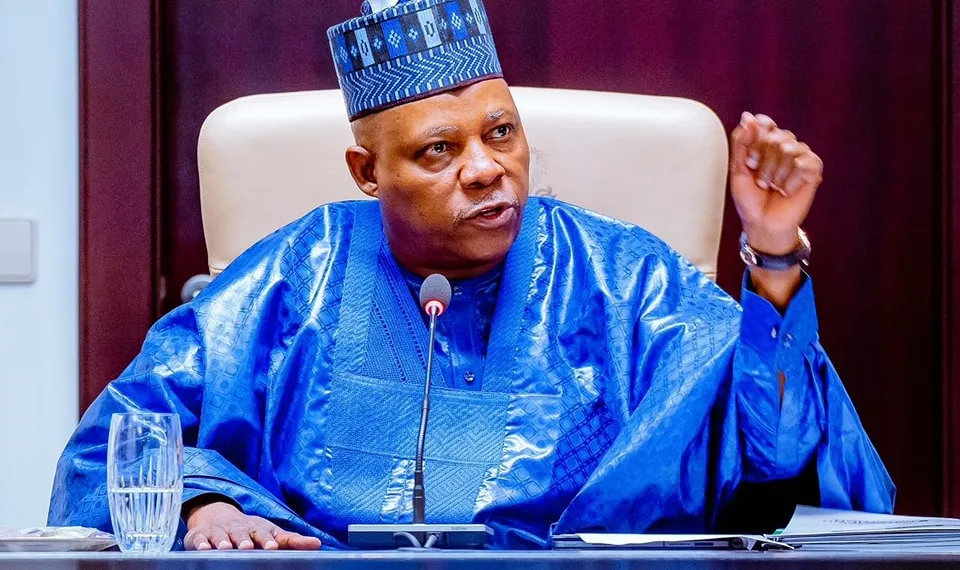
Vice President Kashim Shettima has urged Nigerians to celebrate President Bola Tinubu, saying his leadership saved the country from a potential implosion.
Shettima said Nigeria’s economy had been teetering on the edge of collapse before Tinubu’s intervention, adding that the country could have faced a different situation.
“The economy was teetering on the edge of collapse, we were on a cliff edge,” the Vice President said.
ALSO READ: Subsidy Removal, FX Reforms Driving Fresh Oil Sector Investment – Shettima
“So he literally saved the nation from an implosion. That could have been the scenario. So, instead of demonizing him, Nigerians ought to celebrate this poor man.”
Shettima also called for a return to the drawing board, expressing confidence in the leadership’s commitment and the prospects for the 2027 elections.
“I believe on the bottom of my heart that with this presentation I have seen, and with the commitment of our leadership, by the grace of God, we are going to win,” he said.
Speaking about the 2027 elections, the Vice President reminded his audience that social media platforms should not be mistaken for actual polling stations.
“There are no polling stations on Facebook or Instagram,” he said.
Shettima also expressed gratitude for the efforts made towards promoting the cause of the 2027 elections.

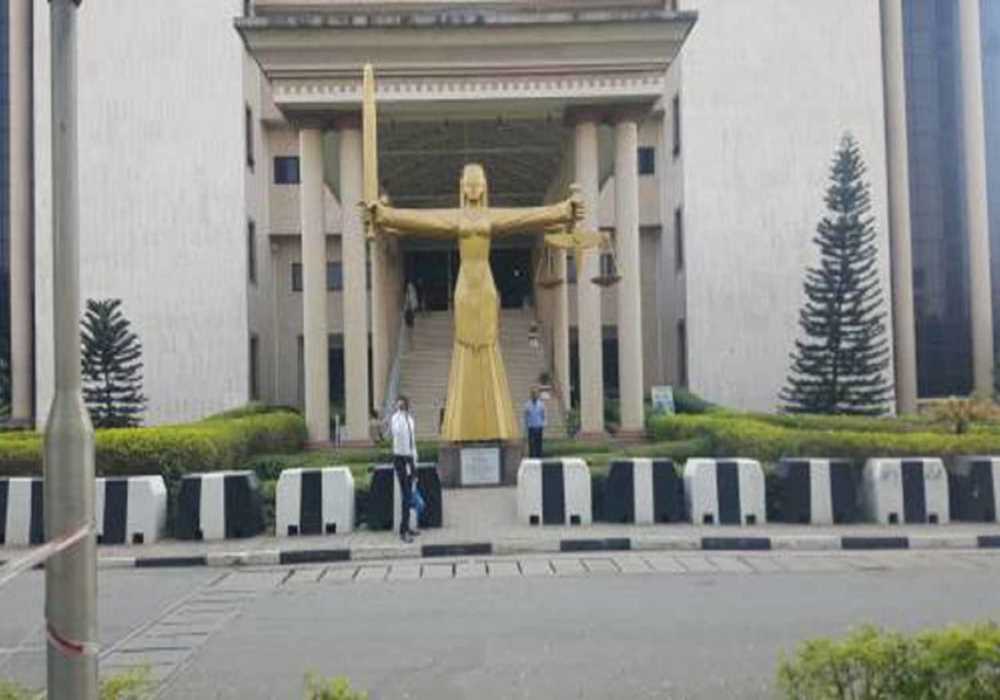
Following observed mis-steps, the Federal Government of Nigeria has withdrawn the eight-count criminal charge brought against the alleged fake Director General (DG) of the Presidential Foreign Intervention Promotion Council (PFIPC), Adeniyi Adeyemi.
Biztellers reports that the matter, in accordance with the counsel of the Attorney General of the Federation (AGF) and Minister of Justice, Prince Lateef Olasunkanmi Fagbemi, (SAN), the matter will be filed at the High Court of the Federal Capital Territory (FCT), instead of the Federal High Court (FHC).
Consequently, upon an unopposed application for termination by the prosecution counsel and Director of the Public Prosecution of the Federation (DPPF), Rotimi Oyedepo (SAN), on Monday, Justice Mohammed Umar of a Federal High Court, Abuja on Monday, struck out the matter.
READ ALSO: Shell Identifies Keys to Nigeria’s Energy Future
In a motion for the termination of the charges, Oyedepo informed the court that the Attorney General of the Federation (AGF) and Minister of Justice has carried out a review of the case file of Adeyemi and the charge filed by the Inspector General of Police (IGP) and found some loopholes.
The DPPF added that the documents allegedly forged by Adeyemi during his operations of the fake agency are those that can be prosecuted by the High Court of the Federal Capital Territory (FCT).
He also informed the court that a new charge has been filed at the High Court of the FCT and that Adeyemi would be expeditiously arraigned afresh.
He therefore urged the judge to strike out the charge as required by law.
Following no objections from Ibrahim Angulu (SAN), who stood in for Adeyemi, Justice Umar subsequently terminated the charge.
Adeniyi, 38, was being tried alongside two others whose whereabouts are unknown, on charges bordering on conspiracy and forgery.
The two others said to be at large were identified as Femi (surname unknown) and Anu (surname unknown).
The charge marked: FHC/ABJ/CR/25/2025, was entered against the defendant by the DPPF.

To secure a bright energy for her teeming population, Nigeria must sustain the momentum of reform, accelerate investment, and deepen partnerships.
This view was expressed by Managing Director, Shell Nigeria Exploration and Production Company of Nigeria Limited (SNEPCo) Ronald Adams in Lagos at the weekend.
Delivering a keynote address at the Africa Energy Conference (AEC) of the Lagos Business School (LBS), Adams called for regulatory certainty through efficient execution of reforms, sustained investment appeal to enable projects to move more swiftly from opportunity to production and partnership by operators, regulators, NNPC Limited and communities to unlock the full value of Nigeria’s resources.
Adams cited Nigeria’s huge oil and gas resources as an advantage but pointed out: “Resources alone do not guarantee prosperity. Prosperity comes when resources are matched with investment, technology, sound policy and disciplined execution. Success will be determined not by the size of our resources, but by our ability to convert them into investment and economic growth.”
Adams pledged the support of Shell towards a bright energy future of Nigerians. He said: “For more than six decades, Shell has been part of Nigeria’s energy journey. Together with our partners, we have helped develop major energy infrastructure, supported Nigerian businesses, invested in talent, and contributed to economic development. Bonga remains a powerful example of what technology, partnership and Nigerian capability can achieve in deepwater operations. Today, that story continues through Bonga North.”
READ ALSO: ADF Targets 5 Million Students, 2 Million Vulnerable Women
Issuing a clarion call for action by all stakeholders, he added: “The world is not standing still. Capital is moving, technology is advancing and competition is intensifying. The countries that attract investment tomorrow are those that improve competitiveness today. Nigeria has begun that journey. Our task is to sustain the momentum and translate reform into projects, projects into growth, and growth into shared prosperity.”
The conference, the 4th in the series had at its theme; “Securing Nigeria’s Energy Future: Policy Reform, Capital Mobilisation, and Pathways to a Sustainable Power and Energy Market” and was attended by top government officials, industry captains, energy professionals, and students.
Lagos State Deputy Governor Obafemi Hamzat represented Lagos State Governor Babajide Sanwo-Olu as the guest of honour. SNEPCo was a principal sponsor of the Africa Energy Conference (AEC) and mounted a well-received exhibition on its deepwater operations and social investments across Nigeria.






2027: ‘Tinubu Has Done Well’ – Wike Tells Opposition to Speak the Truth

‘Celebrate This Poor Man’ – Shettima Defends Tinubu Over Economic Crisis
FG Withdraws Charges Against ‘Fake Agency’ DG, Adeniyi Adeyemi

Shell Identifies Keys to Nigeria’s Energy Future

Nigeria Records Biggest Rise in Multidimensional Poverty Among Five Countries – UN

Katsina Students Get ₦689.79m Bursary as Gov Radda Doubles Allowances

Trump’s Family Unveils New Cryptocurrency Platform

Senate Denies Receiving Petitions Against Tinubu’s Ambassadorial Nominees

Dangote Cement Lights Up Benue Host Communities With CSR Initiatives

Reps Recommend 3-year Jail Term For Aviation minister

Tems Sets New Record On Billboard Hot 100 Chart

https://shorturl.fm/wZXvI
This is the right blog for anyone who wants to find out about this topic. You realize so much its almost hard to argue with you (not that I actually would want…HaHa). You definitely put a new spin on a topic thats been written about for years. Great stuff, just great!
Hello there, You have performed a fantastic job. I’ll definitely digg it and individually recommend to my friends. I’m sure they’ll be benefited from this web site.
I have not checked in here for some time as I thought it was getting boring, but the last several posts are good quality so I guess I will add you back to my daily bloglist. You deserve it my friend 🙂
This is the right blog for anyone who wants to find out about this topic. You realize so much its almost hard to argue with you (not that I actually would want…HaHa). You definitely put a new spin on a topic thats been written about for years. Great stuff, just great!
Great blog! Do you have any tips for aspiring writers? I’m planning to start my own blog soon but I’m a little lost on everything. Would you advise starting with a free platform like WordPress or go for a paid option? There are so many options out there that I’m completely overwhelmed .. Any suggestions? Many thanks!
I’m really impressed with your writing skills as well as with the layout on your weblog. Is this a paid theme or did you modify it yourself? Anyway keep up the excellent quality writing, it is rare to see a great blog like this one nowadays..
hello!,I like your writing very much! share we communicate more about your post on AOL? I require a specialist on this area to solve my problem. Maybe that’s you! Looking forward to see you.
What i don’t realize is actually how you are not really much more well-liked than you may be now. You’re so intelligent. You realize therefore significantly relating to this subject, produced me personally consider it from numerous varied angles. Its like women and men aren’t fascinated unless it’s one thing to do with Lady gaga! Your own stuffs excellent. Always maintain it up!
I?¦ll right away snatch your rss feed as I can not find your email subscription link or newsletter service. Do you have any? Kindly let me understand so that I may subscribe. Thanks.
Great – I should certainly pronounce, impressed with your web site. I had no trouble navigating through all the tabs as well as related information ended up being truly easy to do to access. I recently found what I hoped for before you know it at all. Reasonably unusual. Is likely to appreciate it for those who add forums or anything, site theme . a tones way for your client to communicate. Excellent task.
I genuinely enjoy looking through on this internet site, it has got superb content.
I used to be more than happy to seek out this internet-site.I needed to thanks for your time for this glorious read!! I positively having fun with every little bit of it and I’ve you bookmarked to take a look at new stuff you weblog post.
I like the valuable information you provide in your articles. I will bookmark your weblog and check again here regularly. I’m quite certain I will learn many new stuff right here! Best of luck for the next!