
NEWS
FG Set To Launch Three Major Cancer Treatment Centers

Nigeria is on track to commission three major cancer treatment facilities by May 2025, marking a significant leap in the country’s fight against cancer.
This comes as part of a broader initiative to boost healthcare infrastructure, with six major cancer centers already approved by President Bola Tinubu.
The announcement was made by the Coordinating Minister of Health and Social Welfare, Prof. Muhammad Pate, during a Monday appearance on Channels Television’s Sunrise Daily.
READ MORE: NNPC Ltd Targets 3,000 In Free Cancer Screening Initiative
Prof. Pate revealed that for the first time in Nigeria’s history, the government had approved investments in cancer infrastructure and equipment.
He noted, “For the first time in Nigeria’s history, six major cancer infrastructure, and equipment investments were approved by Mr. President early last year, of which three will be ready by May 2025.”
These state-of-the-art facilities will feature advanced cancer treatment technologies, including linear accelerators, brachytherapy units, and other diagnostic equipment, which are essential for providing high-quality care to cancer patients in Nigeria.
“So that those who are suffering from cancer, that is the high level of care that is needed, it is a tertiary service. We will have the linear accelerators, the brachytherapy, and other diagnostic equipment to allow them to afford good quality cancer care in Nigeria in those six facilities,” Prof. Pate explained.
In addition to these major facilities, the government has already launched 10 cancer diagnostic centers across the country, a project that was flagged off five months ago.
The government also continues to upgrade existing medical infrastructure. Prof. Pate revealed that 201 tertiary healthcare facilities across Nigeria have been equipped with new tools, including Magnetic Resonance Imaging (MRI) and Computed Tomography (CT) scans, as well as anesthesia equipment, in the past year.
“We are going to do more in 2025, but the human resources and the training of that also is an important element; that goes beyond the primary health care, and the Federal Government is investing in it,” he added.
The government has expanded federal healthcare facilities, with new or upgraded hospitals in various states, including the Federal Medical Centre in Epe, Lagos, and a new facility in Ekiti.
The President also recently approved new Federal Teaching Hospitals in Akure and Southern Kaduna, with several existing hospitals, including the specialist hospital in Keffi, upgraded to teaching hospitals.
Prof. Pate stressed that these efforts aim to address the severe gap in healthcare capacity, noting, “For a very long time, the capacity that we had when we were 150 million people is literally what we still have when we are about 230 million people.”
Statistics from the Global Cancer Observatory show a sharp rise in cancer cases in Nigeria, with 127,763 new cases and 79,542 deaths recorded in 2022 alone.
The most common cancers in Nigeria are breast, prostate, and cervical cancer.
According to the Director-General of the National Institute for Cancer Research and Treatment, Prof. Usman Aliyu, approximately 78,000 people died from cancer-related complications in 2020, with more than 120,000 new cases diagnosed annually.







The National Association of Nigerian Students (NANS) has threatened to shut down Alex Ekwueme Federal University, Ndufu-Alike (AE-FUNAI), Ebonyi State, if the institution’s management fails to reverse the reported increase in school fees.
The association, in a press release dated Sunday, October 18, 2026, described the reported tuition increment as insensitive, unjustifiable and unacceptable, citing the economic difficulties confronting Nigerian students.
The statement was signed by the NANS President, Dist. Comr. Akinteye Babatunde Afeez, GCNS, who warned that the increase could frustrate the academic aspirations of countless students.
SEE MORE: BREAKING: OAUSTECH Student Akinteye Babatunde Elected New NANS National President
“To be clear, education cannot be commercialised. Students cannot be made to pay for the financial challenges confronting our universities,” the statement read.
NANS acknowledged that universities require adequate funding but argued that their managements, particularly vice-chancellors, should explore innovative revenue-generating opportunities rather than impose additional financial burdens on students.
The association maintained that the Federal Government was investing heavily in education to keep students in school and ensure that access to education was not determined by their financial background or status.
NANS Gives University Management Conditions
The student body warned the vice-chancellor and the entire university management against policies capable of pushing students out of school.
It said the national leadership would not stand by while Nigerian students faced additional financial pressure that could threaten their academic futures.
“Going forward, we wish to make it clear to the Vice-Chancellor and the entire University Management that the National Leadership of NANS will not stand by while Nigerian students are subjected to policies capable of pushing them out of school,” the statement said.
NANS subsequently demanded an immediate reversal of the reported tuition increase and called on the university to restore fees to the affordable and reasonable levels that existed before the increment.
The association warned that failure to meet its demand would lead to a mobilisation of its national leadership to the institution.
“To this end, we call on the management of Alex Ekwueme Federal University to immediately reverse the reported tuition increment and return the fees to the affordable and reasonable level that existed before the increment. Otherwise, we will mobilise the National Secretariat of NANS to Alex Ekwueme Federal University and shut down the school until the fee is reversed,” the statement added.
NANS Reaffirms Commitment to Students
The association reiterated its commitment to defending the interests, welfare and aspirations of Nigerian students.
It pledged to continue speaking firmly against policies that place unnecessary and unbearable financial burdens on students.
NANS maintained that students should not be made to bear the financial challenges confronting universities and called on the management of AE-FUNAI to reverse the reported increase.

Kaduna State Governor Uba Sani has handed over land titles to displaced residents of nine communities in Birnin Yero, Igabi Local Government Area, to enable them to rebuild their homes and regain shelter.
The Kaduna State Ministry of Information and Culture disclosed the development on Sunday, October 18, 2026, describing the exercise as an intervention aimed at helping displaced residents rebuild their homes.
According to the ministry, each beneficiary is being allocated a plot of land to support resettlement and provide shelter for affected residents.
SEE ALSO: Kaduna Moves to Clear 5-Year Promotion Backlog for 24,000 Teachers
“ He is officially handing over land titles, giving each person a plot of land to rebuild their homes and regain shelter,” the ministry’s announcement stated.
The ministry also noted that Governor Sani had continued to support displaced communities across Kaduna State since assuming office.
The latest exercise focuses on nine communities in Igabi Local Government Area, with the allocation of land intended to help affected residents rebuild their homes and regain stability.
The development comes amid previous reports concerning land disputes and displacement affecting communities in Kaduna State.
In September 2026, reports indicated that the Kaduna Geographic Information Service (KADGIS) had resolved more than 5,000 land disputes and restored over 150 property titles.
The agency also reported that alternative plots had been provided to some communities affected by previous demolitions.
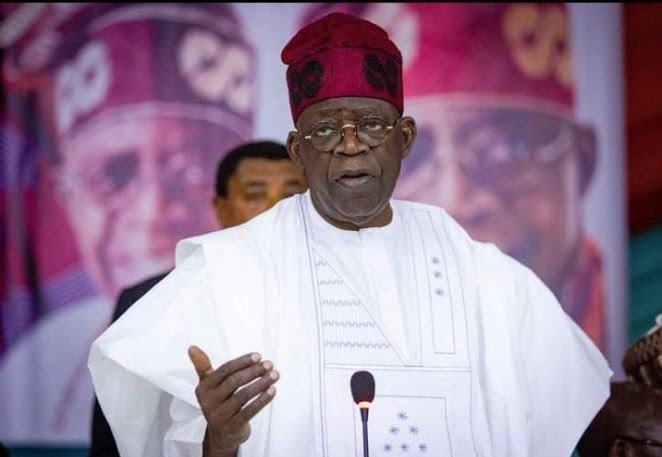
The Presidency has rejected Oyo State Governor Seyi Makinde’s claim that the Federal Government is withholding ₦250 billion in Nigeria LNG Limited (NLNG) dividends for each state, describing the allegation as false and inconsistent with the company’s historical dividend payments.
The rebuttal was contained in a statement issued on Sunday by Bayo Onanuga, Special Adviser to President Bola Tinubu on Information and Strategy.
Makinde had alleged that the Federal Government would not release the funds until after the 2027 general elections, despite states having identified development projects for which the money was expected.
ALSO READ: “Makinde Never Owed Salary Despite FAAC Changes” — APM Chieftain Adelore
The governor made the claim on Friday at the 2027 Budget Stakeholders’ Consultative Engagement held at Olola Ogunlana Hall, International Conference Centre, University of Ibadan.
“Each state was supposed to get ₦250 billion. We had already identified projects that would expand Oyo State’s economy. But they have now said the money will not be paid until after the election. Is the election more important than the people of Nigeria?” Makinde said.
However, the Presidency disputed the governor’s figures, arguing that the amount he cited would require an exceptionally large dividend payment from NLNG.
“Makinde’s latest claim that the Federal Government is withholding the NLNG dividend windfall is false and should be disregarded,” Onanuga stated.
According to the presidential aide, paying ₦250 billion to each of Nigeria’s 36 states would amount to ₦9 trillion, excluding the Federal Government, the Federal Capital Territory and the 774 local government councils.
He explained that under the Federation Account Allocation Committee (FAAC) revenue-sharing formula, states receive 26.72 per cent of distributable Federation Account revenue.
Onanuga said NLNG would have to pay more than ₦33.68 trillion, equivalent to approximately $25 billion, into the Federation Account in a single declaration for the states’ share alone to reach ₦9 trillion.
“NLNG has never paid $25 billion in dividends to the Federation Account in a single payout,” he said.
The Presidency also stated that NLNG had paid approximately $21.5 billion in dividends to the Federation over the past 25 years, with less than $3 billion realised since Tinubu assumed office.
Onanuga argued that these figures contradicted the allegation that a single dividend payment exceeding the company’s total historical distribution to the Federation was being withheld.
“Therefore, any claim that a single payout exceeds the company’s entire lifetime distribution to the Federation—and is being withheld—defies basic logic and economic reality,” he stated.
The presidential aide further criticised Makinde’s public statements, accusing the governor of making misleading claims since embarking on his presidential ambition ahead of the 2027 elections.
“We expect Governor Makinde to be more measured in his public conduct and utterances,” Onanuga said.
He also recalled Makinde’s previous description of the substantial financial allocations from the Federation Account to states, including Oyo, as “voodoo.”
While acknowledging that Makinde was free under Nigerian law to pursue his presidential ambition, Onanuga urged him to avoid what the Presidency described as false claims and disinformation.
“Under Nigerian law, Governor Makinde is free to pursue his presidential ambition. He should desist from making falsehoods and disinformation the hallmarks of his campaign,” he stated.
The Presidency urged Nigerians to disregard the governor’s allegation, arguing that it could mislead citizens and create unnecessary hostility towards the Federal Government.
“We urge the public to disregard these unfounded claims, which serve only to mislead citizens and stoke needless disaffection against the Federal authorities,” Onanuga added.





NANS Threatens to Shut Down AE-FUNAI Over School Fees Hike

Wife Dies in Ogun House Fire as Police Take 56-Year-Old Husband Into Custody

Gov Uba Sani Hands Over Land Titles to Displaced Residents of Nine Kaduna Communities

NDC Withdraws Recognition of Diaspora Chapters Over Court Rulingq

2027: Presidential Aide Nkwocha Warns South-East Over One-Term Presidency Deal
‘Impartiality in Doubt’ – ADC Urges Senate to Reject INEC Nominee Over Sokoto Governor Link

Trump’s Family Unveils New Cryptocurrency Platform

Senate Denies Receiving Petitions Against Tinubu’s Ambassadorial Nominees

Dangote Cement Lights Up Benue Host Communities With CSR Initiatives

Reps Recommend 3-year Jail Term For Aviation minister

Tems Sets New Record On Billboard Hot 100 Chart
