
Other News
FIPL targets energy mix expansion, appoints Nwangwu CEO

The Board of First Independent Power Limited (FIPL), a Sahara Power Group company, has announced the appointment of Dr. Kenechukwu Nwangwu, as its new Managing Director/Chief Executive Officer as FIPL moves to ramp up generation via alternative energy sources.
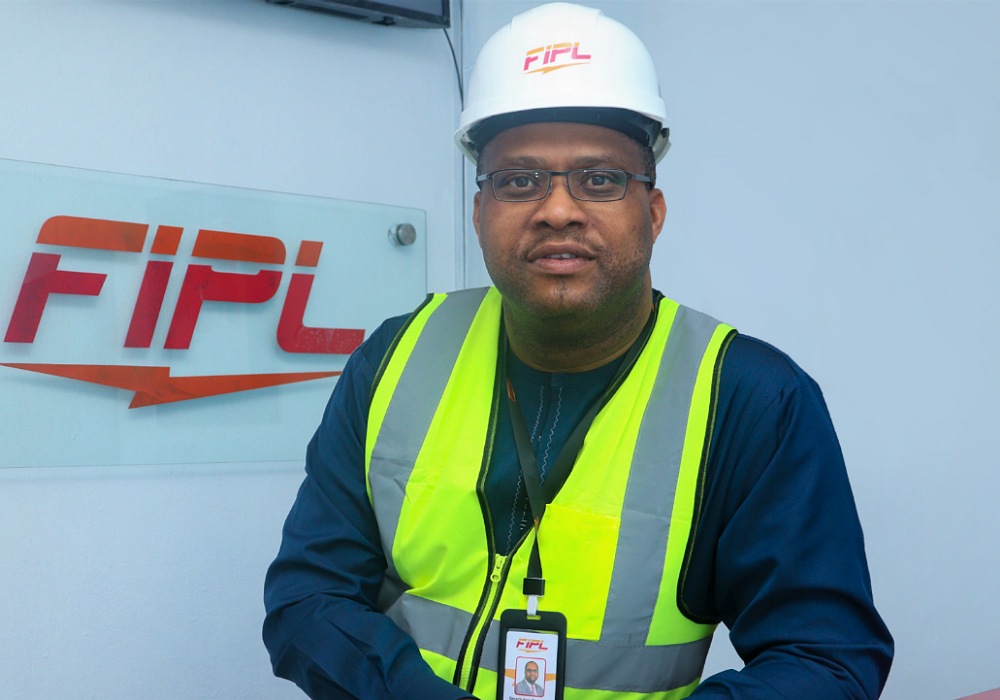
Nwangwu
According to Kola Adesina, Group Managing Director, Sahara Power Group, the appointment will drive FIPL’s ongoing transformation towards sustainable and efficient power generation, especially in the Niger Delta and South-South regions of Nigeria.
Read more>>>Sahara Group Urges Investments In Africa, Others To Achieve Low Carbon World
“We are excited to welcome Kenechukwu to the team at a time when Sahara Group is moving swiftly towards more responsible power generation in line with our commitment to promoting environmental sustainability. We also believe our young engineers will have a lot to learn from the vast experience Kenechukwu is bringing to FIPL,” he said.
Adesina said since acquisition in 2013, FIPL had achieved a remarkable capacity increase from 143 MW to 429 MW through continuous investment in overhauls, technology, and human capital. He also commended the Rivers State Government for its unwavering support and contribution to FIPL’s continuing success.
“We will continue to strengthen our collaboration with the government and good people of Rivers State towards enhancing industrialization and galvanizing socio-economic growth through FIPL’s efficient power generation and corporate citizenship,” he said.
Adesina added that FIPL’s team of young engineers continue to infuse technology driven solutions that are facilitating top performance “while preparing FIPL for a future of smart energy generation powered by a healthy mix of different energy sources.”
Nwangwu who brings over two decades of professional experience to FIPL, said he found the FIPL project “exceptional and future ready”. He said: “Just like other entities under the Sahara Group, FIPL has a unique value proposition for all stakeholders. I am delighted to join the vision of bringing energy to life responsibly to all stakeholders with Team FIPL.”
Nwangwu joins FIPL from Shell Petroleum Development Company of Nigeria Ltd, where he was the CEO, SPDC JV Afam VI 650MW Combined Cycle Power Plant. He led the business creditably with notable achievement in enhancing uptime, optimizing production, and reducing generation losses.
Besides being a Fellow of several professional bodies, Kenechukwu holds a degree in Electronic Engineering from the University of Nigeria, Nsukka, a Graduate Certificate in Oil and Gas Engineering at the SITP/ Robert Gordon University Aberdeen program, and a master’s degree in Petroleum Technology from Curtin University Australia. He also holds two Doctor of Business Administration (Honoris Causa) degrees from Maverick Business Academy London and Commonwealth University.
With a total installed capacity of 541MW, FIPL is a Power generation company located in Rivers State, in the Niger Delta region of Southern Nigeria. FIPL has four Power plants under its portfolio strategically located across the State in Afam (180MW), Omoku (150MW), Trans Amadi (136MW) and Eleme (75MW).
FIPL is the embodiment of technological innovation in Nigeria’s Electricity Generation Business, with its leading mobile application REMACS (Remote e-Monitoring and Control System) development leveraging its internal Research and Development team, to drive operational excellence, technological innovation, energy management and effective monitoring of the impact of the business on the environment.













The Economic and Financial Crimes Commission (EFCC) and the National Judicial Institute (NJI) have called for specialised judges, improved digital evidence management and legal reforms to accelerate the prosecution of corruption and other financial crime cases in Nigeria.
The recommendations were contained in a communiqué issued at the end of the 8th Capacity Building Workshop for Justices and Judges, held in Abuja from October 13 to 15, 2026.
The workshop, organised by the EFCC in collaboration with the NJI, was themed “Investigation and Prosecution of Economic and Financial Crimes in a Digital Age.”
SEE MORE: EFCC Arrests Enugu Estate MD Over Alleged N128m Land Scam
According to a statement signed by the EFCC’s Head of Media and Publicity, Dele Oyewale, the workshop brought together justices and judges from across the country, alongside EFCC investigators and prosecutors, for three days of lectures and deliberations.
Participants resolved that designating specialised judges and court staff to handle corruption cases, alongside targeted training, would help address delays in the administration of justice.
According to the communiqué, delays in resolving corruption cases “will be greatly reduced by designating specialised judges and court staff to handle such cases as well as equipping such judges and courts with necessary skills through training to ensure efficient, certain and consistent application of existing laws in the administration of justice.”
The participants also called for a balance between protecting the rights of defendants and ensuring the speedy administration of justice.
They said the criminal justice system “must strike the proper balance between fairness, efficiency and legal certainty in the protection of individual rights on one hand and the speedy administration of justice, on the other hand.”
To achieve this, they recommended reviewing relevant provisions of the Administration of Criminal Justice Act where necessary.
EFCC, NJI Seek Better Digital Evidence Management
The participants called for stronger investigation standards, including improved digital management protocols, to ensure that prosecutions rely on credible and admissible evidence.
They also recommended a more coordinated approach to obtaining confessional statements, stressing that institutionalising video recording and other necessary safeguards would protect suspects’ rights and preserve the integrity of investigations.
On asset recovery, the communiqué described Non-Conviction Based Asset Forfeiture proceedings as “an effective tool for recovery of stolen assets.”
However, participants stressed that its use “must follow extant legal protocols, adherence to human rights standards and strong institutional oversight.”
They also called for procedural reforms to allow extensions of time for freezing suspected proceeds of financial crimes.
Participants Recommend AI Guidelines for Judiciary
The communiqué further called on Ministries, Departments and Agencies in the anti-corruption sector to work with the National Assembly and the Judiciary to develop governance protocols and policy guidelines for adopting and deploying artificial intelligence in the administration of justice.
Participants also urged stakeholders to familiarise themselves with existing laws and regulations governing the investigation, prosecution and adjudication of financial crime cases involving virtual assets.
These include the Investment and Securities Act (2025), the Executive Order on Virtual Assets Coordination (2026), the Rules on Digital and Virtual Assets Operations (2026) and the Proceeds of Crime Act (2022).
The workshop also highlighted the need for increased investment in digital forensic laboratories, technology infrastructure and specialised training for investigators, prosecutors and judicial officers.
Participants called for continuous training to equip judicial officers and anti-corruption agencies with the skills required to address evolving economic and financial crimes in line with global best practices.
On the use of open-source intelligence, they said investigators, prosecutors and judicial officers should treat it primarily as a source of investigative leads and corroboration, while ensuring that evidence relied upon in court complies with applicable evidential rules.
NJI, NJC Urged to Develop Certification Courses
The communiqué recommended that the NJI, working with the National Judicial Council (NJC), develop accredited certificate and diploma courses to equip judges and other relevant stakeholders with the skills required to improve justice delivery, subject to any necessary legislative review.
Participants also called for sustained coordination among stakeholders in the administration of criminal justice, particularly in sharing information on emerging trends in the investigation and prosecution of economic and financial crimes in the digital age.
They urged heads of courts to use insights from the workshop to develop policies clarifying judicial practice on the technical issues discussed.
The workshop featured nine interactive sessions covering the admissibility of confessional statements, garnishee proceedings, abuse of court processes, asset forfeiture, artificial intelligence in investigations and prosecutions, virtual asset recovery and digital forensics.
Attendees included justices of the Supreme Court and Court of Appeal, judges of the Federal High Court, State High Courts and the High Court of the Federal Capital Territory, alongside other stakeholders in the judiciary and anti-corruption sector.
Participants expressed appreciation to President Bola Ahmed Tinubu, who was represented at the workshop by Vice-President Kashim Shettima, as well as other stakeholders and organisers who contributed to its success.

The Lagos State Traffic Management Authority (LASTMA) has alerted motorists to traffic delays along Ogunnusi Road towards Ojodu-Berger due to ongoing rehabilitation work.
LASTMA disclosed this in a post on its official X account on Sunday, stating that the road rehabilitation was being carried out by the Lagos State Public Works Corporation (LSPWC).
According to the agency, “The ongoing work is affecting traffic flow, with vehicles moving at a slower pace in both directions.”
ALSO READ: Chaos On Lagos-Ibadan Expressway As LASTMA Shuts Otedola Bridge
To ease the situation, LASTMA said a contraflow arrangement had been introduced for motorists travelling from Omole Junction towards Vis Junction.
“A contraflow arrangement is in place for vehicles coming from Omole Junction towards Vis Junction to facilitate the movement of traffic,” the agency stated.
LASTMA added that its personnel had been deployed to manage traffic and ensure the continuous movement of vehicles around the affected area.
“Our personnel are on ground managing the traffic situation and ensuring the continuous flow of vehicular movement,” the agency said.
The traffic management authority advised motorists to remain patient and exercise caution while the rehabilitation work continues.
“Motorists are advised to exercise patience and drive with caution while the rehabilitation work continues,” LASTMA stated.


Leading economists, financial experts and industry stakeholders have described the Dangote Group’s investments as major drivers of industrialisation and economic transformation across Nigeria and Africa.
The experts cited the Group’s impact on job creation, import substitution, foreign exchange conservation and economic competitiveness.
They voiced their thoughts at the Lagos Economic Summit themed “The Real Deal: Africa’s Greatest Investment Opportunity,” where they urged governments to implement policies that strengthen local industries and accelerate economic diversification.
President and Chief Executive Officer of the Africa Finance Corporation (AFC), Samaila Zubairu, commended the Dangote Group’s sustained investments across Africa, describing them as critical to unlocking the continent’s economic potential.
He noted that while recent economic reforms have improved foreign exchange stability, strengthened reserves and eased inflationary pressures, the focus must now shift to growth in industry, productivity and employment.
READ ALSO: NMDPRA Shares July Domestic Cooking Gas Supply Details
Also speaking, Chief Executive Officer of the Centre for the Promotion of Private Enterprise (CPPE), Muda Yusuf, said industrialisation remains the most effective path to sustainable economic development.
He called for better alignment of trade and industrial policies, stressing that local manufacturers require strategic support to compete effectively and drive broader economic benefits.
Founder and CEO of Nairametrics, Ugodre Obi-Chukwu, said Africa’s growing population presents a significant industrial opportunity, noting that investments such as the Dangote Refinery are helping to retain capital within the continent while strengthening local production capacity.
In his keynote address, Managing Director of Financial Derivatives Company Limited, Bismarck Rewane, said Nigeria is gradually transitioning from a consumption-led economy to one driven by investment and production.
He added that sustained investments in productive sectors will continue to stimulate growth, create jobs and improve living standards.
Participants at the summit also advocated stronger credit infrastructure, improved national identification systems and increased investment in skills development to enhance the productivity and global competitiveness of Africa’s growing youth population.
Photo Caption: From Left – Chief Economist, Dangote Industries Limited, Dr. Hassan Mahmud; Lady Maiden Alex-Ibru; Chairman of Occasion/Special Guest of Honour, Samaila Zubairu; Key Note Speaker Session 1, Bismarck Rewane; during the Real Deal: Africa’s Greatest Investment Opportunity, Sponsored by Dangote Industry Limited in Lagos on Thursday 3, September 2026.





‘NELFUND Is Not an Excuse for School Fees Hikes’ – NANS Warns Universities
NANS Threatens to Shut Down AE-FUNAI Over School Fees Hike

Wife Dies in Ogun House Fire as Police Take 56-Year-Old Husband Into Custody

Gov Uba Sani Hands Over Land Titles to Displaced Residents of Nine Kaduna Communities

NDC Withdraws Recognition of Diaspora Chapters Over Court Rulingq

2027: Presidential Aide Nkwocha Warns South-East Over One-Term Presidency Deal

Trump’s Family Unveils New Cryptocurrency Platform

Senate Denies Receiving Petitions Against Tinubu’s Ambassadorial Nominees

Dangote Cement Lights Up Benue Host Communities With CSR Initiatives

Reps Recommend 3-year Jail Term For Aviation minister

Tems Sets New Record On Billboard Hot 100 Chart

430115 646390Soon after study several the websites on your own internet internet site now, i truly like your means of blogging. I bookmarked it to my bookmark internet site list and will also be checking back soon. Pls consider my web-site likewise and tell me what you consider. 947308
967277 894275Usually I dont learn post on blogs, nevertheless I wish to say that this write-up quite pressured me to try and do it! Your writing taste has been surprised me. Thank you, quite great article. 294332