
NEWS
FULL TEXT: President Buhari Delivers Last New Year Message To Nigerians

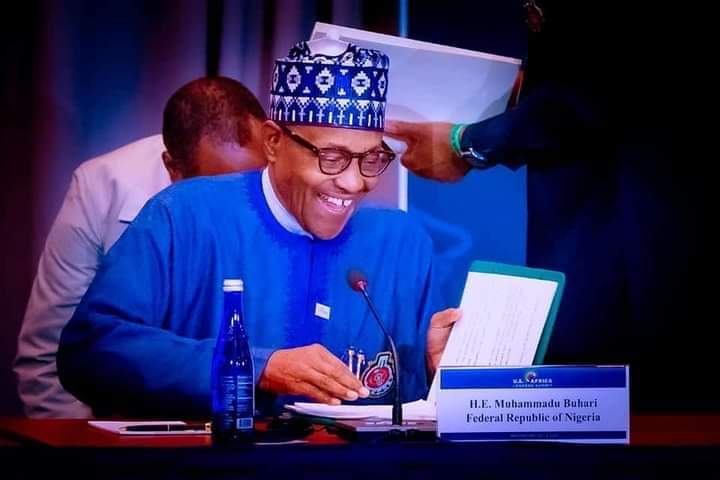
My Fellow Countrymen and Women.
A very happy and prosperous New Year to you.
First, I would like to thank and honour the Almighty who saw us through the year 2022 and has given us the opportunity to see another year. Each New Year is an opportunity to reflect on the past year, reposition, and move forward with the New.
As we celebrate the opportunity to be alive in the year 2023, we must also acknowledge the passing away of our brothers and sisters who didn’t make it into this new year. May their souls rest in perfect peace.
This year is particularly important to me because this message is in essence valedictory. After having the honour of serving you, my compatriots, for the last seven plus years, my tenure as your President in the most revered tradition of our ongoing and maturing democracy must necessarily come to an end. In the next five months we would have gone to the polls and elected a new president along with new governors and a plethora of other elected officials at both the national and state levels.
All these electoral and democratic principles are working in concert because of the transcendent beliefs, beyond partisan politics, of you the great citizen of Nigeria. In addition is my personal commitment and executive promise to see to the letter that the 2023 elections being diligently conducted by INEC will be free and fair. The collective electoral will and votes of Nigerians will be fulfilled, even in the twilight moments of my watch.
Reflecting on year 2022 allows us as a government to examine our legacies of successes and challenges. As we celebrate our wins and review obstacles, we all must understand that governance is a continuum, which still places a transitional responsibility on this administration to provide for the incoming government a non-partisan and objective roadmap for 2023. We as Nigeria; one country united under the will of God and actively growing as an indivisible entity, have been enabled year after year, decade after decade, to weather all stormy waters and emerge stronger and better where others have fallen and disintegrated. This has made us a unique nation across the globe and our continent.
In year 2023, Nigerians go to the polls to exercise our right to vote and elect a new Administration, it is an important year for our country to ensure that we have another smooth transition of government, to whoever the people have decided upon. This administration’s landmark Amended Electoral Act will ensure that we have free and fair elections across the Nation. We as Nigerians must also take responsibility to ensure we participate in ensuring that the 2023 elections are free and fair by not engaging in anti-state activities and other nefarious acts that may affect the run of the polls. We must also resist every attempt to be used by politicians to create unrest in any form to disrupt the elections. We, as government will ensure such activities are met with the full force of the law.
As our security agencies continue to make the country proud, we must continue to assist our patriotic forces by providing much needed community intelligence. It is our collective responsibility to ensure that Nigeria remains safe and peaceful for us all. Therefore, we have a duty and obligation to support our troops and intelligence agencies by being alert and reporting anything suspicious. The fight against insurgency in the North East region has continually recorded very clear wins in the past year. The Federal Government, and the Borno State government, have started the journey of returning internally displaced persons to their ancestral homes earlier taken by the insurgents. Also, over 82,000 insurgents with their families have surrendered to the Nigerian military. A number of surrendered insurgents are currently being processed by the rehabilitation (Operation Safe Corridor) program. The fight against banditry, kidnapping and other crimes in the North West and other regions is gaining momentum and showing very clear results. One of which is the resumption of Train Service along the Kaduna to Abuja corridor.
In the aftermath of the EndSars, our administration took heed and instituted the ongoing Police Reform program based on a new Presidential Vision for Policing in Nigeria. This new vision is framed in a clear road map that transcends the tenure of this administration and it is predicated on six principles:
A) Building Trust and Legitimacy
B ) Leadership, Accountability and Oversight
C) Technology and Digital media
D) Community Policing and Crime Reduction
E) Officers Training and Education
F) Funding, Officers’ Welfare, Wellness and Safety.
This reform program is very much in its foundational phase but has recorded noteworthy successes in improving police welfare and their emoluments. Other gains have been the ongoing training of 500 police cadet trainers to enable a better training regimen for the 2022 first batch of the 10,000 new cadets with an additional 10,000 set for 2023. In support of these reforms has been the provisioning of new material for the Nigeria Police to steadily improve on its constitutional responsibility to enforce law and order, protect lives and property as well as street level peace and security.
Despite the ongoing global economic crisis, we have been able to weather the storms. Inflation across the globe is at its highest, the Federal Government has been resolute through its economic interventions to remain above water during this period. 2022 brought a combined impact from ongoing wars and aftereffects of COVID-19. Though creating its own fiscal challenges, we have continued to subsidize our energy costs to buffer households from inflationary pressure of high energy costs. In 2023, we are focused on building on our GDP and sustain the huge surge in the non-oil GDP growth.
The Nigerian Start up Bill has been passed as an Act. This is considered a huge step in lowering our unemployment figures by boosting job creation and supporting the entrepreneurial drive of our youths. If you recall in my 2021 New Year speech, I had mentioned the need to secure the future of our youth recognizing that our young people are our most valuable natural resource, at home and abroad. In this regard, we worked with the legislature to develop an enabling law to turn their passions into ideas that can be supported, groomed and scaled across regions. 2023 will see the implementation of the Nigerian Start Up Act nationwide.
The year 2023 would, indeed, be a time when we would work to solidify on delivering key strategic priorities under our “SEA” – (Security, Economy and Anti-Corruption) Agenda. Some of the key priority areas we would direct our attention and strengths to include:
a. Focus on SECURITY; we will continue to engage, push back and dismantle the operations of both internal and external extremist and criminal groups waging war against our communities across the Nation. We will also focus on ensuring that free and fair elections would be held come February 2023. Our security forces are working in partnership to ensure the wins we have got in war against insurgency, banditry, secession and other crimes are sustained and more wins acquired.
b. For the ECONOMY; our focus would be on maintaining and building economic growth through the national economic diversification agenda that supports the goal of national food self-sufficiency and growth in non-oil sources. The ongoing infrastructure revolution by our administration will see us deliver the key projects across the Nation in power, rail, roads, ports and technology.
c. ANTI-CORRUPTION: On the anti-corruption drive of our administration, we have created new records in this fight, growing from 117 convictions in 2017 to 3,615 convictions as at December 2022. We as a government are committed to ridding our nation of all forms of corruption, through the collaboration with all the arms of Government to effectively prosecute this fight.
As we welcome the New Year, let us look with hope to 2023, a year to move forward as a Nation towards unity, progress and prosperity. I offer my own personal felicitations, mindful of the various opinions and interpretations of our executive legacies. I welcome and accept both the accolades and criticisms in equal measure secure in the conviction that I did my best to serve our dear country Nigeria and I pray that the next President will also pick up the baton and continue the race to make Nigeria one of the leading countries of the world by the end of this century.
Long Live the Nigerian spirit of oneness, togetherness, and unity. Long Live the Federal Republic of Nigeria. A Happy and prosperous New year.
God bless you.
Muhammadu Buhari, GCFR!





Nigerian national Ekene Chukwuma has said he returned to Nigeria with assistance linked to Oseni Rufai rather than the Nigerians in Diaspora Commission (NiDCOM), while renewing allegations against the commission’s chairperson, Abike Dabiri-Erewa, over his travel documents.
Chukwuma made the remarks in an interview in which he explained how he returned to Nigeria after spending months at a deportation camp in India.
RELATED NEWS: Rufai Oseni Row: NiDCOM Breaks Silence on Nigerians Detained in India, Addresses Ekene’s Case
“My name is Kenneth Chukwu, from Enugu State,” he said, introducing himself before explaining how he returned to the country.
“I came back here with the assist of Osini Roufai, a good friend of him,” he said.
Chukwuma denied that NiDCOM facilitated his return, alleging that the commission had published false information about his case.
“NiDCOM made a lots of false, uh, news acquisition against me, which is still in Abike Dabiri handle in Twitter,” he said.
He also accused Dabiri-Erewa of sharing his expired international passport and a travel certificate he claimed was issued six months after he entered the detention camp.
“He also, she also posted my international passport that expired. He also, she also posted my TC that issued after 6 months,” he said.
His comments renew questions surrounding the handling of his case and the circumstances under which he obtained the documents needed to return to Nigeria.
Chukwuma’s detention in India previously sparked a public disagreement between ARISE News presenter Oseni Rufai and Dabiri-Erewa over NiDCOM’s response to reports of his situation.
Oseni raised concerns about Chukwuma’s detention and the commission’s handling of the case, while Dabiri-Erewa defended NiDCOM’s position and explained the process for submitting information to the commission.
NiDCOM subsequently issued its account of Chukwuma’s detention, stating that he had been arrested in India over a visa overstay and addressing the circumstances surrounding his travel documents.
The differing accounts prompted public debate about the commission’s response to Nigerians facing immigration difficulties abroad.
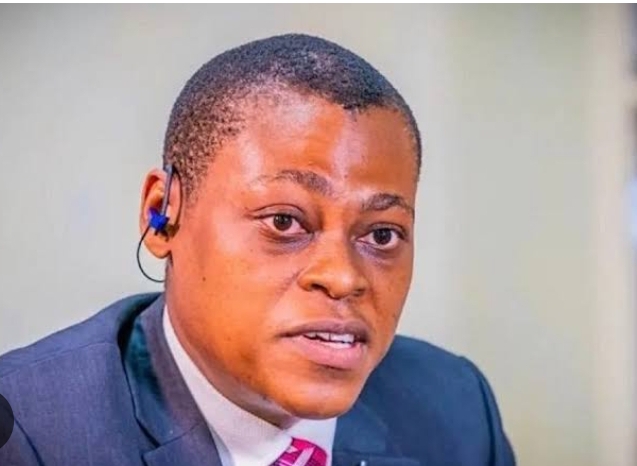
Rufai Oseni has challenged political analyst Olabode Sowunmi over the Federal Government’s 30-day petrol discount, questioning whether the intervention amounts to a return of fuel subsidy despite claims that the discount is being borne by the Nigerian National Petroleum Company Limited (NNPC).
The exchange occurred during an edition of The Morning Show on Arise News, where Oseni questioned Sowunmi about the financial implications of the petrol discount and other measures introduced to cushion the impact of fuel prices.
Oseni argued that several elements of the government’s intervention could be regarded as forms of subsidy, insisting that NNPC’s ownership structure must be considered when determining who ultimately bears the cost.
SEE MORE: ‘Another Speech to Tell Us, It Is Well’ — Oseni Rufai Reacts to Tinubu’s Address
“No matter how you try to explain it away, a subsidy is a subsidy,” Oseni said.
He challenged the argument that the discount should not be classified as a government subsidy simply because NNPC was responsible for providing it.
“We’re talking like NNPC is not owned by [the government] and heavily equity-based by the Ministry of Finance Incorporated,” he said.
Oseni identified the 30-day discount, forward sales of crude oil to domestic refineries, a proposed price ceiling, the removal of road levies and the consideration of an excess-profit tax among the measures he believed could amount to different forms of subsidy.
He argued that forward sales of crude oil to domestic refineries, with increased volumes as production grows, could help shield petrol pump prices from fluctuations in the international market.
Oseni also questioned the proposed negotiation of a price ceiling of ₦1,350 on landing and ex-country costs, arguing that government intervention to moderate prices contradicted the principle of allowing market forces to determine them.
“You are not supposed to come in to do this. Let me go back to your words: forces of market supply and demand should do this, but you have now come in to do this. That’s another form of subsidies,” he said.
He further cited the removal of road levies and cooperation with state governments under new tax laws as part of the measures requiring scrutiny.
After listing the interventions, Oseni demanded that Sowunmi explain their financial implications and identify who would ultimately pay for the petrol discount.
“But tie this with the most important question, actually, that you skipped: How much will this cost NNPC, and who pays for it? Don’t evade that question. Tell us the cost item and how much, who will pay for it,” Oseni said.
Sowunmi Defends His Position
In his response, Sowunmi argued that a government subsidy should be determined by whether the government bears the difference between the total cost of a product and its selling price.
He explained that a subsidy occurs when the government assumes the financial burden created by the gap between the cost of a product and the price at which it is sold.
“In the case of the discount that has been announced, it is borne by NNPC. So that cannot be…” Sowunmi said before Oseni interrupted.
Oseni challenged the distinction, insisting that NNPC’s ownership made it necessary to establish whether the cost could ultimately be linked to the government.
“Wait, not—who owns NNPC? Please answer. No, no, a straight question, and you can go ahead. Who owns NNPC?” Oseni asked.
Sowunmi responded that he had been invited to contribute to the discussion and should be allowed to complete his explanation.
“You asked, you asked NNPC because you believe—you asked me a question because you believe I have something to say. You cannot—you cannot tell me how to talk, so just be…” he said.
Oseni subsequently repeated his question about NNPC’s ownership, prompting Sowunmi to urge him to exercise patience.
“Basically, you need to be a bit patient and just…” Sowunmi responded.
The available transcript ends during the exchange, with no further explanation of the financial arrangements or conclusion to the discussion provided.
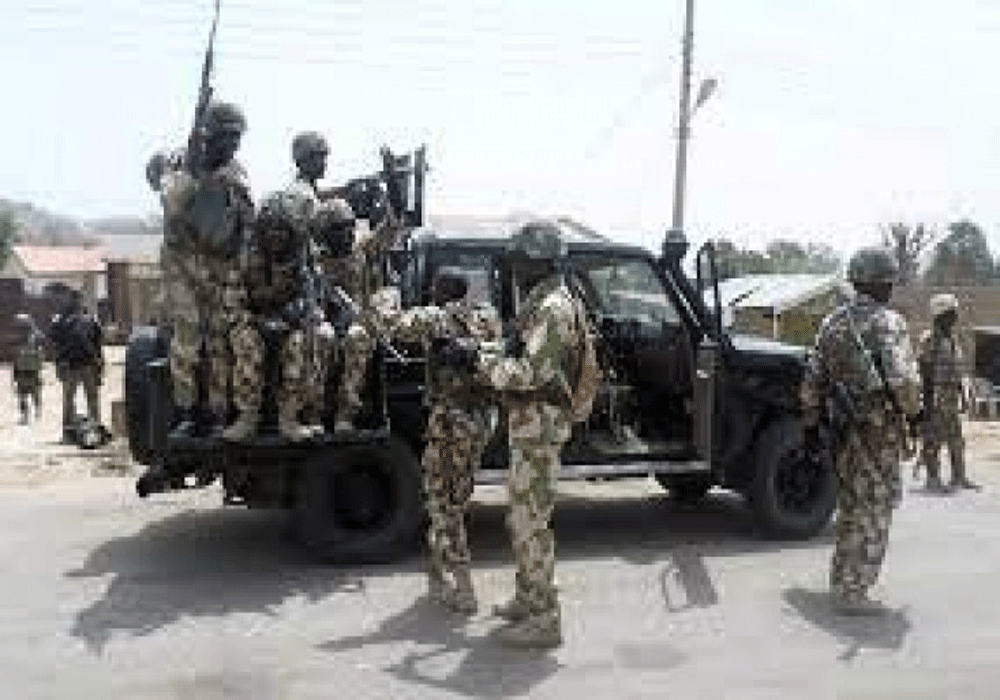
Human rights defender and Amnesty International volunteer, Lawrence Zongo, has been released from the custody of the Nigerian Army in Jos, Plateau State, after spending 10 days in detention.
His release comes after Amnesty International and the Take-It-Back (TIB) Movement demanded his immediate release, raising concerns over his alleged incommunicado detention at the Nigerian Army’s 3 Division headquarters in Jos.
ALSO READ: How Troops Forced Kidnappers to Abandon Abducted Army Lieutenant Colonel in Enugu
“Zongo is out,” a source privy to the information said on Thursday.
Zongo was arrested on October 5 while visiting relatives receiving treatment at a military hospital within Maxwell Khobe Cantonment, Rukuba Barracks, the headquarters of the Army’s 3 Division.
He had reportedly gone to the facility to assist family members who were attacked by gunmen in Meyango, Bassa Local Government Area of Plateau State, on Sunday night.
Sources familiar with the incident said one of Zongo’s first cousins died from injuries sustained in the attack before he arrived at the hospital late Monday morning.
Following his arrest, sources alleged that Zongo was held without charge and denied access to his lawyers and family members.
Sources also claimed that he was wearing Ray-Ban Meta smart glasses when he visited the military facility, suggesting that this might have contributed to the soldiers’ decision to detain him. However, the claim had not been independently verified.
On October 8, Amnesty International raised the alarm over what it described as the arbitrary and incommunicado detention of its member, demanding that the military either release him immediately or hand him over to the appropriate civilian authorities.
The organisation said efforts to gain access to Zongo had been unsuccessful and called on the Army to clarify the circumstances surrounding his arrest and detention.
On October 13, the Take-It-Back Movement’s Plateau State chapter also demanded his release, alleging that he remained in military custody without a clear explanation.
The movement said its members and executive committee representatives had discussed the matter during an appearance on JayFM Jos, insisting that the military should disclose the offence Zongo was suspected of committing and provide evidence justifying his continued detention.
The group also called for respect for Zongo’s fundamental rights and urged the Army to follow established legal procedures if there were allegations against him.
His release comes after days of pressure from rights advocates and activists over the circumstances surrounding his arrest and detention.
The Nigerian Army’s reasons for detaining Zongo and the circumstances surrounding his release were not immediately available.






Tesla Aims for 2028 Commercial Production of Flying Car

Corruption Trials: EFCC, NJI Push Specialised Judges, Digital Evidence Reforms

‘It Is Morally Wrong’ — PDP Chieftain Questions North’s Bid for Another Eight Years

2027 Election: ‘Your Future Is More Valuable’ — IGP Warn Youths Against Political Violence

Tinubu Charges PCC Members to Deliver Wards

Marketers Eye Portion of FG’s Petrol Discount

Trump’s Family Unveils New Cryptocurrency Platform

Senate Denies Receiving Petitions Against Tinubu’s Ambassadorial Nominees

Dangote Cement Lights Up Benue Host Communities With CSR Initiatives

Reps Recommend 3-year Jail Term For Aviation minister

Tems Sets New Record On Billboard Hot 100 Chart
