
Sports
GTI on Negative Effect of Ambush Marketing on Sport Assets


One of the most persistent challenges sports assets face globally is how best to curb the activities of ambush marketers.
As the name implies, ambush marketing is a parasitic promotional strategy in which an advertiser “ambushes” an event, taking advantage of it to compete for visibility against official sponsors.
Another school of thought describes ambush marketing as a tactic through which a company aligns itself with a major event, such as the Olympics, the FIFA World Cup, or leading football leagues, without paying the official sponsorship fees, thereby diverting attention from legitimate sponsors.
This is often achieved by “piggybacking” on an event’s popularity through clever but unofficial advertising techniques, such as sponsoring athletes, hosting fringe events, or running themed campaigns that create a false sense of affiliation.
Numerous high-profile examples across global sport illustrate the harmful effects of this practice, hence the need for this second part of this subject matter.
Fundamentally, ambush marketers operate by creating a commercial link to an event without acquiring the rights. They target large and widely viewed sporting events, and they gain visibility through the backdoor by capitalizing on the event’s audience, prestige, and goodwill. Typical methods include sponsoring participants, staging promotional activities near official venues, hosting event-themed parties, or deploying aggressive social media tie-ins.
ALSO READ: Protests Over Salary Arrears Sees Workers Shut Etsako West LG Secretariat, Edo State
However, the dangers associated with ambush marketing are substantial, legally, ethically, and commercially. These practices undermine the exclusivity purchased by official sponsors and can mislead consumers regarding the authenticity of a brand’s connection to the event.
In many jurisdictions, including Nigeria, these actions may constitute trademark infringement or unfair competition, exposing offending companies to litigation, regulatory sanctions, and reputational damage.
Ambush marketing manifests in several forms, each carrying different levels of legal and ethical exposure:
1. Direct Ambush Marketing: Explicitly attempting to associate with an event, often by infringing on trademarks or protected intellectual property.
2. Predatory Ambushing: Intentionally attacking or overshadowing a competitor’s official sponsorship to divert attention.
3. Trademark Infringement: Unauthorized use of official event logos, names, symbols, or slogans.
4. Self-Ambushing: When an official sponsor exceeds its contractual rights by engaging in additional promotional activities not permitted under the sponsorship agreement.
5. Indirect Ambush Marketing: Subtle tactics that evoke the event without using protected IP or claiming sponsorship.
6. Ambush by Association: Using imagery, themes, colours, or cultural cues that create an implied link to the event.
7. Values Ambushing: Aligning a campaign with the broader values or themes of an event ((e.g., female empowerment during a major women’s sporting event)) to create emotional association.
8. Intrusion/Distraction: Executing marketing activities or placing advertisements in or around designated “clean zones” to capture attention that should rightfully accrue to official sponsors.
In summary, the most effective way to avoid the legal and reputational risks associated with ambush marketing is for brands to engage transparently and invest in official sponsorship arrangements.
Whether for major properties such as the Nigeria Premier Football League (NPFL) or the President Federation Cup (PFC), authentic sponsorship ensures compliance with trademark and intellectual property laws and promotes a fair commercial environment. Companies that attempt to leverage events through ambush tactics often face litigation, financial penalties, and long-term damage to corporate credibility.



Spanish football has been thrown into mourning following the death of CD Tenerife striker Jesus de Miguel, who died at the age of 30 after suffering serious injuries in a collision with FC Andorra goalkeeper Jesus Owono during a second-division match.
Tenerife confirmed the player’s death on Tuesday, November 3, revealing that he died at 8:00 a.m. following complications from injuries sustained during the encounter.
The incident occurred towards the closing stages of the match, which was tied at 2-2, when Owono, an Equatorial Guinea international, rushed out of his goal and collided with De Miguel in the middle of the pitch.
SEE ALSO: Spain’s World Cup Joy Turns to Horror as 13-Year-Old Dies in Celebration Disaster
The goalkeeper was sent off following the incident, while the match was subsequently abandoned.
Spanish media reported that De Miguel suffered a cardiac arrest after the collision and was resuscitated. However, Tenerife later announced that his neurological condition had deteriorated before he eventually died.
In a statement announcing the tragedy, the club expressed profound sadness over the loss of the striker and extended its condolences to his family, friends and supporters.
“Broken with pain, with a lump in our throat and unable to believe this is real, CD Tenerife announces the tragic death, at 8:00 am (7am GMT), of Jesus de Miguel Alameda,” the club said.
De Miguel joined Tenerife in the summer of 2025 from Castellon and had spent just over a season with the Spanish side.
Tributes have continued to pour in from across Spanish football, including former Barcelona defender and FC Andorra majority shareholder Gerard Pique.
“I am so deeply sorry. Rest in peace, Jesus,” Pique wrote on social media.
FC Andorra also expressed its condolences to De Miguel’s family, teammates and Tenerife, while Real Madrid, Barcelona, Atletico Madrid and several other Spanish clubs sent messages of sympathy.
The Royal Spanish Football Federation equally expressed its grief, describing the news as deeply saddening and extending its condolences following the striker’s death.

Lagos State Governor Babajide Sanwo-Olu has pledged the state government’s full support for the successful hosting of the 2026 Confederation of African Football (CAF) Awards.
Sanwo-Olu gave the assurance on Sunday after meeting with a CAF delegation led by Dr Christian Emeruwa, Project Lead for the CAF Awards and CAF General Assembly.
The governor said his administration would pay particular attention to security, logistics, branding and venue access to ensure a memorable experience for participants and visitors.
RELATED NEWS: FIFA, CAF Move to Halt NFF Elections as Football Crisis Deepens
In a statement shared on his social media account, Sanwo-Olu said, “Meeting with the CAF delegation, led by Dr Christian Emeruwa, Project Lead for the CAF Awards and CAF General Assembly, I assured them of our full support, with particular attention to security, logistics, branding and venue access.”
He described Lagos as a city with the energy and capacity to host major international events.
“Lagos is a city of talent, culture, enterprise and youthful energy,” the governor said.
He added, “We look forward to welcoming football leaders, stakeholders and visitors from across Africa and beyond, while showcasing our hospitality and ability to host major international events.”
The meeting comes as preparations continue for the continental football awards, which will bring together prominent figures in African football to celebrate outstanding performances and achievements.
The latest engagement follows the arrival of a 15-member CAF delegation in Nigeria on Friday, October 16, for a final inspection of facilities ahead of the awards and the organisation’s 48th Ordinary General Assembly.
The delegation, led by Emeruwa, was expected to assess facilities in Lagos and Abuja as part of efforts to evaluate the country’s readiness to host the two events.
The inspection also followed an earlier visit by CAF officials in August, when Sanwo-Olu expressed confidence in Lagos’s readiness to host the awards after a delegation inspected the Wole Soyinka Centre for Culture and Creative Arts, formerly known as the National Theatre, in Iganmu.
The 2026 CAF Awards are scheduled to hold in Lagos on December 7, while Abuja is expected to host the CAF Ordinary General Assembly on November 21.
The awards ceremony will recognise outstanding performances and achievements in African football, bringing together players, coaches, officials and other stakeholders from across the continent.
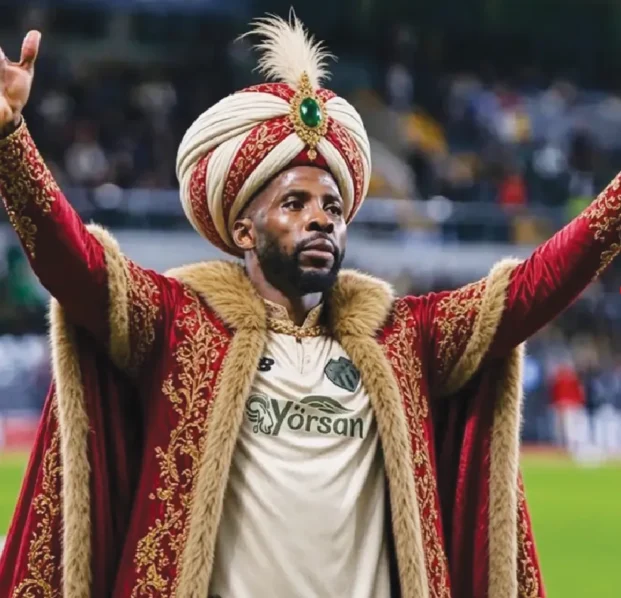
After scoring twice and providing an assist as Bursaspor beat Muglaspor 3-0 in the Turkish 1. Lig on Thursday, Nigerian striker Kelechi Iheanacho took to social media to declare himself boss.
The Super Eagles forward who moved to the Turkish league from Celtic to Bursaspor has made history, becoming the first football player to score in 10 consecutive league matches for the club and in the Turkish professional league football.
He took to his social media handles to flaunt his Turkish nickname – “Agabey”.
In a post on his verified handle on X, the Nigerian forward shared a picture of himself in traditional Turkish dress with a new nickname, “Agabey”. The caption read, “We go ball till eternity, Kelechi Agabey.”
READ ALSO: Tinubu Charges PCC Members to Deliver Wards
The word is a respectful Turkish title that translates as “Big Brother” or “Boss”.
The 30-year-old has now scored in all 10 games he has played for Bursaspor, and including his appearance for the Super Eagles, he has found the net in 11 straight matches. He has 14 goals and three assists since joining from Celtic.






FCT Police Chief Inspects Worship Centres, Commends Residents for Peaceful Conduct
2027: Shettima Arrives in Uyo for APC Presidential Campaign Rally

NDC Warns Judiciary Against Turning Courts Into Tools for Political Opposition

Elohor Aiboni Honoured with DTN@100 Changemaker Award
APC Pressuring Hotels to Deny Opposition Parties Venues – NDC Raises Alarm

Tinubu Hails Flamingos After Historic World Cup Final Qualification, Urges Team to Win Trophy

Trump’s Family Unveils New Cryptocurrency Platform

Senate Denies Receiving Petitions Against Tinubu’s Ambassadorial Nominees

Dangote Cement Lights Up Benue Host Communities With CSR Initiatives

Reps Recommend 3-year Jail Term For Aviation minister

Tems Sets New Record On Billboard Hot 100 Chart
