
NEWS
Gulf of Guinea Round-Table: Global CEOs, Top Diplomats, Ministers, Govs Meet in New York

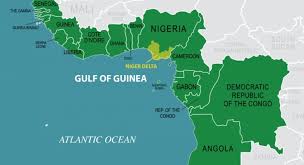
Global CEOs, top diplomats, ministers, governors and industry leaders gather in New York to unlock the Gulf of Guinea’s over $800 billion energy, oil & gas, aviation, minerals and maritime opportunities and a projected $ 3trillion Coastal Africa’s economy as the 80th UN General Assembly opens in the US.
Themed, “Unlocking Energy, Oil & Gas, Minerals, Aviation and Maritime Opportunities in the Gulf of Guinea: A Roadmap for Peace and Security,” the round-table which holds on the sidelines of the 80th session of the United Nations General Assembly, will explore the Gulf of Guinea, Africa’s most strategic region.
The round-table is convened by The New Diplomat, an Abuja based policy think tank, in collaboration with the Gulf of Guinea Commission (GGC) headquartered in Angola with diplomatic coverage over about 19 coastal African countries.
ALSO READ: IATF 2025: Oilserv Raises Hope on Opportunities for Pan-African Oil, Gas Service Companies
The premier event will be chaired by Nigeria’s Professor Ibrahim Agboola Gambari, scholar-diplomat, former Nigeria’s Minister of Foreign Affairs, former United Nations Under Secretary-General, erstwhile Chief of Staff to late former President Muhammadu Buhari and two-time President of the United Nations Security Council.
According to Ambassador Oma Djebah, Nigeria’s former Ambassador to Thailand with concurrent accreditation to the United Nations Economic and Social Commission for Asia and the Pacific (UNESCAP) in Bangkok, the forum aims to unlock the Gulf of Guinea’s over $800 Billion energy, oil & gas, minerals, aviation and maritime investment opportunities.
His words, “the high-level forum will also spotlight coastal Africa’s rich economy projected at $3trillion in order to harness the inherent benefits of its vast economic, investment, minerals, oil & gas, energy, aviation and maritime capabilities for the overall benefits of public and private sector players in the Gulf of Guinea region.”
Ambassador Oma Djebah, also a former two-time Commissioner for Information, Delta State further revealed the high-level roundtable would bring together global public-private sector players, including regional organizations chiefs, public-private sector leaders, energy, oil and gas, maritime, minerals and aviation organizations chiefs, development finance experts and cross-sector regulators with the overarching objective of leveraging the abundant opportunities and potentials in the Gulf of Guinea (GoG).
Similarly, Ambassador Mohammed Bello Abioye, former Nigeria’s Ambassador to Pakistan with concurrent accreditation to the Maldives, who is a co-host at the high-profile event said expected outcomes from the high-level roundtable, include strengthened economic development frameworks, enhanced investors’ confidence through clearer strategic institutional and governance frameworks, expanded networks for B2B, G2G, and P2P cooperation in maritime, oil and gas, energy, aviation, minerals and infrastructure development.
According to Abioye, others objectives include unlocking funding/investment opportunities for both public and private sector players in the Gulf of Guinea region and facilitation of the creation of the Gulf of Guinea Business Council (GGBC) as a strategic regional business network and a nexus for private and public sector engagement in the GoG.
According to the programme brochure obtained by THISDAY, other aims include creating a unique forum for fostering strategic G2G, B2B and P2P networks across international jurisdictions with eyes on investment prospects, direct access to target business markets as well as potential cross-sector collaborations.
Additional objectives include the need to unlock the Gulf of Guinea’s over $800 billion energy, oil and gas, infrastructure, and maritime business opportunities as well as an outlined $3 trillion African coastal economy prospects.
The strategic benefits of the one-day event include, catalyzing Blue Economy, Blue Diplomacy and organizational positioning within the evolving intra-African business eco-system as well as opportunities for stakeholders in the AfCFTA and structured financing frameworks for large-scale projects in energy, oil & gas, aviation, minerals and maritime sectors.
Other key benefits include fostering mechanisms for strengthened cooperation among the 19 coastal states of the Gulf of Guinea and the broader 38 African coastal nations, mobilizing investment in maritime, oil and gas, energy, aviation and minerals projects across the GoG region.
Others include supporting the GGC as a regional coordination hub, showcasing public -private collaboration models aligned with AFCFTA Agenda 2063, and SDG 14 (Life Below Water), and driving technical partnerships around logistics, airlifts, and maritime development.

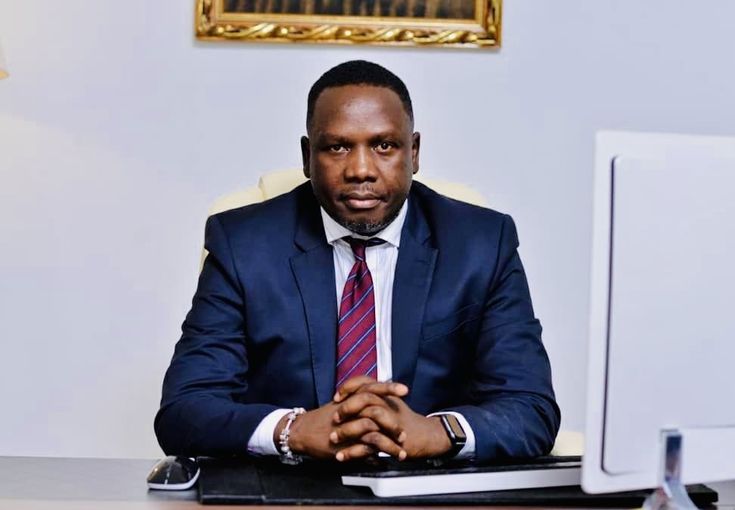
Daniel Bwala, Special Adviser to President Bola Tinubu on Policy Communication, has accused some Arise Television presenters of hypocrisy over their alleged silence during a discussion concerning former Labour Party presidential candidate, Peter Obi.
Bwala made the allegation in a social media post on Monday, October 12, 2026, following the television station’s morning programme, where issues concerning Obi’s alleged inconsistencies and character were reportedly discussed.
SEE ALSO: BREAKING: Daniel Bwala Melts Under Political Heat
According to Bwala, only Dr Reuben Abati, an Arise TV presenter and former presidential spokesman, offered his opinion on the matter, while two other presenters allegedly remained silent.
He claimed that the presenters participated in discussions on subjects before and after the segment involving Obi but declined to express their views when the former Anambra State governor became the subject of discussion.
Bwala suggested that their alleged silence reflected political bias, arguing that the presenters had previously criticised politicians for defecting from their political parties.
“The reason they kept quiet is because they have used their loud mouth in calling out people for changing parties and they cannot afford to call out their master and candidate in the face of raw evidence,” he wrote.
The presidential aide also criticised some individuals he accused of presenting themselves as journalists without formal training, alleging that they contributed to the spread of hate speech, inflammatory rhetoric and misinformation.
“These people parading themselves as journalists with no formal training are the major cause of hate speech, vitriol and fake news,” Bwala stated.
He, however, commended Arise TV presenter Ojy Okpe for what he described as her willingness to scrutinise Obi during the programme.
“Thank you @OjyOkpe at-least today you tried to give Peter his bitter pill of inconsistencies,” he wrote.
Bwala further predicted that Okpe could face criticism from the other presenters for covering the issues involving Obi.
“I know you will have a long day managing backlash from the boy and girl for covering Peter Obi matter,” he added.
He concluded his post by reiterating his criticism of the presenters, declaring that “hypocrisy is real.”
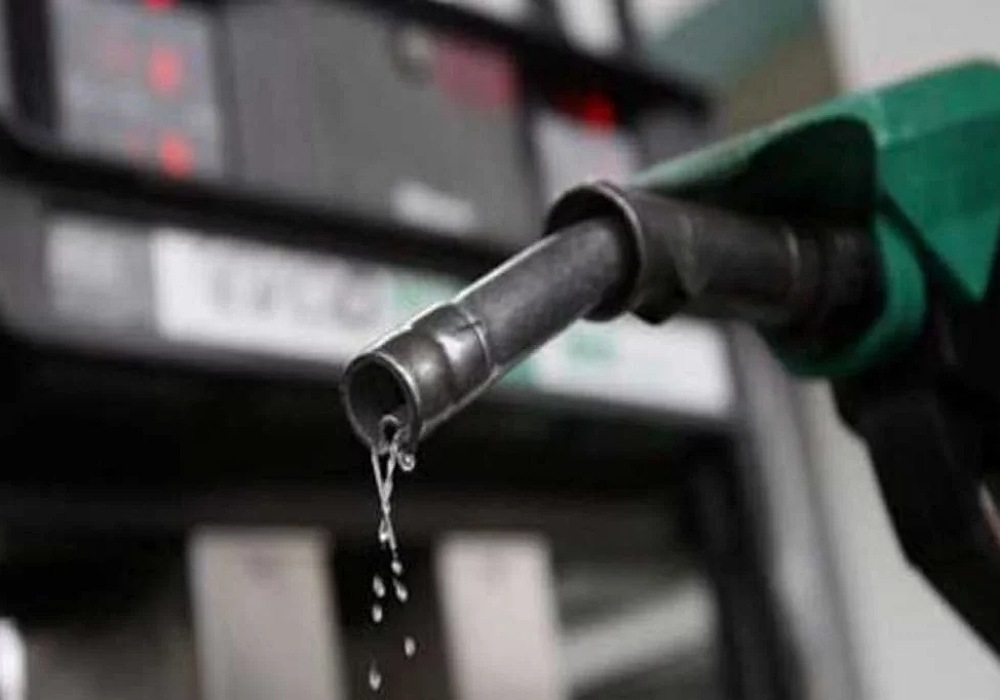
Oil and gas expert, Olabode Sowunmi, has described the Nigerian National Petroleum Company Limited (NNPC) Retail’s 30-day petrol discount as a business decision rather than a government policy.
Sowunmi argued that the initiative was a commercial move by a single market player designed to achieve specific business objectives, rather than a government policy intended to affect all participants in the petroleum industry.
ALSO READ: NNPC Petrol Discount: Oyedele Explains How Lower Margins Could Boost Profits
The energy expert made the remarks during an appearance on The Morning Show on Monday, where he questioned whether the petrol discount should be classified as a policy.
“I’m not sure it’s a policy. I think it was a business decision,” Sowunmi said.
He explained that government policy typically involves a deliberate process designed to influence or regulate the activities of multiple players within a sector.
According to him, the petrol discount differs from such policies because it represents a decision by one company to achieve its own objectives.
“A policy, by definition and by what it is, is a government thought-out process that affects all players. But this is a decision by one single player, calculated to achieve something within their own goals,” he stated.
Sowunmi Cites Telecoms Promotional Offers
To illustrate his argument, Sowunmi compared the petrol discount to promotional offers previously introduced by telecommunications companies to attract customers and strengthen their market positions.
He cited Econet and Vmobile, which operated in Nigeria’s telecommunications market before the emergence of the current industry landscape, as examples of companies that offered promotions such as “buy one, get one free.”
According to him, such offers were commercial decisions made by individual companies and were not intended to change the business strategies of their competitors.
He noted that the promotions were not designed to alter the plans of rival operator MTN but were calculated efforts by the companies to advance their own business interests.
“Businesses do those kind of things as calculated efforts to grow their businesses,” he said.
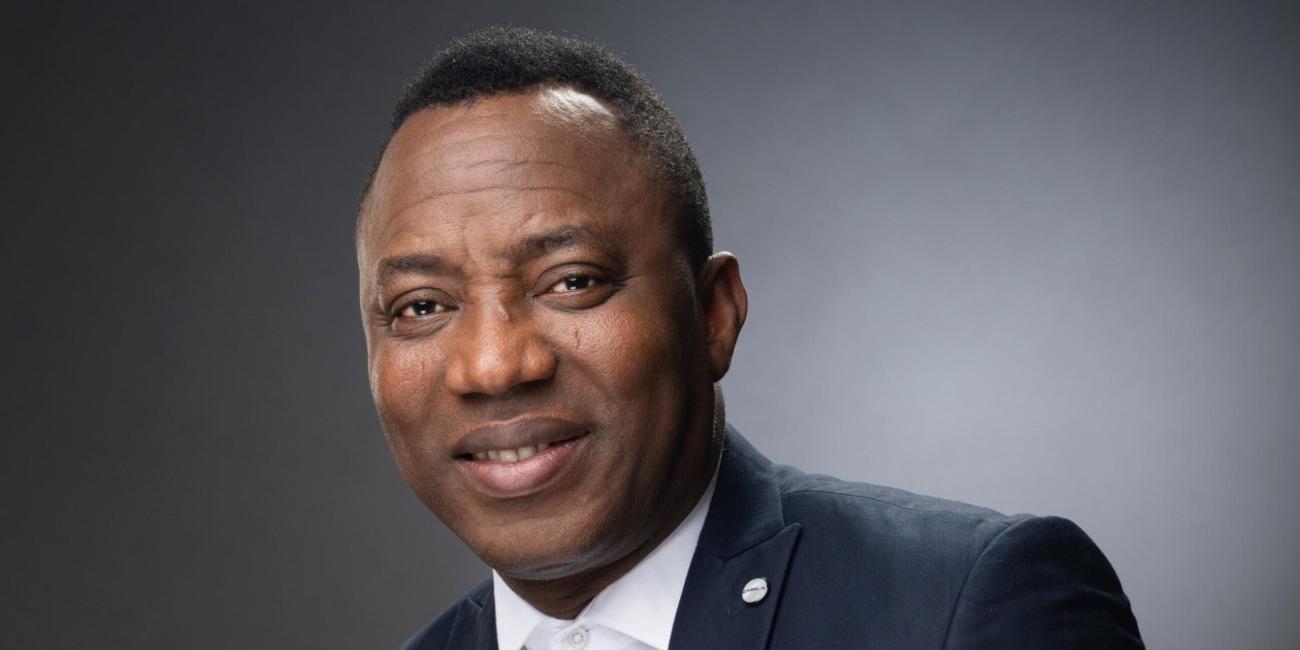
Omoyele Sowore, presidential candidate of the African Action Congress (AAC) for the 2027 presidential election, has declared that his proposed administration would not introduce new taxes if he becomes Nigeria’s president.
Sowore made the clarification following reactions to his interview on African Independent Television (AIT) on Saturday, October 10, 2026, during which he discussed expanding Nigeria’s tax base and bringing more economic activities into the tax system.
In a statement shared on his X account on Monday, the activist said the headline of the interview had created a misleading impression about his position on taxation.
READ ALSO: Nigeria@66: ‘You Wrecked Livelihoods’ — Sowore Fires Back at Tinubu
“Contrary to the misleading impression created by the headline of my recent @AIT_Online interview, let me state categorically that a #Sowore2027 administration has NO plans to introduce new taxes!” he said.
He added, “Nigerians are already overburdened by economic hardship. Our agenda is to create prosperity, not impose additional tax burdens on struggling citizens.”
Sowore also urged Nigerians to watch the video clip of his interview to understand his position directly.
During the interview, the AAC presidential candidate explained that his proposed approach would involve expanding the tax base rather than introducing new taxes.
“We are not going to introduce new taxes, but we would expand the tax base relative to GDP ratio,” he said.
He argued that Nigeria’s tax collection remained relatively low compared with some other African countries.
“Nigeria is probably a poor tax country,” Sowore said, citing Ghana and South Africa as examples in his discussion of tax-to-GDP ratios.
Clarifying his position on taxation, he said, “No. But you see, no, no, no. I’m not taxing Nigerians. We’re expanding the tax base. Are you getting it?”
He explained that the proposed expansion would cover economic activities that were not adequately captured by the existing tax system, including informal businesses and traders operating in markets and on the streets.
“Yeah, as long as they’re making money, all right? And you are supposed to pay tax and ensure that government can do what it say it would deliver to you,” he said.
The AAC presidential candidate also argued that Nigeria could generate additional revenue by recovering money allegedly owed to the government rather than placing additional tax burdens on citizens.
He questioned the recurring concern over how the government would raise funds to provide public services.
“How do you get money? Because that’s always been the, that’s always been, you know, the question thrown at Nigerians. ‘Ah, where are we going to get the money?’” he said.
Sowore claimed that more than $62 billion in royalties was owed to the Nigerian state by oil operators.
“There are, as I speak to you today, over $62 billion in unpaid royalties to the Nigerian state from people that we gave free oil blocks and are making billions from it. They don’t pay royalties,” he said.
He further argued that royalties should be considered part of the broader system of government revenue collection.
“All these revenues we are talking about, they fall under the category of tax. Are you getting my point? Royalties are taxes too,” he said.
He maintained that the government should ensure that those owing the money are assessed and held accountable.
Sowore maintained that recovering the alleged outstanding royalties could provide resources for public infrastructure and social services.
He proposed using the revenue to fund development projects, including roads and schools, while reducing government expenditure.
“We use it to do what we know, the roads we need to construct, the schools we need to build. And we cut down the cost of governance,” he said.






Bwala Accuses Arise TV Presenters of Hypocrisy Over Peter Obi Discussion

NNPC’s 30-Day Petrol Discount Is Not a Policy – Sowunmi
2027 Elections: INEC Debunks Fake Notice on Governorship Candidates in Six States

2027: No New Taxes Under My Gov’t If Elected – Sowore Clarifies
ADF Targets 5 Million Students, 2 Million Vulnerable Women

NUPRC Sets Revocation Date for Undeveloped Oil Licences

Trump’s Family Unveils New Cryptocurrency Platform

Senate Denies Receiving Petitions Against Tinubu’s Ambassadorial Nominees

Dangote Cement Lights Up Benue Host Communities With CSR Initiatives

Reps Recommend 3-year Jail Term For Aviation minister

Tems Sets New Record On Billboard Hot 100 Chart

I’ve been following your blog for some time now, and I’m consistently blown away by the quality of your content. Your ability to tackle complex topics with ease is truly admirable.
5agenk