
NEWS
How to Spot Fake Colgate Toothpaste as NAFDAC Issues Fresh Warning


The National Agency for Food and Drug Administration and Control (NAFDAC) has issued a fresh public warning over the circulation of suspected counterfeit toothpaste products linked to the Colgate brand, advising Nigerians on how to spot fake products in the market.
In a statement shared on its official X handle on Sunday, the agency said its Post-Marketing Surveillance Directorate received a complaint about the sale of the products in Kaduna State, which prompted an immediate investigation.
SEE ALSO: NAFDAC Warns Nigerians As Fake Cowbell Milk Floods Market
NAFDAC officials reportedly traced the items to a retail outlet where two suspicious toothpaste products labelled “Coglaet ActivGel 100g” and “Coglaet Herbal 100g” were discovered. The products are believed to be imitations of the original Colgate toothpaste.
According to the agency, the shop owner claimed the products were purchased from a door-to-door sales representative but failed to provide any valid receipts or proof of purchase.
The regulator explained that the suspected counterfeit products did not meet required regulatory standards for registration and quality assurance, warning that they may pose serious risks to public health.
How to spot the fake products
NAFDAC highlighted several red flags consumers should look out for when buying toothpaste and other regulated products:
Absence of batch number on the packaging
No NAFDAC registration number
Poor or inconsistent labeling and spelling errors.
Suspicious brand names such as “Coglaet” instead of Colgate.
Lack of clear manufacturer details or traceable address.
The agency further revealed that the labels on the fake products claimed they were produced by Guangzhou YECAI Oral Cleaning Products Co., Ltd, based in China, with manufacturing dates listed as August 2025 and expiry dates of August 2029.
NAFDAC confirmed that the affected products — including “Coglaet Crema Dental Herbal 100g” and “Coglaet ActivGel 100g” — have been withdrawn from circulation, while investigations are ongoing to trace those behind their distribution.
The agency also directed all zonal directors and state coordinators to intensify market surveillance and ensure that any remaining fake products are removed from shelves across the country.
It urged wholesalers, retailers, and consumers to remain vigilant and carefully verify product authenticity before purchase or use.
Consumers were also encouraged to report suspected fake or substandard products to the nearest NAFDAC office, call its hotline, or send emails through official channels.








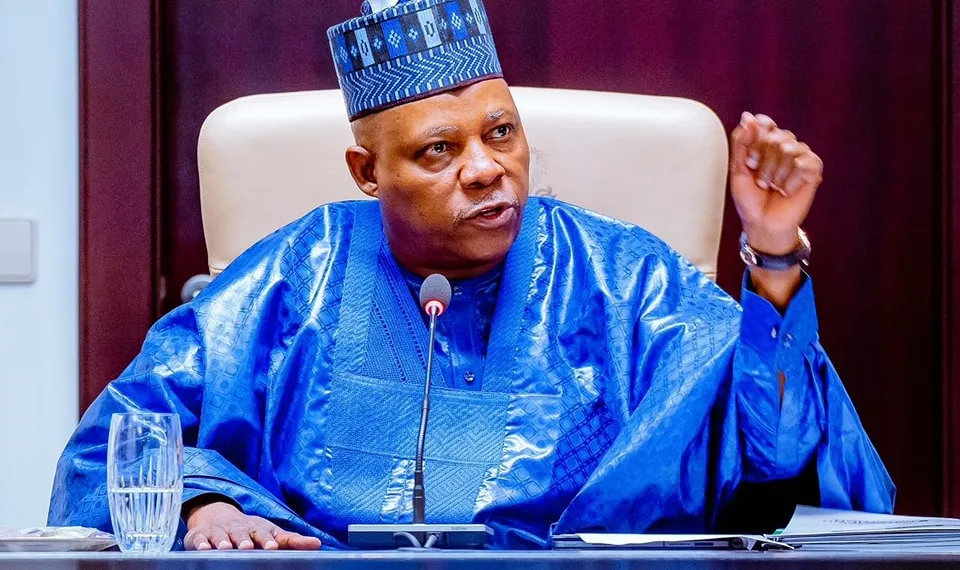
Vice President Kashim Shettima has urged Nigerians to celebrate President Bola Tinubu, saying his leadership saved the country from a potential implosion.
Shettima said Nigeria’s economy had been teetering on the edge of collapse before Tinubu’s intervention, adding that the country could have faced a different situation.
“The economy was teetering on the edge of collapse, we were on a cliff edge,” the Vice President said.
ALSO READ: Subsidy Removal, FX Reforms Driving Fresh Oil Sector Investment – Shettima
“So he literally saved the nation from an implosion. That could have been the scenario. So, instead of demonizing him, Nigerians ought to celebrate this poor man.”
Shettima also called for a return to the drawing board, expressing confidence in the leadership’s commitment and the prospects for the 2027 elections.
“I believe on the bottom of my heart that with this presentation I have seen, and with the commitment of our leadership, by the grace of God, we are going to win,” he said.
Speaking about the 2027 elections, the Vice President reminded his audience that social media platforms should not be mistaken for actual polling stations.
“There are no polling stations on Facebook or Instagram,” he said.
Shettima also expressed gratitude for the efforts made towards promoting the cause of the 2027 elections.

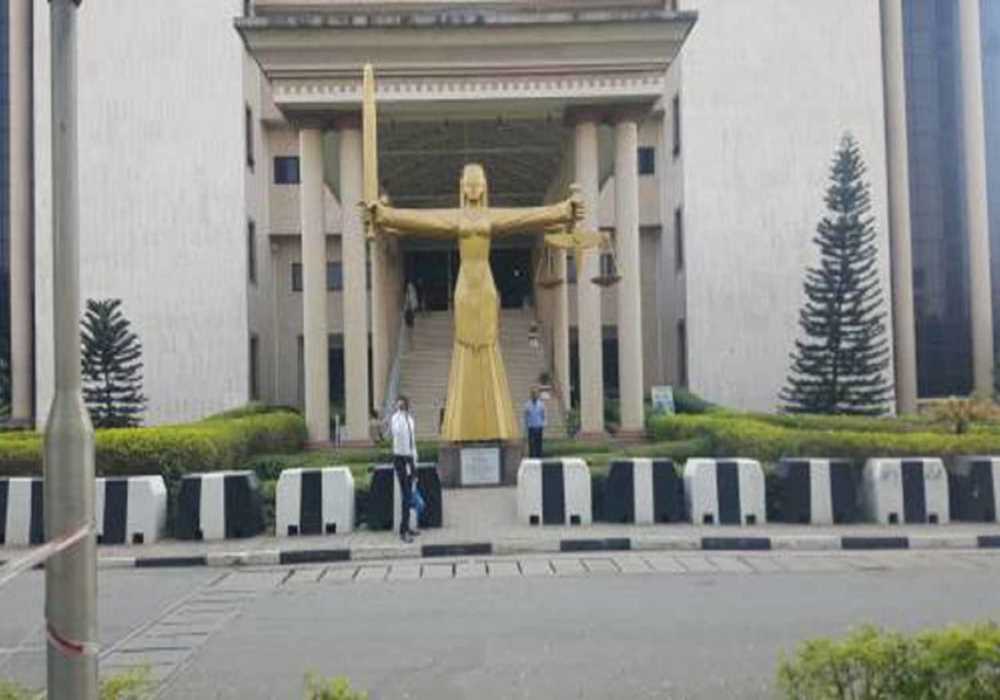
Following observed mis-steps, the Federal Government of Nigeria has withdrawn the eight-count criminal charge brought against the alleged fake Director General (DG) of the Presidential Foreign Intervention Promotion Council (PFIPC), Adeniyi Adeyemi.
Biztellers reports that the matter, in accordance with the counsel of the Attorney General of the Federation (AGF) and Minister of Justice, Prince Lateef Olasunkanmi Fagbemi, (SAN), the matter will be filed at the High Court of the Federal Capital Territory (FCT), instead of the Federal High Court (FHC).
Consequently, upon an unopposed application for termination by the prosecution counsel and Director of the Public Prosecution of the Federation (DPPF), Rotimi Oyedepo (SAN), on Monday, Justice Mohammed Umar of a Federal High Court, Abuja on Monday, struck out the matter.
READ ALSO: Shell Identifies Keys to Nigeria’s Energy Future
In a motion for the termination of the charges, Oyedepo informed the court that the Attorney General of the Federation (AGF) and Minister of Justice has carried out a review of the case file of Adeyemi and the charge filed by the Inspector General of Police (IGP) and found some loopholes.
The DPPF added that the documents allegedly forged by Adeyemi during his operations of the fake agency are those that can be prosecuted by the High Court of the Federal Capital Territory (FCT).
He also informed the court that a new charge has been filed at the High Court of the FCT and that Adeyemi would be expeditiously arraigned afresh.
He therefore urged the judge to strike out the charge as required by law.
Following no objections from Ibrahim Angulu (SAN), who stood in for Adeyemi, Justice Umar subsequently terminated the charge.
Adeniyi, 38, was being tried alongside two others whose whereabouts are unknown, on charges bordering on conspiracy and forgery.
The two others said to be at large were identified as Femi (surname unknown) and Anu (surname unknown).
The charge marked: FHC/ABJ/CR/25/2025, was entered against the defendant by the DPPF.

To secure a bright energy for her teeming population, Nigeria must sustain the momentum of reform, accelerate investment, and deepen partnerships.
This view was expressed by Managing Director, Shell Nigeria Exploration and Production Company of Nigeria Limited (SNEPCo) Ronald Adams in Lagos at the weekend.
Delivering a keynote address at the Africa Energy Conference (AEC) of the Lagos Business School (LBS), Adams called for regulatory certainty through efficient execution of reforms, sustained investment appeal to enable projects to move more swiftly from opportunity to production and partnership by operators, regulators, NNPC Limited and communities to unlock the full value of Nigeria’s resources.
Adams cited Nigeria’s huge oil and gas resources as an advantage but pointed out: “Resources alone do not guarantee prosperity. Prosperity comes when resources are matched with investment, technology, sound policy and disciplined execution. Success will be determined not by the size of our resources, but by our ability to convert them into investment and economic growth.”
Adams pledged the support of Shell towards a bright energy future of Nigerians. He said: “For more than six decades, Shell has been part of Nigeria’s energy journey. Together with our partners, we have helped develop major energy infrastructure, supported Nigerian businesses, invested in talent, and contributed to economic development. Bonga remains a powerful example of what technology, partnership and Nigerian capability can achieve in deepwater operations. Today, that story continues through Bonga North.”
READ ALSO: ADF Targets 5 Million Students, 2 Million Vulnerable Women
Issuing a clarion call for action by all stakeholders, he added: “The world is not standing still. Capital is moving, technology is advancing and competition is intensifying. The countries that attract investment tomorrow are those that improve competitiveness today. Nigeria has begun that journey. Our task is to sustain the momentum and translate reform into projects, projects into growth, and growth into shared prosperity.”
The conference, the 4th in the series had at its theme; “Securing Nigeria’s Energy Future: Policy Reform, Capital Mobilisation, and Pathways to a Sustainable Power and Energy Market” and was attended by top government officials, industry captains, energy professionals, and students.
Lagos State Deputy Governor Obafemi Hamzat represented Lagos State Governor Babajide Sanwo-Olu as the guest of honour. SNEPCo was a principal sponsor of the Africa Energy Conference (AEC) and mounted a well-received exhibition on its deepwater operations and social investments across Nigeria.






State Govs, Wike Endorse One-Party State, Join APC Campaign Council

2027: ‘Tinubu Has Done Well’ – Wike Tells Opposition to Speak the Truth

‘Celebrate This Poor Man’ – Shettima Defends Tinubu Over Economic Crisis
FG Withdraws Charges Against ‘Fake Agency’ DG, Adeniyi Adeyemi

Shell Identifies Keys to Nigeria’s Energy Future

Nigeria Records Biggest Rise in Multidimensional Poverty Among Five Countries – UN

Trump’s Family Unveils New Cryptocurrency Platform

Senate Denies Receiving Petitions Against Tinubu’s Ambassadorial Nominees

Dangote Cement Lights Up Benue Host Communities With CSR Initiatives

Reps Recommend 3-year Jail Term For Aviation minister

Tems Sets New Record On Billboard Hot 100 Chart
