
Business
How Will Local Petrol Prices Respond to Tumbling Oil Prices?


The world is witnessing a sharp drop in crude oil prices, which raises the issue of how the domestic market would react to the global trend.
The fall in oil prices came on Monday after United States President Donald Trump signalled a shift from military action against Iran to renewed diplomatic talks, easing fears of a wider conflict in the Middle East. The development calmed global oil markets, where traders had been worried that fighting in the region could disrupt crude supplies.
Brent crude, the international benchmark used to price Nigerian oil, dropped by more than 4.8 per cent to around $83.70 per barrel, while the U.S. West Texas Intermediate (WTI) crude fell by over 5 percent to about $79.60 per barrel. The decline marked one of the biggest single-day losses in recent months.
The price drop followed Trump’s announcement that he had suspended plans for a military strike on Iran and was instead pursuing a deal aimed at ending tensions over Tehran’s nuclear programme and reopening the strategic Strait of Hormuz.
In a message posted on his Truth Social platform, Trump said: “Iran and all other players have requested time to finalize a deal.”
ALSO READ: NLNG: How Cooking Gas Offtakers Greed Fuel Scarcity, High Prices
The Strait of Hormuz is one of the world’s busiest oil shipping routes, with nearly a fifth of global crude exports passing through it. Any threat to shipping in the area usually pushes oil prices higher because traders fear supply shortages.
For weeks, uncertainty surrounding the conflict had driven oil prices sharply upward, raising the cost of petrol, diesel, aviation fuel and other refined products across many countries, including Nigeria.
Energy analysts say the latest decline in crude prices could eventually translate into lower fuel prices if the trend continues.
Nigeria now operates a deregulated downstream petroleum market, meaning petrol prices largely reflect global crude prices, exchange rates, shipping costs and local distribution expenses.
When crude oil becomes cheaper, the cost of producing refined petroleum products also falls. If marketers are able to buy fuel at lower international prices, consumers could benefit through reduced pump prices, although the adjustment may not happen immediately.
Industry experts, however, caution that Nigerians should not expect an instant reduction because local petrol prices are also influenced by the naira’s exchange rate, transportation costs, taxes and marketers’ existing inventories purchased at higher prices.
They note that marketers typically sell existing stock before adjusting prices to reflect lower replacement costs.
Market still watching Middle East Despite Monday’s sharp decline, analysts say uncertainty remains high as investors continue to monitor developments between the United States and Iran.
While hopes of diplomacy have eased fears of an immediate supply disruption, traders remain cautious because negotiations could still collapse, potentially reigniting tensions and sending oil prices higher again.
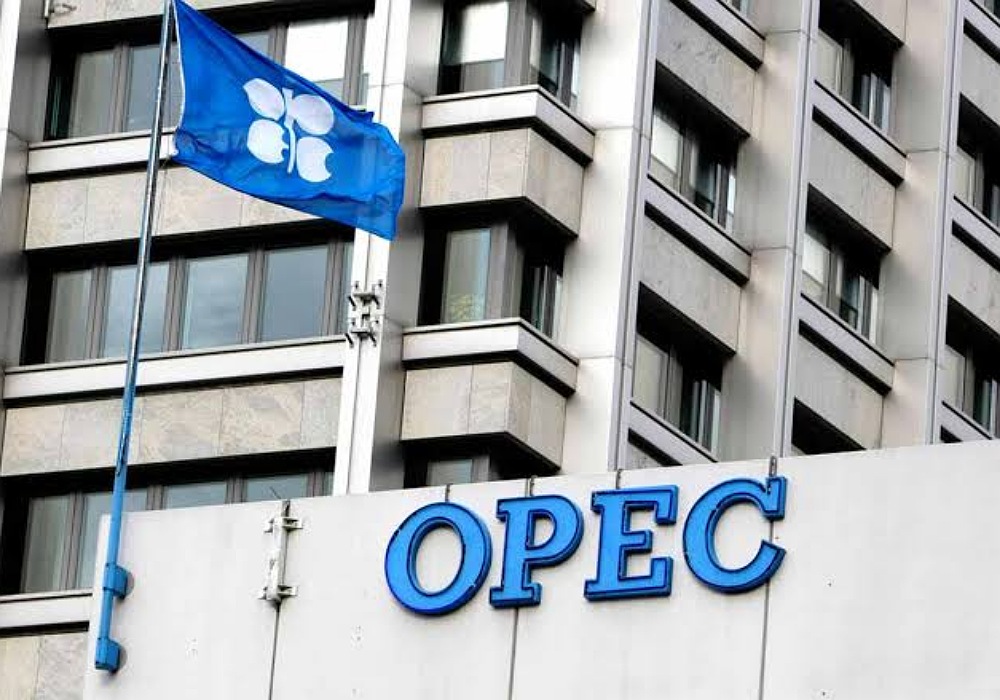
Another factor supporting lower prices is the decision by OPEC+ to gradually increase oil production from September. However, supply challenges in parts of the Middle East and other producing countries continue to limit the full impact of additional output.
For Nigeria, lower crude prices present mixed implications. Consumers could benefit from cheaper petrol if marketers pass on the savings, but reduced oil prices may also shrink government revenue since crude oil remains the country’s biggest source of foreign exchange earnings.
Whether Nigerians eventually enjoy cheaper fuel will depend on how long the decline in global oil prices lasts and whether other factors, particularly the exchange rate and distribution costs, remain stable.





Chevron Nigeria won the second-best exhibitor award at the just-concluded 2026 Nigerian Association of Petroleum Explorationists (NAPE) conference and exhibition at Eko Hotels and Suites, Victoria Island, Lagos.
Biztellers reports that Olajumoke Cecilia Ajayi, FNAPE, NAPE President (2025–2026) and Managing Director/CEO of Ingentia Energies Limited, presented the award to Chevron, during the awards dinner on November 12, 2026.
The award is in recognition of Chevron’s outstanding exhibition, where visitors to its booth, particularly students, took part in Geology/Geophysics presentations and quizzes, word games, and Human Resources/Nigerian Content presentations and quizzes, with gifts for winners and participants.
Commenting on the award, the leader of the Chevron’s exhibition team, Dr. Victor Anyaegbudike, Manager Communications, Chevron companies in Nigeria and the Mid Africa Region, commended NAPE for its commitment to hosting the annual conference and exhibition. He noted that Chevron has operated in Nigeria for over 60 years, contributing to the country’s growth and development and making human investments that yield long-term, transformative returns.
READ ALSO: Tinubu, Shettima Head to Jos for APC Presidential Campaign Rally
“At Chevron Nigeria, we drive innovation and investment to open up opportunities for growth, jobs, productivity and lasting value. Forums like the NAPE conference and exhibition matter because they bring government, academia, students and industry together around shared goals and a better understanding of one another,” he remarked.
Victor noted that Chevron is committed to building productive, collaborative and mutually beneficial relationships, grounded in trust, with governments, partners, customers, communities and employees. “We believe that affordable, reliable and ever-cleaner energy is vital to a more prosperous and sustainable world,” he said.
Attendees at the NAPE conference and exhibition included representatives of the Federal Government of Nigeria, industry regulators, industry leaders, academics, and students from tertiary institutions across the country.


The Nigerian Exchange Limited (NGX) recorded a 1.36 per cent weekly gain as its market capitalisation increased to ₦163.80 trillion at the close of trading on Friday, November 13, 2026.
The NGX All-Share Index (ASI) rose to 252,269.16 points, pushing the market’s year-to-date return to 62.11 per cent.
The performance reflected a positive trading week for the equities market, with 43 listed companies recording price appreciation, compared with 29 in the previous week.
SEE MORE:NGX Market Cap Falls to ₦163.65trn As All-Share Index Drops
According to the Exchange’s weekly market report, investors traded 8.03 billion shares valued at ₦185.36 billion in 160,836 deals during the week.
This represented a significant increase in trading volume from the 2.83 billion shares exchanged in 192,158 deals in the preceding week, although the total value of transactions declined from ₦208.41 billion.
The Financial Services Industry dominated trading activities, accounting for 4.85 billion shares worth ₦95.79 billion. This represented 60.45 per cent of the total equity turnover volume and 51.68 per cent of turnover value.
The Agriculture Industry followed with 2.24 billion shares valued at ₦22.78 billion, while the Consumer Goods Industry recorded 260.99 million shares worth ₦11.89 billion.
Further details of the market performance showed that 39 equities declined during the week, compared with 57 in the previous week, while 64 equities closed unchanged against 60 recorded in the preceding period.
On the gainers’ chart, Champion Breweries Plc emerged as the best-performing stock, appreciating by 27.27 per cent, while LivingTrust Mortgage Bank Plc recorded the biggest loss, declining by 18.53 per cent.
Meanwhile, trading in Exchange-Traded Products (ETPs) stood at 1.21 million units valued at ₦278.97 million in 3,351 deals, compared with 1.46 million units worth ₦381.82 million in 4,085 deals in the previous week.
The fixed-income segment recorded 156,612 units valued at ₦177.88 million in 41 deals, against 21.99 million units worth ₦20.60 billion in 48 deals recorded in the preceding week.
The Exchange also recorded the listing of two commercial paper instruments issued by Thrive Agric Limited.
The instruments comprised ₦3.17 billion Series 1 (Tranche A) and ₦2.09 billion Series 1 (Tranche B) Commercial Papers, with a combined value of approximately ₦5.26 billion.

Nigeria produced a daily average of 1.687 barrels of crude oil and condensate in October 2026, and met its OPEC quota for the sixth consecutive month.
Data from the Nigerian Upstream Petroleum Regulatory Commission (NUPRC) showed that in strict crude oil terms (excluding condensate), the country produced an average of 1.51mbpd in October.
This is 101 percent of the 1.5mbpd quota set by OPEC.
READ ALSO: NLNG, NCDMB Endow Research Chairs in Six Nigerian Varsities with $9m
The data, released on Wednesday, also shows that single-day production hit a peak of 1.79 million barrels, while the lowest for the month under review stood at 1.60 million bpd.
The crude oil data (excluding condensate) shows that Nigeria has met its assigned OPEC quota for six straight months, producing 1.53mobpd in May; 1.55mobpd in June; 1.51mobpd in July; 1.5mobpd in August, 1.53mobpd in September and 1.51mobpd in October.
On a month of month basis, however, production dipped by 1.7 percent.
The NUPRC attributed the stable performance in recent months to an enhanced operational stability, supported improved production uptime and crude evacuation efficiency.
The sustained growth recorded in October reflects the continued commitment of operators and industry stakeholders towards improving operational efficiency, maintaining asset integrity, and enhancing production reliability across the Nigerian upstream petroleum sector.
A breakdown of the daily average crude oil and condensate production by terminals/streams during the review month shows that Forcados Terminal accounted for 318.49kbpd while Bonny comes second with 311.02kbpd.
Qua Iboe Terminal recorded an average production of 173.97kbpd of crude oil and condensates while Escravos Oil Terminal posted a daily average of 134.67kbpd.
Bonga ranked as the fifth highest producing terminal, recording an average of 106.65kbpd of crude oil and condensate.






40% of Breadmakers Shut Down as Atiku Accuses Tinubu of Economic Failure

ADC Fires Back at NBA Over Kalu, Says ‘No Respectful Way to Address Evil’

INEC Debunks Amupitan Resignation Rumour After London Protest, Voter Register Controversy

Chevron Nigeria Emerges Second-best Exhibitor at NAPE 2026
NGX Gains 1.36% as Market Capitalisation Climbs to ₦163.80trn

Shettima, Wife Depart Abuja for Jos as Tinubu–Shettima Campaign Takes Rally to Plateau

Trump’s Family Unveils New Cryptocurrency Platform

Senate Denies Receiving Petitions Against Tinubu’s Ambassadorial Nominees

Dangote Cement Lights Up Benue Host Communities With CSR Initiatives

Reps Recommend 3-year Jail Term For Aviation minister

Tems Sets New Record On Billboard Hot 100 Chart
