
Business
Icahn warns stock market could face ‘big drop’


WASHINGTON – Activist investor Carl Icahn on Monday said there was a chance the stock market could suffer a big decline, saying valuations are rich and earnings at many companies are fueled more by low borrowing costs than management’s efforts to boost results.
Unnerved by Icahn’s prognosis, investors pushed stocks lower. The S&P 500, which was trading near unchanged before Icahn spoke, closed down 0.4 percent.
“I am very cautious on equities today. This market could easily have a big drop,” Icahn said.
He said share buybacks are driving results, not profitability.
“Very simplistically put, a lot of the earnings are a mirage,” Icahn told the Reuters Global Investment Outlook Summit. “They are not coming because the companies are well run but because of low interest rates.”
 He also hinted at his ongoing plan for Apple Inc, the most valuable U.S. company by market value, saying he does not want to fight with management at the iPhone giant but has no plans to walk away from his investment.
Shares of Apple closed down 1.2 percent at $518.92; they were trading at $523.11 before Icahn’s remarks. Icahn said he still thinks Apple’s stock price is undervalued and said the company’s CEO, Tim Cook, feels the same way.
Icahn, who runs Icahn Enterprises, a diversified holding company, is urging Apple to buy back $150 billion worth of shares. The company has not committed to that. Icahn owns approximately 0.4 percent of Apple’s outstanding shares, according to Thomson Reuters data.
Icahn said that he and Cook are friendly, but he still spoke critically. “Apple is not a bank and it should not be run like a bank because investors did not invest in a bank,” he said. “Apple has all this money, they should be using it.”
Known for decades of strong-arm tactics, including proxy fights, Icahn was diplomatically vague about exactly how he planned to proceed in his efforts with Apple. He did joke that if Reuters reporters had joined him for a cocktail, he might have said more.
The 77-year-old investor’s views on markets and individual companies are widely followed in light of the strong returns he has generated.
Icahn said that in the last five years, investors who bought shares of companies in which his firm took seats on the board of directors and held the shares as long as an Icahn representative stayed on those boards would have earned 28 percent on an annualized basis.
Icahn is known as one of the market’s most powerful activist investors. But he said he and his colleagues do not want to micro-manage corporations. He prefers to speak with top management and “set up parameters” for performance, such as return on equity or performance against competitors.
“Boards should be keeping the CEO accountable,” Icahn said, adding, “that’s what a board should do.”
Activism has become a hot-button topic in the hedge fund industry this year, in part because returns at activist funds are roughly 14 percent, nearly twice as strong as gains at the average hedge fund.
While he pointed to a handful of managers who practice activism well, Icahn took a swipe against William Ackman, whose Pershing Square Capital Management is one of the industry’s biggest activist managers, with average annual returns of 20 percent over the last decade.
“What we don’t do is exactly what Ackman does do. We may have an idea, but we never push it,” Icahn said.
Ackman and Icahn have engaged in a very public battle on their opposing views of Herbalife, the nutrition and supplements company. Ackman took a large short position in Herbalife, while Icahn bet the company’s share price will rise, which in fact it has.
Ackman also made waves in his aggressive push to overhaul retailer J.C. Penney, but finally sold his 18 percent stake in the company earlier this year, losing hundreds of millions of dollars, after his campaign failed.
But Icahn sang the praises of other activists, including Keith Meister, his one-time lieutenant who now manages Corvex Capital. Jeff Ubben’s ValueAct, which was instrumental in forcing change at Microsoft, also got high marks, as did Daniel Loeb, whose Third Point, won big at Yahoo where he helped install Marissa Mayer as CEO last year.
Icahn said he had looked at investing in Microsoft but did not, declining to give a reason.
– REUTERS

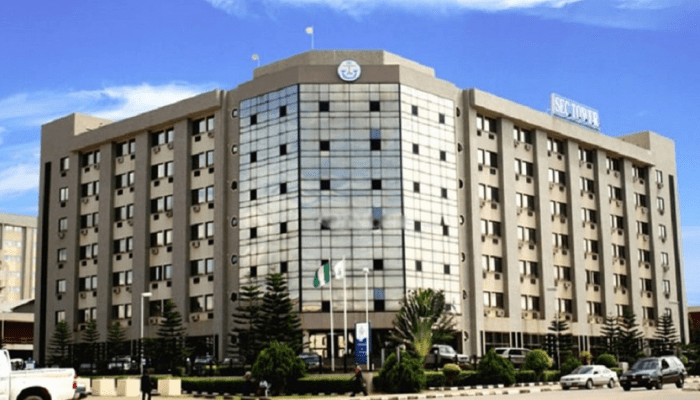
With members of the public showing much zeal to take up the equities made available by the Dangote Petroleum Refinery and Petrochemicals (DPRP), in its Initial Public Offering (IPO), financial institutions have warned against the activities of scammers.
On Tuesday, they counselled investors against disclosing sensitive banking information to parties claiming to facilitate the purchase of the refinery’s shares.
This is coming after the IPO drew about N1.5 trillion in subscriptions within the first 6 hours of trade on the floor of the Nigerian Exchange Limited (NGX), signaling extraordinary investor appetite for what could be one of Africa’s biggest share sales after the likes of MTN.
READ ALSO: Smart Filling Stations: NNPC Ltd Assuages Job-loss Worries
The rush by Nigerians to buy shares in the DPRP overwhelmed some local investment and trading platforms, with investors reporting difficulties accessing the apps as the IPO opened last Monday.
The unprecedented demand followed the commencement of the N2.15 trillion share offer by the Dangote Industries Limited (DIL), which sought to sell 4.1 billion shares in the refinery at N525 per share.
Urging Nigerians to participate, Chief Executive, Dangote Industries Limited, Aliko Dangote, assured investors that the public offering presents a compelling opportunity for strong returns and sustainable wealth creation.
Following the announcement, the Securities and Exchange Commission (SEC) in a public statement, cautioned prospective investors to be vigilant and use only approved channels when subscribing to the IPO.
The Commission confirmed that it had approved the refinery’s public offer and urged investors to ensure that all applications and payments are processed exclusively through authorised receiving agents, approved subscription platforms, and designated channels.
In the same vein, banks urged customers to be particularly careful with unsolicited messages, calls and social-media offers promising access to shares or preferential allocations.
They pointed out that legitimate banks will not request highly sensitive information such as a customer’s full card number, personal identification number (PIN), card verification value (CVV) or one-time password (OTP) through unsolicited calls, text messages or online communications.
In a notification sent to its customers, Access Bank, said, “Buying the Dangote Refinery IPO? Remember, Access Bank will never ever ask for your full card number, PIN, CVV or OTP.
If you have shared the above information with anyone, please dial *901*911# to block your account”.
The warning highlights a familiar tactic used by financial fraudsters: exploiting public interest in a major corporate transaction to make fraudulent requests appear legitimate.
Scammers may present themselves as bank officials, investment advisers, brokers or representatives involved in the share offering. They can use official-looking logos, convincing language and references to well-known companies to persuade potential victims that a transaction is genuine.
Banks are therefore advising customers to independently verify investment opportunities before transferring money or providing personal information. Investors should rely on official communications and established financial channels rather than links or contact details supplied through unexpected messages.
The DPRP, one of Africa’s most prominent industrial projects, has generated significant interest in Nigeria’s capital markets and broader business community. Any potential share offering connected to the company is likely to attract considerable attention from retail and institutional investors.
That visibility, however, also creates an opportunity for criminals.
Financial institutions say customers who have already disclosed sensitive banking information should act immediately rather than wait to determine whether their accounts have been compromised. Promptly contacting the bank and taking steps to block or secure an account can help limit potential losses.
The latest warnings also underscore the wider challenge facing Nigeria’s financial sector as digital banking and mobile transactions become increasingly common. Fraudsters have increasingly sought to exploit moments of heightened public interest, particularly when consumers are eager to participate in investments that appear to offer significant returns.
For prospective investors, the message from banks is straightforward, enthusiasm for an investment opportunity should not override basic security precautions.
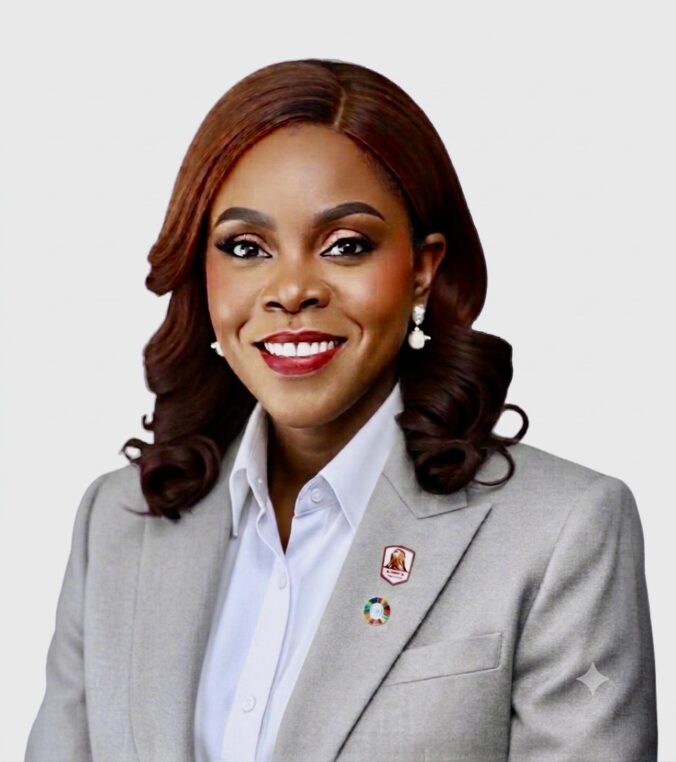
In a move perceived as an important milestone in the company’s journey to accelerate its Beyond XXX vision and drive the next phase of growth, innovation, and impact, Sahara has announced the appointment of Chidilim Menakaya as Managing Director.
Menakaya is a seasoned transformation and strategy executive, bringing more than two decades of leadership experience spanning Africa, Asia, Europe, and the Middle East.
Prior to her appointment, Menakaya served as Director of the Sahara Foundation, where she led the company’s sustainability and social impact agenda.
READ ALSO: Olaniwun Ajayi Weighs In on Dangote Refinery IPO
Under her leadership, the Foundation expanded the reach of Sahara’s EXTRApreneurship model, strengthened strategic partnerships, and deepened socio-economic impact across communities in the company’s locations.
Widely respected for her collaborative leadership style, strategic insight, and ability to build high-performing teams, she has consistently demonstrated a commitment to developing people, driving innovation, and delivering measurable outcomes.
Commenting on the appointment, Executive Director, Sahara, Ade Odunsi, said the decision reflects Sahara’s confidence in purposeful leadership and its commitment to building the future from within.
“For over three decades now we have remained committed to our vision of bringing energy to life responsibly. Beyond XXX represents our commitment to shaping the future through bold thinking, innovation, sustainability, and shared value creation. Chidilim’s appointment reflects these aspirations. We are confident that under her leadership, Sahara will continue to expand the frontiers of impact and create sustainable value for stakeholders across our markets.”
Odunsi noted that the appointment signals Sahara’s determination to build a resilient, future-focused enterprise capable of thriving in an increasingly dynamic global environment.
As Managing Director, Menakaya will provide strategic leadership for steering Sahara’s Beyond XXX agenda, enhancing stakeholder value, and positioning Sahara for continued growth and global relevance.
Menakaya holds executive and professional qualifications from leading global institutions, including London Business School, INSEAD, and Manchester Business School. She is also a certified Human Resources Business Partner, Transformation and Reputation Manager, and Prosci-certified Change Management Practitioner.
The Dangote Petroleum Refinery and Petrochemicals FZE (DPRP) Initial Public Offering (IPO), has been described as an important precedent in the Nigerian capital market.
Sharing the view in a statement on Monday, Olaniwun Ajayi LP also expressed its pleasure at having advised on the IPO while acting as Joint Solicitor to the transaction.
According to a Forbes report on Monday, Africa’s richest man, Aliko Dangote, saw his fortune rise to $51.3 billion following the launch of the refinery’s highly anticipated IPO on the Nigerian Exchange (NGX), amid strong investor demand on the opening day.
READ ALSO: DPRP IPO: Dangote Rings Opening Bell at NGX
The transaction was brought to the market by a consortium of professional advisers, including Olaniwun Ajayi LP, which acted as the Joint Solicitors to the issue.
In that capacity, the firm advised Dangote Refinery on the legal aspects of the offer, from transaction structuring and regulatory engagement through to launch
According to the law firm, the transaction is expected to be the largest IPO in both Nigeria and Africa, marking the first public offer of shares by a Nigerian Free Zone Enterprise (NFZE) in Nigeria.
The law firm stated that the transaction matters beyond the deal as it “establishes an important precedent for capital raising by Free Zone Enterprises”, while contributing to the continued development of the Nigerian capital market.
It added that the proceeds are intended to support DPRP’s long-term growth strategy, including the expansion of its refining and petrochemicals capacity.
The law firm stressed that the offer broadens public participation in one of Africa’s most significant industrial assets.





2027: Sowore Disowns Involvement in Utomi-Led Single-Candidate Talks

Chelsea Confirm Major Ownership Change as Clearlake Takes Full Control

EFL Cup Fourth Round: Liverpool Face Chelsea as Arsenal, Newcastle Discover Opponents

EFCC Arrests Enugu Estate MD Over Alleged N128m Land Scam

Borgu: ‘We Must Never Normalise the Killing of Nigerians’ — Peter Obi

Atiku Meets Aisha Buhari, Says Nigeria Must Become Affordable Again

Trump’s Family Unveils New Cryptocurrency Platform

Senate Denies Receiving Petitions Against Tinubu’s Ambassadorial Nominees

Dangote Cement Lights Up Benue Host Communities With CSR Initiatives

Reps Recommend 3-year Jail Term For Aviation minister

Tems Sets New Record On Billboard Hot 100 Chart
