
International News
ICC Issues War Crime Arrest Warrants Against Russia’s Army Chief, Ex-Minister

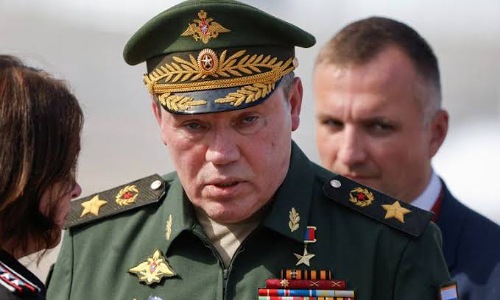
The International Criminal Court announced on Tuesday that arrest warrants had been issued against Russia’s Chief of the General Staff, Valery Gerasimov, and former Defence Minister Sergei Shoigu.
The warrants, issued on Monday and made public on Tuesday, allege their involvement in directing attacks on Ukrainian infrastructure deemed as war crimes.
These actions include targeting civilian sites and causing disproportionate harm to civilians, along with committing inhumane acts considered crimes against humanity in Ukraine, according to the ICC statement.
The ICC warrants mark the latest developments in the court’s actions related to the Ukraine conflict, which notably include an arrest warrant for Russian President Vladimir Putin.
ICC judges stated that there is sufficient evidence to suggest that the two suspects are responsible for missile strikes conducted by the Russian armed forces on Ukrainian electrical infrastructure between October 10, 2022, and March 9, 2023.
According to the court, these strikes targeted civilian objects, and even when the targets could be considered military, the civilian casualties were deemed disproportionate to any anticipated military advantage.
Ukraine welcomed the decision, with President Volodymyr Zelensky describing it as significant.
He expressed hope that the suspects would be apprehended and emphasized that the decision underscores the inevitability of justice for Russian actions against Ukrainians.
Russia has dismissed the warrants as “insignificant,” with the country’s security council stating that the ICC’s jurisdiction does not extend to Russia and labeling the decision as part of the West’s hybrid warfare against Russia.
The ICC, headquartered in The Hague, lacks its own enforcement mechanism for arrest warrants and instead depends on its 124 member states’ justice systems to execute them.
In practice, individuals under an ICC warrant are theoretically barred from traveling to any ICC member state due to the risk of arrest.

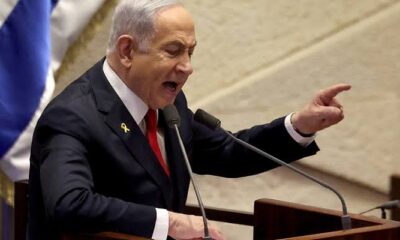

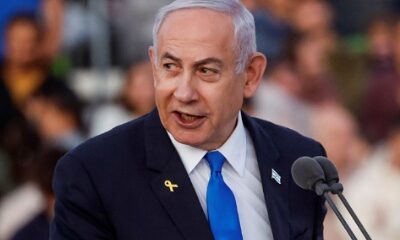


The Middle East is on high alert after Israel confirmed it had killed Iran’s Intelligence Minister, Esmail Khatib, in a precision strike, marking another major escalation in the ongoing conflict between the two nations.
Israeli officials announced that their military has been authorised to target any senior Iranian leader deemed a threat.
“We will continue to thwart them and hunt them all down,” said Israel’s Defence Minister, Israel Katz.
MORE ALSO: WHO Releases Alarming Casualty Figures From US‑Israel‑Iran Conflict
The Israeli Defense Forces have also vowed to pursue Iran’s new Supreme Leader, Mojtaba Khamenei, who has remained largely out of public view since succeeding his father.
Brigadier General Effie Defrin added, “We will track him down, find him, and neutralize him.”
In response, Tehran promised decisive retaliation for the killing of Khatib and other top officials, including Ali Larijani, Iran’s National Security Council Secretary. Iranian President Masoud Pezeshkian called the killings a cowardly act and warned that Iran’s response would be resolute.
“The pure blood of this great martyr… will be a source of honour, power and national awakening against global arrogance,” said Iranian army chief Amir Hatami.
Iran further threatened attacks on energy infrastructure across the Gulf after Israeli strikes targeted its largest gasfield, South Pars, which it shares with Qatar.
The attacks marked the first direct strike on Iran’s energy sector since the war began, prompting the Islamic Revolutionary Guard Corps to issue a stern warning.
“The fuel, energy, and gas infrastructures of those who attacked Iran will be burned and turned to ashes at the earliest opportunity,” said a spokesperson for IRGC’s Khatam al-Anbiya Headquarters.
Iranian Foreign Minister Abbas Araghchi warned that the conflict’s global consequences would affect everyone, regardless of wealth, religion, or race.
He noted that an increasing number of international voices, including European and US officials, view the war against Iran as unjust.
Meanwhile, the US President urged allies to secure the Strait of Hormuz, a vital oil and gas passage, as Iran has effectively closed the strait, sending global oil prices soaring.
NATO members are reportedly discussing ways to reopen the waterway.
UK Conservative leader Kemi Badenoch criticised the US over repeated public attacks on Prime Minister Keir Starmer, describing the remarks as “childish” and counterproductive amid growing global tensions.
The conflict has already taken a human toll. Iranian missile strikes killed two people near Tel Aviv, while Israeli and US strikes reportedly killed and injured dozens in multiple locations across Iran. With hundreds displaced and energy markets disrupted, the war continues to send shockwaves through the Middle East and beyond.
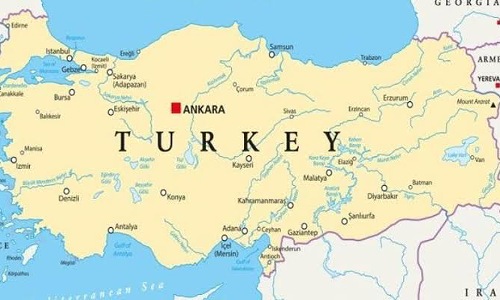
NATO air defence systems have intercepted a third ballistic missile believed to have been launched from Iran after it entered Turkish airspace, Turkey’s Defence Ministry confirmed on Friday, raising fresh concerns about the growing tensions in the Middle East.
In a statement, the ministry said the missile was neutralised by NATO air and missile defence assets deployed in the eastern Mediterranean after it crossed into Turkish territory.
SEE MORE: WHO Releases Alarming Casualty Figures From US‑Israel‑Iran Conflict
The latest interception triggered security alerts across parts of southern Turkey.
Air raid sirens reportedly sounded at the strategic Incirlik Air Base, a key NATO military facility that hosts United States troops and other allied personnel.
Residents in the nearby city of Adana were awakened around 3:25 a.m. by the warning alarms. Some locals reportedly captured footage showing what appeared to be a fast-moving object on fire streaking across the sky.
Similar sirens were also heard in the eastern Turkish city of Batman around 4:00 a.m., with reports indicating the alarm may have been linked to a nearby military drone base located close to the city’s airport.
The incident marks the third time NATO defence systems have intercepted missiles linked to Iran in recent weeks. The first missile was shot down on March 4, while a second was intercepted earlier this week.
Following Monday’s incident, the United States temporarily shut down its consulate in Adana and urged American citizens to leave southeastern Turkey due to security concerns.
Iranian President Masoud Pezeshkian, however, reportedly denied that the missile had been launched from Iran during a telephone conversation with Turkish President Recep Tayyip Erdogan.
The rising tensions come amid the ongoing conflict that erupted on February 28 involving the United States, Israel and Iran. Since the outbreak of hostilities, Tehran has reportedly carried out retaliatory strikes across several locations in the Middle East.
Incirlik Air Base remains one of NATO’s most important strategic military facilities in the region. The base has hosted US troops for decades and also accommodates military personnel from other NATO member states including Spain and Poland.
Another key NATO installation is located in Kurecik, in Turkey’s Malatya province, where US troops operate an early-warning radar system capable of detecting missile launches from Iran. The radar facility forms part of NATO’s broader ballistic missile defence shield.
Although Turkish authorities have consistently denied that radar data from the base has been shared with Israel, its presence has reportedly raised concerns in Tehran.
Earlier this week, Turkey also confirmed the deployment of a Patriot missile defence system in Malatya as NATO strengthens its regional missile defence posture amid the escalating conflict.
The World Health Organization (WHO) has released a disturbing update on the escalating conflict involving the United States, Israel, and Iran, revealing that thousands of people have been killed or injured in just under two weeks.
WHO Director-General Tedros Adhanom Ghebreyesus warned that health systems across the Middle East are under “immense strain” and are at risk of complete collapse if the crisis continues.
SEE MORE: US-Israel-Iran War: Day Four Updates from the Middle East
According to WHO reports, Iran has suffered over 1,300 deaths and around 9,000 injuries, while Lebanon has recorded at least 570 deaths and approximately 1,400 injuries.
In Israel, at least 15 people have died and more than 2,100 have been injured since hostilities escalated.
The conflict began on February 28, following a massive joint strike by US and Israeli forces that targeted top Iranian officials, including the country’s Supreme Leader.
The violence has since spread across the region, with retaliatory attacks targeting Israeli sites and US military bases in neighboring countries.
The humanitarian impact is severe. Over 100,000 Iranians and up to 700,000 Lebanese citizens have been displaced, many living in overcrowded conditions with limited access to clean water, sanitation, and medical care.
The WHO warns that these conditions put women and children at particular risk of disease outbreaks.
The organization also highlighted a growing trend of attacks on healthcare infrastructure, reporting dozens of strikes on hospitals and medical facilities across Iran and Lebanon.
Such attacks have not only resulted in deaths but also deprived entire communities of critical medical care when they need it most.
Tedros emphasized the urgent need for all parties to respect international law and protect civilians, calling for unimpeded humanitarian access and immediate measures to prevent the collapse of fragile health systems.
With the conflict continuing to escalate, the WHO has stressed that immediate action is required to protect lives, ensure medical support reaches affected populations, and prevent the humanitarian crisis from worsening.






Israel Kills Iran Intel Chief, Tehran Threatens Retaliation

Tinubu Makes History at Windsor Castle, Vows Stronger Nigeria-UK Partnership

Workers Rejoice as Yobe Pays Salaries Early Ahead of Eid

AFCON 2025 Drama: Morocco Defends CAF Ruling Amid Growing Controversy

Fear of Crisis Looms as Sanusi, Bayero Plan Rival Sallah Durbar

Maiduguri Blasts: Atiku Warns of Terror Resurgence, Slams Govt Response

Trump’s Family Unveils New Cryptocurrency Platform

Dangote Cement Lights Up Benue Host Communities With CSR Initiatives

Reps Recommend 3-year Jail Term For Aviation minister

Senate Denies Receiving Petitions Against Tinubu’s Ambassadorial Nominees

Tems Sets New Record On Billboard Hot 100 Chart
