
Crime
Amnesty International Petitions ICC Over Delayed Nigerian War Crimes Investigation

Amnesty International has filed a petition with the International Criminal Court (ICC), urging pre-trial judges to end the prolonged delay in investigating war crimes and crimes against humanity in Nigeria.
The global human rights organization on Monday, speaking on behalf of victims’ groups, described the delay as unjustifiable and a violation of victims’ rights.
In December 2020, the ICC Prosecutor determined that the criteria for opening an investigation into atrocities committed during the conflict in northeast Nigeria had been met.
READ MORE: Civic Group Rates Tinubu’s Governance 31.97%, Labels It “Totalitarian Democracy“
However, four years later, the court has yet to authorize the investigation, leaving victims without justice or closure.
Isa Sanusi, Director of Amnesty International Nigeria, expressed frustration over the inaction.
He said, “Victims of war crimes and crimes against humanity in Nigeria are as entitled to justice as victims of crimes under international law elsewhere. They have already waited too long. Nigeria should not be forgotten by the International Criminal Court.”
Amnesty International criticized the ICC Prosecutor for failing to seek authorization to investigate the crimes, as required under the Rome Statute.
According to the organization, the inaction has placed Nigeria in a “legal limbo,” neither classified as a preliminary examination nor an active investigation.
Sanusi added, “Amnesty International has called for an ICC investigation in Nigeria for years. The Office of the Prosecutor continues to delay, despite its clear legal obligation and its promise to open an investigation. We urge the ICC judges to exercise their oversight power to ensure the Prosecutor acts in conformity with the Rome Statute’s provisions.”
Amnesty also condemned the prosecutor’s failure to explain the delay or prioritize Nigeria’s case.
Sanusi posed a critical question: “The Prosecutor has also failed to justify the deprioritisation of the Nigeria situation, leaving victims and survivors of the conflict waiting with no explanation, nor any certainty, about the Prosecutor’s intended next steps. When is it going to be Nigeria’s turn?”
The petition, filed on behalf of thousands of victims from groups such as the Jire Dole Mothers and Knifar Movement, emphasized the grave human rights abuses committed by both Boko Haram and the Nigerian military since 2009.
Boko Haram has been responsible for mass killings, school attacks, and the abduction of women and children, many of whom have been subjected to forced labor, sexual slavery, and conscription as child soldiers.
The Nigerian military has faced accusations of extrajudicial killings, mass arrests, torture, and the deaths of thousands in custody.
Amnesty further alleged that the ICC Prosecutor’s inaction has effectively put victims’ rights to truth, justice, and reparations on indefinite hold.
The organization called on ICC member states, who are convening for their annual Assembly session, to demand equal attention for all cases before the court, including Nigeria.
The ICC began its preliminary examination of Nigeria’s conflict in 2010 under former Prosecutor Luis Moreno Ocampo.
A decade later, Prosecutor Fatou Bensouda concluded that Boko Haram and the Nigerian military had committed war crimes and crimes against humanity, and that the Nigerian government had failed to adequately investigate or prosecute these violations.
Despite these findings, Amnesty International stressed that no tangible progress has been made.











The Nigeria Police Force has commenced steps to investigate alleged financial crimes involving more than ₦178 million against the National Chairman of the Police Community Relations Committee (PCRC), Alhaji Mogaji Ibrahim Olaniyan, and other national executive officers of the organisation.
The allegations were contained in a petition submitted to the Inspector-General of Police on July 13, 2026, by the law firm of A.F. Obainoke & Co. on behalf of some elected national officers of the PCRC.
According to the petition, Olaniyan and some other national executive officers were accused of financial crimes involving more than ₦178 million.
SEE ALSO: IGP Disu Proposes New Police Desk for Nigeria’s Creative Economy, Intellectual Property
The petitioners said they were elected into various national positions in the PCRC in 2022, including the position of National Auditor, while Olaniyan was elected National Chairman and subsequently sworn into office.
In a letter dated July 20, 2026, the office of the Inspector-General of Police forwarded the petition to the Director of Legal Services of the Nigeria Police Force for appropriate action.
The letter, signed by CP Lateef Ahmed, Principal Staff Officer, conveyed the directive of the Inspector-General for the matter to be handled by the legal services department.
The document, according to the report, was received by the Directorate of Legal Services on July 28, 2026.
The latest development comes amid ongoing allegations and internal disputes surrounding the leadership of the PCRC under Olaniyan.
Previous Allegations
The development follows earlier allegations of financial mismanagement and accountability concerns within the organisation.
In March, some PCRC members reportedly accused Olaniyan of failing to account for more than ₦20 million allegedly generated from registration fees for the organisation’s 2026 national leadership workshop.
Sources cited in the report claimed that more than 2,000 PCRC members registered for the workshop at ₦12,000 each in January and February 2026.
The report also alleged that the organisation had not conducted a comprehensive audit of its national accounts for more than three years.
Another PCRC controversy emerged in 2023 when an eight-member committee was reportedly constituted to investigate allegations involving ₦60.3 million allegedly embezzled by the chairman.
A document cited in the report indicated that the committee confirmed that ₦60.3 million had been realised by the PCRC and reviewed expenditure records, with an alleged balance of approximately ₦1.4 million.
The committee reportedly recommended measures including greater financial discipline, limiting the chairman’s powers and ensuring compliance with the organisation’s constitution.
PCRC Election Controversy
The latest allegations also come amid disputes over internal elections within the PCRC.
In July, the Assistant Inspector-General of Police in charge of Zone 13, AIG Godwin Iguh Eze, reportedly postponed a PCRC Zone 13 election over alleged procedural issues.
The police said nomination forms had not been made available to the AIG or the Zonal Police Public Relations Officer, while contestants had also not been screened by the AIG or members of the Zonal Management Team.
Sources further alleged that Olaniyan had sought to influence the electoral process, although he reportedly did not respond to attempts to obtain his reaction.
Meanwhile, sources within the PCRC reportedly claimed that Olaniyan is seeking another tenure as National Chairman ahead of the November 29 election.
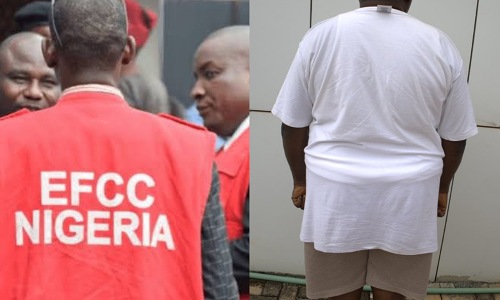
Operatives of the Enugu Zonal Directorate of the Economic and Financial Crimes Commission (EFCC) have arrested Basil Iwoba Ochili, Managing Director of Debasilio Construction and Estate Development Limited, over alleged fraudulent activities involving N128 million.
The EFCC disclosed this in a statement posted on its official X account on Wednesday.
According to the commission, Ochili was arrested for allegedly using his company for fraudulent activities, including “obtaining by false pretence to the tune of N128,000,000.00 (One Hundred and Twenty-eight Million Naira).”
SEE ALSO: EFCC Warns Lawyers Against Charging Clients in Foreign Currencies
The EFCC said Ochili was arrested based on a claim by a petitioner who alleged that sometime in September 2022, the suspect falsely presented himself as the owner of five plots of land situated beside Anambra State Secretariat by Stamford Hotel, Aroma Junction, Awka, Anambra State, and falsely offered the property for sale.
“Relying on the suspect’s representation, the petitioner purchased the said plots in the sum of N128,000,000.00 (One Hundred and Twenty-Eight Million Naira), which was paid into the suspect’s company account,” the EFCC said.
However, the commission said the petitioner was unable to take possession of the land.
Preliminary investigations, according to the EFCC, showed that the suspect knew that the land “encroached on Anambra State Government Secretariat’s land” but allegedly went ahead to sell it to the petitioner.
The commission further said that instead of refunding the petitioner’s money, Ochili “offered him two dud cheques.”
“Further preliminary investigations showed that the suspect used part of the money to settle his debts,” the EFCC said.
The commission also stated that Ochili’s company, Debasilio Construction and Estate Development Limited, “has never been tax compliant.”
The EFCC said the suspect will be charged to court after investigations are concluded.
“The suspect will be charged to court as soon as investigations are concluded,” the commission stated.

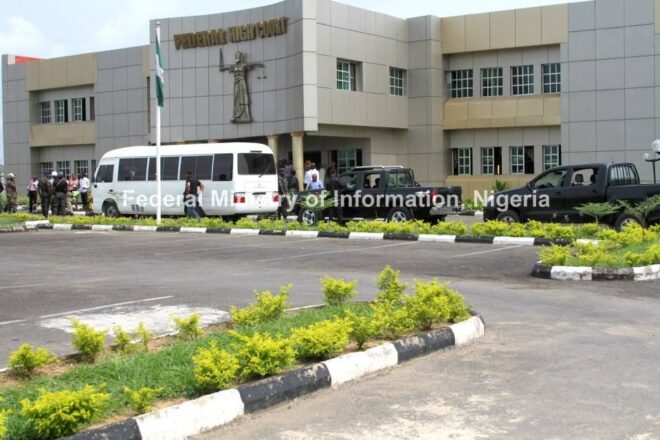
The Federal High Court (FHC) sitting in Uyo, Akwa Ibom State, has sentenced nine convicted crude oil thieves to 10 years in prison without an option of fine following a joint intelligence-led operation by the Department of State Services (DSS) and the Nigerian Navy (NN).
The convicts were among 19 suspects arrested earlier this year after security operatives caught them allegedly stealing crude oil from an oil well head identified as Asabo-D in Ibeno Local Council of the state.
READ ALSO: DPRP to Favour Small Investors in Event of IPO Oversubscription
Delivering judgment on Monday, Justice Joy Ikpeme found the nine men guilty on a two-count charge of conspiracy and tampering with an oil pipeline, contrary to Section 1(7) of the Miscellaneous Offences Act.
The judge sentenced each of them to five years’ imprisonment on the first count and 10 years on the second count, with no option of fine. The sentences are to run concurrently.
The remaining 10 suspects arrested during the operation are expected to face further legal proceedings.
The arrests followed an intelligence-led operation conducted by the DSS in collaboration with the NN as part of efforts to disrupt crude oil theft and illegal bunkering activities in the oil-producing communities of Akwa Ibom.
The conviction was described by a security source as another significant step in the sustained campaign against oil theft, particularly along Nigeria’s maritime and riverine areas.
According to the source, crude oil theft and illegal bunkering have continued to deprive the country of vital oil revenue while inflicting serious environmental damage on host communities.
The source said the latest conviction underscored the determination of security agencies to ensure that those involved in the theft of the nation’s crude resources are brought to justice.






ICAN, Police Move to Finalise MoU on Financial Crime Investigation

Police Probe PCRC Chairman Olaniyan Over Alleged ₦178m Financial Crimes

FRSC Disowns Viral Recruitment Notice, Warns Applicants Against Fraudsters

‘Stock Brokers Have Sweet Mouth’ — Shehu Sani Warns Nigerians on Stock Investments

Dangote IPO Will Spread Wealth Across Nigeria – Emir Sanusi

Abdulhamid Kabara Takes Over as New NSCDC Niger Commandant

Trump’s Family Unveils New Cryptocurrency Platform

Senate Denies Receiving Petitions Against Tinubu’s Ambassadorial Nominees

Dangote Cement Lights Up Benue Host Communities With CSR Initiatives

Reps Recommend 3-year Jail Term For Aviation minister

Tems Sets New Record On Billboard Hot 100 Chart
