
NEWS
Justice at Last: Boko Haram Member Sentenced to Death for 2015 Maiduguri Terror Attack


The Federal High Court in Abuja has sentenced a Boko Haram member, Alkali Yarima, also known as La’ari, to death by hanging for his involvement in the 2015 terrorist attacks on Maiduguri, Borno State.
Justice James Omotosho delivered the judgment on Friday, finding Yarima guilty of participating in acts of terrorism that led to the deadly attacks.
The court also imposed multiple prison terms on the convict for other terrorism-related offences.
SEE ALSO: MNJTF Commander Pledges End to Boko Haram Insurgency in Borno
Aside from the death sentence on count seven, the court sentenced Yarima to life imprisonment on count six for receiving arms and weapons training in preparation for carrying out terrorist activities.
Justice Omotosho also handed him 35 years imprisonment on count one for professing membership of the proscribed Boko Haram terrorist group, and 30 years imprisonment on count five.
In addition, the court sentenced him to 10 years imprisonment each on counts two, three and four.
The Federal Government had arraigned Yarima on a seven-count charge marked FHC/KNJ/CR/971/2026, filed by the Director of Public Prosecutions of the Federation, Rotimi Oyedepo (SAN), on behalf of the Attorney-General of the Federation.
According to the prosecution, Yarima, who hails from the Lawanti area of Mafa Local Government Area of Borno State, belonged to Boko Haram between 2009 and 2015 before his arrest.
He was also accused of accepting the teachings (Da’awah) of the sect’s late founder, Mohammed Yusuf, and remaining a member of the terrorist organisation despite its proscription.
The prosecution further told the court that Yarima travelled to an Arab country where he received training in arms and weapon handling in preparation for terrorist operations, an offence punishable under the Terrorism (Prevention Amendment) Act, 2013.
He was also found guilty of participating in the 2015 attacks on Maiduguri, an offence that attracted the death penalty under Section 2(1) of the Terrorism (Prevention Amendment) Act, 2013.
The trial, which is usually conducted in Kainji, Niger State, was moved to the Federal High Court in Abuja.
Speaking after the judgment, the Attorney-General of the Federation and Minister of Justice, Lateef Fagbemi (SAN), reaffirmed the Federal Government’s resolve to eliminate terrorism in Nigeria.
“We will fight with every inch of our blood to ensure that we make Nigeria a safe place for everybody,” Fagbemi said.





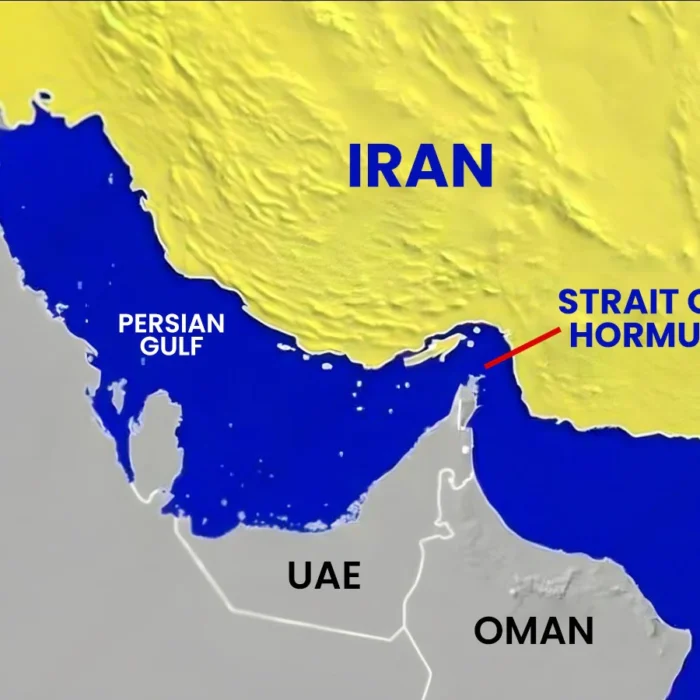
Renewed hostilities between the United States and Iran have heightened fears of another global fuel supply crisis.
The escalating tensions have renewed concerns about disruptions to crude oil shipments through the Strait of Hormuz, a major global oil transit route, with possible consequences for crude supply, petroleum product availability, shipping costs and energy prices.
The crisis initially erupted in late February when military strikes by the United States and Israel against Iran triggered retaliatory attacks by Tehran, disrupting traffic through the strategic waterway and unsettling global oil markets.
READ ALSO: EFCC Arraigns Woman over Alleged N1.1 bn NNPC Ltd Appointment Fraud
Tensions escalated again on November 17 following reported US strikes on an Islamic Revolutionary Guard Corps site on Qeshm Island, which prompted fresh Iranian attacks on American bases in Kuwait and Bahrain, as well as tankers.
Diplomatic efforts have also remained stalled over Tehran’s demand for the lifting of the blockade before progress can be made on a nuclear agreement.
The renewed uncertainty has raised concerns among oil market analysts. June Goh, a senior oil market analyst at Sparta Commodities in Singapore, said global observable oil inventories were beginning to decline sharply, a development she said could weigh more heavily on market sentiment than political statements about reopening the Strait of Hormuz.

Osun State Governor, Senator Ademola Adeleke has endorsed the appointment of Prince Adewumi Olusola Adeniyi of Godo-dudu royal house of Esa Oke as the new Owamiran of Esa-Oke.
This, according to a government house statement issued in Osogbo on Thursday, followed the outcome of the state executive council meeting presided over by Gov Adeleke.
The statement noted that the stool of Owa-Omiran of Esa Oke became vacant following the demise of Oba Akanbi Adediran from Aragadagbagun ruling house of Esa Oke.
Following this development, with Godo-dudu as the next ruling house, Prince Adewumi Adeniyi’s candidature was subsequently ratified by the state executive council to fill the vacuum created by the death of the immediate Owamiran.
READ ALSO: Atiku Accuses Tinubu of Seeking Plateau’s Forgiveness Only for 2027 Votes
It added that the Osun State Government congratulates and wishes the new Oba elect a peaceful reign as he directs the affairs of the ancient town of Esa Oke in his new capacity as the approved Oba by the Osun State Executive Council.
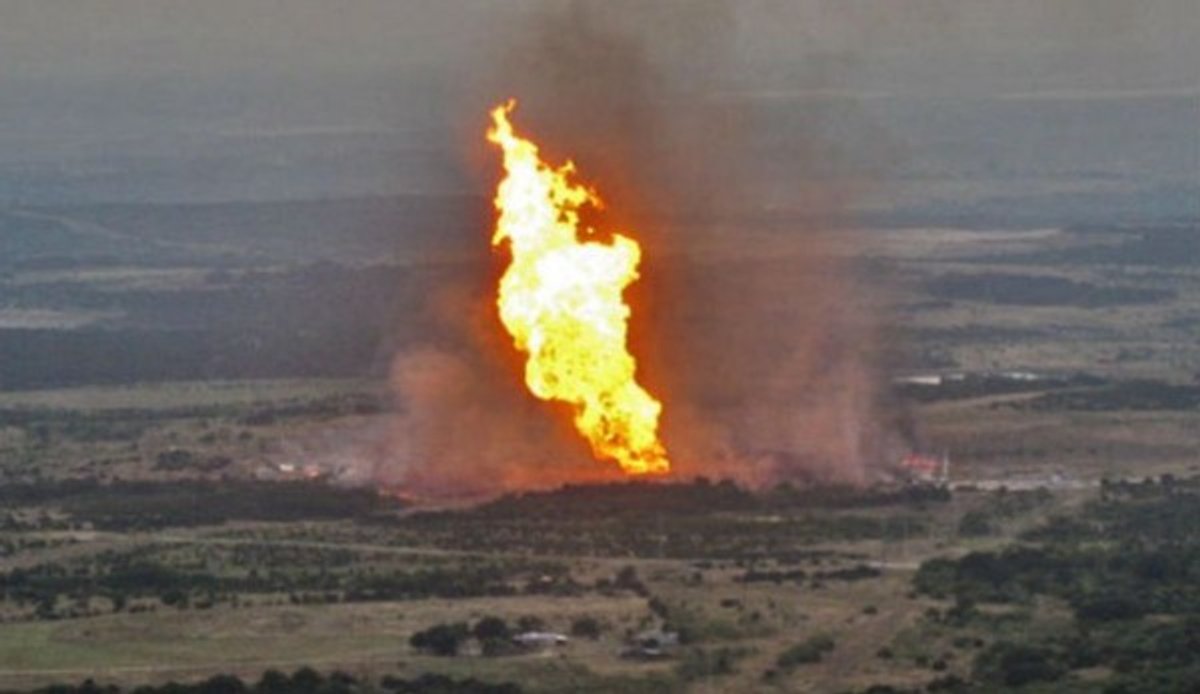
A call has gone to local and international investors to increase funding for the development and sustainability of Nigeria’s pipeline infrastructure.
The Pipelines Professionals Association of Nigeria (PLAN) made the call at the Nigeria International Pipeline Technology and Security Conference (NIPITECS 2026), which opened in Abuja on Tuesday, warning that the country’s energy security and industrial growth depend largely on reliable pipeline networks.
The President of PLAN, Engr. Ngozi Adeleke listed significant investment, innovative financing solutions, advanced technology, strong regulatory support and effective security frameworks as requirements to develop and sustain critical pipeline infrastructure.
READ ALSO: NNPC Ltd Declares 100% Pipeline Availability for First Time in 2 Decades
She said pipelines remained the backbone of the energy value chain, connecting producing fields to processing facilities, power plants, industrial hubs, export terminals and consumers.
According to her, without reliable pipeline networks, Nigeria’s ambitions to achieve energy security, economic diversification and industrial development would be difficult to realise.
She noted that the conference, with the theme, “Financing the Future: Unlocking Capital for Resilient Pipeline Infrastructure in Nigeria,” was particularly relevant as the country seeks to increase hydrocarbon production, deepen domestic gas utilisation, expand energy access and strengthen industrial capacity.
The PLAN president said the two-day conference would provide an opportunity for industry stakeholders to examine ways of attracting investments into new and existing pipeline infrastructure, while exploring how technology could improve asset integrity and security.
She also called for stronger collaboration among operators, financiers, regulators, service providers, technology companies, academia and host communities to address challenges confronting the sector.
Adeleke stressed that NIPITECS should go beyond discussions to facilitate partnerships, stimulate innovation, encourage knowledge sharing and generate practical recommendations for strengthening Nigeria’s pipeline ecosystem.
“As an association, PLAN remains committed to promoting professionalism, operational excellence, safety, integrity and capacity development across the pipeline industry.
“We will continue to serve as a platform for engagement, learning and collaboration, while advocating policies and practices that support the growth and sustainability of the sector,” she said.
She further urged participants to use the conference to build meaningful relationships and develop partnerships capable of driving progress in the industry beyond the event.
According to her, Nigeria’s energy future would not be determined by its natural resources alone but by the collective ability of stakeholders to finance, build, protect and sustain the infrastructure needed to convert those resources into economic value.
She added that collaboration, shared innovation and collective responsibility were essential to unlocking investment and securing the country’s energy future.
The conference brings together industry leaders, government representatives, regulators, investors, technology companies and other stakeholders to discuss financing, technology and security challenges in Nigeria’s pipeline sector.





Dangote, SEC Ponder Secondary Sale to Meet Refinery IPO Demand

Renaissance Unlocks New Oil, Gas Reserves with Technology

Fuel Supply Fears Spike on Renewed Middle East Crisis

EFCC Arraigns Woman over Alleged N1.1 bn NNPC Ltd Appointment Fraud

Adeleke Approves Prince Adewumi Olusola Adeniyi as New Owamiran of Esa-Oke

SGF Commissions Another Go Recycling Hub

Trump’s Family Unveils New Cryptocurrency Platform

Senate Denies Receiving Petitions Against Tinubu’s Ambassadorial Nominees

Dangote Cement Lights Up Benue Host Communities With CSR Initiatives

Reps Recommend 3-year Jail Term For Aviation minister

Tems Sets New Record On Billboard Hot 100 Chart
