
Other News
If I Were Tinubu – Part 4: Beware of virus and terminal diseases

By Segun Adeleye
It is instructive to note and never forget the definition of virus- an infectious agent of small size and simple composition that can multiply only in living cells of animals, plants, or bacteria. It cannot replicate alone; instead, it must infect cells and use components of the host cell to make copies of itself.
As one can only imagining how virus will be spreading in all directions causing havoc, activities in Nigeria’s political space have so many similarities with how virus operates, from when getting attached to cells and eventually getting them destroyed.
Comedy has made a fortune out of Nigeria’s politics where it sources its contents, as people can only laugh away their sorrow to save them from high blood pressure and heart attacks.
Flash back to Tuesday, March 31, 2015 as Nigerians anxiously awaited the full results of the Presidential and National Assembly elections, a former Niger Delta Minister, Mr Godsday Orubebe of the Peoples Democratic Party (PDP) disrupted the results collation, accusing the chairman of the Independent National Electoral Commission (INEC), Attahiru Jega, of bias. In fact, Orubebe held up the announcement of results for over 20 minutes, insisting that Jega should leave the collation centre. Jega in part of his response reminded Godsday Orubebe of the need to exercise restraint, especially given his status in the society, saying, “Mr Orubebe, you are a former minister of the Federal Republic, you are a statesman in your own right. So, you should be careful what you say or what accusations or allegations you make, and certainly you should be careful about your public conduct.”
Fast forward to Monday, February 27, 2023, history repeated itself with a mild drama at the same collation centre when agent of the same PDP, former Senator Dino Melaye contested the results. While Melaye protested, insisting that his observation must be implemented before results from other states are taken, the INEC boss, Prof. Mahmood Yakub cautioned him, saying ‘You’re now deliberately being disruptive’.
Now like in a comedy, the same Orubebe with the great zeal for the PDP in July 2022 officially joined the ruling All Progressives Congress (APC) in Delta and was even the director-general of the campaign organisation of the APC flag bearer, Deputy Senate President, Ovie Omo-Agege in the just concluded 2023 governorship election.
With a virus only preference for a cell being that it’s suitable and accommodating for it to attach, politicians antic is to remain relevant, which could be through jumping ship to any government in power with no regards for ideology, integrity and decency.
Making a genius out of the art of forming political parties, dumping them for another only to come back again, Alhaji Atiku Abubakar had ran unsuccessfully for President six times, in 1993, 2007, 2011, 2015, 2019, and 2023. He was a presidential candidate of the Action Congress (AC) in the 2007; he contested the presidential primaries of the PDP during the 2011 presidential election losing to incumbent President Goodluck Jonathan; in 2014, he joined the APC ahead of the 2015 presidential election and contested the primaries losing to Muhammadu Buhari; in 2017, he returned to the PDP and was the presidential candidate during the 2019 and 2023 elections.
Similarly, the presidential candidate of the Labour Party during the 2023 presidential election, Mr Peter Obi was the running mate of Atiku in the PDP during the 2019 election, a development that made enemies out of the partners of four years ago that must attack others and the values they once professed to.
The 2023 election brought to bear the follies of political payers that will dine with one camp today only to have breakfast with another in the morning as nemesis caught up with some during campaigns when they had to condemned their former camp and still maintain bold face as if the audience should have sterilized their memories not to remember or care.
There was the case of Iyorchia Ayu who after falling out with former President Olusegun Obasanjo left the PDP to join the AC where he headed the campaign to elect Atiku as president in April 2007. Now fast-forward to 2023, Ayu not only returned to the PDP, was the chairman of the party, and then came an unforgettable moment during a presidential campaign in Kano where he made a gaffe, shouting that the PDP had brought shame to the country and should not be retained in power, when he intended to say the APC.
For the spokespersons of the political parties, it will take volume of books to document their comedy. There were many cases where spokespersons had recycled parties over and over, and whatever they say would be the exact opposite of what they said years back when they eulogized their current opponents, as if suffering from amnesia that caused loss of memories, including facts, information and experiences of the past. In fact, all what one of the parties did during the 2023 electioneering campaign was to reproduce a video clip of how an opposition’s spokesperson praised its candidate before as reasons why he should be preferred.
These same people with the characteristics of virus are still on ground while those yet to move to the victorious party will not only do so soon, but will be scheming to speak for the incoming administration.
When COVID-19 started at Wuhan city of China in early December 2019 and rapidly widespread across the world, the first step taken was to isolate any confirmed victim. Isolation is important for most viral infections while treatments can only help with symptoms during the wait for immune system to fight off the virus.
This same approach to virus should be applicable to those seeking to speak for the country, as any information coming from the government must be factual, reassuring and never to be doubted by the people. This can only be guaranteed when coming from officials with no questionable moral sense of right and wrong. If I were Tinubu, I will steer clear of these viruses like plague.
But what of if they are cases of chronic or terminal diseases?
As we have seen in the case of COVID where concerted efforts were taken to contain it with vaccination and observance of relevant protocols, the world has not been lucky with some chronic and terminal diseases like advanced cancer, dementia, lung disease among others whose cures have been scarce or elusive for ages.
What can be likening to terminal disease in Nigeria’s polity is corruption which has eaten into all the fabric of the country with many still wondering why the country has not died.
There was a report in The Economist magazine of October 10, 2019 which revealed that about $582 billion was stolen from Nigeria since independence in 1960. The report said at least N11 trillion was diverted in the power sector alone since 1999, while N1.3 trillion public funds were reportedly laundered between 2011 and 2015.
If the former late Head of State, Gen Sani Abacha had not died in office, the revelation that he looted billions of dollars would not have happened, as other former leaders before and after him are living happily after with no stumbling on any loot. As at 2019, more than $1billion seized from Abacha’s bank accounts were said to have been returned with some reports claiming that some of the returned loot had been re-looted.
Stealing from Nigeria is either though outright fund diversion to personal accounts, contract inflations, payment for contracts not executed among other ways.
Transparency International (TI), a global movement working to end corruption in its 2020 Corruption Perception Indexes (CPIs) rated Nigeria 149th out of the 180 countries surveyed, scoring 25 out of 100 points.
A group, Human and Environmental Development Agenda in February 2021 delivered a list of 25 top corruption cases linked with stolen or mismanaged funds worth N900 billion to President Muhammadu Buhari which it said the government was investigating but had been left dormant.
There was also a report credited to the United Kingdom’s Department for International Development in December 2017 that said about $32 billion was lost to corruption during the six-year administration of ex-President Goodluck Jonathan. The agency said the huge amount represented 16 percent of the government’s resources that could have been channeled to development.
Similarly, the Presidency in May 2018 released details of alleged grand corruption during Jonathan administration claiming that $3 billion was stolen under the Nigeria National Petroleum Corporation (NNPC) Strategic Alliance Contracts in 2013, with three Nigerians said to be responsible.
A keynote address of the Former Chairman of INEC, Prof Attahiru Jega at the 4th National Summit organised by the Independent Corrupt Practices and Other Related Offences Commission (ICPC) in October 2022 summed up the tragedy of corruption in Nigeria, saying no amount of disagreement can change the fact that Nigeria has been globally recognised as one of the most corrupt countries in the world.
According to him, the relatively very poor record and ranking was essentially on account of the humongous corruption associated with what was known about its extent and magnitude in the Nigerian public sector, especially at the federal level and that corruption was more embedded at the state and local government levels, upon which less attention was focused.
He lamented that “Corruption is the single greatest obstacle preventing Nigeria from achieving its enormous potential as it drains billions of dollars a year from the country’s economy, stymies development and weakens the social contract between the government and its people,” hence “Nigerians… struggle daily to cope with its effects.
“The endemic and pervasive nature of corruption in Nigeria negatively impacts human security, as well as democratic and socioeconomic development. This is essentially because the nature, extent and dimensions of corruption are no doubt associated with bad governance, and the inadequacy of institutional framework to effectively address it. Hence, public officials occupying elected/appointed public offices in trust convert those for private gain, often with impunity and crass disregard for due process, accountability and ethical conduct.”
It’s heartbreaking that those engaging in corruption will always be in government. Whenever their party is out of government, without any shame, they will denounce it and join the ruling party. Their movements between parties are always driven by survival- to expect protection from the anti-corruption agencies that may be waylaying them on past frauds, to remain politically relevant with greed to ensure that source of livelihood from patronages is not cut off. As empty drum makes the loudest noise, they have to be very outspoken for the new camp to feel their presence and validate their importance. Even when there is no need for talking, they must have something to say. Even when not officially appointed as spokespersons, they will create platforms to speak and even assume the role of ethnic champions if that is the card that will work to attract wider sympathy and sense of relevance.
With PDP, the former ruling party now out of government for eight years, one doesn’t need a prophet to predict that the last ruminants of its members will be ready to decamp to the ruling party in a matter of months.
Like one bad apple spoiling the whole basket, life to this small group of people is just to steal money and live large. These are people with no shame in their dictionary. These are people that never care that their actions had brought reproach and turned their country which suppose to be a frontline nation and pride of Africa, to a pariah enclave that has become a disgrace to the entire continent with citizens being stigmatized as fraudsters all over the world. What is difficult to understand about these people is how do they face their children? When they look at the mirror, what do they see?
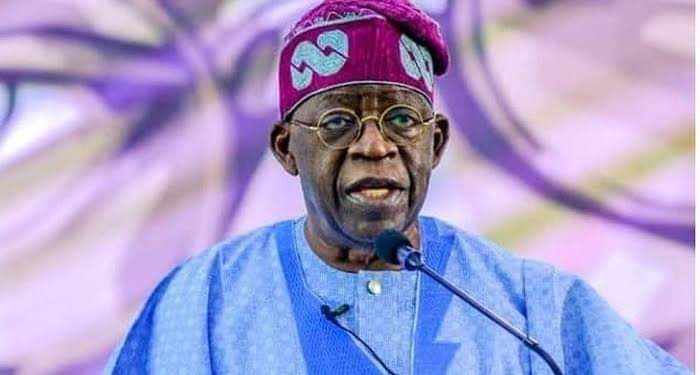
The President-elect will need to beware of wolfs in sheep clothing. His remark during his famous ‘emi lokan’ speech in Abeokuta that he had not been appointed minister and didn’t get nor request a contract since Buhari emerged, is instructive that he is out for greater good.
To fight corruption should not be that difficult. The two simple steps to observe are; must never steal, no matter how small and secondly, must always watch your back for viruses that will first size you out and probe where they can penetrate. The President-elect must always remember the definition of virus to be small size agent that cannot replicate alone but must infect and use components of host to make copies of itself.
As for the President-elect, the viruses will be all around him, swarming on him, looking for any opening to penetrate and cause havoc. But because they are little minds with defective conscience, whenever they are challenged and exposed, they easily crumble like house of cards.
Prof Jega recommendations of “remarkable, systematic value additions to governance and democratic development to ultimately address corruption decisively and impactfully, if not permanently in the Nigerian public sector” are very instructive.
According to him, “In the short to medium terms, a comprehensive, targeted sectoral and multi-tier anti-corruption campaigns, with an excellent legal framework, strong anti-corruption agencies/institutions, led by selfless and fearless appointed public officials, would bring about incremental positive changes.
“Clearly, we should focus on this, while we work hard to improve and develop our country’s governance framework and systems, and accelerate democratic development, a key aspect of which is increasing/improving the integrity of our elections.”
There is a story of Arkad in the book ‘The Richest Man in Babylon’ by Gorge S Clason whose friends of younger days approached with the lamentation that despite that they studied under the same master, played same games which he never outshined, never worked harder or more faithful, but “Why, then, should a fickle fate single you out to enjoy all the good things of life and ignore us who are equally deserving?”
Arkad response was instructive and will be relevant to every situations of life including that of Nigeria. He said, “If you have not acquired more than a bare existence in the years since we were youths, it is because you either have failed to learn the laws that govern the building of wealth, or else you do not observe them.”
Later in the book when Babylon faced serious economic crisis with unemployment and inflation like the present day Nigeria, the king was made to understand that most people had nothing to show for their earnings as all the gold found its way into the possession of a few very rich men of the city. “Why should so few men be able to acquire all the gold?” was the curious question from the king. The king was wondering why should not all the people learn how to accumulate gold and therefore become rich and prosperous? He was compelled to ask who best knew how to become wealthy, and the name of Arkad came up again, and he was eventually called to teach them, which he did and their stories changed.
As they used to say, once beaten twice shy. In Nigeria today, people from all the political divide, students, lecturers, market women, transporters, trade unions, industrialists, entrepreneurs, journalists and people from all works of life have a legitimate right to look at the President-elect and ask him, why and how is it your turn? Is it your turn to continue the mind-boggling lootings of the Obasanjo and Jonathan’s eras or the misery of the Buhari’s era? Enough is enough!
If I were Tinubu, I will act like the then King of Babylon by assembling the most successful Nigerians like the Dangote(s) to help teach my people how to make a legitimate living, build wealth and turn around the fortune of the country.
A city build on a hill cannot be hidden. Tinubu asked and he has been given. Like a golden fish, there will be no hidden place for him again.
He should be conscious that all his steps will be watched and probed. He should be like an inspirational, detribalized and God fearing coach who will assemble a team of the best 11 and still keep a strong bench in case he needs to change tactics by substituting one or two players that will get him the goals.
Among the first 11 must be the Chief Economic Advisor (CEA) and the chairman of Federal Inland Revenue Services (FIRS). Without any prompting, the CEA should be able to alert the president about hidden opportunities, something like a projected demand for cassava around the world in the next season and how Nigeria can quickly move to get a market share.
Eventually, if Nigerians can see that the president-elect’s renewed hope is hopefully real; they will respond with enthusiasm and give him the support to chart a new course to prosperity.
*Segun Adeleye is the President/CEO, World Stage Limited; Creator, OELA Music; Author of ‘So Long Too Long Nigeria’ and Founder/Chairman, Segun Adeleye Foundation for Good Leadership in Africa (SAFFGLIA).






The Lagos State Traffic Management Authority (LASTMA) has alerted motorists to traffic delays along Ogunnusi Road towards Ojodu-Berger due to ongoing rehabilitation work.
LASTMA disclosed this in a post on its official X account on Sunday, stating that the road rehabilitation was being carried out by the Lagos State Public Works Corporation (LSPWC).
According to the agency, “The ongoing work is affecting traffic flow, with vehicles moving at a slower pace in both directions.”
ALSO READ: Chaos On Lagos-Ibadan Expressway As LASTMA Shuts Otedola Bridge
To ease the situation, LASTMA said a contraflow arrangement had been introduced for motorists travelling from Omole Junction towards Vis Junction.
“A contraflow arrangement is in place for vehicles coming from Omole Junction towards Vis Junction to facilitate the movement of traffic,” the agency stated.
LASTMA added that its personnel had been deployed to manage traffic and ensure the continuous movement of vehicles around the affected area.
“Our personnel are on ground managing the traffic situation and ensuring the continuous flow of vehicular movement,” the agency said.
The traffic management authority advised motorists to remain patient and exercise caution while the rehabilitation work continues.
“Motorists are advised to exercise patience and drive with caution while the rehabilitation work continues,” LASTMA stated.

Leading economists, financial experts and industry stakeholders have described the Dangote Group’s investments as major drivers of industrialisation and economic transformation across Nigeria and Africa.
The experts cited the Group’s impact on job creation, import substitution, foreign exchange conservation and economic competitiveness.
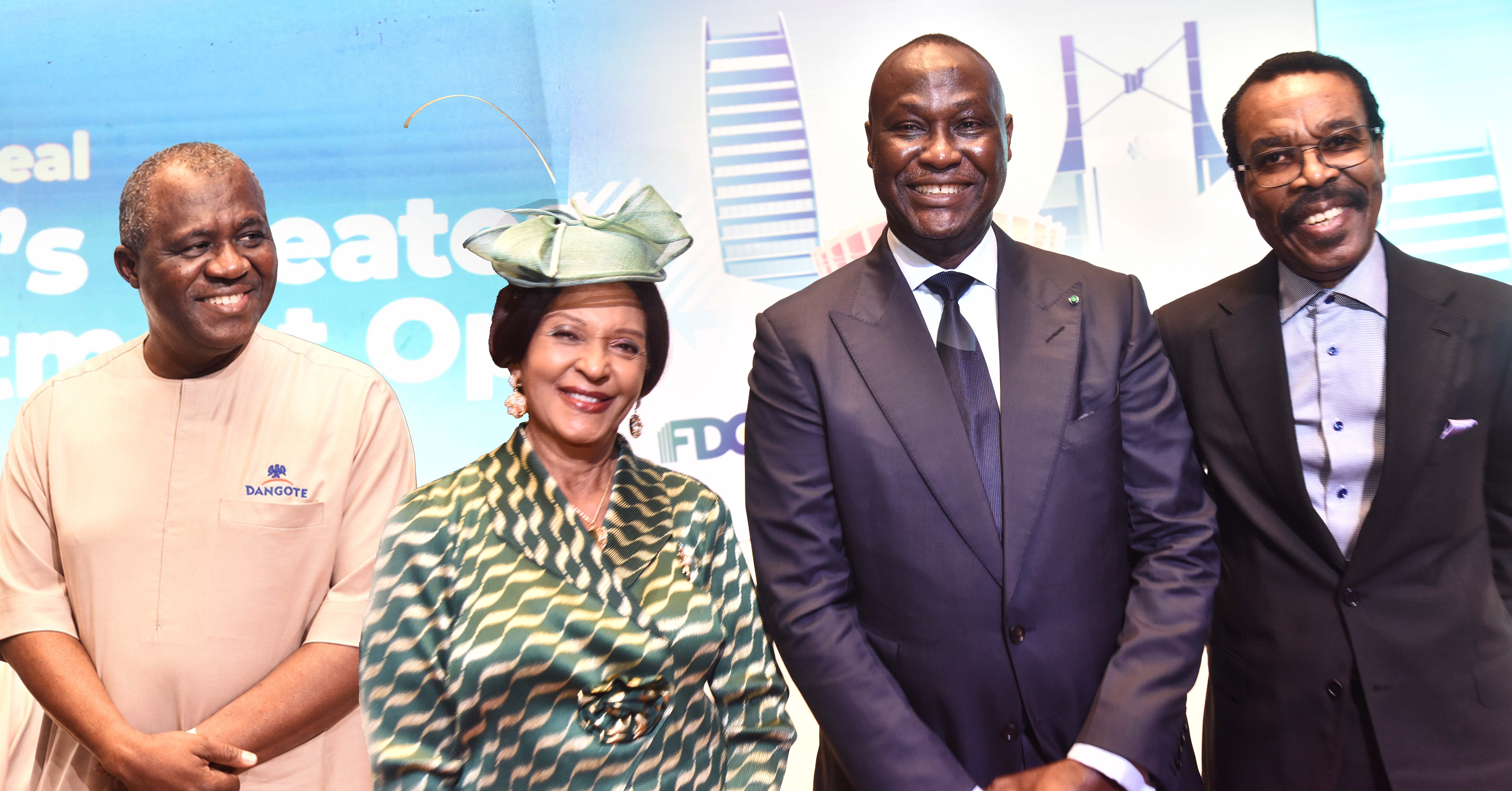
They voiced their thoughts at the Lagos Economic Summit themed “The Real Deal: Africa’s Greatest Investment Opportunity,” where they urged governments to implement policies that strengthen local industries and accelerate economic diversification.
President and Chief Executive Officer of the Africa Finance Corporation (AFC), Samaila Zubairu, commended the Dangote Group’s sustained investments across Africa, describing them as critical to unlocking the continent’s economic potential.
He noted that while recent economic reforms have improved foreign exchange stability, strengthened reserves and eased inflationary pressures, the focus must now shift to growth in industry, productivity and employment.
READ ALSO: NMDPRA Shares July Domestic Cooking Gas Supply Details
Also speaking, Chief Executive Officer of the Centre for the Promotion of Private Enterprise (CPPE), Muda Yusuf, said industrialisation remains the most effective path to sustainable economic development.
He called for better alignment of trade and industrial policies, stressing that local manufacturers require strategic support to compete effectively and drive broader economic benefits.
Founder and CEO of Nairametrics, Ugodre Obi-Chukwu, said Africa’s growing population presents a significant industrial opportunity, noting that investments such as the Dangote Refinery are helping to retain capital within the continent while strengthening local production capacity.
In his keynote address, Managing Director of Financial Derivatives Company Limited, Bismarck Rewane, said Nigeria is gradually transitioning from a consumption-led economy to one driven by investment and production.
He added that sustained investments in productive sectors will continue to stimulate growth, create jobs and improve living standards.
Participants at the summit also advocated stronger credit infrastructure, improved national identification systems and increased investment in skills development to enhance the productivity and global competitiveness of Africa’s growing youth population.
Photo Caption: From Left – Chief Economist, Dangote Industries Limited, Dr. Hassan Mahmud; Lady Maiden Alex-Ibru; Chairman of Occasion/Special Guest of Honour, Samaila Zubairu; Key Note Speaker Session 1, Bismarck Rewane; during the Real Deal: Africa’s Greatest Investment Opportunity, Sponsored by Dangote Industry Limited in Lagos on Thursday 3, September 2026.
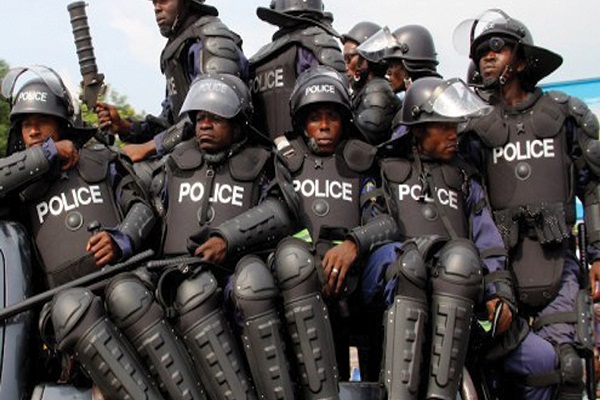
Social media critic Martins Vincent Otse, popularly known as VeryDarkMan (VDM), has released what he described as his first piece of evidence after the Nigeria Police Force challenged him to substantiate his allegations that some police officers allegedly collaborate with kidnappers.
VDM released a video on his Instagram handle on Thursday, August 27, 2026, shortly after the police invited him to provide evidence supporting the claims he made at the 66th Annual General Conference of the Nigerian Bar Association (NBA) in Port Harcourt.
SEE MORE: ‘Provide Evidence’ — Police React to VDM’s Explosive Kidnap Allegation
The activist captioned the video: “My evidence number 1.”
Recalled that VDM, who was a panellist at the NBA conference on Tuesday, had alleged that some police officers manning checkpoints along major highways provide kidnappers and bandits with information about travellers.
According to him, the officers allegedly relay details about the identities and movements of travellers to criminal groups, thereby facilitating abductions for ransom.
The allegation triggered a response from the Nigeria Police Force, which denied the claim and challenged VDM to substantiate his allegations.
The police invitation came as the force sought evidence to support the serious claims made by the social media critic.
In response, VDM released the video, describing it as his “evidence number 1”, signalling that he may provide further material to support his allegations.
The development has continued to attract attention, with the controversy placing renewed focus on allegations of possible collaboration between security personnel and criminal groups involved in kidnapping and banditry.






2027 Election: ‘Your Future Is More Valuable’ — IGP Warn Youths Against Political Violence

Tinubu Charges PCC Members to Deliver Wards

Marketers Eye Portion of FG’s Petrol Discount

Tanzania Nears Completion of $42bn Equinor, Shell-Led LNG Project

IEA Puts UAE’s Oil Output at 5.3mbpd for September

Africa’s Energy Security Conversations Pull Industry Executives Together

Trump’s Family Unveils New Cryptocurrency Platform

Senate Denies Receiving Petitions Against Tinubu’s Ambassadorial Nominees

Dangote Cement Lights Up Benue Host Communities With CSR Initiatives

Reps Recommend 3-year Jail Term For Aviation minister

Tems Sets New Record On Billboard Hot 100 Chart
