
Politics
If I Win, Subsidy Will ‘Go’ Immediately- Peter Obi

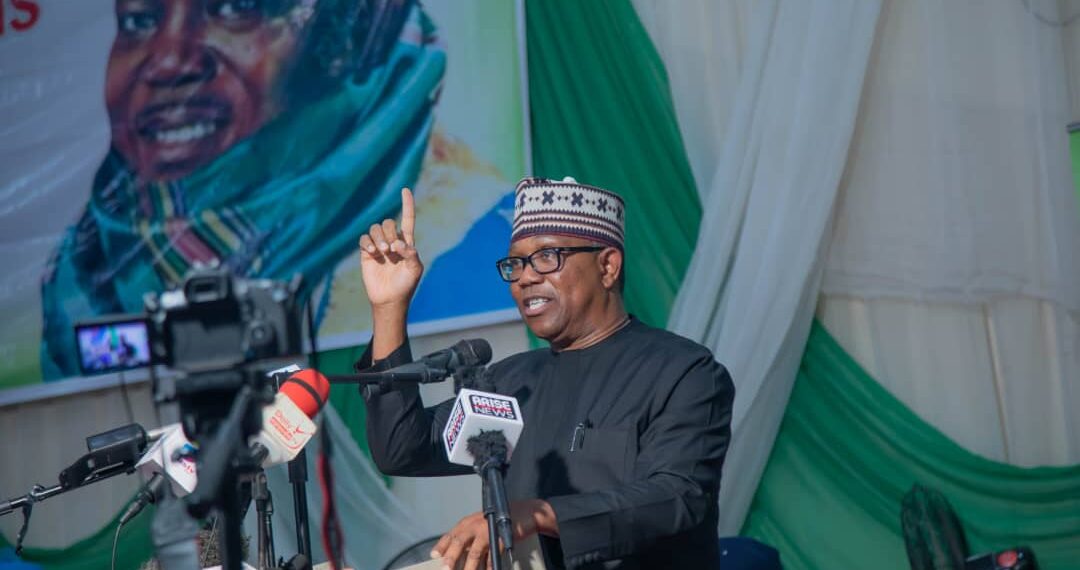
The presidential candidate of the Labour Party (LP), Peter Obi, has described the Nigerian government’s controversial subsidy regime as “an organised crime.”
Mr Obi, who lamented the controversies surrounding the subsidy during a town hall meeting organised by Channels Television on Sunday, where he also said he would not allow it to stay any longer, should he be elected as Nigeria’s president in the next election.
The Nigerian government has, for decades, subsidised fuel and fixed retail prices of petroleum products.
In November 2021, the federal government announced its plan to remove the fuel subsidy and replace it with a monthly N5,000 transport grant for poor Nigerians. But the government later suspended the plan after the Nigeria Labour Congress (NLC) and Trade Union Congress (TUC) threatened to embark on mass protests.
Speaking on Sunday, Mr Obi said: “I can assure you, it (subsidy) will go immediately. The subsidy, I have said before, is an organised crime and I will not allow it to stay a day longer.
“What they are telling you is not what it is. Half of what is being mentioned is not subsidy. First is that we consume the quantity that is not supposed to be consumed here,” he said.
According to Mr Obi, the money spent on petrol subsidy should be channelled into social development.
“Look at this year’s budget. Education, which is the highest since this government came, is about N2 trillion. Health, which is the highest since this government came, is about N1.5 trillion. Then infrastructure, which is roads and everything, is about N1 trillion.
“These three critical development areas are receiving N4.5 trillion. Subsidy is N3.6 trillion half year. So, if it’s a full year, it is about N7 trillion. Which country will invest more in subsidy than education, health and even roads? It doesn’t make sense,” he said.
The former governor of Anambra State said Nigeria has the same population as Pakistan.
“They (Pakistan) consume below 50 per cent of what we consume. So, the first half, I will remove it so we can save the money,” he said.








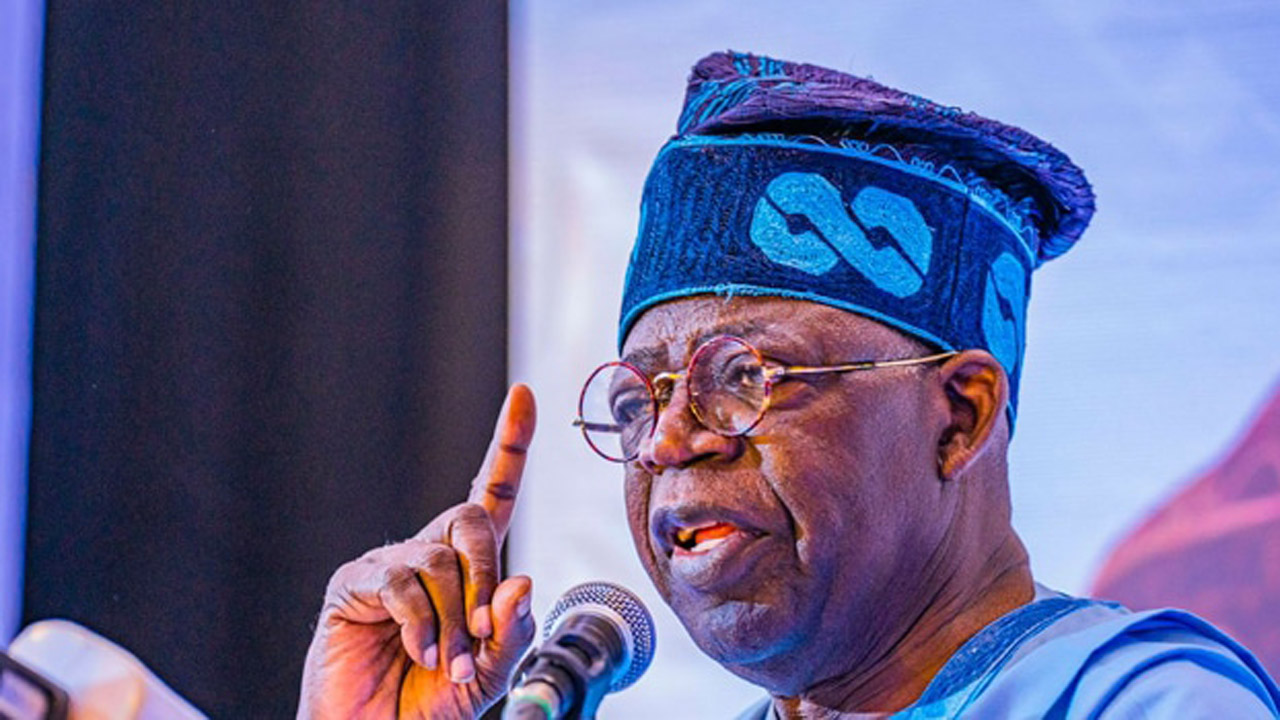
Two sitting state governors of other political parties and an influential minister, also of an opposition party have teamed up with the ruling All Progressives Congress (APC) in the push to help President Bola Ahmned Tinubu retain his seat come 2027.
Biztellers reports that Osun State Governor, Senator Ademola Adeleke (Accord Party) and his Anambra State counterpart, Prof Charles Soludu (All Progressives Grand Alliance (APGA)) have joined the Minister of Federal Capital Territory (FCT), Nyesom Wike (Peoples Democratic Party, (PDP)) in backing Tinubu’s re-election bid and would be serving in the revised Presidential Campaign Council (PCC).
Tinubu is the presidential candidate of the ruling APC.
According to a notice signed by the National Secretary of the APC, Senator Ajibola Basiru, the inauguration of the Council is scheduled for Wednesday at the Banquet Hall, Presidential Villa, Abuja by 11:00 a.m.
In a move signifying that politics is ticker than blood-relationship, Adeleke, a member of the Accord Party in Osun state was preferred to the President’s cousin and the Minister of Marine and Blue Economy, Gboyega Oyetola, who is the leader of the APC in the state.
With the Presidential candidate of the African Democratic Congress (ADC), Atiku Abubbakar, and Candidate of the National Democratic Congress (NDC) giving APC and Tinubu a good fight, the ruling party is leaving nothing to chance, hence, its decision to leverage on the popularity of friendly governors in opposition parties such as Adeleke to garner more support for Tinubu in Osun.
READ ALSO: 2027: Tinubu Will Beat Atiku, Obi by Wide Margin, Says Bwala
Also, Soludo, a member of the APGA has never hidden his desire to work for the re-election of President Tinubu in the January 16, 2027 presidential election. Soludo is Obi’s home state Governor.
Even before the ruling party released the revised campaign list, Wike, a member of the PDP had named himself the campaign coordinator for the FCT. So, it was no surprise that he was drafted into the campaign council of the APC.
Vice President Kashim Shettima would serve as Vice Chairman I, while the National Chairman of the APC, Prof. Nentawe Goshwe Yilwatda is Vice Chairman II. Senate President Godswill Akpabio, House Speaker Tajudeen Abbas and Kwara Governor AbdulRahman AbdulRazaq are Deputy Vice Chairmen.
Former Zamfara State Governor, Senator Abdulaziz Yari remains the Director General of the Campaign Council.
The Deputy Director-Generals of the PCC are: Yobe State Governor, Mai Mala Buni (North I), Senator Opeyemi Bamidele (South I), Deputy Senate President Barau Jibrin (North II), Deputy Speaker Benjamin Kalu (South II), while Senator Adams Oshiomhole will head Mobilization.
Also on the list is the Chief of Staff to the President, Hon. Femi Gbajabiamila who will serve as the Head of Administration, Hon. James Faleke is Deputy Director General in charge of Election Planning, Hon. Ibrahim Masari is in charge of Logistics and Operations, Hon. Aminu Masari heads Parliamentary Mobilisation, and Minister of Works, Engr. David Umahi heads Infrastructure Mobilization and Sensitization.
Imo State Governor, Hope Uzodimma is Secretary of the Council, while Basiru is Deputy Secretary and Hadiza Bala Usman is Assistant Secretary.
The Zonal Campaign Coordinators include Governor Babajide Sanwo-Olu for South-West, Governor Peter Mbah for South-East, Senator Bassey Otu for South-South, Governor Umar Bago for North-Central, Governor Uba Sani for North-West and Senator Ali Modu Sheriff for North-East.
The list also shows state coordinators made up of serving APC governors, past governors, National and State Assembly members and other critical stakeholders.
Key directorates in the council are: Finance/Treasury to be led by Delta State Governor, Sheriff Oborevwori, Fund Raising by Ogun State Governor, Dapo Abiodun, Policy and Manifesto by Minister of Budget and Economic Planning, Atiku Bagudu, and Legal Directorate by Muiz Banire, SAN.
The Directorate of Media and Strategic Communications has Minister of Information, Idris Malagi as Coordinating Director I, while Dele Alake is Presidential Campaign Spokesperson I. Other spokespersons include; Bayo Onanuga, Lere Olayinka, Ajuri Ngelale, Ayobami Oyalowo, Kemi Asekun-Shitu, Bala Ibrahim, Hon. Adamu Fanda and Mohammed Garba.
The Directorate of Security and Intelligence would be headed by Gen. Sarki Yaki, Data Management by Dr. Bisoye Coker, while the Directorate of Support Groups is headed by H.E. Silas Agara.
The party said all members are expected to be present at the inauguration.

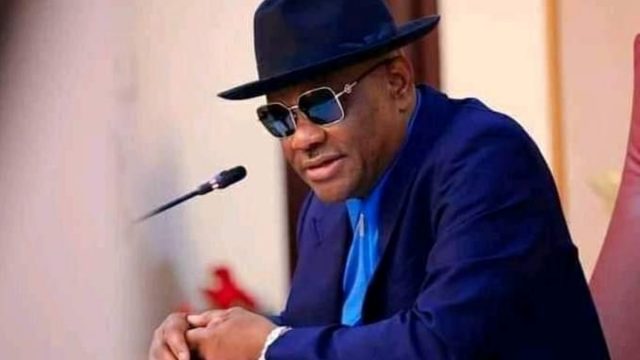
Minister of the Federal Capital Territory, Nyesom Wike, has urged opposition politicians to acknowledge President Bola Tinubu’s performance, insisting that political differences should not prevent them from recognising what he described as the President’s achievements.
Wike made the remarks during his media chat on Tuesday while speaking about the political atmosphere ahead of the 2027 general elections and criticism of the Tinubu administration.
ALSO READ: 2027 Election: Wike Sets Resignation Date If Tinubu Loses Rivers, FCT
He said some politicians publicly support the President at the national level but take a different position at the sub-national level because of their desire to maintain control of their states.
“I know that sometimes, some people will come out publicly, will support you at the national level, but at the sub-national level, forget it,” Wike said.
He added that such politicians believe the President should win at the national level while they retain control of their respective states.
“But this time around I came out open because of the period we are in,” he said.
According to Wike, several politicians have been making statements about the 2027 general elections, with some claiming that Tinubu has done nothing since assuming office.
He argued that opposition parties should not dismiss the President’s performance simply because they want to take over power.
“You have to check the governor of Bauchi, who is a member of PDP, who has a presidential candidate, came out to say, ‘Look at television, that Mr. President has done well,’” he said.
Wike also urged Nigerians to consider the state of the economy before and after Tinubu assumed office.
“See what I was telling you about Bauchi. See what he has done. See what our economy is before, see what it is now,” he said.
The FCT minister maintained that political opposition should not prevent politicians from acknowledging what they consider positive developments in the country.
“You know, time has come, not because you’re an opposition party, and then you just say the man who is the chief of affairs of the country has done nothing either for the sake of, I mean, opposition, that is not fair,” he said.
He further argued that politics should not be treated as a do-or-die affair, adding that the desire to win elections should not prevent political actors from recognising the performance of their opponents.
“For us, and whether anybody likes us or not, Mr. President has done well,” Wike said.
He accused the opposition of focusing on its ambition to take over power while failing to acknowledge the administration’s performance.
“That’s something, it’s just that the opposition wants to take over power,” he said.
Wike added that opposition parties would continue to criticise the administration even if it achieved results, because they wanted to replace it.
“But the way the opposition is going now, it’s a bit of concern to us, who are saying, ‘No, no, no, no, these people are not telling Nigerians the truth,’” he said.
He called on politicians in other parties who believe the opposition is misrepresenting the situation to speak out and offer their own account of events.
“Let those of us who are also in other political parties tell Nigerians, ‘No, this is not truth, this is what is happening, and that what is, you know, going on,’” he said.
Addressing the issue of political loyalties and godfatherism, Wike said people should be willing to acknowledge good work regardless of their party affiliations.
“So, the issue of godson, the issue of whatever you may call it, I don’t, I’m not a, I’m not a party to, to read, but when you see something that will help your country, when you see somebody who is doing good, come out and say it,” he said.
He added: “It doesn’t matter whether you’re in opposition or not.”
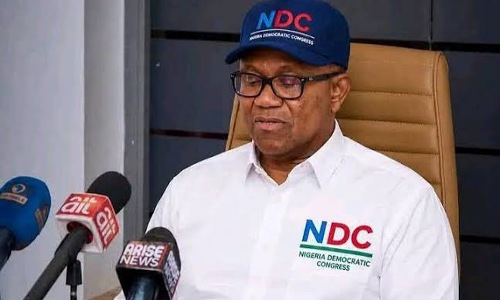
Peter Obi, the 2027 presidential candidate of the Nigeria Democratic Congress (NDC), has criticised President Bola Tinubu’s administration over its debt management, citing figures showing that the Federal Government spent ₦7.7 trillion on debt interest payments against revenue of ₦6.2 trillion in the first half of 2026.
Obi made the criticism in a statement posted on his X account on Monday, October 12, while reacting to a World Bank report titled Beyond the Federal Purse: How Higher Revenues Reshaped State Priorities.
According to Obi, the Federal Government spent ₦7.7 trillion on debt interest payments between January and June 2026, representing approximately 124.2 per cent of its total revenue of ₦6.2 trillion during the same period.
RELATED NEWS: ‘140 Million Nigerians Are Poor Despite Tinubu’s Economic Reforms’ – peter Obi
He said debt interest payments exceeded the government’s revenue by approximately ₦1.5 trillion, questioning how the country could continue to face a debt crisis despite increased revenue.
“How do you explain the unsustainable debt crisis even with exponential increase in revenue that we have had since 2023?” Obi asked.
The former Anambra State governor also expressed concern over a reported reduction of about ₦700 billion in capital expenditure during the first half of the year.
He argued that the government’s spending priorities showed a significant imbalance between debt servicing and investment in capital projects.
“In comparison, the APC led Federal Government spends about 11 times more on interest payment than on capital projects,” he stated.
Obi attributed the situation to what he described as reckless borrowing, corruption and incompetence within the Tinubu administration.
He argued that increased government revenue should not be celebrated without examining how public funds are spent and whether government spending priorities support economic development.
Obi further maintained that the presentation of improved economic indicators should not distract from the country’s debt burden and the impact of government policies on Nigerians.
He said the administration should recognise that economic progress cannot be measured by increased revenue alone, particularly when the government continues to face substantial debt interest obligations.
The NDC presidential candidate also questioned the government’s presentation of economic performance, arguing that economic statistics should reflect the actual impact of reforms rather than serve as a basis for celebrating improvements that have not translated into better living conditions for citizens.
.






State Govs, Wike Endorse One-Party State, Join APC Campaign Council

2027: ‘Tinubu Has Done Well’ – Wike Tells Opposition to Speak the Truth

‘Celebrate This Poor Man’ – Shettima Defends Tinubu Over Economic Crisis
FG Withdraws Charges Against ‘Fake Agency’ DG, Adeniyi Adeyemi

Shell Identifies Keys to Nigeria’s Energy Future

Nigeria Records Biggest Rise in Multidimensional Poverty Among Five Countries – UN

Trump’s Family Unveils New Cryptocurrency Platform

Senate Denies Receiving Petitions Against Tinubu’s Ambassadorial Nominees

Dangote Cement Lights Up Benue Host Communities With CSR Initiatives

Reps Recommend 3-year Jail Term For Aviation minister

Tems Sets New Record On Billboard Hot 100 Chart
