
Other News
IMF Executive Board Concludes 2013 Article IV Consultation with Algeria


ALGIERS – On January 23, 2014, the Executive Board of the International Monetary Fund (IMF) concluded the Article IV consultation with Algeria without a meeting.2
Economic performance in 2013 has been satisfactory. Inflation, which reached 8.9 percent last year, has decelerated significantly in 2013 thanks to fiscal consolidation and prudent monetary policy. Real gross domestic product (GDP) growth is expected to slow to 2.7 percent in 2013 from 3.3 percent in 2012, reflecting a continued decline in hydrocarbon sector output and lower public spending, somewhat offset by the strong growth of private demand and investment by state-owned enterprises. However, Algeria’s external position, though still very strong, has started to weaken. The current account surplus is expected to narrow to 1.1 percent of GDP in 2013, as robust domestic hydrocarbon consumption, together with declining prices, weighs on hydrocarbon exports and import growth remains sizeable. Risks are tilted to the downside: Algeria is vulnerable to a prolonged decline in oil prices, a worsening of the global environment, further pressure on the hydrocarbon rent, and an intensification of regional tensions. Outward spillovers are likely to be limited. Algeria faces a number of challenges. Despite stabilization in 2013, new inflationary pressures may arise following the recent surge in credit and a new increase in public sector wages. Fiscal and external vulnerabilities to developments in the hydrocarbon sector are worsening, as the domestic consumption drag on export volumes is compounding the longstanding risk related to lower oil prices. In addition, notwithstanding the ongoing consolidation, fiscal policy is not on a sustainable path. It is de facto pro-cyclical, and the non-hydrocarbon primary deficit is well above its long-term sustainable level, implying negative net public savings in the long run. Finally, shortcomings in competitiveness and productivity are weighing on economic growth, which remains below its potential and below the level required to significantly reduce unemployment, especially for youth and women. Although stable, the financial sector is underdeveloped, constraining access to financing, in particular for small- and medium-sized enterprises.
Executive Board Assessment
Executive Directors commended Algeria’s economic performance, notably the decline in inflation, unemployment and inequality. Directors noted, however, that strong credit growth and another public sector wage increase call for continued caution over price stability. They also observed a worsening in the economy’s vulnerability to developments in the hydrocarbon sector, as declining hydrocarbon production and surging domestic consumption are squeezing export volumes, compounding the longstanding risk of lower oil prices. Finally, they noted that unemployment remained high among youth and women. Against this background, Directors encouraged the authorities to take measures to consolidate macroeconomic and financial stability, ensure long-term fiscal sustainability, and promote strong private sector-led non-hydrocarbon growth and robust job creation.
Directors welcomed the decline in inflation brought about by monetary tightening and fiscal consolidation. They cautioned, however, that the recent surge in credit to the economy, together with the planned increase in current spending in 2014, could revive inflationary pressures, and urged the Banque d’Algérie to stand ready to increase liquidity absorption and raise interest rates if needed. Avoiding new increases in current spending, and financing the budget deficit by issuing debt rather than by drawings from the oil fund, will also be important.
Directors emphasized that the fiscal consolidation initiated in 2013 should continue in order to ensure fiscal sustainability. They recommended containing the wage bill; gradually phasing out subsidies while establishing a targeted cash-transfer system to protect the poor; stabilizing transfers to public entities in real terms; and reducing tax exemptions. To protect economic growth, Directors agreed that it will be important to preserve capital spending and enhance its efficiency and effectiveness.
Directors recommended that Algeria adopt a full-fledged fiscal rule to better manage hydrocarbon revenue volatility and attain fiscal sustainability. A fiscal rule using a backward-looking average oil price and setting a limit on the structural primary balance consistent with long-run fiscal sustainability would improve the management of hydrocarbon revenue. Further, the oil fund could be transformed into a sovereign wealth fund, and annual ceilings on drawings established to preserve financial savings. To improve public financial management, Directors recommended increasing the transparency of hydrocarbon revenue collection and developing an integrated financial management information system.
Directors noted that preserving fiscal and external sustainability would require increasing hydrocarbon production and extending the time horizon of reserves. They recommended improving the business environment, attracting Foreign Direct Investment (FDI) in the hydrocarbon sector, and swiftly implementing the national oil company’s investment plans. Phasing out implicit subsidies would help contain domestic energy consumption and support exports.
Directors encouraged the authorities to continue targeting the equilibrium real effective exchange rate to protect the competitiveness of non-hydrocarbon exports. They saw the premium in the illegal parallel exchange market as detrimental to growth and urged the authorities to forcefully tackle it. Furthermore, they recommended increasing the indicative foreign exchange ceilings for travelers to more realistic levels.
Directors welcomed the stability of the financial sector. To support its development, they recommended fostering competition in the banking sector, speeding up the development of credit bureaus, revisiting the guarantee mechanisms, and strengthening collateral and insolvency regimes. Directors also called for the ban on consumer lending to be lifted, and more space provided for mortgage finance. To develop capital markets, they advised issuing more sovereign debt and listing well-performing state-owned enterprises on the stock exchange, while removing disincentives to private sector debt and equity issuance. Finally, Directors urged the authorities to take immediate steps to address deficiencies in the Anti-Money Laundering/Combating the Financing of Terrorism framework.
Directors underscored the need for wide-ranging structural reforms to accelerate economic growth and job creation. They noted in particular the importance of improving the business environment, enhancing cost competitiveness, and relaxing the restrictive FDI regime. They called for deeper trade integration through WTO accession, trade facilitation, and export promotion. Directors also called for reforms to increase labor market flexibility and ensure that job seekers are equipped with the right skills.


The Lagos State Traffic Management Authority (LASTMA) has alerted motorists to traffic delays along Ogunnusi Road towards Ojodu-Berger due to ongoing rehabilitation work.
LASTMA disclosed this in a post on its official X account on Sunday, stating that the road rehabilitation was being carried out by the Lagos State Public Works Corporation (LSPWC).
According to the agency, “The ongoing work is affecting traffic flow, with vehicles moving at a slower pace in both directions.”
ALSO READ: Chaos On Lagos-Ibadan Expressway As LASTMA Shuts Otedola Bridge
To ease the situation, LASTMA said a contraflow arrangement had been introduced for motorists travelling from Omole Junction towards Vis Junction.
“A contraflow arrangement is in place for vehicles coming from Omole Junction towards Vis Junction to facilitate the movement of traffic,” the agency stated.
LASTMA added that its personnel had been deployed to manage traffic and ensure the continuous movement of vehicles around the affected area.
“Our personnel are on ground managing the traffic situation and ensuring the continuous flow of vehicular movement,” the agency said.
The traffic management authority advised motorists to remain patient and exercise caution while the rehabilitation work continues.
“Motorists are advised to exercise patience and drive with caution while the rehabilitation work continues,” LASTMA stated.

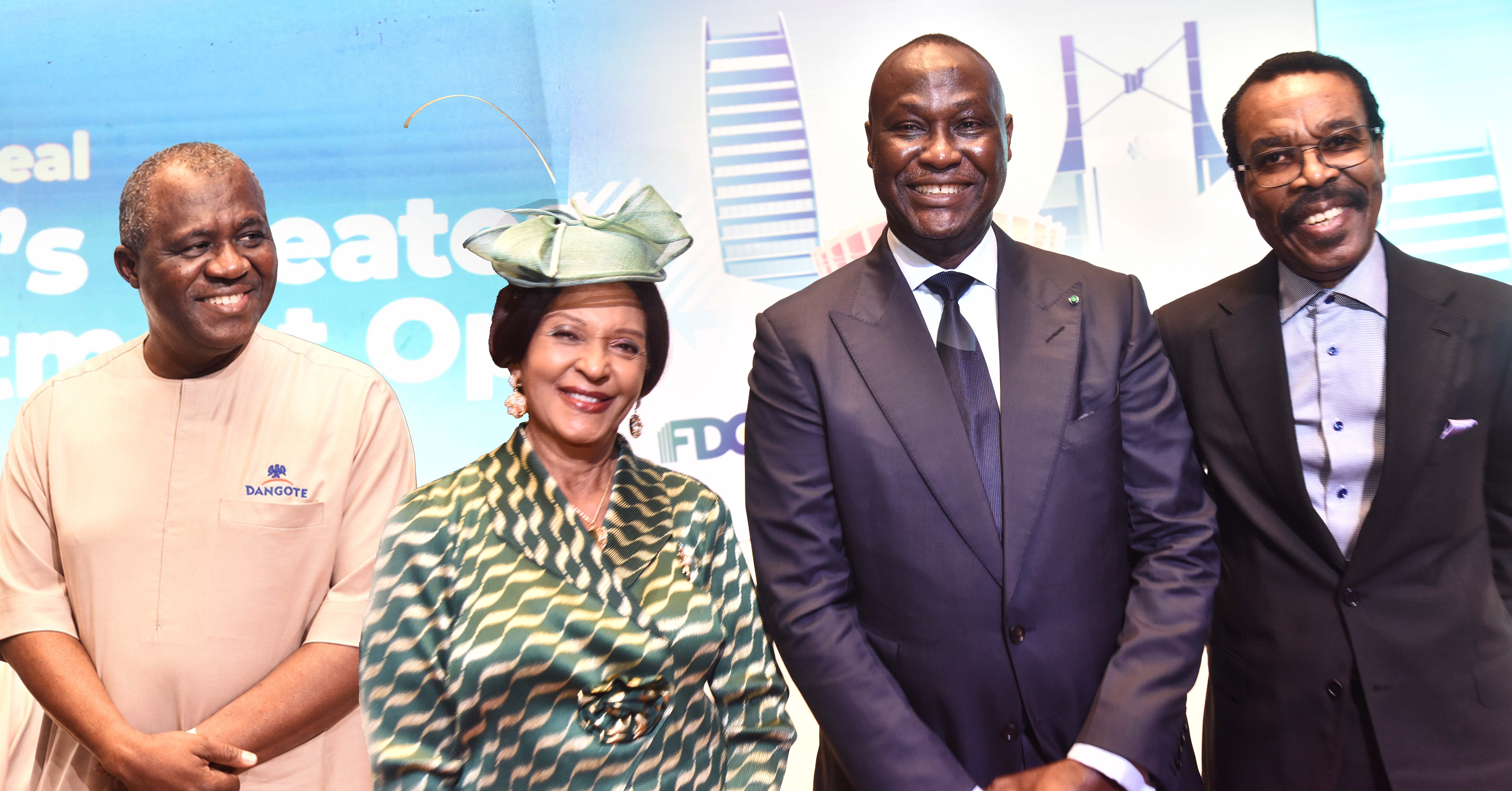
Leading economists, financial experts and industry stakeholders have described the Dangote Group’s investments as major drivers of industrialisation and economic transformation across Nigeria and Africa.
The experts cited the Group’s impact on job creation, import substitution, foreign exchange conservation and economic competitiveness.
They voiced their thoughts at the Lagos Economic Summit themed “The Real Deal: Africa’s Greatest Investment Opportunity,” where they urged governments to implement policies that strengthen local industries and accelerate economic diversification.
President and Chief Executive Officer of the Africa Finance Corporation (AFC), Samaila Zubairu, commended the Dangote Group’s sustained investments across Africa, describing them as critical to unlocking the continent’s economic potential.
He noted that while recent economic reforms have improved foreign exchange stability, strengthened reserves and eased inflationary pressures, the focus must now shift to growth in industry, productivity and employment.
READ ALSO: NMDPRA Shares July Domestic Cooking Gas Supply Details
Also speaking, Chief Executive Officer of the Centre for the Promotion of Private Enterprise (CPPE), Muda Yusuf, said industrialisation remains the most effective path to sustainable economic development.
He called for better alignment of trade and industrial policies, stressing that local manufacturers require strategic support to compete effectively and drive broader economic benefits.
Founder and CEO of Nairametrics, Ugodre Obi-Chukwu, said Africa’s growing population presents a significant industrial opportunity, noting that investments such as the Dangote Refinery are helping to retain capital within the continent while strengthening local production capacity.
In his keynote address, Managing Director of Financial Derivatives Company Limited, Bismarck Rewane, said Nigeria is gradually transitioning from a consumption-led economy to one driven by investment and production.
He added that sustained investments in productive sectors will continue to stimulate growth, create jobs and improve living standards.
Participants at the summit also advocated stronger credit infrastructure, improved national identification systems and increased investment in skills development to enhance the productivity and global competitiveness of Africa’s growing youth population.
Photo Caption: From Left – Chief Economist, Dangote Industries Limited, Dr. Hassan Mahmud; Lady Maiden Alex-Ibru; Chairman of Occasion/Special Guest of Honour, Samaila Zubairu; Key Note Speaker Session 1, Bismarck Rewane; during the Real Deal: Africa’s Greatest Investment Opportunity, Sponsored by Dangote Industry Limited in Lagos on Thursday 3, September 2026.
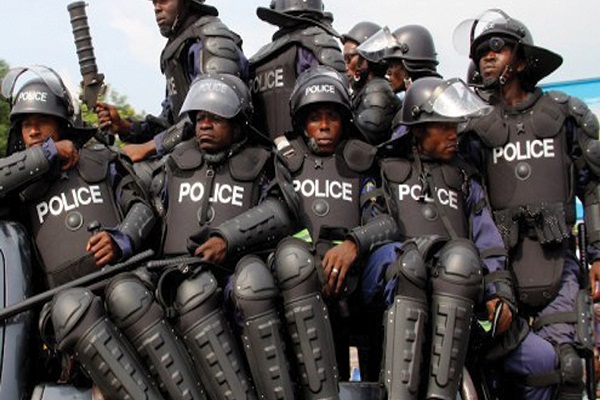
Social media critic Martins Vincent Otse, popularly known as VeryDarkMan (VDM), has released what he described as his first piece of evidence after the Nigeria Police Force challenged him to substantiate his allegations that some police officers allegedly collaborate with kidnappers.
VDM released a video on his Instagram handle on Thursday, August 27, 2026, shortly after the police invited him to provide evidence supporting the claims he made at the 66th Annual General Conference of the Nigerian Bar Association (NBA) in Port Harcourt.
SEE MORE: ‘Provide Evidence’ — Police React to VDM’s Explosive Kidnap Allegation
The activist captioned the video: “My evidence number 1.”
Recalled that VDM, who was a panellist at the NBA conference on Tuesday, had alleged that some police officers manning checkpoints along major highways provide kidnappers and bandits with information about travellers.
According to him, the officers allegedly relay details about the identities and movements of travellers to criminal groups, thereby facilitating abductions for ransom.
The allegation triggered a response from the Nigeria Police Force, which denied the claim and challenged VDM to substantiate his allegations.
The police invitation came as the force sought evidence to support the serious claims made by the social media critic.
In response, VDM released the video, describing it as his “evidence number 1”, signalling that he may provide further material to support his allegations.
The development has continued to attract attention, with the controversy placing renewed focus on allegations of possible collaboration between security personnel and criminal groups involved in kidnapping and banditry.





FG Withdraws Charges Against ‘Fake Agency’ DG, Adeniyi Adeyemi

Shell Identifies Keys to Nigeria’s Energy Future

Nigeria Records Biggest Rise in Multidimensional Poverty Among Five Countries – UN

Katsina Students Get ₦689.79m Bursary as Gov Radda Doubles Allowances
DOJ Confirms Federal Criminal Investigation After Agents Raid Ilhan Omar’s Home

Peter Obi Slams Tinubu Over ₦7.7tn Debt Interest Against ₦6.2tn Revenue

Trump’s Family Unveils New Cryptocurrency Platform

Senate Denies Receiving Petitions Against Tinubu’s Ambassadorial Nominees

Dangote Cement Lights Up Benue Host Communities With CSR Initiatives

Reps Recommend 3-year Jail Term For Aviation minister

Tems Sets New Record On Billboard Hot 100 Chart
