
NEWS
India Blocks WhatsApp Username Rollout Over Rising Scam Fears

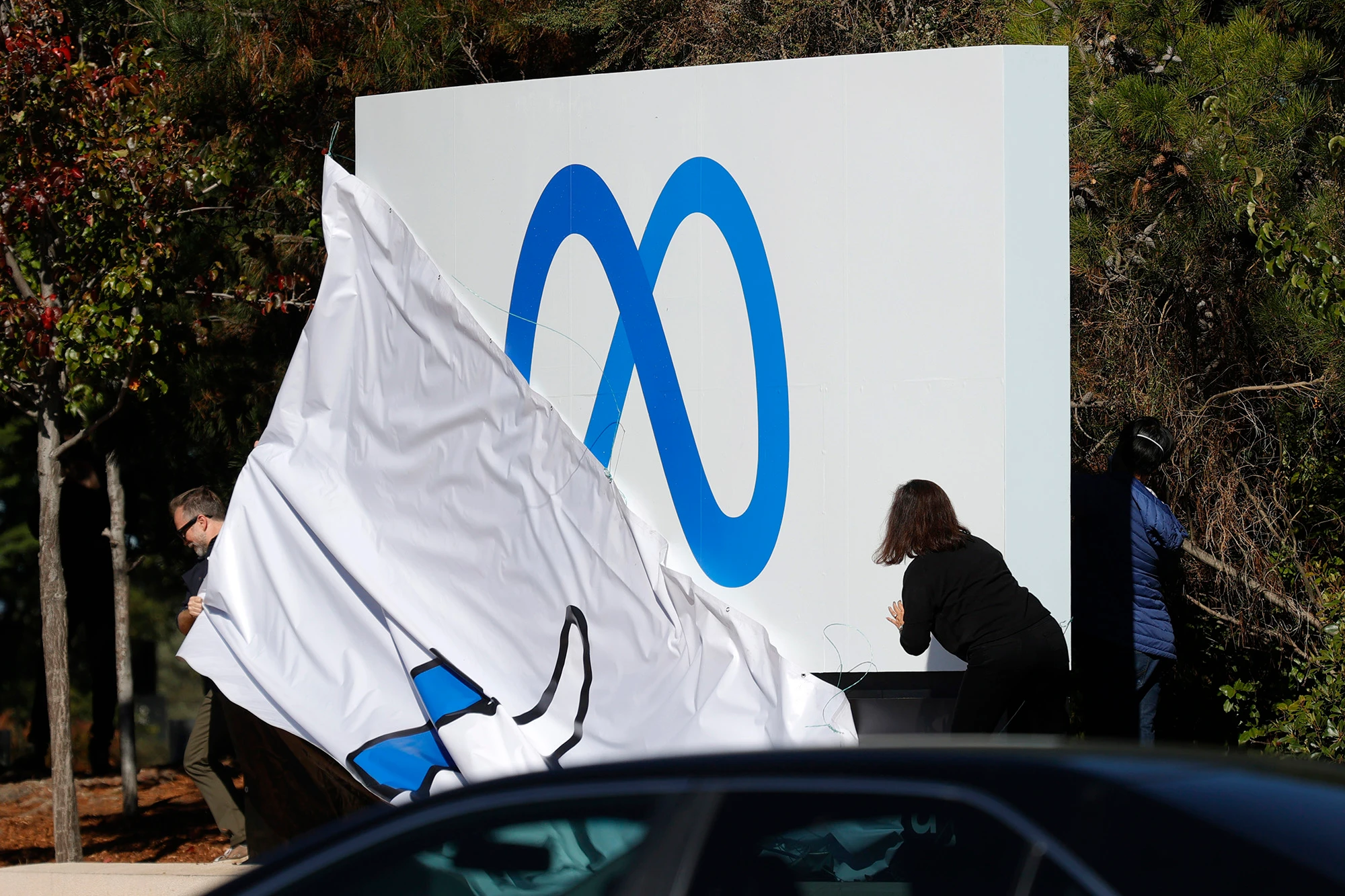
The Indian government has directed Meta to delay the rollout of WhatsApp’s upcoming username feature, citing concerns that it could expose millions of users to fraud, phishing, and impersonation scams.
The move follows WhatsApp’s recent announcement that users worldwide would soon be able to connect using unique usernames instead of sharing their phone numbers, a feature designed to improve privacy.
ALSO READ: WhatsApp to Introduce Usernames, Ending the Need to Share Phone Numbers
However, Indian authorities fear the change could be exploited by cybercriminals, particularly as the country continues to witness a sharp rise in online fraud.
According to reports, India’s Ministry of Electronics and Information Technology has asked Meta to suspend the launch of the feature until consultations with the government are completed.
Officials warned that fraudsters could register deceptive usernames and pose as trusted individuals or organisations, making it more difficult for users—especially those with limited digital literacy—to identify scams.
The ministry also expressed concerns that the feature could fuel phishing attacks, impersonation, and the growing trend of so-called “digital arrest” scams that have affected thousands of victims across the country.
Responding to the concerns, Meta said the username feature has not yet been launched in India. The company noted that usernames for public figures and verified accounts have already been reserved to prevent impersonation.
Meta also stressed that users will still need a phone number to create and use a WhatsApp account, adding that the platform has built multiple layers of protection into the new feature to help detect and prevent scams.
India is WhatsApp’s largest market, with more than 500 million users. Government figures show that cyber fraud losses in the country reached nearly $3 billion in 2025, almost 40 times higher than the amount recorded in 2021, underscoring the growing challenge of online crime.
The WhatsApp username feature is already available on WeChat, the messaging platform owned by Chinese technology company Tencent.





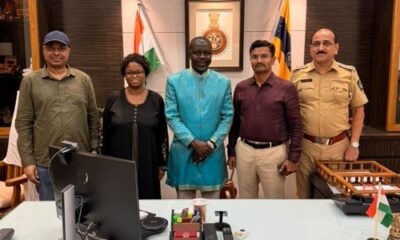




To secure a bright energy for her teeming population, Nigeria must sustain the momentum of reform, accelerate investment, and deepen partnerships.
This view was expressed by Managing Director, Shell Nigeria Exploration and Production Company of Nigeria Limited (SNEPCo) Ronald Adams in Lagos at the weekend.
Delivering a keynote address at the Africa Energy Conference (AEC) of the Lagos Business School (LBS), Adams called for regulatory certainty through efficient execution of reforms, sustained investment appeal to enable projects to move more swiftly from opportunity to production and partnership by operators, regulators, NNPC Limited and communities to unlock the full value of Nigeria’s resources.
Adams cited Nigeria’s huge oil and gas resources as an advantage but pointed out: “Resources alone do not guarantee prosperity. Prosperity comes when resources are matched with investment, technology, sound policy and disciplined execution. Success will be determined not by the size of our resources, but by our ability to convert them into investment and economic growth.”
Adams pledged the support of Shell towards a bright energy future of Nigerians. He said: “For more than six decades, Shell has been part of Nigeria’s energy journey. Together with our partners, we have helped develop major energy infrastructure, supported Nigerian businesses, invested in talent, and contributed to economic development. Bonga remains a powerful example of what technology, partnership and Nigerian capability can achieve in deepwater operations. Today, that story continues through Bonga North.”
READ ALSO: ADF Targets 5 Million Students, 2 Million Vulnerable Women
Issuing a clarion call for action by all stakeholders, he added: “The world is not standing still. Capital is moving, technology is advancing and competition is intensifying. The countries that attract investment tomorrow are those that improve competitiveness today. Nigeria has begun that journey. Our task is to sustain the momentum and translate reform into projects, projects into growth, and growth into shared prosperity.”
The conference, the 4th in the series had at its theme; “Securing Nigeria’s Energy Future: Policy Reform, Capital Mobilisation, and Pathways to a Sustainable Power and Energy Market” and was attended by top government officials, industry captains, energy professionals, and students.
Lagos State Deputy Governor Obafemi Hamzat represented Lagos State Governor Babajide Sanwo-Olu as the guest of honour. SNEPCo was a principal sponsor of the Africa Energy Conference (AEC) and mounted a well-received exhibition on its deepwater operations and social investments across Nigeria.

Katsina State Governor, Dikko Umaru Radda, has flagged off the disbursement of ₦689.79 million in bursary payments to 19,318 continuing students across 97 institutions for the 2025/2026 academic session.
The disbursement follows a 100 per cent increase in academic bursary rates, marking the first adjustment since 2007.
The latest payment forms part of the state government’s broader investment in education and student welfare, with cumulative bursary disbursements and related student awards under the administration reaching ₦3.29 billion.
SEE ALSO: Dikko Radda Of APC Wins Katsina Governorship Election
More than 174,000 beneficiary payments have been recorded across successive payment cycles.
Increased Allowances for Veterinary and Law Students
Under the revised scholarship support framework, allowances for Veterinary Medicine students have increased by 150 per cent for students in the 300 and 400 levels and by 200 per cent for those in the 500 and 600 levels.
Support for Nigerian Law School students and academic excellence awards has also continued.
The state government has also approved a scholarship programme for 1,700 students, with 50 beneficiaries drawn from each of the state’s 34 local government areas.
The programme is designed to support tuition fees, registration and other educational expenses.
₦6bn Scholarship Trust Fund
The government has made provision for ₦6 billion in seed funding for a scholarship trust fund intended to strengthen educational financing.
The fund is expected to support specialised scholarship opportunities in fields including engineering, medicine, Artificial Intelligence and mechatronics.
The state’s foreign scholarship initiatives have also supported 118 students studying Medicine, Artificial Intelligence and Bioengineering in Egypt, Ethiopia and China, with approved educational and living expenses covered by the government.
More Scholarship Opportunities
Other educational support initiatives include 34 maritime scholarship beneficiaries and seven students receiving 50 per cent financial support at the Nigerian College of Aviation Technology, Zaria.
The state has also nominated 34 candidates for MBBS studies in Russia, identified 70 prospective master’s degree candidates and selected 10 candidates for Qur’anic Sciences scholarships in Ghana.
These initiatives form part of the state’s broader efforts to expand access to education across different fields and levels of study.
Scholarship Board Strengthens Accountability
The Katsina State Scholarship Board has also strengthened its application, verification and payment systems.
As part of its accountability measures, the board interviewed more than 14,925 fresh applicants and returned approximately ₦86 million in unclaimed funds to the state government.
The state also acknowledged the contributions of the Nigerian Education Loan Fund (NELFUND), the Tertiary Education Trust Fund (TETFund) and the National Information Technology Development Agency (NITDA) in expanding access to educational financing and digital learning resources.
Radda Inaugurates Tinubu/Dikko Education Beneficiary Network
As part of the activities, Radda inaugurated the Tinubu/Dikko Education Beneficiary Network (TDEBNET), a voluntary organisation comprising parents and beneficiaries of educational programmes.
Members of the organisation expressed support for the re-election bids of Radda and President Bola Ahmed Tinubu in 2027.
Federal agents raided the Washington, D.C., home of Democratic Congresswoman Ilhan Omar early Monday morning as part of an ongoing federal criminal investigation, the United States Department of Justice (DOJ) has confirmed.
Homeland Security Investigations agents arrived at the Minnesota congresswoman’s residence at about 6:00 a.m. Eastern Time, according to a report by Fox News.
SEE MORE: Trump Sparks Outrage With Shock Proposal to Rename New Mexico
The report said both the Department of Homeland Security (DHS) and the DOJ are involved in the investigation.
A DOJ spokesperson confirmed the operation, stating: “Today in the Washington, D.C. area, Homeland Security Investigations executed a judicially authorized search warrant secured by the Department of Justice.”
The spokesperson added: “This enforcement action is part of an ongoing federal criminal investigation.”
Details later……….






Shell Identifies Keys to Nigeria’s Energy Future

Nigeria Records Biggest Rise in Multidimensional Poverty Among Five Countries – UN

Katsina Students Get ₦689.79m Bursary as Gov Radda Doubles Allowances
DOJ Confirms Federal Criminal Investigation After Agents Raid Ilhan Omar’s Home

Peter Obi Slams Tinubu Over ₦7.7tn Debt Interest Against ₦6.2tn Revenue

‘140 Million Nigerians Are Poor Despite Tinubu’s Economic Reforms’ – Peter Obi

Trump’s Family Unveils New Cryptocurrency Platform

Senate Denies Receiving Petitions Against Tinubu’s Ambassadorial Nominees

Dangote Cement Lights Up Benue Host Communities With CSR Initiatives

Reps Recommend 3-year Jail Term For Aviation minister

Tems Sets New Record On Billboard Hot 100 Chart
