
NEWS
Indian Army Begins Hand-Digging To Rescue 41 Trapped Workers

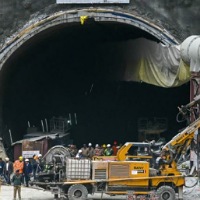
After numerous setbacks, Indian military engineers have resolved to excavate by hand from Monday in an attempt to rescue 41 workers who had been stuck in a collapsed road tunnel for 16 days.
Underneath the snow-capped peaks of Uttarakhand in the Himalayan state, soldiers intend to adopt a method known as “rat-hole mining,” excavating by hand to remove the remaining nine metres (29 feet) of rocks and debris.
Last week, engineers working to drive a metal pipe horizontally through 57 metres (187 feet) of rock and concrete ran into metal girders and construction vehicles buried in the earth, snapping a giant earth-boring auger machine.
“The broken parts of the auger (drilling) machine stuck inside the tunnel have been removed,” senior local civil servant Abhishek Ruhela told AFP on Monday, after a specialised superheated plasma cutter was brought in to clear the metal.
“Preparations are being made to start manual drilling work,” he added. “Indian Army engineering battalion personnel, along with other rescue officers, are preparing to do rat-hole mining”.
Engineers in the bitterly cold conditions will use manual drills to clear the route, a tough task in the narrow pipe, just wide enough for a man to crawl through.
Tunnel expert Chris Cooper, who is advising the rescue teams, said he was optimistic the soldiers will be able to dig through.
“It depends on how the ground behaves,” he told reporters, saying they may yet have to cut through heavy-duty girders that had been meant to hold the collapsed roof up. “We are confident that we can overcome it”.
Vertical drilling, constituting a distinct initiative, has penetrated over 25% of the 89-meter depth to reach the trapped individuals through a perilous path in an area previously impacted by a collapse. A drilling apparatus was transported to the wooded hill above the tunnel via a custom-built track.
“Vertical drilling is going on at a fast pace,” with teams having reached 19 metres (63 feet) by late Sunday, said Mahmood Ahmed, a top official in the national roads ministry.
Work is ongoing at “full speed but with caution”, he added.
Digging, blasting and drilling have also begun from the far side of the road tunnel, a much longer third route estimated to be around 480 metres.
The 41 construction workers have been trapped in the Silkyara road tunnel since November 12.
Efforts have been painfully slow, complicated by falling debris and repeated breakdowns of drilling machines.
Hopes that the team was on the verge of a breakthrough on Wednesday were dashed, with a government statement warning of the “challenging Himalayan terrain”.
For the distraught relatives of the trapped men, it has been an ordeal without an imminent end in sight.
But Uttarakhand chief minister Pushkar Singh Dhami vowed Monday that all the men would be rescued.
“Do not worry, all the labourers will be taken out safely,” he said on X, formerly Twitter.
Tuesday marked the first time the workers were spotted alive, when they looked through the endoscopic camera that rescuers had sent down a tiny line that supplies food, drink, power, and air.
Despite being imprisoned, they have plenty of room in the tunnel, which is almost two km long and 8.5 metres high.










The Minister of Education, Dr Maruf Tunji Alausa, has commended Alhaji Aliko Dangote and the Aliko Dangote Foundation for plans to acquire Initial Public Offering (IPO) shares of Dangote Refinery on behalf of eligible Nigerian tertiary institution students.
Alausa described the initiative as an innovative approach to promoting financial literacy, youth empowerment and wealth creation among young Nigerians.
According to a press release issued by the Federal Ministry of Education on Monday, October 19, 2026, the initiative is expected to benefit up to four million students aged 18 and above, with each eligible student expected to receive 10 IPO shares without requiring prior investment or share purchase.
The minister said the programme would expose students to capital markets, responsible investing and long-term financial planning, preparing them for greater economic participation and financial independence.
He noted that the initiative aligns with the Nigeria Education Sector Renewal Initiative (NESRI) and President Bola Ahmed Tinubu’s Renewed Hope Agenda by connecting education with enterprise, human capital development and inclusive economic growth.
According to Alausa, the initiative reflects the importance of partnerships between the education sector and private organisations in equipping young Nigerians with the knowledge and skills needed to participate in the economy.
He said the Federal Ministry of Education remained committed to strengthening private-sector partnerships to improve educational quality, relevance, equity and efficiency while preparing learners for a changing economy.
While appreciating the foundation’s contribution to youth development, the minister clarified that the ministry’s commendation was based on the initiative’s educational and developmental value.
He stressed that the ministry’s position “does not constitute an endorsement of any particular investment decision.”
Alausa also encouraged other corporate organisations to support similar initiatives that promote financial awareness, economic productivity and entrepreneurship among young Nigerians.
He urged businesses to support NESRI and the Renewed Hope Agenda in building a financially informed and economically productive generation.
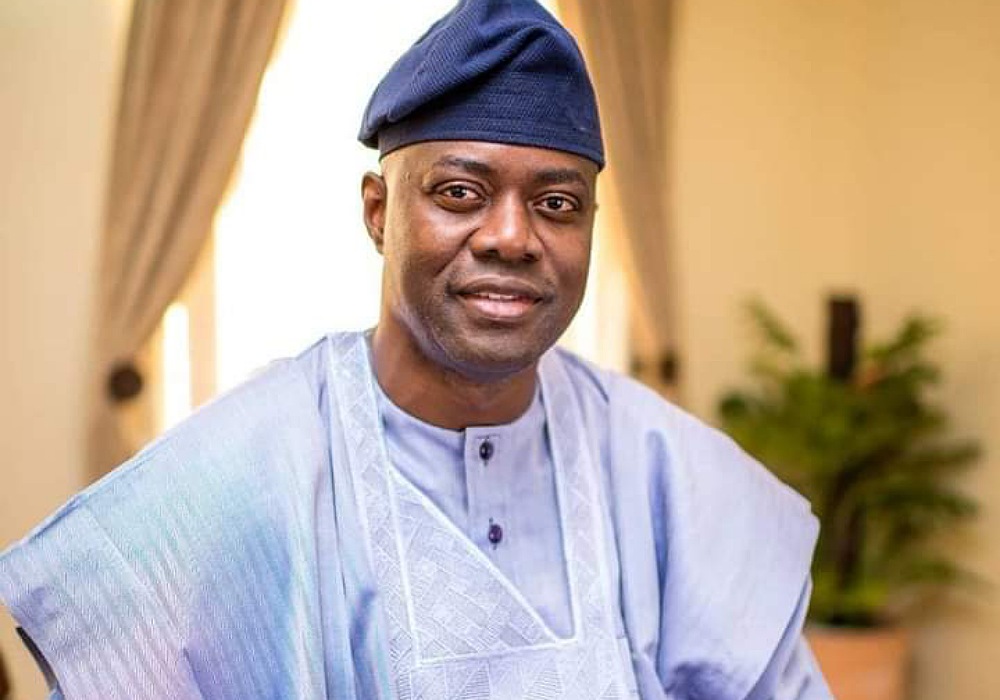
Oyo State Governor Seyi Makinde has challenged the Presidency to explain how Nigeria Liquefied Natural Gas (NLNG) dividends were distributed among states and local governments, insisting that a reconciliation exercise identified a shortfall of about ₦9 trillion.
Makinde’s position was contained in a statement issued on Sunday by his Special Adviser on Media, Dr Sulaimon Olanrewaju, in response to the Presidency’s rejection of the governor’s earlier claims over NLNG dividend payments.
RELATED NEWS: JUST IN: Presidency Rejects Makinde’s Claim of ₦250bn NLNG Dividends for Each State
The statement said the Nigeria Governors’ Forum (NGF), with the support of the Federal Government, engaged a consultant to reconcile NLNG dividend payments, adding that the exercise identified approximately ₦9 trillion allegedly due to states and local governments.
“The exercise identified a shortfall of about ₦9 trillion due to states and local governments. The Federal Government accepted the findings,” the statement said.
The governor maintained that the reconciliation report remained in the custody of both the Federal Government and the NGF.
“The report remains in the custody of both the Federal Government and the NGF. We trust the Presidency will not deny its existence,” the statement added.
The statement also noted that Makinde is the incumbent Vice-Chairman of the NGF.
Makinde Questions $21.5bn NLNG Dividend Payments
The governor questioned the Presidency’s statement that NLNG had paid $21.5 billion in dividends into the Federation Account since its inception, including $3 billion received under the current administration.
According to Makinde, the Presidency’s response did not explain how the payments were distributed or establish the amounts received by states and local governments.
“The Presidency stated that NLNG had paid $21.5 billion in dividends into the Federation Account since inception, including $3 billion received under the current administration. But it did not explain how these funds were disbursed,” the statement said.
The governor also questioned whether states and local governments had received their shares, how much they received and the basis for calculating their allocations.
“Have states and local governments received their shares? How much did they receive, and how were those amounts calculated? What happened to the $3 billion received under this administration?” the statement asked.
Makinde defended the figures he had previously cited, maintaining that his claims were based on verifiable information.
“Governor Makinde conducts public discourse with decorum and does not make unfounded claims or quote figures without a basis,” the statement said.
The governor maintained that he was ready to provide further clarification on the matter while urging the Presidency to address the substance of the allegations.
“We remain ready to provide further clarification while we urge the presidency to address the substance of the matter,” the statement added.
Recall that Biztellers had earlier reported the Presidency’s rejection of Makinde’s claim concerning NLNG dividends allegedly withheld from states and local governments.
The Presidency stated that NLNG had paid $21.5 billion in dividends into the Federation Account since its inception, including $3 billion received under the current administration.
However, in his latest response, Makinde argued that disclosing the total amount paid into the Federation Account did not address how the funds were distributed among the different tiers of government.
The governor is now demanding clarification on the distribution of the dividends and the findings of the reconciliation exercise that reportedly identified the ₦9 trillion shortfall.

The National Association of Nigerian Students (NANS) has threatened to shut down Alex Ekwueme Federal University, Ndufu-Alike (AE-FUNAI), Ebonyi State, if the institution’s management fails to reverse the reported increase in school fees.
The association, in a press release dated Sunday, October 18, 2026, described the reported tuition increment as insensitive, unjustifiable and unacceptable, citing the economic difficulties confronting Nigerian students.
The statement was signed by the NANS President, Dist. Comr. Akinteye Babatunde Afeez, GCNS, who warned that the increase could frustrate the academic aspirations of countless students.
SEE MORE: BREAKING: OAUSTECH Student Akinteye Babatunde Elected New NANS National President
“To be clear, education cannot be commercialised. Students cannot be made to pay for the financial challenges confronting our universities,” the statement read.
NANS acknowledged that universities require adequate funding but argued that their managements, particularly vice-chancellors, should explore innovative revenue-generating opportunities rather than impose additional financial burdens on students.
The association maintained that the Federal Government was investing heavily in education to keep students in school and ensure that access to education was not determined by their financial background or status.
NANS Gives University Management Conditions
The student body warned the vice-chancellor and the entire university management against policies capable of pushing students out of school.
It said the national leadership would not stand by while Nigerian students faced additional financial pressure that could threaten their academic futures.
“Going forward, we wish to make it clear to the Vice-Chancellor and the entire University Management that the National Leadership of NANS will not stand by while Nigerian students are subjected to policies capable of pushing them out of school,” the statement said.
NANS subsequently demanded an immediate reversal of the reported tuition increase and called on the university to restore fees to the affordable and reasonable levels that existed before the increment.
The association warned that failure to meet its demand would lead to a mobilisation of its national leadership to the institution.
“To this end, we call on the management of Alex Ekwueme Federal University to immediately reverse the reported tuition increment and return the fees to the affordable and reasonable level that existed before the increment. Otherwise, we will mobilise the National Secretariat of NANS to Alex Ekwueme Federal University and shut down the school until the fee is reversed,” the statement added.
NANS Reaffirms Commitment to Students
The association reiterated its commitment to defending the interests, welfare and aspirations of Nigerian students.
It pledged to continue speaking firmly against policies that place unnecessary and unbearable financial burdens on students.
NANS maintained that students should not be made to bear the financial challenges confronting universities and called on the management of AE-FUNAI to reverse the reported increase.





Alausa Hails Dangote Foundation’s Plan to Give Four Million Students IPO Shares

APC Campaign Council Sets Inaugural Meeting for Tuesday Ahead of Kaduna Flag-Off

Renaissance Capital Sees Significant Upside in Dangote Refinery, Lifts Valuation by 33.4%

Dangote Refinery IPO Elicits Participation in 90 Countries Globally

Makinde Fires Back at Presidency, Insists on ₦9tn NLNG Dividend Shortfall

‘NELFUND Is Not an Excuse for School Fees Hikes’ – NANS Warns Universities

Trump’s Family Unveils New Cryptocurrency Platform

Senate Denies Receiving Petitions Against Tinubu’s Ambassadorial Nominees

Dangote Cement Lights Up Benue Host Communities With CSR Initiatives

Reps Recommend 3-year Jail Term For Aviation minister

Tems Sets New Record On Billboard Hot 100 Chart
