
NEWS
Industrial Action Escalates as NUPENG Blocks Loading at Dangote Refinery

Signs have emerged that the recently brokered peace between the Nigeria Union of Petroleum and Natural Gas Workers (NUPENG) and Dangote Refinery by the Ministry of Labour and Employment may be short-lived as NUPENG threatened to reactivate the suspended industrial action.
The NUPENG, in an issued statement on Thursday in which it accused Dangote Refinery of negating the resolutions reached at the peace meeting.
The union, in its statement, accused Alhaji Sayyu Aliu Dantata, the founder of MRS holdings, of instructing all his Truck drivers who are NUPENG-PTD members for several years to remove the union stickers from their trucks yesterday, and subsequently “instructed them to forcefully drive into Dangote Refinery to load.”
The statement further explained that NUPENG officials stopped the trucks entering the Dangote Refinery to load because “their trucks violated Union loading rules and regulations.”
At this point, the union alleged that Dantata then invited the Navy to come over “ostensibly to crush the Union officials.”
But responding to the allegation, Dangote Petroleum Refinery, in a statement last night, dismissed recent allegations made by the NUPENG, insisting that claims of anti-labour practices, monopolistic behaviour, and planned fuel price hikes are “entirely unfounded.”
In its official response, Dangote Refinery reiterated its full support for constitutionally protected labour rights, stating that employees are free to affiliate with any recognised trade union. “Assertions that drivers are compelled to waive union rights are categorically false,” the statement said, adding that the dispute involves NUPENG’s Petrol Tanker Drivers (PTD) unit and does not implicate the refinery in any breach of rights,” the statement said.
The NUPENG statement, signed by NUPENG’s President, Akporeha Williams and General Secretary Afolabi Olawale, also accused the Dangote Refinery of working against the agreement.
The statement, titled: “Dangote Empire Negates Resolutions Reached On 9th September 2025,” issued by NUPENG yesterday, read: “This is to alert the general public and the government of the Federal Republic of Nigeria that notwithstanding the resolution reached and signed at the office of the DSS with three Ministers of the Federal Republic of Nigeria and the Deputy Director General of the DSS in attendance on the right of unionisation of the workers, Alhaji Sayyu Aliu Dantata on Wednesday, 10th September, 2025 instructed all his Truck Drivers who are NUPENG-PTD members for several years to remove the Union Stickers from their trucks yesterday.
“Today, Thursday (yesterday), 11th September, 2025, he instructed them to forcefully drive into Dangote Refinery to load and Union officials stopped them from entering the Refinery to load because their trucks violated Union loading rules and regulations.
“Alh Sayyu Aliu Dantata flew over them several times with his helicopter and then called the Navy of the Federal Republic to come over ostensibly to crush the Union officials.
“Our members are waiting for him and his agents to run them over. We call on everyone to let Alh Sayyu Aliu Dantata know that he is not bigger than the Federal Republic of Nigeria and we strongly condemn his arrogant attitude towards official institutions of this great country and blatant lack of respect for the laws of this country. We call on the Federal Government not to allow the Navy and other security agents being paid by the resources of this country to be used with impunity against the laws and people of this country. Security agents should not allow an individual to ride roughshod with impunity even while not observing terms of agreement reached in meetings in which security agents facilitated along with Ministers of the Federal Republic of Nigeria.
“We are by this statement placing all our members on red alert for the resumption of the suspended nationwide industrial action and calling on the Nigeria Labour Congress, Trade Union Congress, all Regional and Global Working people and Civil Society Organisations to rise in support and solidarity against this threat of the Capitalist world.
“We assure the people and the government of the Federal Republic of Nigeria that NUPENG will continue to remain a patriotic, responsible and responsive organisation to this great country.”
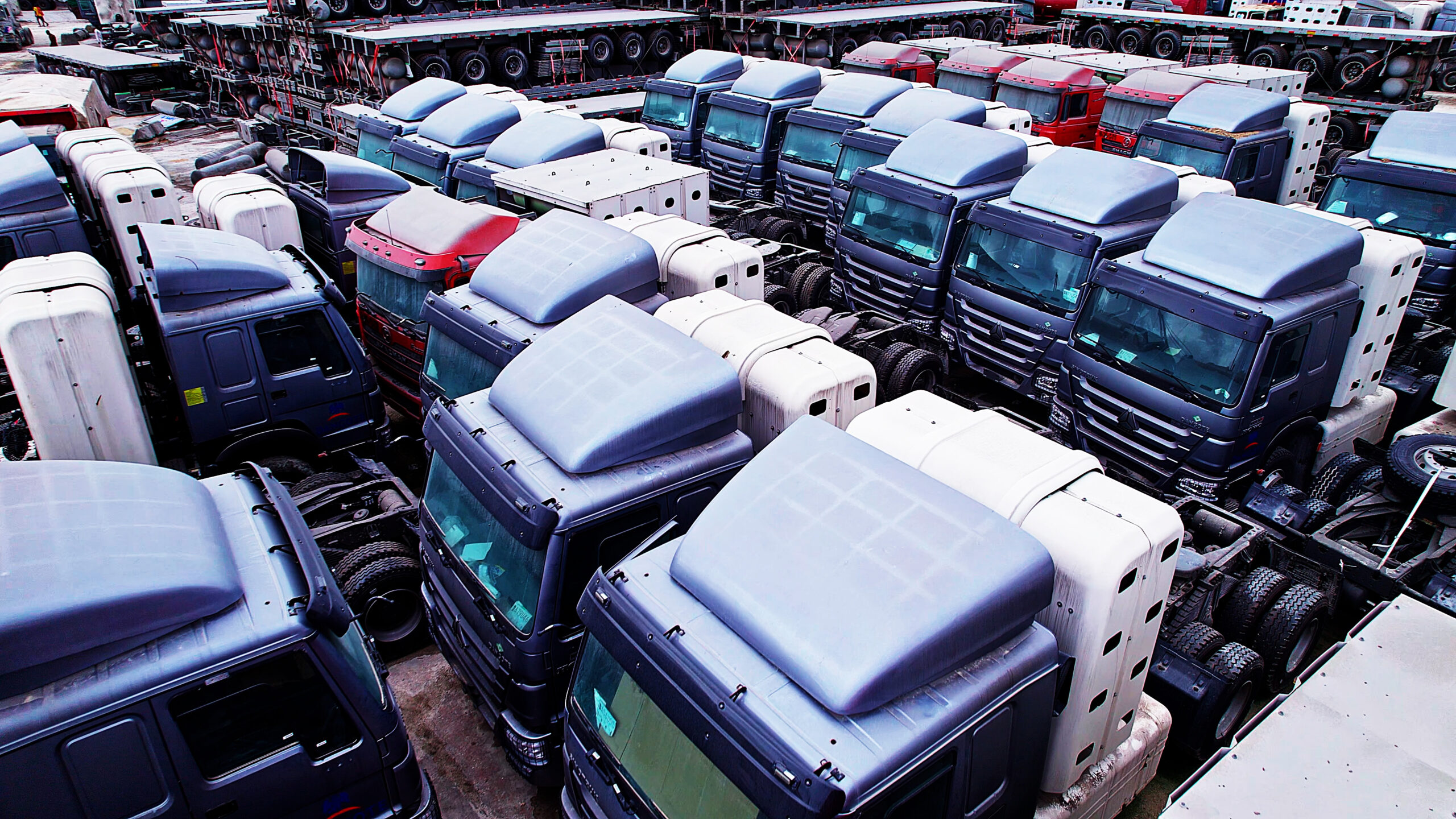
According to Dangote Refinery, central to NUPENG’s allegations is the roll-out of over 4,000 CNG-powered bulk trucks, which the union claims could displace existing jobs. Dangote Group firmly refuted this, describing the initiative as a cornerstone of Nigeria’s energy transition strategy.
“The deployment of CNG-powered trucks is a strategic initiative designed to support national energy transition goals, not to displace existing jobs,” the company stated. Each truck will be operated by a six-person team, with drivers receiving salaries significantly above the national minimum wage, plus medical cover, pensions, housing allowances, and long-term access to housing loans. The company aims to have 10,000 such trucks in operation by year-end, potentially creating over 60,000 direct jobs.
Responding to accusations of monopolistic behaviour, Dangote Refinery emphasised its compliance with Nigeria’s deregulated oil sector under the supervision of the Nigerian Midstream and Downstream Petroleum Regulatory Authority (NMDPRA).
The company highlighted that over 30 refinery licences have been issued to private players, with active developments by BUA, Aradel, Walter Smith, and the Edo Refinery. “While we are major industry player, our presence has revitalised the downstream sector, reopened previously dormant petrol stations and restored investor confidence,” the management said.
The statement also drew parallels with the company’s influence in the cement industry, noting that Dangote’s entry helped eliminate Nigeria’s reliance on imports and spurred the rise of other local producers.
Dangote Refinery strongly denied any plans to increase fuel prices. On the contrary, the company claims its operations have stabilised fuel availability and driven down costs. Diesel prices, for instance, have dropped by over 30% in the past year, and petrol prices in Nigeria are now reportedly lower than in oil-rich nations like Saudi Arabia and 40% cheaper than neighbouring West African countries.
The company also pointed to its N720 billion investment in CNG infrastructure as evidence of its commitment to reducing logistics costs and improving nationwide fuel distribution.
Dangote stated it maintains a cordial and cooperative relationship with all recognised trade unions, including NUPENG. It rejected accusations of walking out on recent conciliation efforts, stating that the union had not formally communicated any grievances before going public.
“We acknowledge and appreciate the intervention of the Federal Government, particularly the Ministry of Labour and Employment, and remain fully supportive of ongoing efforts to achieve a lasting resolution. We hold both the Minister, Dr Mohammed Dingyadi (Katuka Sokoto) and Mrs. Nkiruka Onyejeocha, in the highest regards, and reject any suggestion that we have acted in a manner that would undermine their involvement. The Hon. Minister granted Mallam Sayyu Dantata the permit to enable him attend to his medication,” the company said, expressing appreciation for the roles played by the Ministry of Labour and Employment and key ministers involved in mediating the dispute.
ALSO READ: Adeleke Flaunts Cooperative Financing Scorecard, Expands Start-Up Grants to 2000
With over 570,000 direct and indirect jobs created, including through road, power, and water infrastructure projects, Dangote Refinery has positioned itself as a centre for skills development and technology transfer in Nigeria.
Reiterating its commitment to responsible business, Dangote Group concluded by dismissing the monopoly allegations as “recycled falsehoods”, urging other private sector players to follow its lead in investing in Nigeria’s economic future.
“At Dangote, we have chosen to invest boldly in Nigeria’s future and we will continue to do so. It is time others follow suit.”






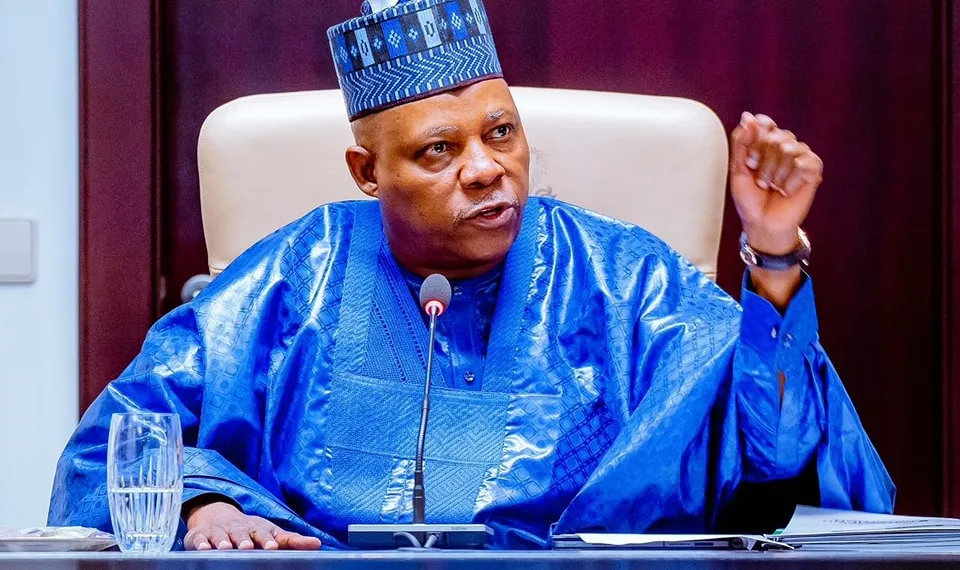
Vice President Kashim Shettima has urged Nigerians to celebrate President Bola Tinubu, saying his leadership saved the country from a potential implosion.
Shettima said Nigeria’s economy had been teetering on the edge of collapse before Tinubu’s intervention, adding that the country could have faced a different situation.
“The economy was teetering on the edge of collapse, we were on a cliff edge,” the Vice President said.
ALSO READ: Subsidy Removal, FX Reforms Driving Fresh Oil Sector Investment – Shettima
“So he literally saved the nation from an implosion. That could have been the scenario. So, instead of demonizing him, Nigerians ought to celebrate this poor man.”
Shettima also called for a return to the drawing board, expressing confidence in the leadership’s commitment and the prospects for the 2027 elections.
“I believe on the bottom of my heart that with this presentation I have seen, and with the commitment of our leadership, by the grace of God, we are going to win,” he said.
Speaking about the 2027 elections, the Vice President reminded his audience that social media platforms should not be mistaken for actual polling stations.
“There are no polling stations on Facebook or Instagram,” he said.
Shettima also expressed gratitude for the efforts made towards promoting the cause of the 2027 elections.
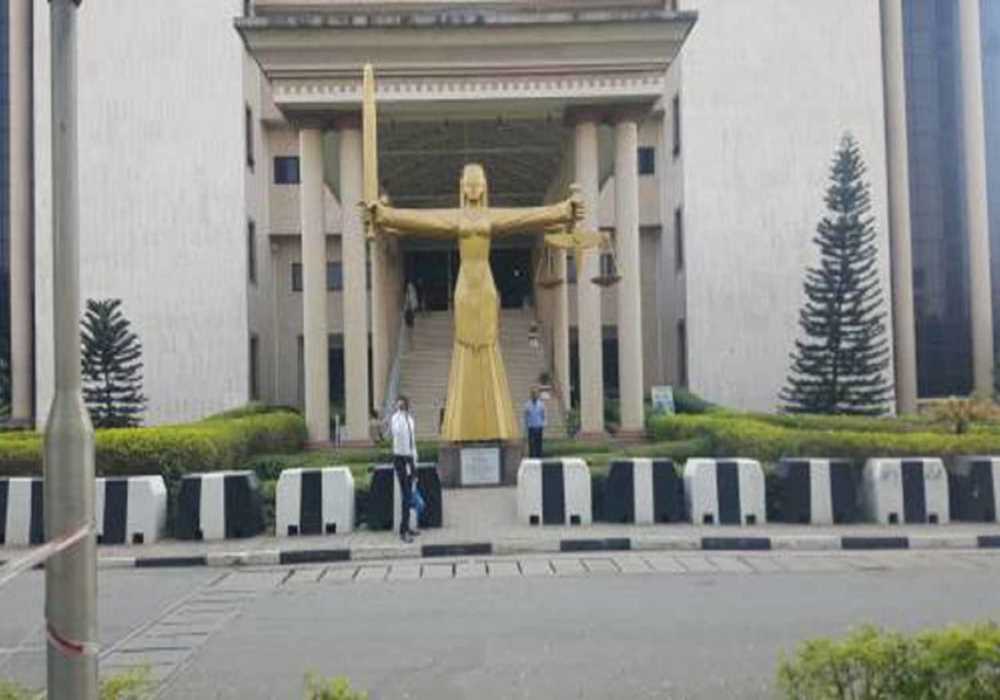
Following observed mis-steps, the Federal Government of Nigeria has withdrawn the eight-count criminal charge brought against the alleged fake Director General (DG) of the Presidential Foreign Intervention Promotion Council (PFIPC), Adeniyi Adeyemi.
Biztellers reports that the matter, in accordance with the counsel of the Attorney General of the Federation (AGF) and Minister of Justice, Prince Lateef Olasunkanmi Fagbemi, (SAN), the matter will be filed at the High Court of the Federal Capital Territory (FCT), instead of the Federal High Court (FHC).
Consequently, upon an unopposed application for termination by the prosecution counsel and Director of the Public Prosecution of the Federation (DPPF), Rotimi Oyedepo (SAN), on Monday, Justice Mohammed Umar of a Federal High Court, Abuja on Monday, struck out the matter.
READ ALSO: Shell Identifies Keys to Nigeria’s Energy Future
In a motion for the termination of the charges, Oyedepo informed the court that the Attorney General of the Federation (AGF) and Minister of Justice has carried out a review of the case file of Adeyemi and the charge filed by the Inspector General of Police (IGP) and found some loopholes.
The DPPF added that the documents allegedly forged by Adeyemi during his operations of the fake agency are those that can be prosecuted by the High Court of the Federal Capital Territory (FCT).
He also informed the court that a new charge has been filed at the High Court of the FCT and that Adeyemi would be expeditiously arraigned afresh.
He therefore urged the judge to strike out the charge as required by law.
Following no objections from Ibrahim Angulu (SAN), who stood in for Adeyemi, Justice Umar subsequently terminated the charge.
Adeniyi, 38, was being tried alongside two others whose whereabouts are unknown, on charges bordering on conspiracy and forgery.
The two others said to be at large were identified as Femi (surname unknown) and Anu (surname unknown).
The charge marked: FHC/ABJ/CR/25/2025, was entered against the defendant by the DPPF.
To secure a bright energy for her teeming population, Nigeria must sustain the momentum of reform, accelerate investment, and deepen partnerships.
This view was expressed by Managing Director, Shell Nigeria Exploration and Production Company of Nigeria Limited (SNEPCo) Ronald Adams in Lagos at the weekend.
Delivering a keynote address at the Africa Energy Conference (AEC) of the Lagos Business School (LBS), Adams called for regulatory certainty through efficient execution of reforms, sustained investment appeal to enable projects to move more swiftly from opportunity to production and partnership by operators, regulators, NNPC Limited and communities to unlock the full value of Nigeria’s resources.
Adams cited Nigeria’s huge oil and gas resources as an advantage but pointed out: “Resources alone do not guarantee prosperity. Prosperity comes when resources are matched with investment, technology, sound policy and disciplined execution. Success will be determined not by the size of our resources, but by our ability to convert them into investment and economic growth.”
Adams pledged the support of Shell towards a bright energy future of Nigerians. He said: “For more than six decades, Shell has been part of Nigeria’s energy journey. Together with our partners, we have helped develop major energy infrastructure, supported Nigerian businesses, invested in talent, and contributed to economic development. Bonga remains a powerful example of what technology, partnership and Nigerian capability can achieve in deepwater operations. Today, that story continues through Bonga North.”
READ ALSO: ADF Targets 5 Million Students, 2 Million Vulnerable Women
Issuing a clarion call for action by all stakeholders, he added: “The world is not standing still. Capital is moving, technology is advancing and competition is intensifying. The countries that attract investment tomorrow are those that improve competitiveness today. Nigeria has begun that journey. Our task is to sustain the momentum and translate reform into projects, projects into growth, and growth into shared prosperity.”
The conference, the 4th in the series had at its theme; “Securing Nigeria’s Energy Future: Policy Reform, Capital Mobilisation, and Pathways to a Sustainable Power and Energy Market” and was attended by top government officials, industry captains, energy professionals, and students.
Lagos State Deputy Governor Obafemi Hamzat represented Lagos State Governor Babajide Sanwo-Olu as the guest of honour. SNEPCo was a principal sponsor of the Africa Energy Conference (AEC) and mounted a well-received exhibition on its deepwater operations and social investments across Nigeria.





Sahara Champions Global Shipping Collaboration for $20m Mercy Ships Healthcare Impact

30 Nigerians Bag Postgraduate Scholarship from NNPC Ltd, Eni

2027: ‘Algorithms Will Not Decide Election Results’, INEC Chairman Declares

Navy Recovers 98,000 Litres of Suspected Stolen Crude in Rivers

DPRP’s Appeal Against Fuel Import Licence Ruling Earns Stakeholder Backing

State Govs, Wike Endorse One-Party State, Join APC Campaign Council

Trump’s Family Unveils New Cryptocurrency Platform

Senate Denies Receiving Petitions Against Tinubu’s Ambassadorial Nominees

Dangote Cement Lights Up Benue Host Communities With CSR Initiatives

Reps Recommend 3-year Jail Term For Aviation minister

Tems Sets New Record On Billboard Hot 100 Chart
