
Crime
Lagos Assembly Takes Action On Missing Intestine of 12-Year-Old Boy

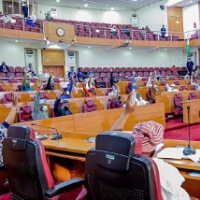
The Lagos State House of Assembly has taken action by establishing an ad-hoc committee to thoroughly investigate the case of 12-year-old Adebola Akin-Bright, who allegedly experienced the disappearance of his small intestine during the course of his medical treatment.
This significant initiative was undertaken during a plenary session on Monday, with the Speaker, Mr. Mudashiru Obasa, presiding over the inauguration of the committee.
It is worth noting that the distressing incident was initially brought to light on Friday, when Abiodun Deborah, the mother of the young boy, voiced her concerns regarding the inexplicable disappearance of her child’s small intestine during his medical care at the Lagos State University Teaching Hospital (LASUTH).
Obasa announced that the ad-hoc committee will be tasked with conducting a thorough investigation into this matter and delivering its findings to the house within a two-week timeframe.
The committee will be chaired by the Majority Leader, Mr. Noheem Adams, and will include other dedicated members such as Mr. Temitope Adewale, Mr. Steve Ogundipe, Mr. Surajudeen Tijani, and Mr. Lawal Musibau.
The Speaker also expressed commendation for Governor Babajide Sanwo-Olu’s visit to the 12-year-old, characterizing the governor’s actions as a clear demonstration of the government’s responsiveness and compassion.
He said: “It shows the governor is caring for him to have visited mother and child at the hospital and the promise he made which gives hope. It is commendable.
“However, it is important to have a system in place to ensure a structure that curtails any challenge that affects institutions in the state, therefore, it is necessary that we get to the root of the problem.
In response, Deputy Whip Mr. David Setonji expressed gratitude to the Speaker for bringing this matter to the forefront of legislative attention.
He emphasized the urgency of focusing on the state’s healthcare sector and noted that the House had already taken significant steps toward passing a law concerning Organ Harvesting, which holds substantial importance for the state’s development.
Additionally, Mr. Sa’ad Olumo applauded the mother of the boy for her remarkable courage in drawing the attention of Nigerians to her son’s distressing situation.









The Nigerian Navy has uncovered 132,000 litres of stolen crude oil in Allison community, Bonny Local Government Area, Rivers State.
This was detailed in a statement by the Director of Naval Information, Navy Captain Abiodun Folorunsho, in which he disclosed that the Forward Operating Base Bonny discovered the stolen crude oil under Operation Delta Sentinel, following actionable intelligence.
He said the operation uncovered 10 dugout pits, adding that the site and the recovered products were handled in accordance with extant regulations.
“The operation reinforces the importance of intelligence-led action in identifying concealed petroleum stockpiles and disrupting the infrastructure that enables crude oil theft and the unauthorised movement of petroleum products.
“The Nigerian Navy will sustain efforts to locate and dismantle illegal refining infrastructure and disrupt the networks facilitating crude oil theft across the Niger Delta,” the statement said.
READ ALSO: FCT Motorists, Commuters Divided over NNPC Petrol Discount
The Navy urged community leaders, residents, traditional institutions and other stakeholders to promptly report crude oil theft, illegal refining, suspicious petroleum storage and the unauthorised movement of petroleum products to the nearest security agency.
Timely, credible information, the statement said, could enable swift intervention and prevent illicit activities from expanding.
“Safeguarding the nation’s critical petroleum assets requires vigilance and active cooperation between security agencies and the communities they serve. The Navy therefore urges the public to remain alert and support lawful efforts to protect national resources,” Folorunsho concluded.

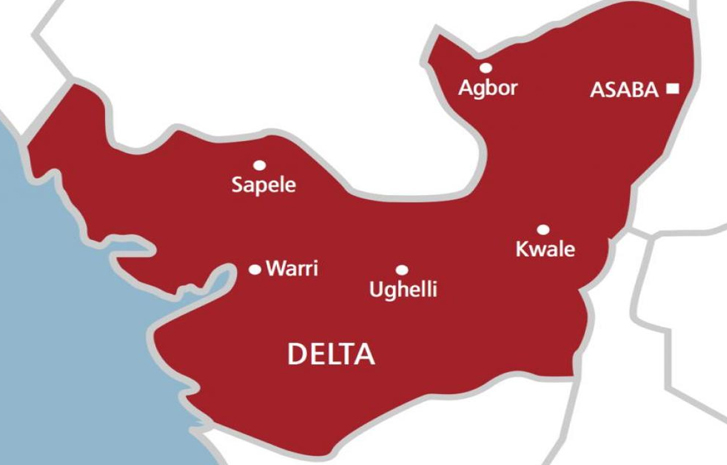
The Delta State Police Command has arrested a 28-year-old school bus driver, Onome Lucky Ughagha, over the alleged kidnapping and sexual assault of a 14-year-old female student in Sapele, after reportedly collecting ₦503,000 in ransom from the victim’s father.
The suspect was arrested on October 23, 2026, following investigations into the incident, which was reported to the Sapele Area Command on October 20 by the victim’s father.
The statement was signed by the Police Public Relations Officer of the Delta State Command, SP Bright Edafe, and dated October 25, 2026.
SEE ALSO: JUST IN: Ex-Delta Governor Emmanuel Uduaghan Is Dead
According to the police, the father alleged that the suspect abducted his daughter while she was preparing to leave for school. The suspect reportedly contacted him afterward, demanded ₦503,000 and threatened to kill the minor if the ransom was not paid.
After the payment was made, the victim was allegedly abandoned along Oton Road in Sapele, where she was reunited with her family in a traumatised condition, with indications of sexual assault.
Following the report, operatives of the Sapele Area Command commenced investigations, while the victim was taken to a medical facility for examination and treatment.
The police also invited the school’s principal and vice principal for questioning as investigations continued.
The suspect reportedly abandoned the school bus and fled after the incident. However, acting on credible intelligence, police operatives traced him to his hideout in the Ajimele area of Sapele, where he was arrested on October 23.
During preliminary interrogation, the suspect reportedly confessed to his involvement in the crime, according to the police.
The command said arrangements were underway to transfer him to the State Criminal Investigation Department in Asaba for further investigation.
Reacting to the incident, the Commissioner of Police in Delta State, CP Samuel E. Erale, condemned the alleged crime and reaffirmed the command’s commitment to protecting children from violence and exploitation.
The commissioner reiterated the command’s commitment to “protecting children from all forms of violence and exploitation.”
He also assured the public that “investigations will be thorough and that anyone found culpable will be brought to justice.”
Erale further called on school authorities, parents and transport operators to exercise greater vigilance in safeguarding children, stressing that “the safety of every child entrusted to their care must remain paramount.”
Two suspected political thugs have reportedly died following an attack on the convoy of Rollins Offia Nwali, the Nigeria Democratic Congress (NDC) candidate for Ezza South Constituency in the Ebonyi State House of Assembly.
The incident occurred on Thursday afternoon when Nwali’s motorcade was returning from Amazekewe community, according to a report published by SaharaReporters on Friday, October 23, 2026.
Security sources told the publication that the attackers allegedly opened fire on the candidate’s convoy, prompting security personnel attached to him to return fire after ensuring the safety of Nwali and his team.
SEE ALSO: NDC Withdraws Recognition of Diaspora Chapters Over Court Rulingq
One of the suspected attackers reportedly died at the scene, while the second was said to have died later in hospital. One of the deceased was identified as Jude Nwamgbada.
The attackers were alleged to have been armed with AK-47 rifles and pump-action guns.
However, the identities and political affiliations of the attackers could not be independently verified as of the time of the report.
NDC Candidate Confirms Attack, Says Hilux Was Burnt
Nwali confirmed the incident in a statement shared on his Facebook page, disclosing that his Toyota Hilux was set ablaze during the attack.
He expressed gratitude to security agencies for ensuring the safety of everyone in his convoy.
“My motorcade was attacked today by armed hoodlums who opened fire on our vehicles while we were returning from Amazekewe. My Toyota Hilux was set ablaze and completely burnt in the attack,” he said.
“Thankfully, we are all safe, and I sincerely appreciate the professionalism and gallantry of the security agencies who ensured our safety.”
The NDC candidate also acknowledged reports of casualties among the attackers, expressing sympathy for those affected and their families.
“I have also been informed that there were casualties among those who carried out the attack. My heartfelt sympathy goes out to those affected and their families. Regardless of the circumstances, the loss of human life is deeply regrettable,” he added.
Nwali Warns Youths Against Political Violence
Following the incident, Nwali appealed to young people not to allow themselves to be used by politicians seeking power at the expense of their lives.
He urged youths to consider the consequences of participating in political violence, stressing that no political ambition justified the loss of human life.
“No political ambition is worth the life of any young person, and no young person should have to lose their life in pursuit of another person’s political ambition,” he said.
The candidate further insisted that the attack would not deter him from pursuing his political ambition and serving the people of Ezza South.
“As for us, we are prepared to make the sacrifices necessary to serve our people, and I assure you that no amount of intimidation or violence will deter us from this course,” he added.
Attack Comes Amid Reported Political Violence in South-East
The incident comes amid a series of reported attacks involving members and supporters of the NDC in the South-East, particularly in neighbouring Enugu State.
On October 10, suspected political thugs reportedly attacked NDC supporters at the Akanu Ibiam International Airport in Emene, Enugu, as they gathered to welcome the party’s governorship candidate, Christian Chinyeaka Ohaa.
Video footage of the incident reportedly showed supporters fleeing amid sporadic gunfire, while a suspected attacker was seen assaulting an NDC supporter with a plank.
Amnesty International subsequently condemned the attack, describing it as part of a troubling pattern of violence targeting opposition members.
Another incident occurred at the NDC secretariat in the Government Reserved Area of Enugu, where armed men allegedly opened fire during preparations for the party’s campaign flag-off.
The shooting reportedly left a man who was repairing a vehicle with a gunshot injury and damaged five parked cars.
Nworie Christopher, an NDC member from Affa in Udi Local Government Area, later died from injuries sustained during the attack on the party’s campaign office.
The Enugu State Police Command reportedly ordered an investigation into the shooting, while Governor Peter Mbah pledged to prosecute those responsible for the airport and secretariat attacks.
The NDC has accused the ruling All Progressives Congress (APC) of orchestrating intimidation against its members. However, the alleged APC affiliation of those involved in the Ebonyi incident has not been independently verified.
The party has also called for an independent investigation into previous attacks on its members in Enugu State.
Meanwhile, efforts to obtain comments from the Ebonyi State Police Command were unsuccessful, as its spokesperson, SP Joshua Ukandu, reportedly did not answer calls or respond to a message seeking his reaction to the incident.






Fears of Fresh US Strikes on Iran Fuels Crude Price Surge

Navy Uncovers 132,000 Litres of Stolen Crude Oil in Bonny

Delta Police Arrest School Bus Driver Over Alleged Kidnap, Rape of 14-Year-Old Student

₦2.3tn Kaduna Rally Claim: APC Accuses Atiku, ADC of Fake News Plot

Dangote Identifies Power, Financing as Possible Keys to Africa’s Industrial Revolution

Dangote Calls for Stronger Protection of Local Industries, Unveils Pan-African Energy Distribution Network

Trump’s Family Unveils New Cryptocurrency Platform

Senate Denies Receiving Petitions Against Tinubu’s Ambassadorial Nominees

Dangote Cement Lights Up Benue Host Communities With CSR Initiatives

Reps Recommend 3-year Jail Term For Aviation minister

Tems Sets New Record On Billboard Hot 100 Chart
